
What the day feels like
You step off the ferry into a wash of light: the lake opens like a distant ocean, pale blue at the horizon, rimmed by mountains. On the pier gulls argue with the rattle of mooring ropes and the air smells faintly of smoked fish and lakeweed. This is Lake Constance—the Bodensee—a body of water that reads like a map of Central Europe, where German, Austrian and Swiss cultures brush shoulders across a single shoreline.
A day trip around Lake Constance condenses history, geology and regional life into a pleasingly manageable loop: cobbled lanes and half-timbered facades in Meersburg; a compact island town in Lindau that feels Mediterranean despite its Alpine backdrop; and a cable car that climbs to Pfänder’s summit (1,064 m) and serves up a panorama of 240 Alpine peaks. The route is the sort of travel that rewards both curiosity and a sensible itinerary: stroll, climb, ride and pause to eat luminous fish by the water.
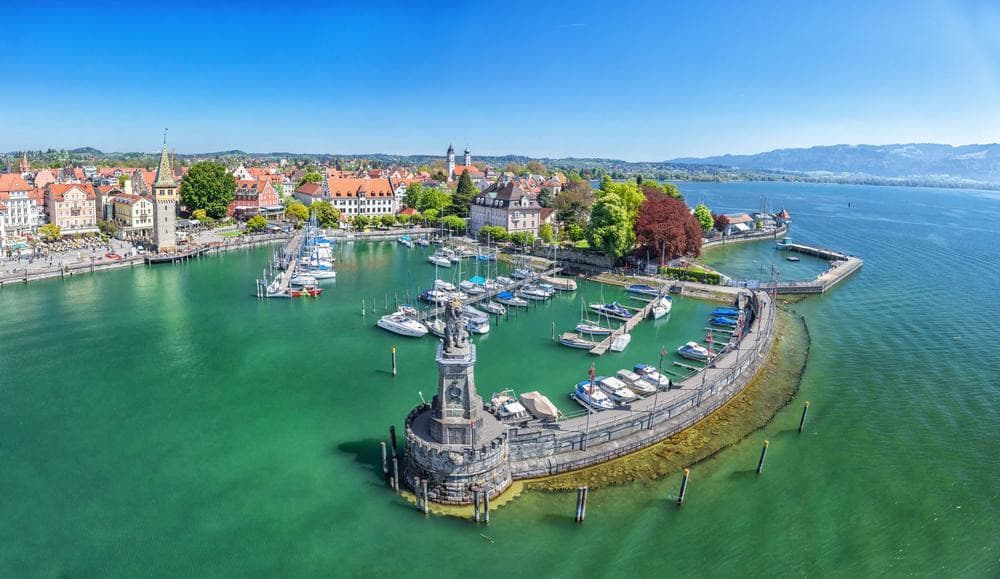
Geologically, the lake is a glacial legacy—an imprint of ice that carved a basin and gathered melt into a long, shallow inland sea. Centuries of trade and contest turned its towns into storied waypoints. Meersburg’s Alte Burg claims a near-continuous inhabited line stretching back to the medieval period; the town’s narrow alleys and half-timbered houses still lean into that history. Lindau, by contrast, is a pocked island of sunlit promenades and a harbor guarded by its iconic lion and lighthouse—an orientation walk here is part architecture primer, part coastal repose.
The cultural rhythm around Lake Constance is shaped by food and festivals. Bregenz stages the world’s largest floating festival—an operatic and theatrical spectacle that drifts on pontoons just off the shore—while local markets spin out smoked lake fish, tangy cheeses and small-batch wines from the steep slopes that rise from the water’s edge. Language and currency change as you move along the shoreline; German is predominant, but dialects and accents slide across borders, and Swiss francs are commonly taken in Swiss harbors.
Why go now? Because the lake wears the seasons openly. In late summer you get warm, still water, long evenings and the best visibility from Pfänder for those Alpine silhouettes. In spring, migratory birdlife thickens the reed beds. Fall brings a soft, burnished light over the vineyards; winter, when the towns quiet and the air sharpens, makes for dramatic photography—but be prepared for shorter services and colder cable-car rides.
The practical side: you can tailor the day to fit ambition. A morning ferry or private transfer brings you to Lindau for a 60–90 minute orientation walk that covers the harbor, the old town and the leafy promenade. From there a short drive or boat ride takes you towards Bregenz, where the Pfänderbahn cable car ascends about 1,000 vertical meters in roughly seven minutes. At the top, a ring path and summit terraces offer the clean, alpine air and—on clear days—views stretching across Germany, Austria and Switzerland.
Conclude with Meersburg: a medieval compact of stairways and fortified walls. The Alte Burg and the newer palace terraces make a digestible late afternoon exploration; expect 1–2 hours to wander the courtyard, museum rooms and lakeshore promenades. If you’ve booked a private tour from Zurich, the transfer smooths logistics and leaves you to focus on the sensory tasks of tasting smoked whitefish, timing the cable-car run and catching the light on the water.
Practical tips for planning: start early to avoid midday tourist peaks, book Pfänderbahn tickets ahead during high season and wear shoes that can handle cobbles and short, steep paths. Water and a layered jacket are essential—weather on the lake can shift fast—and bring a compact camera or a phone with a good tele lens for birdlife and the long Alpine line.
For adventurers who like options, Lake Constance is forgiving. Rent a bike for a segment of the Bodensee-Radweg (the full loop is roughly 260 km, but most people ride day sections), join a guided walking tour through Lindau’s lanes, or make a half-day of birdwatching in the reed-fringed bays. If your appetite is cultural, time a visit for the Bregenz Festival to see theater staged on the water, or follow the vineyard terraces for small-producer wine tastings.
Lake Constance refuses to be only one thing: it is a border, a meeting place, a stage and a natural system. That blend—easy access and layered authenticity—is why travelers return. It’s not about conquering a peak or ticking off a single sight; it’s about letting the lake’s rhythm set your pace. Walk slower, look longer, listen to the gulls and the cable-car’s steady hum. The lake will do the rest.
Where this trip becomes yours is in the choices: swap a private car transfer for the ferry to feel the wind, trade a museum for cafeteria fish and a glass of local white, take the cable car up at dusk and watch the towns light like constellations. Lake Constance offers all those small, decisive moments that make a day off the map feel like a proper escape.
Trail wisdom
Small choices, better day.
Start early
Begin before 09:00 to avoid crowds at Lindau’s harbor and to secure morning visibility from Pfänder.
Layer for wind
Bring a light waterproof shell—lake winds and ridge exposure can make summer mornings chilly.
Mind your footwear
Wear grippy shoes for cobbled streets and short, steep paths in Meersburg and at Pfänder summit trails.
Book peak experiences
Reserve Pfänderbahn tickets and any Bregenz festival seats in advance during July–August to avoid sold-out times.
Local knowledge
Read the place, not just the route.
Watch for native species including mute swans, great crested grebe.
Keep an eye out for wildlife during the transition between areas and habitats. Respect distance guidelines.
Local organizations like the Bodensee-Stiftung work to monitor water quality and manage habitat restoration; visitors help by minimizing litter and avoiding disturbance to reed beds.
Follow the guide's instructions on size limits, ethical handling, and leave-no-trace practices.
Reichenau Island’s romanesque monastery and quiet vegetable gardens. Pfänder’s lesser-known panoramic loop path for sunset views
Locally recommended viewpoints and quiet spots known best to local operators.
Lake Constance (Bodensee) has been a crossroads since Roman times; Meersburg’s Alte Burg is among Germany’s oldest continuously inhabited castles, anchoring the region’s medieval heritage.
Maritime roots and regional tradition shape the waterways and working coasts.
Seasonal guide
Four versions of the same landscape.
Spring
Best formigratory birds · blooming vineyards
Challengesunpredictable rain · cool mornings
Spring opens the reed beds to migratory birds and the vineyards to new shoots—bring layers and expect variable weather.
Summer
Best forwarm lake swims · festival events · clear summit views
Challengescrowds · higher prices
Long, warm days and clear vistas make summer ideal, but plan ahead for busy ferries and festival crowds.
Fall
Best forvineyard colors · crisp light for photography
Challengesshorter daylight · cooler water temperatures
Autumn paints the slopes and delivers excellent visibility; bring warm layers for evenings.
Winter
Best forquiet town walks · crisp mountain silhouettes
Challengesreduced services · cold winds at altitude
Winter is quieter and starkly beautiful—expect fewer tours and be prepared for colder, brisk conditions.
Pack with intention
What to bring.
Good to know
Common questions.
The Pfänderbahn ascends roughly 1,000 vertical meters and the ride takes about seven minutes; summit facilities and short loop trails are accessible from the top.
Plan the edges
The details that make the day easier.
Lake Constance (Bodensee) borders Germany, Austria and Switzerland and the full Bodensee cycle route around the lake is roughly 260 km long.
Taste the region’s smoked and freshwater fish (often served with rye bread), sample Muller-Thurgau and Pinot Blanc from lakeside vineyards, and time your visit for farmers’ markets selling local cheese and produce.
- Nearest international airport
- Zurich (~1–1.5 hours by car); transport options: ferry, regional train and private transfers; languages: German (regional dialects); currency: Euro (Germany
- Austria) and Swiss franc in Switzerland; best access
- ferry lines and regional roads around the lake.
Prefer public ferries or cycling for short segments, avoid single-use plastics, stick to marked paths to protect reed-bed habitats, and consider a donation to local conservation groups like Bodensee-Stiftung.
Explore by topic
Follow the threads.
Keep exploring
Make the story part of the trip.
 Related story
Less than two hours from Nairobi, Kereita Forest pairs hands-on canopy adventure with quiet montane trails and a sobering colonial history—perfect for families, teams, and curious travelers seeking a full-day pulse of nature.
Set out from Bass Harbor for a private, customizable day on Blue Hill Bay — lighthouses, puffins, seals, and the chance to feel Acadia from the water. Small groups, local captains, unforgettable views.
In four hours you can move from shaded canyon ferns to wind-scoured coastal ridgelines, guided by someone who knows where the light—and the hidden views—live. This private half-day hike on the Monterey Peninsula or Big Sur is compact, curated, and perfect for travelers who want depth without a multiday commitment.