
What the day feels like
You climb into the minivan before dawn with a thermos of tea and the city still dim behind you. The road north from Baku threads past salt flats and villages, then starts to climb; houses thin, chestnut and beech crowd the shoulder, and the air smells different—cleaner, colder, the way mountain air pulls at your lungs. By midmorning the van parks at the edge of Qecresh Forest and the guide points you toward the trees: a short walk, some photographs, and then the cable car that will lift you out of lowland light into an alpine clarity you only get at a few thousand meters.
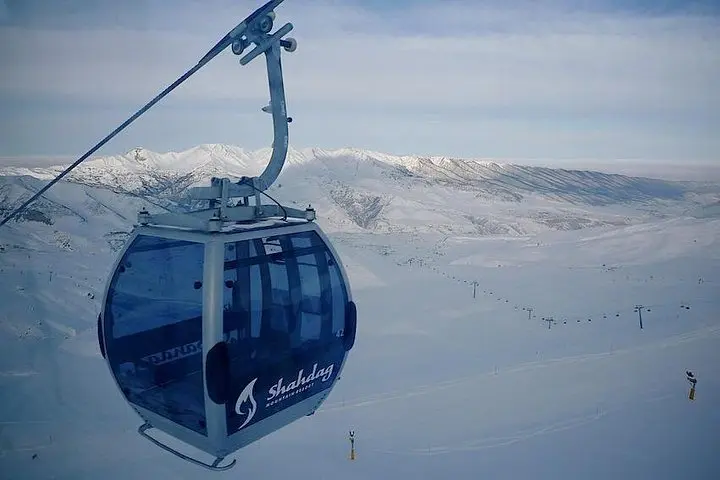
The Shahdag Adventure Tour is a full-day loop—roughly 10 to 11 hours from pickup to drop-off—that stitches together two of northeastern Azerbaijan’s best-known features: the town and forests around Guba (sometimes spelled Quba) and the Shahdag Mountain Resort perched in the Greater Caucasus. It is, in equal measure, a cultural day trip and a mountain outing. In under a day you go from cobbled streets and rug workshops to thin air, marmot meadows, and an engineered ascent that feels at once modern and elemental: the cable car, climbing roughly 700–900 vertical meters, carries you through a procession of pines and rock faces until the world blooms into an amphitheater of ridges.
Geologically, you’re on the edge of two stories. The deep story is the slow, violent pushing up of the Greater Caucasus—limestone beds tilted and broken by the collision of tectonic plates—and the recent, more gentle story is the carving of valleys by rivers that still convince you they own the land. Cultural history is braided through that landscape: Guba is a trading town known for its carpet-weaving and orchard agriculture, a crossroad of Persian, Caucasian, and Turkic influences that shows up in its food and in the patterns local women stitch. The Soviet era left its mark, too—the resort infrastructure and cable cars are newer iterations of a longer human impulse to make the mountains accessible.
Once off the cable car, the day opens. Trails and short boardwalks run through dwarf mountain pines and alpine meadows. There are lookout points with 180-degree views of serrated ridgelines, and on a clear day you can pick out ribbons of river in the valleys below. Wildlife is discreet but present: if you sit quietly, chamois or wild goats might appear on distant ledges and golden eagles will ride the thermals like punctuation marks.
Why do this trip? It gives you a concentrated dose of the Caucasus without overnight logistics. If you only have a day or prefer not to sleep at elevation, you still get the elevation, the views, and local color. The cable car itself is unexpectedly cinematic—an aerial rhythm that alternates silence and the whirr of metal, a good antidote to the static of city life. For photographers and family groups alike, Shahdag combines low-effort access with high-impact scenery.
Practical nuts and bolts: the tour runs about 10–11 hours and typically includes round-trip transport from Baku, stops in Guba, a short forest walk (Qecresh), cable car tickets, and time at Shahdag Mountain Resort for exploring or light activities. Expect the highest point of activity near 2,000–2,100 meters above sea level at the resort; the cable car gains roughly 700–900 meters of elevation from the lower station. Terrain at the resort is mostly gravel paths, short stair sections, and well-marked viewpoints—no technical scrambling required for the standard visit. The only real physical demand is the altitude and a few short uphill walks.
Timing matters. Early starts win: morning light in the mountains is cleaner, and you’ll avoid the afternoon cloud build-up that can hide the peaks. Bring layers—the day can begin in T-shirt weather in Guba and end with a stiff wind at the top. Hydration is a simple but often overlooked factor; the air is dry, and altitude amplifies dehydration. Wear supportive shoes with tread for wet boardwalks and rocky outlooks; you don’t need mountaineering boots, but trail shoes are a smart choice.
Local etiquette and logistics are straightforward. The tour often includes a local guide—use them as a bridge to small cultural moments (carpet workshops, village teahouses) and practical ones (currency, where to find toilets). Azerbaijani hospitality is real; accept tea when offered. There are no special permits for day visits to Shahdag Resort if you’re part of this commercial tour, but independent travel into protected areas may have different rules.
If you’re going to plan smart: charge batteries and phones, bring sunscreen (the sun at 2,000 meters is more intense than down in the city), carry small-denomination local currency (AZN) for snacks and souvenirs, and give yourself time for the drive back—the winding roads and intermittent cell service mean patience is part of the itinerary.
For hikers used to long days, this tour is a shortcut to alpine perspective; for casual travelers, it’s an easy, high-value taste of the Greater Caucasus. Either way, you come away with a sense of how the mountains shape human life here—how villages trade, how carpets and cuisine speak of soil and climate, and how infrastructure like the cable car mediates access without stealing the place's character. The last thing you’ll notice before the minivan pulls you toward the lowlands is how the mountains seem to shrug off the city’s noise, keeping their own timetable. You’ll likely leave the day with photographs, a stronger saltiness to your tea appreciation, and a simple certainty: this is the kind of mountain day that makes you plan a return visit.
Trail wisdom
Small choices, better day.
Layer for temperature swings
Pack a lightweight insulating midlayer and a wind shell; temperatures can drop quickly above 1,800–2,000 m.
Hydrate before you ascend
Altitude and dry air increase fluid loss—drink water prior to the cable car ride and carry a 1–2 L bottle.
Protect from UV
Use SPF 30+ sunscreen and sunglasses—the sun’s intensity increases with elevation.
Pace short hikes
Walk steadily on uphill stretches to manage shortness of breath from elevation; stop for views rather than sprinting.
Local knowledge
Read the place, not just the route.
Watch for native species including Caucasian chamois (bezoar ibex), Golden eagle.
Keep an eye out for wildlife during the transition between areas and habitats. Respect distance guidelines.
Shahdag sits adjacent to protected parklands—stay on marked trails, avoid picking plants, and use local guides to minimize impact.
Follow the guide's instructions on size limits, ethical handling, and leave-no-trace practices.
Qecresh Forest short trails and picnic spots. Small carpet workshops and teahouses in Guba’s old quarter
Locally recommended viewpoints and quiet spots known best to local operators.
Guba has been a regional trading hub for centuries and is known for its traditional carpet-weaving; Shahdag’s mountain route ties modern recreation to older pastoral routes.
Maritime roots and regional tradition shape the waterways and working coasts.
Seasonal guide
Four versions of the same landscape.
Spring
Best forWildflower displays · Mild temperatures · Quieter trails
ChallengesSnow patches at higher elevations · Unpredictable weather · Muddy approaches
Spring brings melting snow and early green; expect variable trail conditions and pack waterproof layers.
Summer
Best forClear visibility · Comfortable valley temps · Family-friendly outings
ChallengesAfternoon clouds · Higher visitor numbers · Stronger sun exposure
Late spring into summer is the most accessible time for cable car access and meadow walks, but aim for morning for the best light.
Fall
Best forCrisp air and colors · Stable weather windows · Great photo light
ChallengesCooler nights · Shorter daylight · Possible early snow at elevation
Late summer and early fall offer prime visibility and color; bring warm layers for higher viewpoints.
Winter
Best forSnow sports at the resort · Snow-covered landscapes · Skiing and winter activities
ChallengesSki-season crowds · Cold temperatures · Possible road closures
Shahdag becomes a winter-sports hub; expect full resort operations and the need for winter driving or transfers.
Operator details
What the booking data adds.
Included
- ✓Hotel pick up & drop off
- ✓Driver Service
- ✓Air-conditioned vehicle
- ✓Touristic Destinations mentioned in the tour program
- ✓Professional Licensed Tour Guide
Not included
- —Personal Expenses
- —Meals & drinks
- —Activities in Shahdag resort
Good to know
- ✓Suitable for all physical fitness levels
Pack with intention
What to bring.
Good to know
Common questions.
Expect roughly 2.5–3.5 hours each way depending on traffic and stops; the tour is planned as a full day (about 10–11 hours total).
Plan the edges
The details that make the day easier.
Shahdag National Park, established in 2006, is one of Azerbaijan’s largest protected areas and conserves high-mountain ecosystems of the Greater Caucasus.
After a mountain morning, head back to Guba’s old quarter for lamb stew or freshly baked flatbread in a local teahouse. The region is known for handwoven carpets—visit a cooperative workshop to see local patterns and meet artisans. For a low-key evening, try local trout or a tea service at a village guesthouse to round out the day.
- Closest airport
- Heydar Aliyev International Airport (Baku); Typical driving distance: ~170–200 km from Baku to Guba
- Shahdag (2.5–3.5 hours); Cell service
- intermittent at higher elevations; Permits: none required for standard guided tours
Shahdag’s mountain ecosystems are sensitive—stay on established trails, pack out trash, and support local businesses and guides to encourage conservation-minded tourism.
Explore by topic
Follow the threads.
Keep exploring
Make the story part of the trip.
 Related story
Aksla is the small mountain that makes Ålesund legible: 418 steps, sweeping panoramas, and a short tour that threads architecture and coastline into 90 minutes of memorable sightlines. Perfect for anyone who wants a quick, high-reward encounter with Norway’s west coast.
 Related story
The New York Public Library’s Main Branch is more than a photo stop—it's a civic living room, an architectural landmark, and a waypoint for walking tours that stitch together Midtown’s history, films, and holiday rituals. Here's how to make the most of a visit.
 Related story
Five miles of riverfront walking that reveal NYC’s quieter rhythms—Riverside Park pairs easy urban hiking with history, birdlife and a front-row view of the city’s climate resiliency efforts. Walk a stretch or follow the Greenway; either way, the Hudson makes its presence felt.