
What the day feels like
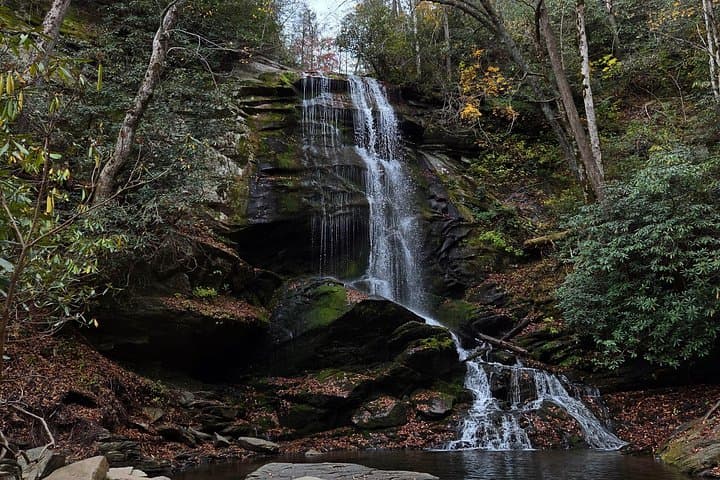
The river starts as a whisper here — thin and bright, threading through rhododendron corridors and under a canopy that smells faintly of wet stone. Within the first half mile the Catawba dares you to keep pace, quickening as the valley tightens, tumbling into pools and—if you time it right—catching sunlight in a spray that throws rainbows across the trail. The Catawba Waterfall Hike Half Day Tour packages that rising momentum into a four-and-a-half-hour morning: a small-group hike from downtown Asheville, transport, snacks, and a guide who knows how to read the river, the stairs, and the late-season light.
This is a hike that rewards patience rather than speed. The trail is well-graded for much of the route, a steady 3.5 miles round-trip that climbs from the lower cascade to the viewpoint and then on to the Upper Catawba Falls — the latter only open to the public in 2024 after long closures and access changes. An observation tower (580 stairs in total) crowns the ascent with an east-facing sweep of the Blue Ridge, and from its rails the river’s origin looks like an ink line across ridgelines. The geology here tells a simple story: ancient metamorphic rock wrestled into sharp folds, then carved by water through millennia. The falls are the punctuation in that story — erosive, insistent, and oddly social: hikers, birds, and moss sharing ledges.
Culturally, the Catawba sits within layers of Appalachian history. Early European settlers used these valleys for mills and for passage; Indigenous peoples moved through and stewarded these waterways for generations. Today, the area is threaded with recreational access and community stewardship efforts that allowed the Upper Falls to reopen. The guide on this tour serves as both interpreter and trail manager — pointing out sensitive riparian areas, routing the group away from fragile spots, and explaining what’s changed since access expanded to include the upper cascade.
Why go now? The route is compact enough to work as a half-day commitment out of Asheville but varied enough to give a full day’s sensory payoff: moss-soft forest, the tight choreography of a river negotiating bedrock, and a vantage that opens the Blue Ridge like a folded map. The hike isn’t technical — no ropework or scrambling required — but there are stair sections and wet rock near the falls that demand steady footing and attention to pace.
Practicalities matter, and this tour gets them right. Groups are capped at six, reducing crowd pressure on fragile riverbanks. You meet in downtown Asheville at 8:30 a.m., where snacks and transport are included; the guide provides a short orientation and route briefing before you hit the trail. Expect a total outing time around 4.5 hours; the walking portion is roughly 3.5 miles round-trip at a moderate effort. The guide can supply trekking poles and daypacks on request — useful if you’re traveling light or want balanced footing on the slick sections near the cascades.
Timing, footwear, and water are the simple variables that shape enjoyment here. Early starts mean softer light and clearer parking; avoid midday if you’re chasing solitude. Trail shoes or light boots with good grip are essential: the access to Upper Catawba involves river-splashed rock and stair climbs, so confidence on wet surfaces makes the day more pleasurable. Hydration is straightforward but real: bring at least 1–2 liters of water, more if the forecast is warm. Dress in layers; mountain weather can change quickly, and a wind or rain jacket will turn an uncomfortable retreat into a relaxed break on a ledge.
On the conservation side, the guides emphasize Leave No Trace: stay on durable surfaces, keep away from shoreline vegetation, and pack out any trash. The newly opened upper corridor benefits from low-impact travel — the more respectful hikers are, the more likely access remains open.
For the photographer: wide-angle shots from the observation tower frame the river’s serpentine path and the Blue Ridge beyond; on-trail detail work — droplets on rhododendron leaves, moss textures, and the fractured layers of schist — rewards a macro lens or close framing. Midday sun can blow out waterfall highlights, so plan for early or late morning light.
Who this tour suits: hikers who want a compact, scenic mountain experience without technical climbing; travelers staying in Asheville who want transport and local recon; families with older kids comfortable on stairs and wet rock. The tour is accessible year-round, with each season flipping the page on the same route: spring runoff pushes the falls into thunder, summer dives offer cooling shade, fall paints the ridgelines, and winter dresses the cascades in ice and hush.
In short, the Catawba Waterfall Hike Half Day Tour is a precise antidote to overlong itineraries: concentrated, scenic, and guided by people who care about the river. It’s a morning spent letting water work its old magic while you move through the landscape that makes western North Carolina feel like a place that keeps some of its best secrets just out of sight until you earn them.
Trail wisdom
Small choices, better day.
Start Early
Meet at 8:30 a.m. in downtown Asheville to beat crowds and get the best light for photos; mornings are cooler and the river is more photogenic.
Grip the Rock
Wear shoes with good traction — the trail near the falls can be slippery even on warm days.
Pack a Lightweight Rain Jacket
Mountain weather changes quickly; a compact shell keeps you comfortable without adding much weight.
Respect Newly Opened Areas
Stick to the guided route near Upper Catawba Falls to protect fragile riverbanks and ensure continued public access.
Local knowledge
Read the place, not just the route.
Watch for native species including White-tailed deer, Red-eyed vireo and other forest songbirds.
Keep an eye out for wildlife during the transition between areas and habitats. Respect distance guidelines.
The Upper Falls corridor was reopened with updates to minimize erosion and protect riparian habitat—stick to durable surfaces and follow guide instructions to help preserve access.
Follow the guide's instructions on size limits, ethical handling, and leave-no-trace practices.
A mossy side pool about halfway to the Upper Falls that often holds still-water reflections. Observation tower at the viewpoint—less crowded spot with sweeping east-facing views of the Blue Ridge
Locally recommended viewpoints and quiet spots known best to local operators.
The Catawba River’s headwaters and surrounding valleys have long been used as travel and resource corridors; changes to access and stewardship have shaped recent reopenings to Upper Catawba Falls.
Maritime roots and regional tradition shape the waterways and working coasts.
Seasonal guide
Four versions of the same landscape.
Spring
Best forHigh waterfall flows · Wildflower blooms · Cool hiking temperatures
ChallengesMuddy trails · Higher creek crossings
Spring brings the biggest water volume and fresh green growth; expect saturated trails and vivid cascades.
Summer
Best forDense forest shade · Warmer swimming-friendly pools downstream · Early-morning solitude
ChallengesHeat and humidity · Afternoon storms
Summer offers shaded, lush forest and steady insect season—go early to avoid heat and lightning risk.
Fall
Best forPeak foliage · Crisp air and long vistas · Photographic light
ChallengesHigher trail use on weekends · Cooler mornings
Fall paints the ridgelines; cooler temps make stair climbs feel easier, but expect more hikers on peak days.
Winter
Best forIcicle formations at the falls · Quiet trails · Crisp mountain light
ChallengesIcy patches · Shorter daylight hours
Winter can be spectacular with icy cascades and long views, but bring traction and plan for limited daylight.
Pack with intention
What to bring.
Good to know
Common questions.
The route is about 3.5 miles round-trip and rated moderate due to stair climbs and some wet, uneven terrain near the falls.
Plan the edges
The details that make the day easier.
Upper Catawba Falls was closed to general public access for years and reopened in 2024 under updated trail management; the falls sit at the headwaters of the Catawba River, which flows across the Piedmont to South Carolina.
After the hike, return to downtown Asheville for wood-fired pizza or Southern-inspired farm-to-table fare; explore the South Slope brewery district for a post-hike beer and chat with locals about their favorite backcountry spots.
- Closest airport
- Asheville Regional Airport (AVL); Driving distance from downtown Asheville: ~25–40 minutes to trailhead depending on traffic; Cell service: intermittent on the trail; Permits: none required for guided hikes but check for any temporary closures
This river corridor has sensitive riparian habitats and recently managed access—pack out all trash, avoid stepping on shoreline vegetation, and keep group sizes small to limit erosion.
Explore by topic
Follow the threads.
Keep exploring
Make the story part of the trip.
 Related story
Less than two hours from Nairobi, Kereita Forest pairs hands-on canopy adventure with quiet montane trails and a sobering colonial history—perfect for families, teams, and curious travelers seeking a full-day pulse of nature.
Set out from Bass Harbor for a private, customizable day on Blue Hill Bay — lighthouses, puffins, seals, and the chance to feel Acadia from the water. Small groups, local captains, unforgettable views.
In four hours you can move from shaded canyon ferns to wind-scoured coastal ridgelines, guided by someone who knows where the light—and the hidden views—live. This private half-day hike on the Monterey Peninsula or Big Sur is compact, curated, and perfect for travelers who want depth without a multiday commitment.