
What the day feels like
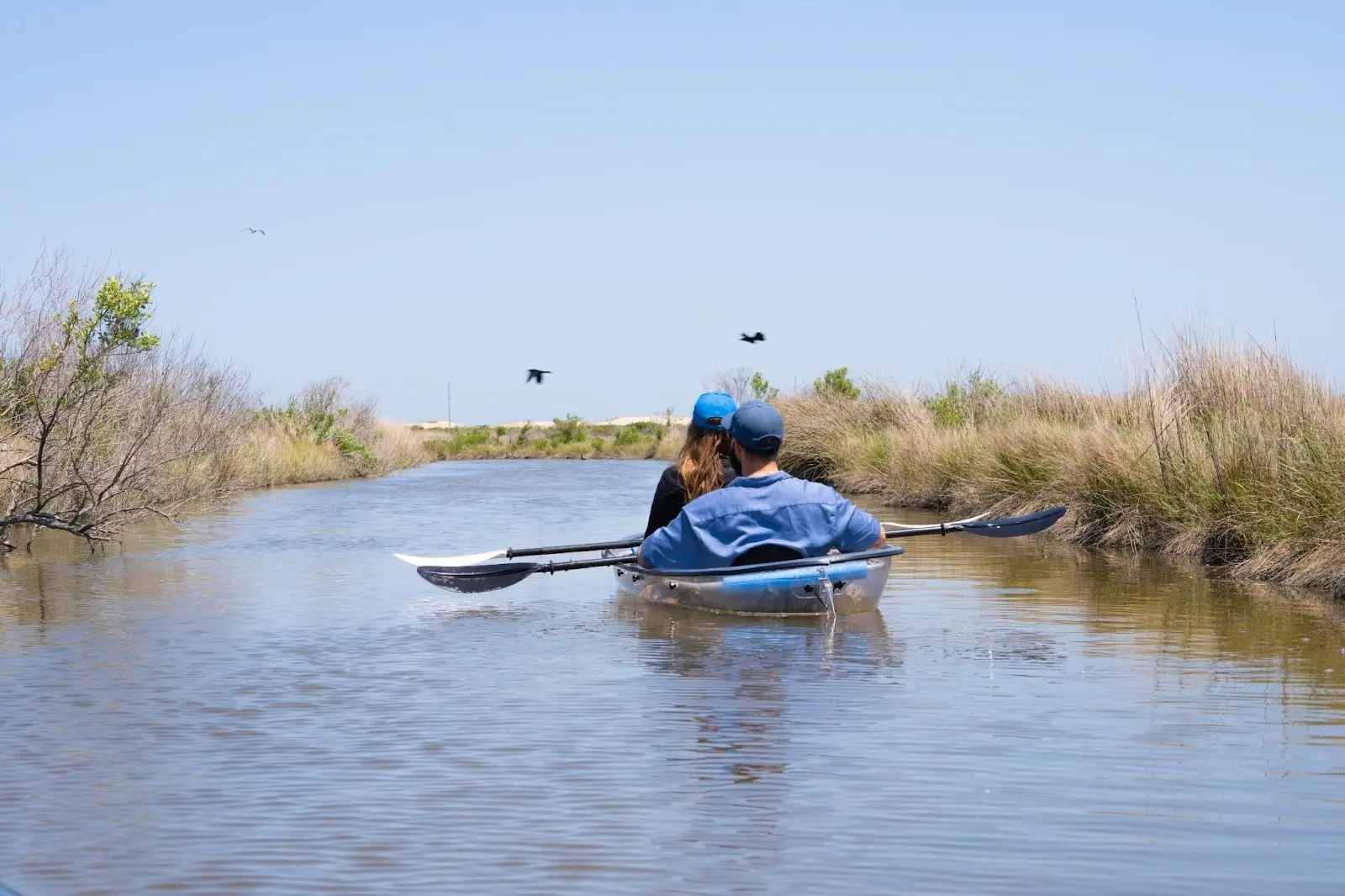
The Roanoke Sound moves like a slow-breathing animal at first light—exhale, inhale, a hush draped in salt and birdsong. Marsh grass whispers against a mild breeze. A great blue heron watches your bow slide by, its neck cocked in that judgmental way herons have, as if to say: keep it quiet, keep it steady. Then the lighthouse steps in—the bold, banded tower of Bodie Island, black-and-white stripes cleaving the sky—steady as a metronome while your clear kayak drifts over eelgrass and a scattering of shells. The water under you turns into a window. A stingray flickers like a skipping stone beneath the hull and disappears, the sound teasing you forward.
This is the draw of a private clear kayak outing at Bodie Island: intimacy. There’s no scramble to match someone else’s pace, no splitting attention with a large group. A guide sets the route and the rhythm, then the sound itself dictates everything else. On a 1.5–2-hour paddle, you trace the quiet edges between marsh and open water, taking in lighthouse views that feel somehow bigger at water level—because here, the landscape doesn’t just surround you; it participates. The breeze nudges your shoulders, the current taps your stern, and birds carve their intents across the air.
The Outer Banks have been read and reread by mariners for centuries, a shifting script of shoals and storms. Bodie Island (pronounced like “body,” a nod to the Boddie family rather than the shipwreck lore) stands near the heart of this maritime story. The current lighthouse—completed in 1872—rises 156 feet, its first-order Fresnel lens historically projecting a warning across what’s long been called the "Graveyard of the Atlantic." Two earlier versions fell to structural issues and war; this one endures, a sentinel over a barrier-island world still writing its chapters with every tide. Here, estuarine waters blend the Atlantic’s salt with the mainland’s fresh, creating a habitat rich in life: ospreys and pelicans, cormorants and egrets, diamondback terrapins and the occasional Atlantic stingray cruising the shallows.
You push off near the boardwalk beneath the lighthouse, the guide laying out the plan: stay tight to the marsh when the wind pipes up, pause often to listen and look, use the tandem rhythm—left-right, left-right—so the boat runs quiet. If you’re new to paddling, it’s forgiving water: broad, shallow margins and frequent lulls. If you’ve got miles in your shoulders, the reward is clarity—you’re not just gliding through scenery but over it, watching the floor of the sound unfurl beneath your feet. The crystal hull turns every meter into a live exhibit: swaying grass, ghost-crab tracks, the glint of a mussel bed. It’s less spectacle, more conversation.
There’s history here, but there’s also work—the practical, daily life of these islands. Off in the distance, commercial boats trace their routines; closer to shore, the remains of old lifesaving stations speak to an era when wrecks were frequent and winter gales wrote the rules. The Bodie Island Light is part of the Cape Hatteras National Seashore, a landscape managed to preserve both heritage and habitat. You feel that balance on the water: access without abrasion, adventure without bravado.
Because this is a private tour, the experience bends toward you. Want a slower pace and more wildlife stops? The sound obliges. Prefer to aim for the best angle on the lighthouse and practice turning strokes? The water becomes your classroom. The guide shares local lore and names—how the tides move through Oregon Inlet, which birds prefer which perches, why eelgrass beds matter—and keeps a quiet eye on wind, chop, and group comfort. You’ll learn that mornings here are typically calmer, that wind direction can turn an easy outing into a shoulder workout, and that a slim windbreaker can be the difference between chill and comfort when a breeze snakes over open water.
In summer, the sound warms and the sky goes cinematic at sunset—pink bloom to purple fade—though you’ll want to keep an eye on afternoon storms that build fast and loud. Spring and fall can be prime for birdlife; the Atlantic Flyway funnels migratory species into the marsh, and those glassy shoulder-season mornings often deliver mirror-like water. Winter strips the landscape down to its elements: crisp air, wide horizons, fewer boats, and a kind of coastal solitude rarely found anywhere else.
The practicalities are refreshingly simple. Tours run about 1.5–2 hours. Kayaks are doubles, with a combined weight limit of 425 pounds and a per-person limit of 250 pounds. A guide, PFDs, and a dry bag are provided; you bring a water bottle, sun protection, and curiosity. Alcohol is prohibited. Reservations are required, and groups are capped at ten paddlers so the Sound’s quiet gets to be part of the experience instead of its casualty.
If you’re building a trip around this outing, base yourself in nearby Nags Head—an easy launch point for a morning paddle and a beach afternoon. Plan to arrive 20 minutes early to park, gear up, and get a quick paddle refresher dockside. Then let the water set the tone. The Sound will dare you to slow down. The lighthouse will stand its post. And your clear kayak will keep telling the story under your feet, a ribbon of light on the bottom sweeping you along.
Ready to design your own pace beneath this historic beacon? Explore the details and reserve your spot here: <a href="https://app.advcollective.com/local-experts/explore-bodie-island-lighthouse-by-private-clear-kayak-outer-banks-water-adventure">Bodie Island Lighthouse private clear kayak tour</a>. For more on the route, conditions, and what to expect on the water, dive into our <a href="https://app.advcollective.com/local-experts/explore-bodie-island-lighthouse-by-private-clear-kayak-outer-banks-water-adventure">Outer Banks water adventure guide</a>. If you’re timing it for golden hour—and you should—this <a href="https://app.advcollective.com/local-experts/explore-bodie-island-lighthouse-by-private-clear-kayak-outer-banks-water-adventure">private clear kayak experience</a> delivers the kind of light that makes even the marsh feel cinematic.
The Sound will keep breathing. You’ll match it stroke for stroke.
Trail wisdom
Small choices, better day.
Chase morning calm
Outer Banks winds often build by midday—book an early tour for flatter water and easier paddling.
Team up your strokes
These are tandem kayaks—communicate, match cadence, and keep your blades light to minimize splash and maximize glide.
Protect your feet
Wear closed-toe water shoes; the Sound’s edges hide shells and oyster fragments that can cut bare feet.
Respect the roosts
Give birds space, especially during nesting and feeding; if a bird flies because of you, you’re too close.
Local knowledge
Read the place, not just the route.
Watch for native species including Osprey, Atlantic stingray.
Keep an eye out for wildlife during the transition between areas and habitats. Respect distance guidelines.
This estuary is part of Cape Hatteras National Seashore—stay off fragile marsh edges, avoid disturbing roosting birds, and pack out all trash to protect seagrass and nursery habitats.
Follow the guide's instructions on size limits, ethical handling, and leave-no-trace practices.
Coquina Beach, just across NC-12 from the lighthouse—broad sand and fewer crowds. Pea Island National Wildlife Refuge’s North Pond Trail for a post-paddle birding walk
Locally recommended viewpoints and quiet spots known best to local operators.
The current Bodie Island Lighthouse was completed in 1872, replacing two earlier towers, and historically used a first-order Fresnel lens to guide ships through the treacherous Outer Banks shoals.
Maritime roots and regional tradition shape the waterways and working coasts.
Seasonal guide
Four versions of the same landscape.
Spring
Best forMigratory bird action · Glassier morning water · Mild temps
ChallengesVariable winds · Cooler water temps
Expect lively birdlife and comfortable air; bring a light wind shell and quick-dry layers for passing breezes.
Summer
Best forSunset color shows · Warm water · Family outings
ChallengesHeat and UV exposure · Pop-up thunderstorms · Biting flies on still days
Start early or go late for cooler air; hydrate, wear sun protection, and keep an eye on storm forecasts.
Fall
Best forPeak migration sightings · Calm, clear mornings · Lower crowds
ChallengesRemnant nor’easters · Shorter daylight
Shoulder-season paddles can be sublime—pack an extra layer and check wind direction before you launch.
Winter
Best forSolitude · Crystal air clarity
ChallengesCold water/air · Limited tour availability during extreme weather
Dress in warm, windproof layers and choose calm-day windows; the payoff is quiet water and expansive views.
Pack with intention
What to bring.
Good to know
Common questions.
No. The tour is beginner-friendly, with a guide offering basic instruction; tandem kayaks make it easy to balance and keep pace.
Plan the edges
The details that make the day easier.
The Bodie Island Lighthouse, completed in 1872, stands 156 feet tall and historically used a first-order Fresnel lens; the name traces to the Boddie family, not to shipwrecked 'bodies.'
Post-paddle, fuel up at Sam & Omie’s near Whalebone Junction for a classic Outer Banks meal, or try Blue Moon Beach Grill in Nags Head for fresh local seafood. Beer lovers can head to Outer Banks Brewing Station in Kill Devil Hills—wind-powered and reliably lively.
- Closest airport
- Norfolk International (ORF), ~2 hours by car. Launch area: Bodie Island Lighthouse, 8210 Bodie Island Lighthouse Rd. ~15 minutes from central Nags Head. Cell service: Generally fair but can be spotty near the marsh. Permits: None required for guided tours; reservations are mandatory.
You’re paddling sensitive estuarine habitat—avoid grounding in seagrass, keep paddles shallow near oyster beds, and maintain a respectful buffer from wildlife. Refill a reusable bottle and leave only ripples.
Explore by topic
Follow the threads.
Keep exploring
Make the story part of the trip.
 Related story
Aksla is the small mountain that makes Ålesund legible: 418 steps, sweeping panoramas, and a short tour that threads architecture and coastline into 90 minutes of memorable sightlines. Perfect for anyone who wants a quick, high-reward encounter with Norway’s west coast.
 Related story
The New York Public Library’s Main Branch is more than a photo stop—it's a civic living room, an architectural landmark, and a waypoint for walking tours that stitch together Midtown’s history, films, and holiday rituals. Here's how to make the most of a visit.
 Related story
Five miles of riverfront walking that reveal NYC’s quieter rhythms—Riverside Park pairs easy urban hiking with history, birdlife and a front-row view of the city’s climate resiliency efforts. Walk a stretch or follow the Greenway; either way, the Hudson makes its presence felt.