
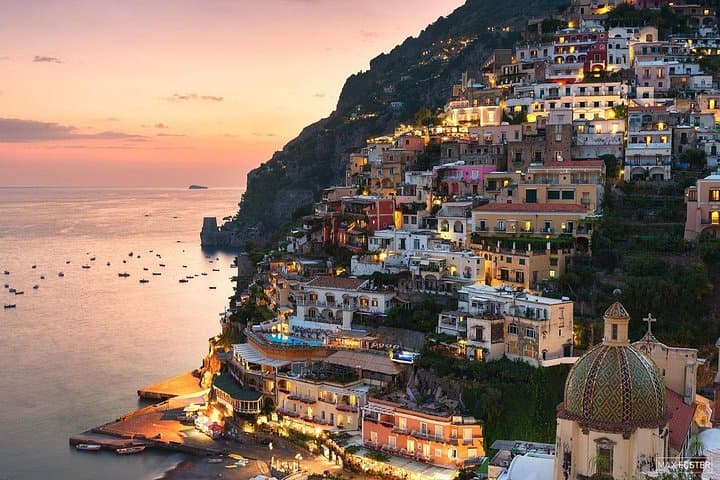
What the day feels like
The sun arrives like an invitation—slow, warm, lighting the washed-pastel houses of Positano from behind, making the sea a sheet of hammered metal. You ease into the passenger seat of a small van, camera bag at your feet, and the driver—part guide, part local raconteur—pulls onto the SS163, the Amalfi Drive. The road clings to cliffs here, hairpin after hairpin, and every turn opens to a new composition: a terrace of lemon trees, a domed church framed by bougainvillea, the sea dropping away in impossible hues of blue. This is a day shaped by light and landscape, designed for people who come home with images as tangible memories.
The Amalfi Coast is a study in contrasts: vertical gardens of lemon groves and vineyards stitched into limestone ledges, medieval towns whose footprints date back to the maritime republics, and a coastline that has long threaded Mediterranean trade and culture. Amalfi was a merchant power in the Middle Ages; its naval architecture and the ancient laws of the sea once rivaled Venice. Today, the coastline’s cultural currency is different but just as rich—craft ceramics in Vietri sul Mare, delicate limoncello made from sfusato amalfitano lemons, and recipes built on the catch of the day.
Geologically, the coast is the product of tectonic uplift and coastal erosion. The cliffs are steep because millions of years of Mediterranean forces carved valleys that human hands then terraced for agriculture. Those terraces—both functional and photogenic—are a signature of the region and a reminder that this landscape is worked as much as it is admired.
On this private photo tour, the day is curated for both aesthetics and access. Expect a full 8–10 hour sweep of Positano’s vertical streets, Amalfi’s cathedral terrace, and quieter viewpoints that most travelers never see. Your guide times stops for soft morning light, mid-day color in cliffside lemon groves, and late-afternoon golden hour that turns the sea molten. There’s model-lighting instruction for portraits against pastel facades, framing tips for dramatic wide angles, and long-lens options for distant villages clinging to the shoreline.
Practicality sits comfortably alongside atmosphere. The roads are narrow and often busy in high season; the tour’s private format means less time in queues and more time composing images. You won’t be climbing alpine ridges—most walking is short and cobbled—but expect uneven surfaces and a handful of steep staircases in places like Positano. Water, sun protection, comfortable shoes, and a charged camera battery will keep the rhythm of the day smooth.
Compositionally, the Amalfi Coast rewards three approaches: layered landscapes (foreground vegetation, midtown terraces, background sea), intimate details (hand-painted tiles, lemon groves, fishing nets), and small-scenes-that-tell-a-larger-story (a woman carrying a basket of lemons, fishermen hauling a net at dawn). The best photographs often come from the edges—the small alleys that supply glimpses rather than panoramas.
There’s an etiquette to shooting here. Settled communities live where you take pictures: respect private property, ask before photographing people up close, and follow your guide’s lead about access. The coastline’s fragile terraces and narrow roads are easier to protect when visitors act like temporary neighbors rather than tourists with a checklist.
For travelers who want a deeper experience, a photography tour unlocks not only better images but stories. Your guide will explain Amalfi’s maritime past, point out churches whose mosaics and domes are centuries old, and introduce you to lesser-known stops like a tucked-away lemon grove where the scent of citrus is almost medicinal. For anyone with a camera and the desire to learn, it’s a day that turns a postcard coastline into a personal narrative.
How to make the most of it: arrive rested, with a short list of shots you want to practice (portraits, wide-angle landscapes, detail textures). Use the morning for softer light and the afternoon for golden hour landscapes. If you’re shooting on a smartphone, bring a small tripod; if you’re in a mirrorless or DSLR setup, two lenses (a fast prime and a wide zoom) keep you nimble. And leave space in your schedule for lunch at a seaside trattoria—fresh seafood, a squeeze of lemon, and a glass of local white bring the day into full focus.
By evening, when you step out onto a terrace and watch the village lights blink on, the coastline reads differently: less an image to capture than a place that has revealed itself on its own terms. A good photo tour doesn’t just improve your camera work; it deepens your sense of place. On the Amalfi Coast, that sense is defined by stone, sea, citrus, and light —and by the small human gestures that make travel feel like discovery rather than consumption.
Trail wisdom
Small choices, better day.
Time your light
Plan the tour to include golden hour—early morning or late afternoon offers the soft, directional light that flatters both villages and seascapes.
Comfortable shoes for cobbles
Wear supportive, grippy shoes for stairways and cobbled streets; walking is short but surfaces are uneven.
Hydration and shade
Bring a refillable water bottle and a lightweight hat; coastal sun and walking between viewpoints add up quickly.
Respect private spaces
Always ask before photographing people close-up and avoid walking into private terraces for a shot.
Local knowledge
Read the place, not just the route.
Watch for native species including Bottlenose dolphins off the coast, Peregrine falcons nesting on cliffs.
Keep an eye out for wildlife during the transition between areas and habitats. Respect distance guidelines.
Heavy tourism strains terraces and local infrastructure—stay on paths, avoid picking plants, and support local businesses to benefit the community.
Follow the guide's instructions on size limits, ethical handling, and leave-no-trace practices.
Fiordo di Furore—an unexpected inlet with a dramatic bridge and quiet beach. A tucked-away lemon grove above Amalfi where you can photograph terraced lemon trees up close
Locally recommended viewpoints and quiet spots known best to local operators.
Amalfi was a powerful medieval maritime republic with distinct legal and trade traditions; the coast’s villages grew in response to sea-based commerce and terraced agriculture.
Maritime roots and regional tradition shape the waterways and working coasts.
Seasonal guide
Four versions of the same landscape.
Spring
Best forWildflower-framed shots · Mild temperatures · Quieter roads
ChallengesUnpredictable rain · Some hilltop terraces still damp
Spring (April–June) offers mild weather, blooming terraces, and fewer crowds—ideal for landscape and detail photography.
Summer
Best forVivid color saturation · Extended daylight · Lively village scenes
ChallengesCrowds and traffic · Strong midday sun and heat
Summer packs energy and bold colors but expect crowds and hard light—shoot early or late for the best results.
Fall
Best forGolden-hour warmth · Harvest scenes in lemon groves · Moderate crowds
ChallengesShortening days · Occasional storms
Autumn delivers warm tones and calmer afternoons—an excellent balance of light and accessibility.
Winter
Best forQuiet streets and moody skies · Lower prices · Soft diffuse light
ChallengesCooler, variable weather · Some businesses closed
Winter is quiet and atmospheric; the sea is changed by weather, offering dramatic skies but fewer open eateries.
Operator details
What the booking data adds.
Included
- ✓Private transportation
Good to know
- ✓Infants and small children can ride in a pram or stroller
- ✓Public transportation options are available nearby
- ✓Infants are required to sit on an adult’s lap
- ✓Not recommended for travelers with spinal injuries
- ✓Suitable for all physical fitness levels
Pack with intention
What to bring.
Good to know
Common questions.
The tour runs approximately 8–10 hours (480–600 minutes), covering Positano, Amalfi, and several scenic viewpoints.
Plan the edges
The details that make the day easier.
The Amalfi Coast was inscribed as a UNESCO World Heritage Site in 1997 for its cultural landscape of outstanding scenic and historical value.
After a day shooting, head to a seaside trattoria in Positano for fresh seafood and a 'delizia al limone'; try local limoncello and browse Vietri sul Mare ceramics for a tactile souvenir.
- Closest airport
- Naples (NAP) ~65 km; Typical drive from Naples: 1.25–1.75 hours depending on traffic; Cell service: generally available but patchy in some cliffside pockets; Permits: none required for tourist photography; Meeting point: central Positano or as specified by operator.
The Amalfi Coast’s terraces and villages are sensitive to erosion and visitor pressure—avoid trampling gardens, pack out all trash, and support small, local businesses to keep tourism benefits in the community.
Explore by topic
Follow the threads.
Keep exploring
Make the story part of the trip.
 Related story
Less than two hours from Nairobi, Kereita Forest pairs hands-on canopy adventure with quiet montane trails and a sobering colonial history—perfect for families, teams, and curious travelers seeking a full-day pulse of nature.
Set out from Bass Harbor for a private, customizable day on Blue Hill Bay — lighthouses, puffins, seals, and the chance to feel Acadia from the water. Small groups, local captains, unforgettable views.
In four hours you can move from shaded canyon ferns to wind-scoured coastal ridgelines, guided by someone who knows where the light—and the hidden views—live. This private half-day hike on the Monterey Peninsula or Big Sur is compact, curated, and perfect for travelers who want depth without a multiday commitment.