
What the day feels like
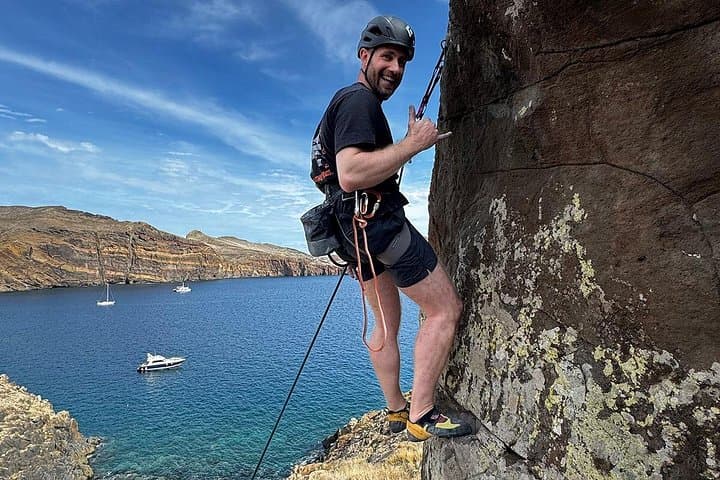
The wind gets there first. It moves across the Atlantic with purpose, shouldering past the cliffs of Ponta de São Lourenço and combing the dry grasses into neat, silvered rows. The sea answers with a steady bass line—waves driving into basalt ledges, setting the tempo for your first climb on Madeira’s far eastern tip. Chalk dust lifts, carabiners click, and a line of bolt heads glints along the route. The cliff face is a dark script of volcanic stone, asking simple questions with honest answers: where will you put your feet; how well will you trust the rock; how much of this place will you let in?
This is outdoor climbing with the ocean as your belay chorus. Ponta de São Lourenço is the island stripped to its geology—no forests here, just a ribbon of tawny headland and outlying islets, all carved from ancient lava flows. The routes are clean and well-bolted, ideal for beginners and improving climbers who want their first taste of real rock without the chaos. Over four focused hours, an instructor breaks down movement and safety with a calm, practical cadence: tie-in checks, body positioning, breathing with the wind instead of fighting it. The peninsula listens and pushes back, teaching balance one gust at a time.
Madeira’s story is written in basalt. The island rose from the seafloor on a mantle hotspot, layered by eruptions and shaved by persistent Atlantic weather. Here on the east end, the cliffs reveal the bones—columnar joints, tuff bands, and iron-rich seams weathered into crimps and edges. When you lean into the wall, your fingers find the island’s geologic punctuation. The sea makes sure you notice each sentence.
The human footprint at Ponta de São Lourenço is lighter than in the laurel forests of the interior. Caniçal, the nearest village, was once the island’s whaling hub; today it carries that history in a museum and moves forward with conservation at its core. Out on the peninsula, the protected reserve status keeps the landscape spare and open. Kestrels ride the thermals like bored aerobats. On stiller days you might catch a flash of dolphins offshore, cutting bright arcs beyond the sea stacks. Most days, though, the trade winds write the agenda—and that’s part of what makes climbing here unique in Europe. Few places deliver genuine oceanfront routes, year-round mild temperatures, and wild, wind-sculpted exposure in a package this accessible.
A climbing class at Ponta de São Lourenço tends to run a friendly, methodical course. You meet at the trailhead by Baía d’Abra, shoulder packs, and walk in on a compact path—10 to 20 minutes of gentle undulation with the ocean tugging your gaze east. At the crag, a quick orientation: helmets on, knots checked twice, belay commands practiced until they’re unthinking. Your instructor sets a line on a grade suitable for true beginners—think low-to-mid 4s and 5s on the French scale—with progression options nearby. Expect emphasis on footwork over brute strength, silent hips over flailing arms. The routes are honest; the rock is grippy when dry; the moves reward calm decisions. The wind? It prods you into better body position, then lets the view reward your focus.
Between attempts, there’s time to breathe in the details. The cliff smells faintly metallic and sun-baked. The sea presses forward, then exhales; it keeps your rests honest. Far across the blue, the Desertas Islands crouch on the horizon. Climbing distills the scene—you measure the day by anchors and handholds, not hours and emails. The island approves.
Practically speaking, this is a beginner-friendly experience with a professional edge. The instruction covers essential systems: tying in, safe belaying, route reading, and efficient movement. The approach is short, but the terrain is rocky; sturdy shoes matter. Exposure to sun and wind is near-constant, so a light windproof layer and reliable sunscreen are as important as your chalk bag. Hydration is non-negotiable, especially on warm days when the headland bakes.
Timing your session pays off. Spring and fall strike the best balance between mild temps and manageable winds, with wildflowers dotting the slopes in spring and glassier seas in autumn. Winter is surprisingly good, too—Madeira sits well south of mainland Europe, catching steady sun while the continent shivers. Summer brings heat and stronger trades; go early or later in the day, and embrace the breeze as your built-in cooling system.
Getting here is simple. From Funchal, it’s a 35–40 minute drive to Baía d’Abra, the usual starting point. Caniçal, the nearest town, is even closer—about 10 minutes away and a good base for post-climb food. Parking is limited on busy days, and cell coverage can flicker in the gullies; download maps ahead of time. No permits are needed to climb with a guide, but this is a protected reserve: stick to established paths and listen for any seabird nesting advisories.
Why choose this adventure? Because it distills what’s special about Madeira into a single, memorable session. You get an island born of fire, cooled by wind, edged in bright water—and you learn to move with it. It’s technical enough to be proud of, friendly enough to welcome first-timers, and singular in its setting. The ocean challenges you without malice. The rock is patient and clear. The place itself does the rest.
Trail wisdom
Small choices, better day.
Work with the wind
Keep hips close to the wall and weight on your feet—use gusts as a cue to pause, breathe, and move deliberately.
Hydrate before the crux
There’s no shade at the crag; drink 500 ml before you start and carry at least 1.5 L for a 4-hour session.
Sun-smart systems
Apply reef-safe SPF 30+ at the car and reapply every two hours; a cap and light buff help on belay.
Footwear matters
Approach is rocky—wear grippy approach shoes or sturdy trail runners for the walk-in and transitions.
Local knowledge
Read the place, not just the route.
Watch for native species including Cory’s shearwaters, Madeiran wall lizard.
Keep an eye out for wildlife during the transition between areas and habitats. Respect distance guidelines.
Ponta de São Lourenço is a protected reserve; stay on marked paths, keep noise low near nesting birds, and pack out all waste.
Follow the guide's instructions on size limits, ethical handling, and leave-no-trace practices.
Miradouro da Ponta do Rosto for sweeping sunrise views. Prainha de Caniçal, a small black-sand beach sheltered from surf
Locally recommended viewpoints and quiet spots known best to local operators.
Caniçal’s past as a whaling port now lives on in conservation-focused exhibits at the Madeira Whale Museum.
Maritime roots and regional tradition shape the waterways and working coasts.
Seasonal guide
Four versions of the same landscape.
Spring
Best forMild temperatures · Wildflowers and clear light
ChallengesIntermittent trade winds · Unpredictable showers
The island is green, the light is crisp, and winds are manageable—arguably the best overall climbing conditions.
Summer
Best forDry rock · Long daylight hours
ChallengesStronger winds · High UV and heat exposure
Start early or late to avoid heat; wind offers natural cooling but demands steady footwork on exposed moves.
Fall
Best forStable weather · Calmer seas
ChallengesOccasional humidity · Sudden squalls
Comfortable temperatures and soft light return; keep a wind layer handy for cliff-top belays.
Winter
Best forMild European winter sun · Quieter crags
ChallengesShorter days · Slick holds after rain
Showers pass quickly; give basalt time to dry and choose sunny aspects for best grip.
Pack with intention
What to bring.
Good to know
Common questions.
Yes. The class is designed for beginners, with well-bolted routes and step-by-step instruction in safety and movement.
Plan the edges
The details that make the day easier.
Ponta de São Lourenço is the easternmost point of Madeira and part of the Madeira Natural Park as a Partial Nature Reserve, protecting its unique volcanic landscapes and seabird habitats.
Refuel in Caniçal with grilled lapas (limpets) and bolo do caco at a seaside tasca, then try a classic poncha or a local Coral beer. If you have time, the Madeira Whale Museum offers a thoughtful lens on the region’s maritime past and modern conservation.
- Closest airport
- FNC (Cristiano Ronaldo Madeira International). Trailhead: Baía d’Abra car park. Drive: ~40 minutes from Funchal, ~10 minutes from Caniçal. Cell service: patchy near cliffs. Permits: none for guided climbing; drones restricted in the reserve.
This headland is a protected reserve—stick to established paths, minimize chalk use, brush holds gently, and give nesting seabirds wide berth.
Explore by topic
Follow the threads.
Keep exploring
Make the story part of the trip.
 Related story
Less than two hours from Nairobi, Kereita Forest pairs hands-on canopy adventure with quiet montane trails and a sobering colonial history—perfect for families, teams, and curious travelers seeking a full-day pulse of nature.
Set out from Bass Harbor for a private, customizable day on Blue Hill Bay — lighthouses, puffins, seals, and the chance to feel Acadia from the water. Small groups, local captains, unforgettable views.
In four hours you can move from shaded canyon ferns to wind-scoured coastal ridgelines, guided by someone who knows where the light—and the hidden views—live. This private half-day hike on the Monterey Peninsula or Big Sur is compact, curated, and perfect for travelers who want depth without a multiday commitment.