
What the day feels like
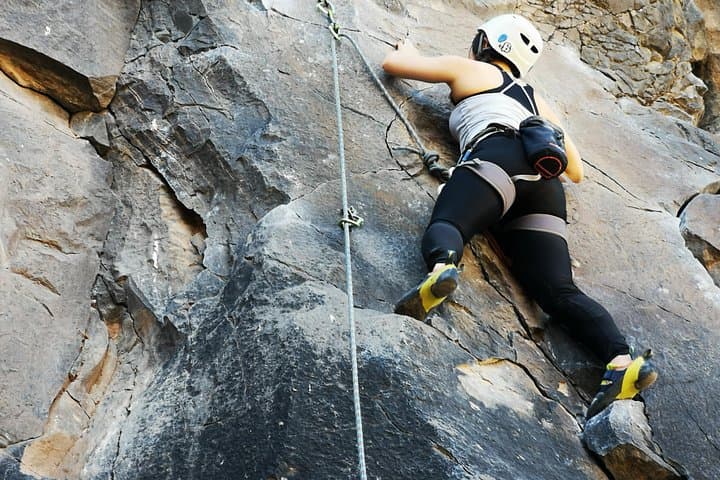
By the time you leave the scrubby lowland for the first cliff band, the Atlantic is already a bright sheet across the horizon—whitecaps flickering like a promise. The route starts modestly: a chipped face of basalt warmed by the southern sun, pockets and crimps that look small until your fingers remember they can hold you. For three hours in Adeje, Tenerife, rope systems hum, harness buckles click, and a small poodle named V inspects each climber’s shoes as if passing judgment. It’s an uncomplicated scene, but one that has a way of rearranging priorities. Climbing here is mostly about focus—feet on rock, breath steady, the sea and volcanic peaks keeping score.
This is not big-wall alpinism. The climbs described by the guides range from five to twenty meters, sport climbs bolted into volcanic rock that is both grippy and honest. That texture is Tenerife: a young island built of lava flows and uplift, a place where geology writes itself across the landscape. Teide, the volcano at the island’s center, dominates the skyline—the same eruptions that raised Teide shaped the cliffs you climb. The result is varied terrain: compact basalt faces near Adeje, short vertical pitches ideal for beginners, and more technical sequences where body tension and precise footwork pay off.
Adeje’s climbing culture is quietly practical. The guides running these outings are inviting and efficient: they teach you the sport-climbing basics—knot work, belay commands, clipping safely—and they do it against a backdrop of subtropical sun and Canary pines. That blend of thorough instruction and approachable terrain is why this trip is popular with travelers who want an adrenaline hit without committing to a full course. Women and children are routinely highlighted as quick learners here; Tenerife’s routes reward technique over brute strength, and many climbers discover a knack for using their feet that surprises them.
Historically, Tenerife has been a crossroads of seafaring and agriculture. The Guanche people were the island’s first inhabitants, and evidence of their presence can still be found in rock carvings and scattered ruins inland. Modern Adeje, now a sun-splashed tourism hub, holds these quieter traditions near its edges—small farms, local bakeries serving gofio, and fishermen mending nets near the beaches. That blend of volcanic history and contemporary hospitality gives the day an authentic texture: you climb on stone that remembers eruptions, then wash the chalk off in the Atlantic or cool down with a local herb tea.
Safety arrives in every sentence of the guides’ instructions. Helmets, harnesses, and top-rope systems are standard; the guides will assess each climber’s level and set routes accordingly. Expect instruction on efficient movement, how to rest on a hold, and the etiquette of communicating a climb with your belayer. If you arrive curious but untrained, know that learning basic belay skills and working a short lead under supervision is part of the experience. For more experienced climbers, the routes provide enough variation to test a crux or two without requiring rope-soloing expertise.
Practicalities matter in a trip like this. The outing runs about three hours from meeting to farewell and costs around USD 153. Groups are kept small, which is both a convenience and a safety feature. Bring layered clothing—sun in the morning can become a warm breeze by midday—and shoes that grip the rock; if you don’t own climbing shoes, operators usually have rental pairs. Hydration is essential; Tenerife’s south side runs dry, and the sun is honest. Sunscreen and a hat are nonnegotiable.
If you plan a visit, tie it to the rhythms of southern Tenerife. Morning climbs—starting before the heat of the day—offer the clearest light and firmest rock. Afterward, accept the local hospitality: head to Costa Adeje for fresh grilled fish and a cold beer, or find a village bar to sample local cheeses and a glass of Canary wine. The island’s supply of microclimates means you can finish a cliff session and drive into higher, cooler pine forests within forty minutes—more geological drama to explore.
For photographers and practical-minded travelers alike, this trip balances spectacle and accessibility. The climbs are short enough that you can try multiple routes in one session; the views are expansive enough to make the effort feel worthwhile. And while the sea seems to dare you from below, the guides keep the experience grounded in clear instruction and simple logistics. You come for the adrenaline, you stay for the movement, and you leave with a new vocabulary: heel hook, smear, dyno—and the memory of basalt warming beneath your palms.
This isn’t a pilgrimage to a single summit. It’s an invitation to touch the island’s geology, to test small margins of fear and skill, and to learn that climbing can be both playful and precise. If your travel list includes a day of purposeful physicality, with top-quality instruction and a landscape that does the talking, Adeje’s sport-climbing afternoons deliver exactly that. And don’t be surprised if a small poodle named V follows you back to the parking lot—on Tenerife, even the dogs seem to approve of a good vertical day.
Trail wisdom
Small choices, better day.
Start Early
Morning sessions offer firmer rock and cooler temperatures—plan to arrive 30 minutes before your scheduled start.
Bring Footwear or Rent
Climbing shoes make a big difference; check with the operator about rentals if you don’t own a pair.
Hydrate Strategically
Carry at least 1–2 liters of water per person for the 3-hour outing; the south coast is dry and exposed.
Trust the System
Listen carefully to belay instruction and double-check knots and harness buckles—guides will run through safety checks, but stay engaged.
Local knowledge
Read the place, not just the route.
Watch for native species including Canary Islands lizard (Gallotia galloti), Bottlenose dolphins visible offshore.
Keep an eye out for wildlife during the transition between areas and habitats. Respect distance guidelines.
Tenerife’s fragile island ecosystems need protection—stay on established paths, minimize chalk use on rock, and pack out all trash to preserve native flora and fauna.
Follow the guide's instructions on size limits, ethical handling, and leave-no-trace practices.
Roque del Conde viewpoint for sweeping island panoramas. Quiet coastal walk near Playa San Juan for seafood and sunset
Locally recommended viewpoints and quiet spots known best to local operators.
Tenerife’s landscape is volcanic—its central peak Mount Teide was formed by eruptions that also shaped coastal cliffs; the island was originally inhabited by the Guanche people.
Maritime roots and regional tradition shape the waterways and working coasts.
Seasonal guide
Four versions of the same landscape.
Spring
Best forComfortable temps · Beginner-friendly instruction · Blooming lowland vegetation
ChallengesVariable winds · Busy tourist shoulder season
Spring offers mild temperatures and steady climbing conditions—ideal for learners who want long daylight and manageable heat.
Summer
Best forLonger daylight · Consistently warm weather
ChallengesHigh sun exposure · Midday heat can be intense
Summer brings reliably warm days; plan for early starts and bring sun protection to avoid peak heat.
Fall
Best forStable weather · Post-summer cooling · Clear sea views
ChallengesOccasional Atlantic swells bringing wind · Tourist crowds can persist
Autumn is a sweet spot—sea still warm, temperatures cooling, and rock conditions usually steady for climbing.
Winter
Best forAvoiding crowds · Warm lowland microclimates
ChallengesCooler mornings · Occasional rain at higher elevations
Southern Tenerife winter is mild compared to mainland Europe; you can still climb comfortably but expect cool mornings and occasional weather shifts.
Operator details
What the booking data adds.
Included
- ✓elmets , arnes , rope ,carabiner ,guide , trasport
Not included
- —Bottled water
Good to know
- ✓Public transportation options are available nearby
- ✓Infants are required to sit on an adult’s lap
- ✓Not recommended for travelers with spinal injuries
- ✓Not recommended for pregnant travelers
- ✓Not recommended for travelers with poor cardiovascular health
- ✓Suitable for all physical fitness levels
Pack with intention
What to bring.
Good to know
Common questions.
No—this experience is designed for beginners and intermediate climbers; instructors teach essential techniques and will match routes to your level.
Plan the edges
The details that make the day easier.
Mount Teide on Tenerife is the highest peak in Spain at 3,718 meters; Teide National Park is a UNESCO World Heritage Site.
After a climb, head to Costa Adeje or nearby Playa de las Américas for grilled fish, local tapas, and Canary wine; small village bars around Adeje offer gofio-based dishes and a chance to meet locals.
- Closest airport
- Tenerife South (TFS) ~15–20 minutes drive; Meeting point: operator will provide exact meeting location in Adeje; Driving from Costa Adeje: under 30 minutes; Cell service: generally good in southern Tenerife; Permits: none required for sport climbing in most areas—confirm with operator.
Tenerife’s climbing sites sit in sensitive volcanic and coastal ecosystems—use minimal chalk, follow fixed routes, avoid vegetation damage, and carry out all waste.
Explore by topic
Follow the threads.
Keep exploring
Make the story part of the trip.
 Related story
Less than two hours from Nairobi, Kereita Forest pairs hands-on canopy adventure with quiet montane trails and a sobering colonial history—perfect for families, teams, and curious travelers seeking a full-day pulse of nature.
Set out from Bass Harbor for a private, customizable day on Blue Hill Bay — lighthouses, puffins, seals, and the chance to feel Acadia from the water. Small groups, local captains, unforgettable views.
In four hours you can move from shaded canyon ferns to wind-scoured coastal ridgelines, guided by someone who knows where the light—and the hidden views—live. This private half-day hike on the Monterey Peninsula or Big Sur is compact, curated, and perfect for travelers who want depth without a multiday commitment.