
What the day feels like
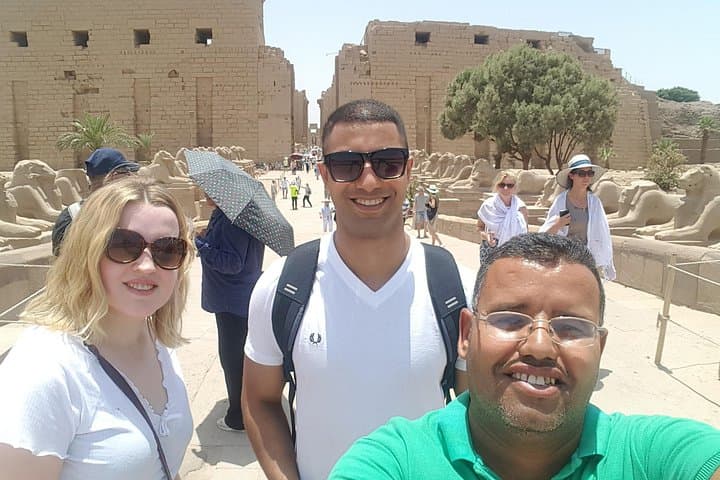
The sun sits low and burnished over the Nile, and for a few astonishing moments the sandstone columns of Karnak look as if they were carved from the same light. Your guide, a member of the Ra Tour Guide Team, steps into a gap in the hypostyle hall and the noise of modern Luxor — the horns, the markets, the motorbikes — drops away. All that remains is carved stone, grooves worn by millennia of feet, and the slow, patient presence of history. This is the East Bank: a tight cluster of temples, modern streets, riverside cafés and a living city that still wears the imprint of ancient Thebes.
A day on the East Bank is part history lesson, part sensory expedition. Start at Karnak, the temple complex that became Egypt’s greatest stage for pharaohs who wanted to be seen by gods and people alike. Columns rise like a man-made forest; each capital is a statement of power and astronomy. Walk the avenue of sphinxes toward Luxor Temple and the world narrows to reliefs and carved inscriptions that map a civilization’s rituals. Between monuments, the rhythm of the Nile — feluccas tugging at their sails, laundry lines, a fisherman casting with practiced patience — reminds you this is a living landscape, not an open-air museum.
Geology and time are inseparable here. Soft, wind-sorted sands and the silt of the Nile make the ochre tones that give Luxor its warmth. The stone is limestone and sandstone, layered with historic repairs and reused blocks from other eras. That reuse tells a different story: conquerors and dynasties repurposed their predecessors’ monuments, and every crack holds evidence of shifting tastes and technologies.
Culture is immediate: street vendors offer orange juice, local coffee houses are thick with mint tea steam and quiet conversation, and you’ll pass families in modern dress and older women in traditional galabeyas. The Ra Tour Guide Team makes these intersections legible, pointing out not only the pharaonic high points but the small things — a 19th-century renovation inscription, the modern mosque steps into an ancient colonnade, the way local artisans carve a granite souvenir.
Practicalities matter in the East Bank heat. This is a 5–7 hour guided experience (Viator lists the tour at roughly 300–420 minutes), which gives plenty of time for Karnak, Luxor Temple and a relaxed riverside lunch. The tour is private, often with hotel pickup, instant confirmation and a price point that starts near $35. Expect a pace designed for both photographers and people who want context: temples aren’t just objects to tick off, they’re layered narratives.
Timing is a strategic choice. Early morning offers cooler air and better light for photos; late afternoon softens shadows and sounds, and the light becomes honeyed on the stone. Midday is the hottest and the least forgiving, but it’s also when the light is flat and reliefs can read clearly in side-light — helpful for detail shots. Choose your window based on whether you’ll prioritize comfort or a particular photographic mood.
You don’t need specialized gear, but the right kit improves the experience. Breathable layers, a wide-brimmed hat and SPF will keep you in the game; comfortable, broken-in walking shoes will prevent the small but persistent agony of blisters. Bring water — more than you think you’ll need — and a small pack for sunscreen, camera, and a local map or guidebook.
For travelers who crave more than a checklist, this day trip offers a balance: it’s intimate enough to feel curated and wide enough to carry a sense of discovery. Your guide will suggest where to pause for shots, how to read a cartouche, and which sellers are fair. If you go with the Ra team, ask about a route that includes the open-air Karnak Museum monument displays and a quick walk along the avenue of sphinxes for context. Finish with a relaxed lunch at a Nile-facing café and a glass of hibiscus juice — the city opens up when you slow down.
From a conservation perspective, the East Bank is under constant pressure: tourism brings income and wear. Respect barriers, don’t climb on reliefs, and follow your guide’s instructions. Small acts — leaving no trash, carrying a reusable water bottle, and buying a locally made souvenir — help sustain the places you came to see.
This is a day that teaches you how to look: at stone, at water, at a living city. It’s easy enough to fit into a longer Egyptian itinerary and rich enough to feel like a complete journey on its own. You come for the monuments, but you stay for the way the Nile organizes the day and the people who keep this river city alive.
Trail wisdom
Small choices, better day.
Beat the heat
Book the earliest start possible to avoid peak sun and crowds; mornings are cooler and better for long lens shots.
Bring local cash
Small purchases and entry fees at sideline vendors are often easiest to pay in Egyptian pounds—keep small notes handy.
Respect the monuments
Do not touch or climb on reliefs and follow rope barriers; conservation staff monitor popular sites.
Hydration matters
Carry at least 1–2 liters of water in a refillable bottle and rehydrate during breaks at shaded cafés.
Local knowledge
Read the place, not just the route.
Watch for native species including Nile egret, House sparrow.
Keep an eye out for wildlife during the transition between areas and habitats. Respect distance guidelines.
Ongoing preservation projects aim to stabilize fragile reliefs and manage visitor impact; support licensed guides and don't remove or touch artifacts.
Follow the guide's instructions on size limits, ethical handling, and leave-no-trace practices.
Sofra Restaurant courtyard for traditional local dishes after the tour. A short walk along the Nile corniche near the ferry landings for quiet afternoon felucca views
Locally recommended viewpoints and quiet spots known best to local operators.
Luxor sits on the site of ancient Thebes, once the religious and political heart of New Kingdom Egypt; Karnak rose over centuries with contributions from multiple pharaohs.
Maritime roots and regional tradition shape the waterways and working coasts.
Seasonal guide
Four versions of the same landscape.
Spring
Best forComfortable daytime temps · Blossoming riverside greenery
ChallengesOccasional dust storms · Increasing daytime heat in late spring
Spring offers moderate temps and clearer skies, but late-season wind can kick up dust—light layers and a buff help.
Summer
Best forLong daylight for extended photography · Lower prices in shoulder accommodations
ChallengesHigh daytime heat · Midday closures or slower pace due to heat
Summer is hot; schedule activities for early morning or late afternoon and plan extra water and sun protection.
Fall
Best forCrisp light for photos · Comfortable sightseeing temperatures
ChallengesTourist season ramps up, so expect more crowds · Higher hotel rates
Fall balances pleasant weather and strong daylight; book popular time slots early to avoid crowds.
Winter
Best forCoolest temperatures · Best overall sightseeing conditions
ChallengesCool evenings and possible early morning chill · Peak tourist months can mean busier sites
Winter is the most comfortable season for exploring Luxor — bring a light jacket for early mornings and nights.
Operator details
What the booking data adds.
Included
- ✓Bottled Mineral Water
- ✓Egyptologist tour guide
- ✓Tourism Police Permission
- ✓Air Conditioned Private vehicle (Inc Chauffeur)
Not included
- —Accommodation
- —Meals or Beverages during the tour
- —Tipping
- —Anything not mentioned above
- —entrance fees.(tickets)
Good to know
- ✓Travelers should have at least a moderate level of physical fitness
Pack with intention
What to bring.
Good to know
Common questions.
This private tour runs about 5–7 hours (the operator lists it as 300–420 minutes), enough to visit Karnak, Luxor Temple and a riverside lunch.
Plan the edges
The details that make the day easier.
Karnak Temple is part of the largest ancient religious complex ever built — construction spanned roughly 1,500 years across multiple dynasties.
After your tour, head to Sofra on Corniche El Nile for traditional Egyptian meze and kushari, or find a riverside café to sip mint tea and watch feluccas pass; for souvenirs, browse the stalls off Al-Sahaby Lane for carved alabaster and handwoven textiles.
- trailhead
- Luxor International Airport (LXR); Driving distance from central Luxor: usually 10–20 minutes depending on hotel location; Cell service: generally good in city, limited inside some enclosed monuments; Permits
- passes
- entrance tickets required for Karnak and Luxor Temple—confirm whether tour price includes them.
These monuments are vulnerable to foot traffic and pollution—stay on marked paths, avoid touching reliefs, use a reusable water bottle, and hire licensed local guides to support conservation efforts.
Explore by topic
Follow the threads.
Keep exploring
Make the story part of the trip.
 Related story
Less than two hours from Nairobi, Kereita Forest pairs hands-on canopy adventure with quiet montane trails and a sobering colonial history—perfect for families, teams, and curious travelers seeking a full-day pulse of nature.
Set out from Bass Harbor for a private, customizable day on Blue Hill Bay — lighthouses, puffins, seals, and the chance to feel Acadia from the water. Small groups, local captains, unforgettable views.
In four hours you can move from shaded canyon ferns to wind-scoured coastal ridgelines, guided by someone who knows where the light—and the hidden views—live. This private half-day hike on the Monterey Peninsula or Big Sur is compact, curated, and perfect for travelers who want depth without a multiday commitment.