
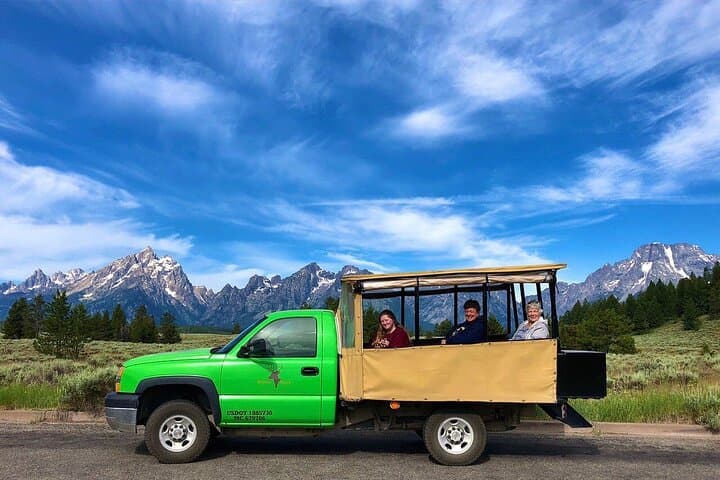
What the day feels like
The first light arrives slow and deliberate over the Teton skyline, painting the serrated teeth of the range in a cool, spare gold. Our jeep eases away from Jackson into a valley that still smells of sage and last night’s rain; the engine hum is low, patient. Around us, meadows hold their breath. A bull elk lifts his head like a sentinel; a pair of bald eagles wheel above the Snake River, and somewhere in the willows a beaver’s dam keeps the current honest. This is the rhythm of a Grand Teton wildlife safari—an early-morning habit of watching the landscape wake and testing your luck against the park’s famously generous cast of megafauna.
The tour’s promise is simple and exact: four hours on a small-group, naturalist-led search for the park’s wildlife at the moments they are most active. Operated seasonally in an open-air safari vehicle when the weather allows (roughly June 1–September 10) and in a heated, enclosed vehicle outside those dates, the trip balances the immediacy of field observation with safe, guided interpretation. Guides point out ecological relationships—how elk and bison graze the valley floor, how riparian corridors concentrate prey and predators—and they stop where the view and the animals are best. The group size (10–12 people) keeps the experience intimate: you’re not an anonymous passenger but an observer in a patient, respectful procession.
Grand Teton’s geology plays a quiet role in the show. The sharp rise of the range along the Teton fault created steep faces and deep glacial basins where lakes and marshes now sit like magnets for wildlife. The Snake River—coaxing its way through sage flats—acts like a backstage corridor; early morning fog and slanted light make it an ideal hunting ground for moose and river otters, and a prime perch for eagles. The park is also part of a much bigger story: indigenous people have inhabited these valleys for millennia, and the arrival of Euro-American trappers—who famously named the highest peaks “les trois tétons”—changed the cultural landscape long before the park’s formal establishment in 1929.
You’ll hear about all of that from a naturalist who understands behavior as well as topography. That matters, because a wildlife safari isn’t a checklist so much as a conversation with the land. A grizzly sighting can be a quick, heart‑stopping glimpse or a long, educational viewing where the guide explains how to read tracks, scat, or fresh diggings. Wolves, foxes, bighorn sheep, moose, elk, bison and both black and grizzly bears dot the ranger’s narrative. On any given trip the stars can change—this park has generosity in its roster—but the reward is always context: why animals appear where they do, and what that tells you about seasons and survival in the Tetons.
Practicalities are part of the experience. The tour runs about four hours, and it’s designed to coincide with dawn or dusk for the best light and wildlife activity. Wear a quiet pair of shoes, layers for a shifting morning, and bring a camera with a telephoto lens if you want crisp animal portraits; phone cameras work for wide landscapes and candid moments. Binoculars are invaluable—animals can be at a respectful distance—and the guide will position the vehicle for safe viewing and photography. The park requires an entrance fee, and cell service is patchy once you’re in the valley; savor the fact that you’ll be mostly off-grid.
If you’re timing a trip, consider season and animal life cycles. Late spring and early summer bring calves and newborns—soft, watchful additions to plains and marshal—while late summer and fall can feature rutting elk and spectacular migrations of birds. Winter trips, in enclosed vehicles, have a different charm: the snows sharpen the air and tracking becomes an instructional thrill.
The tour’s accessibility—departing from Jackson and lasting half a day—makes it a user‑friendly option for families, photographers, and anyone who wants an efficient, educational introduction to the park’s wildlife. Guides are skilled at balancing excitement and safety; they’ll teach you how to behave around wild animals, why cars should stay at a respectful distance, and why human food and curiosity can be lethal for wildlife. In short, this safari is as much about conservation-minded observation as it is about adrenaline.
Leave room in your trip for the human textures of Jackson: the town’s western flair, a hearty post-tour brunch, and local breweries that practice a kind of reflexive hospitality for wet boots and wildlife stories. The whole arc—the early wake-up, the low sun, the hush of the valley, the guide’s steady narration—feels calibrated to what travel should be: a stretch of time where you come to better see place and from that, learn how to keep it whole.
If you go, come prepared to be patient and observant, and to let the land reveal itself on its own terms. The Tetons don’t perform for spectators; they offer chapters of a longer story. Your job, for four hours, is to read closely.
Trail wisdom
Small choices, better day.
Bring Binoculars
Animals often remain at a respectful distance; binoculars let you see behavior without disturbing wildlife.
Dress in Layers
Mornings can be cold and afternoons warm—pack an insulating mid-layer and a wind shell.
Use a Telephoto Lens
A 200–400mm lens is ideal for close-up wildlife shots without approaching animals.
Follow Guide Instructions
Guides prioritize safety—stay with the vehicle and keep noise low to maximize sightings.
Local knowledge
Read the place, not just the route.
Watch for native species including Elk, Bald Eagle.
Keep an eye out for wildlife during the transition between areas and habitats. Respect distance guidelines.
Guides follow Leave No Trace and wildlife viewing ethics—do not approach or feed animals; keep noise low and remain with the vehicle to minimize disturbance.
Follow the guide's instructions on size limits, ethical handling, and leave-no-trace practices.
Snake River Overlook at first light for sweeping valley views. Laurel Lake trailhead for a quieter marshland birding experience
Locally recommended viewpoints and quiet spots known best to local operators.
Grand Teton National Park was established in 1929; the park’s dramatic peaks were later expanded and protected in part due to local conservation efforts in the mid-20th century.
Maritime roots and regional tradition shape the waterways and working coasts.
Seasonal guide
Four versions of the same landscape.
Spring
Best forCalving and newborns · Bird migration
ChallengesUnpredictable weather · Snow-covered higher elevations
Late spring brings newborn mammals and active birdlife, but expect variable conditions and chilly mornings.
Summer
Best forOpen-air safaris · Long daylight hours
ChallengesBugs in marshy areas · Crowds at popular viewpoints
June–August offers the open-air vehicle experience and reliable weather—prime time for immersive viewing.
Fall
Best forElk rut viewing · Crisp light for photography
ChallengesShortening days · Variable temperatures
September can produce dramatic wildlife behavior and golden light, though mornings grow brisk.
Winter
Best forSnowscapes & tracking · Quiet, intimate viewing
ChallengesCold, icy roads · Limited open-air operation
Winter tours use enclosed vehicles; the stark landscape and fresh tracks make for a different, very instructive safari.
Operator details
What the booking data adds.
Included
- ✓Transport by enclosed, heated/air-conditioned vehicle *mid-September-May*
- ✓Snacks, bottled water, and soda
- ✓Hotel pickup in approved Jackson Hole area from November-mid-May
- ✓Use of binoculars/scope
- ✓Transport by open-air safari vehicle *June-mid-September, weather dependent*
Not included
- —Gratuities, recommended at 10-15% of tour price (optional)
- —Hotel pickup and drop-off (summer tours)
- —National Park Entrance Fee For U.S. Citizens
- —National Park Entrance Fee for Non-US Citizens
Good to know
- ✓Service animals allowed
- ✓Public transportation options are available nearby
- ✓Suitable for all physical fitness levels
- ✓Children 5 years and younger are not allowed
- ✓June-Mid September guests: Please wear sturdy walking shoes, bring a jacket and wear long pants
- ✓Guests traveling in winter months: Please plan to dress in winter snow gear (snow boots, snow pants/bibs, winter jacket, gloves, beanie, scarf)
- ✓Summer Safari Tours (June-mid September) are not recommended for travelers with back problems
Pack with intention
What to bring.
Good to know
Common questions.
The tour is approximately four hours, timed for dawn or dusk to maximize wildlife activity.
Plan the edges
The details that make the day easier.
The Teton Range is geologically young—uplifted along the Teton fault within the last ~9 million years—producing its steep, dramatic relief.
After the safari, return to Jackson for a hearty breakfast at The Bunnery or a beer at Snake River Brewing; explore Western art galleries around Town Square or grab a rustic, locally sourced meal at Dornan’s for scenic riverside views.
- Closest airport
- Jackson Hole Airport (JAC); Typical drive from Jackson to park entrance: 10–30 minutes; Cell service: patchy in the park, better near Jackson; Permits
- Passes
- Grand Teton park entrance fee required.
This tour emphasizes low-impact viewing: keep distance from wildlife, don’t feed animals, pack out trash, and follow guide instructions to protect fragile riparian and meadow habitats.
Explore by topic
Follow the threads.
Keep exploring
Make the story part of the trip.
 Related story
Less than two hours from Nairobi, Kereita Forest pairs hands-on canopy adventure with quiet montane trails and a sobering colonial history—perfect for families, teams, and curious travelers seeking a full-day pulse of nature.
Set out from Bass Harbor for a private, customizable day on Blue Hill Bay — lighthouses, puffins, seals, and the chance to feel Acadia from the water. Small groups, local captains, unforgettable views.
In four hours you can move from shaded canyon ferns to wind-scoured coastal ridgelines, guided by someone who knows where the light—and the hidden views—live. This private half-day hike on the Monterey Peninsula or Big Sur is compact, curated, and perfect for travelers who want depth without a multiday commitment.