
What the day feels like
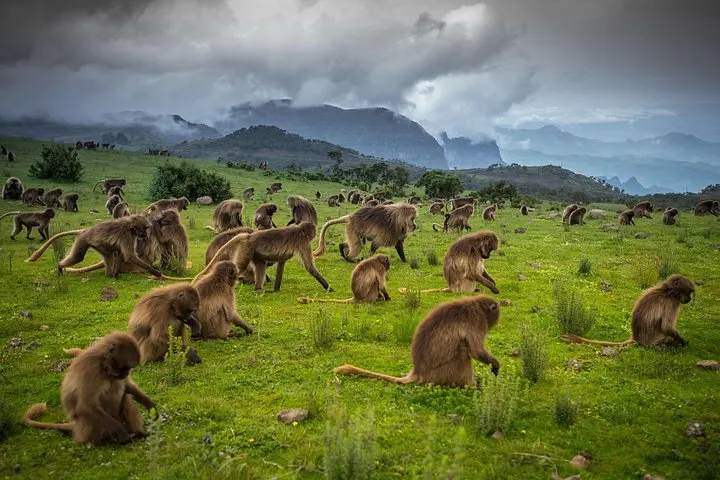
The cliffline arrives like a held breath. One step you’re crossing highland pasture, listening to the soft clink of goat bells, and the next the world drops away into an ocean of ochre gullies and green-carved amphitheaters. Up here on the Simien escarpment, wind combs the grasses and dares you to the edge. Gelada monkeys—scarlet-chested and shaggy as rock stars—graze with the calm of old kings. Ravens stitch the sky. Somewhere far below, valleys unravel toward the Tekezé River and the Sudanese border. You feel the altitude in your chest, but the horizon keeps pulling you forward.
This is a classic Simien Mountains circuit—four days skirting the rim between Sankaber, Geech, and Chennek, with optional side trips to peaks like Imet Gogo or, for longer expeditions, the distant bulk of Ras Dashen, Ethiopia’s high point at 4,533 meters. It’s a trek defined by contrast: delicate giant lobelias poking from basalt shelves; sprawling plateaus ending in sheer, thousand-meter walls; harsh sun at midday that softens into gold at dusk when lammergeiers ride thermals like they own them (they do). The Simiens don’t shout their grandeur. They just stand there, patient and ancient, and let you earn every view.
Geology did the heavy lifting. Millions of years ago, flood basalts poured across northern Ethiopia, building a volcanic layer cake. Uplift and erosion took over: rivers gnawed troughs into the plateau, sculpting knife ridges and toothy pinnacles. What remains in Simien Mountains National Park—a UNESCO World Heritage Site since 1978—is a jagged balcony over a lost world of valleys and hidden hamlets. Hike it and the ground tells a story with every step: slick black basalt, crunchy tuff, the brushed velvet of alpine grasses swaying to the beat of the wind.
Culture threads the trail as tightly as geology. The park’s gateway town of Debark is where you register, hire a mandatory local scout, and often arrange mules for camp gear. On the trek you’ll pass stone-walled fields of barley and chat with shepherds whose homes dot the fringe of the park. Evenings might bring a coffee ceremony at camp if your crew organizes it—fragrant beans roasted and poured three times, smoke curling into the cold. It’s a gentle reminder that this wilderness is lived-in, and has been for centuries.
Wildlife is the park’s signature flourish. Geladas move like grass itself, rustling across the slope. Walia ibex—found naturally only here—pose improbably on cliff ledges, their heavy, scimitar horns keeping elegant time. If you’re lucky in the dawn hush, you might spot the Ethiopian wolf (often called the Simien fox) ghosting across moorland in search of rodents. Above, lammergeiers carry bones skyward, dropping them to shatter for the marrow. The Simiens are not a zoo; they’re an ecosystem that feels intact and in charge. You’re the visitor.
Most four-day itineraries average 40–60 kilometers total, with cumulative elevation gain around 1,500–2,000 meters. The walking is non-technical, but altitude makes everything louder. Camps sit between roughly 3,200 and 3,600 meters; day hikes like Imet Gogo flirt with 3,926 meters. Hydrate early and consistently, pace like you mean it, and listen if your head starts pulsing. The mountain will wait for you. Mornings are crisp—layer-friendly—and nights can shimmy toward freezing even in fair weather. Afternoon clouds often build, then peel away for sunset when the escarpment throws its best shadow theatre.
Logistics are refreshingly straightforward. Fly or drive to Gondar, a historic city famous for its 17th-century royal compounds, then continue by road about 2.5–3 hours to Debark. There you pay park fees, meet your guide, and roll toward the trailhead. Camps like Sankaber, Geech, and Chennek have designated sites and basic facilities; some trekkers opt for lodge stays at the park’s edges, but camping puts you where dawn arrives first. Your scout walks with a battered rifle—customary and required—while muleteers thread the old routes, an unbroken continuum of trade turned trek support.
The payoff is in the pacing. Day one introduces the escarpment’s drama—baboons on the edge, waterfalls slicing the cliffside when rains linger. Day two opens the plateau: giant lobelias stand at attention as skylarks chase the breeze. Day three swings to panoramic promontories where the Earth feels folded, then unfurled. By day four, trail dust and sunshine have mixed into the sort of fatigue that makes meals taste better and sleep come hard and fast. The Simiens don’t just show you views; they reset your cadence.
Between the story and the stats, preparation matters. Good boots. A warm layer that takes no prisoners. A hat, sunscreen, and a rain shell because seasons in the highlands like to improvise. Water treatment for when your crew fills from springs. Cash for park fees and tips in Debark. And patience, because the track can be rocky, the grade honest, and the weather occasionally stubborn. In return, you get the kind of clarity only altitude and openness can offer, where ravens act like gatekeepers and the cliff seems to breathe with you.
For those chasing a first big African mountain trek—or veterans looking for a fresh edge—the Simien Mountains deliver a clean, elemental itinerary with cultural texture and wildlife you won’t find anywhere else. It’s Africa at the roofline: less about conquest, more about conversation. The path speaks. The wind answers. And you, moving steadily between them, learn to listen.
Trail wisdom
Small choices, better day.
Acclimate Early
Spend a night in Gondar or Debark before starting to help your body adjust to elevations above 3,000 meters.
Layer Like a Local
Mornings and nights are cold, afternoons can be hot. Quick-change layers keep you comfortable across rapid temperature swings.
Hydrate on a Schedule
Sip regularly rather than guzzling at camp; altitude dehydrates faster than you think.
Give Wildlife Space
Geladas and ibex are calm but wild—use a zoom lens and stay on established paths to protect them and the fragile escarpment.
Local knowledge
Read the place, not just the route.
Watch for native species including Gelada monkeys, Walia ibex.
Keep an eye out for wildlife during the transition between areas and habitats. Respect distance guidelines.
Stick to established trails to prevent erosion, keep 30+ meters from wildlife, and support local livelihoods by hiring registered guides, scouts, and muleteers.
Follow the guide's instructions on size limits, ethical handling, and leave-no-trace practices.
Imet Gogo sunrise spur for 360-degree views. The lesser-traveled ridge between Geech and Inatye for sweeping lammergeier flybys
Locally recommended viewpoints and quiet spots known best to local operators.
Simien Mountains National Park became one of Ethiopia’s first UNESCO World Heritage Sites in 1978, recognized for its dramatic Afro-alpine landscapes and endemic species.
Maritime roots and regional tradition shape the waterways and working coasts.
Seasonal guide
Four versions of the same landscape.
Spring
Best forGreener slopes after late rains · Cool trekking temperatures
ChallengesIntermittent showers · Mud on certain sections
March–May brings shoulder-season greenery and fewer crowds, with occasional rain squalls and slick trail segments.
Summer
Best forLush landscapes · Birdwatching
ChallengesMain rainy season (rough trails) · Cloud-obscured views
June–August is peak wet season; scenery is vibrant but storms can limit visibility and make routes muddy.
Fall
Best forClear skies · Prime visibility and wildflowers
ChallengesCold nights at altitude · High UV exposure
September–November is the sweet spot after rains: crisp air, expansive views, and colorful alpine blooms.
Winter
Best forDry, stable weather · Fewer afternoon storms
ChallengesChilly mornings near freezing · Dust on exposed sections
December–February is dry-season trekking with cold dawns and steady, bluebird days ideal for big mileage.
Operator details
What the booking data adds.
Included
- ✓Lunch
- ✓Dinner
- ✓Breakfast
- ✓4WD transportation guide scout professional cook mule mattresses Tables & chairs on the mountain trek all park entrance fees plenty of food & bottled mineralwater Camping fire every single nights.
Not included
- —Landing and facility fees
Good to know
- ✓Service animals allowed
- ✓Not recommended for travelers with spinal injuries
- ✓Not recommended for pregnant travelers
- ✓Not recommended for travelers with poor cardiovascular health
- ✓Travelers should have at least a moderate level of physical fitness
Pack with intention
What to bring.
Good to know
Common questions.
Yes. Park regulations require a local armed scout, and a licensed guide is strongly recommended for navigation, safety, and logistics.
Plan the edges
The details that make the day easier.
Ras Dashen, at 4,533 meters in the Simiens, is Ethiopia’s highest peak, and the park is home to the world’s only wild population of Walia ibex.
Base yourself in Gondar before or after the trek: explore Fasil Ghebbi’s castle complex, then refuel at Four Sisters Restaurant with injera platters and tibs. Cap the day with a cold Dashen beer at a local bar or a sunset view from the Goha Hotel terrace. Don’t miss the murals at Debre Berhan Selassie Church.
- Closest airport
- Gondar (GDQ). Trailhead: Debark Park Office (about 100 km
This Afro-alpine ecosystem is fragile. Pack out all waste, filter water responsibly, avoid trampling lobelia stands, and observe wildlife from a respectful distance to reduce stress and preserve natural behaviors.
Explore by topic
Follow the threads.
Keep exploring
Make the story part of the trip.
 Related story
Aksla is the small mountain that makes Ålesund legible: 418 steps, sweeping panoramas, and a short tour that threads architecture and coastline into 90 minutes of memorable sightlines. Perfect for anyone who wants a quick, high-reward encounter with Norway’s west coast.
 Related story
The New York Public Library’s Main Branch is more than a photo stop—it's a civic living room, an architectural landmark, and a waypoint for walking tours that stitch together Midtown’s history, films, and holiday rituals. Here's how to make the most of a visit.
 Related story
Five miles of riverfront walking that reveal NYC’s quieter rhythms—Riverside Park pairs easy urban hiking with history, birdlife and a front-row view of the city’s climate resiliency efforts. Walk a stretch or follow the Greenway; either way, the Hudson makes its presence felt.