
What the day feels like
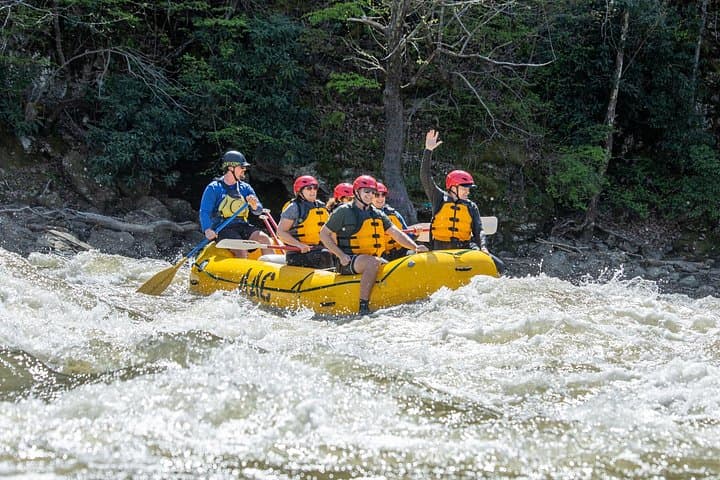
The French Broad doesn't ask permission; it invites. At the put-in near Marshall, North Carolina, the river arrives with the surety of an old traveler, its surface shifting from glass to ripple to a braided line of churning foam as you slide into your oversized raft. Guides issue quick instructions—lean left on command, keep your paddle in the water—and then the river takes over, daring you into the next bend, the next rapid. For four hours you trade the city clock for the current's cadence: pulse quickens at the rapids, eases in the long pools, and opens up to mountain views that feel deliberately composed, as if the gorge had practiced being beautiful.
This is Section 9 of the French Broad River, a roughly 5-mile corridor that threads through Pisgah National Forest and protected lands about 45 minutes from Asheville. It's the kind of run that welcomes the curious and tests the attentive—largely class II and III rapids, occasional class IVs when spring rain swells the river, and continuous moving water that keeps your muscles honest and your grin honest, too. Guides steer, interpret, and point out geological clues: folded bedrock, rounded boulders, and steep streamside cliffs that tell a story of millions of years of uplift, erosion, and high-water drama.
Beyond the hydrology, the trip reads like a regional primer. The French Broad spans about 218 miles, flowing north from the Blue Ridge before turning toward Tennessee, and geologists often note it as an ancient watercourse that predates the mountains that now flank it. Culturally, the river has been a lifeline for communities in Madison and Buncombe counties; its valleys supported early industry, then small farms, and now a mix of conservation lands and outdoor economies that cater to paddlers, anglers, and hikers.
Expect bird song and the faint motor of distant traffic up on the ridgelines; expect an emphasis on stewardship from your outfitter—this stretch runs through protected tracts and benefits from community-based conservation. Guides are as much interpreters of place as they are safety officers: they flag sensitive shorelines, explain Leave No Trace practices, and sometimes pull over at quiet eddies to let guests sense the river’s subtler moods: the cool smell after rain, the hum of insect life, the way light filters through sycamores.
Practicality is baked into every moment of the trip. The total excursion is about four hours door to door on the water, with roughly five miles of rafting. It’s rated beginner-friendly—perfect for families and first-timers—but don’t mistake ‘beginner’ for ‘boring.’ You’ll paddle, brace, laugh, and get wet. Weather and river conditions dictate difficulty; spring runoff can push some drops into class IV territory, and operators adjust the route and safety briefings accordingly.
For planning: aim for spring or early summer when flows are lively but not reckless. Reservations matter—this tour commonly sells out—and the price point makes it accessible, with rates starting around $71. Gear is straightforward: a well-fitted life jacket, closed-toe water shoes, sun protection, and a waterproof camera if you want action shots. Guides typically provide paddles, rafts, and basic safety kit; they’ll also brief you on how to ride the raft and what to do if you go swimming.
The experience pairs well with a longer Appalachian itinerary. Asheville’s craft-beer scene and farm-to-table restaurants make an ideal post-raft reward, while smaller towns like Marshall offer a quieter counterpoint: historic Main Street cafes, local trailheads, and a slower pace that fits the rhythm of the river. If you have time, combine the day on the water with a hike in Pisgah—Black Balsam and Looking Glass areas are close enough for an afternoon—or plan an overnighter at nearby dispersed campsites in the national forest.
Safety and sustainability deserve the same earnest attention as your camera settings. Hydration and a sensible timeline—morning launches to avoid heat and afternoon thunderstorms—keep the day smooth. Respect the river’s variable temperament: listen to your guide, avoid loose straps that can catch on rocks, and secure electronics in dry bags. On the conservation front, treat this corridor as a shared corridor: pack out trash, don't disturb nesting banks, and follow your guide’s guidance on shoreline access.
Why go? Because it’s a balanced kind of adventure: adrenaline stitched to scenery, accessible enough for beginners but compelling enough for seasoned paddlers who appreciate the long, continuous play of class II–III water. The gorge is immediate and honest—no cable-car spectacle, no summit slog—just a river that asks you to respond, physically and attentively. For a day near Asheville that feels both wild and managed, the French Broad Gorge delivers, leaving you with wet shoes, a clearer pulse, and a better sense of what the Southern Appalachians sound like when you let the river speak for itself.
Trail wisdom
Small choices, better day.
Morning Launch Wins
Start early to catch cooler temperatures and more stable weather; afternoons can bring pop-up thunderstorms in the mountains.
Secure Your Gear
Use a dry bag for phones and cameras and wear a snug life jacket to prevent chafing and flotation issues.
Footwear Matters
Wear sturdy water shoes or old sneakers—no flip-flops—to protect feet during portages and unexpected swims.
Listen to Your Guide
Follow commands during rapids—timing in paddling and bracing keeps groups safe and the run fun.
Local knowledge
Read the place, not just the route.
Watch for native species including Great blue heron, River otter.
Keep an eye out for wildlife during the transition between areas and habitats. Respect distance guidelines.
Much of Section 9 runs through protected forest; operators emphasize Leave No Trace practices and local groups work to maintain shoreline habitats.
Follow the guide's instructions on size limits, ethical handling, and leave-no-trace practices.
Quiet eddy-side swimming holes on calmer days. Short river-access trails near the put-in for novice hikers
Locally recommended viewpoints and quiet spots known best to local operators.
The French Broad is one of the oldest rivers in North America and its valley supported early industry and agriculture before conservation turned many stretches into protected lands.
Maritime roots and regional tradition shape the waterways and working coasts.
Seasonal guide
Four versions of the same landscape.
Spring
Best forHigh flows and lively rapids · Wildflower viewing along the banks
ChallengesHigher difficulty in some drops · Cold water temperatures early in the season
Spring brings the most dynamic river conditions and fuller rapids; expect energetic water and chilly swims.
Summer
Best forStable guided runs · Post-raft swimming and swimming holes
ChallengesWarmer air temps and afternoon storms · Higher visitor numbers
Summer offers warm days and reliable guided trips but plan around midday heat and potential thunderstorms.
Fall
Best forColorful foliage from the river's perspective · Lower but enjoyable flows
ChallengesCooler mornings and variable flows · Shorter daylight hours
Fall provides scenic leaf color and pleasant temperatures; flows may be lower but still fun for guided runs.
Winter
Best forQuiet river views and fewer crowds · Cold-weather photography
ChallengesVery cold water, limited operations · Potential for trip cancellations due to low water or weather
Winter trips are occasional; expect cold conditions and reduced commercial operations—confirm availability in advance.
Pack with intention
What to bring.
Good to know
Common questions.
Yes—the run is designed for beginners and families, with professional guides who provide instruction and safety equipment.
Plan the edges
The details that make the day easier.
The French Broad River is one of the oldest rivers in the world and predates the mountains it now runs through.
After the trip, head to Asheville for craft breweries and farm-to-table meals, or stop in Marshall for a quieter Main Street cafe and local artisan goods to round out the day.
- Closest airport
- Asheville Regional Airport (AVL); Driving time from Asheville: ~45 minutes to Marshall
- put-in; Cell service
- intermittent in the gorge; Permits: none required for commercial trips—follow USFS rules for shore access
This section flows through protected forest land—pack out all trash, avoid disturbing shoreline vegetation, and follow outfitter guidance to protect fragile riverbanks.
Explore by topic
Follow the threads.
Keep exploring
Make the story part of the trip.
 Related story
Less than two hours from Nairobi, Kereita Forest pairs hands-on canopy adventure with quiet montane trails and a sobering colonial history—perfect for families, teams, and curious travelers seeking a full-day pulse of nature.
Set out from Bass Harbor for a private, customizable day on Blue Hill Bay — lighthouses, puffins, seals, and the chance to feel Acadia from the water. Small groups, local captains, unforgettable views.
In four hours you can move from shaded canyon ferns to wind-scoured coastal ridgelines, guided by someone who knows where the light—and the hidden views—live. This private half-day hike on the Monterey Peninsula or Big Sur is compact, curated, and perfect for travelers who want depth without a multiday commitment.