
What the day feels like
The Atlantic exhales against Santa Maria’s south shore, a steady breath that slicks the limestone with mist and salt. On the path above Pedreira do Campo, the wind nudges you forward, then leans back as if to ask, Are you ready to meet time face-to-face? Underfoot, the ground is a museum with no entry fee: scallop shells, tiny corals, and sea urchin imprints pressed into creamy stone—evidence of an ancient shoreline lifted high by the island’s restless geology. Here, the island doesn’t just tell its story. It points to it. Everywhere.
This coastal walk—threading the fossil beds of Pedreira do Campo and the manmade caverns of Gruta do Figueiral—captures the appeal of Santa Maria, the oldest island in the Azores. Unlike its volcanic siblings darkened by basalt, Santa Maria wears sunlight and sediment. Locals call it the “island of the sun,” and on a good day the sea is a bright plate of cobalt, the cliffs streaked with honey and rust, and the path stitched with low scrub that scratches your calves with salt-brittle fingers.
Start near the signed geosite at Pedreira do Campo. The route is straightforward but varied, undulating along the coast on farm tracks and limestone shelves, with short sections on loose cobbles. In-season, the wind has personality—it will barrel down the gullies and then go quiet as you step into the lee of a ridge. The hike itself is an efficient half-day: 6–9 kilometers with around 250 meters of total gain, depending on your link-ups and how long you linger where the sea chews at the rock. Most will take 3–4 hours, but time stretches easily when you pause to trace a fossil scallop with your finger or watch fulmars ride the thermals.
Geologically, you’re walking across a chapter few islands offer so openly. Santa Maria formed 8–10 million years ago, then dipped, then rose again, laying down marine sands and shells and later lifting them well above the tide. Pedreira do Campo is part of the Azores UNESCO Global Geopark, a protected window into the Miocene-Pliocene transition. Fossil beds here showcase bivalves and echinoids cemented into calcarenite, and the rock’s pale color—rare in the Azores—makes the fossils easy to spot. Keep your hands to yourself. The stone is fragile, and removing fossils is illegal as well as shortsighted; these pages of the earth’s diary read best when left intact.
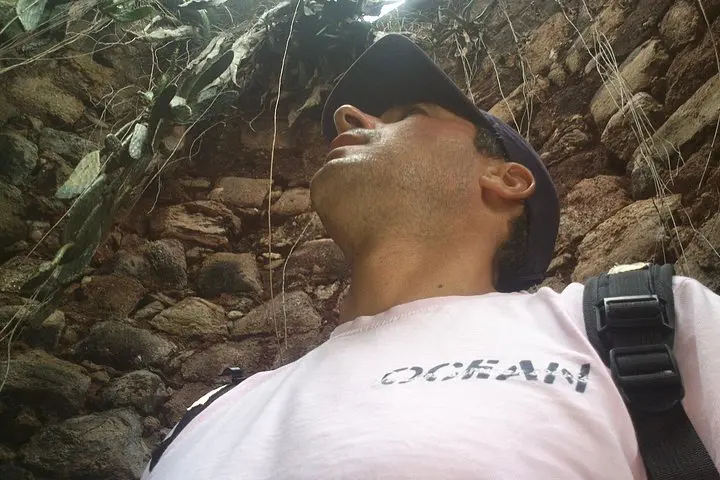
Continue east and the landscape tightens into the Gruta do Figueiral area, where centuries of quarrying carved corridors and chambers into the calcarenite. The caves are human-made yet feel claimed by the island: swallows trim arcs across the entrances, damp corners bloom with ferns, and the air cools abruptly as you step inside. The ceilings remember chisels, but the walls keep their secrets—shell fragments suspended mid-sentence, as if the sea paused and the island pressed the pause button forever. Exploring here is best with a guide who knows which chambers are safe and how to read the floor for fragile pockets.
Culturally, this walk touches what has long sustained Santa Maria: the sea, and adaptation. Early settlers burned limestone to make mortar; the caves you visit were part of that economy, feeding construction for cisterns, homes, and walls. Today vineyards ribbon the hills in low, wind-braced plots, and stone corrals corral the breeze as much as they once corralled goats. You’ll pass donkeys behind dry-stone fences, wild fennel nodding along the path, and fishermen angling from rock ledges the ocean slaps with a steady hand. Life here faces the Atlantic and keeps its footing.
It’s an approachable adventure with a practical cadence. Footing shifts from grippy rock to knee-high grass, then to short bursts of loose pebbles. A sturdy pair of trail shoes handles it easily; poles help on the steeper bits and when wind gusts play their tricks. Hydration matters: this is the sunniest corner of the archipelago, and exposure is part of the charm—views are wide and unshaded. Start early or late to work the golden light and cooler air. And mind the tide if you detour toward Praia Formosa; the beach welcomes you generously at low tide and shrugs you back at high.
If you came to the Azores for moody basalt and cloud-wrapped craters, Santa Maria offers a foil: maritime light, calcarenite cliffs, and a teachable coastline that invites you to read the rock. The sea here doesn’t brood; it hustles, a constant partner on your shoulder. Take your time, but stay present. The island has done the work—lifting ancient seafloor, preserving a fossil library, carving galleries from stone. Your job is simply to walk, look, and leave it better than you found it.
Planning essentials: expect a moderate effort over uneven terrain, with wind exposure and sections of open sun. The route is well-marked around the geosite; a local guide elevates the experience with history and geology, and ensures safe access within the Gruta do Figueiral complex. There’s little in the way of facilities on-trail, so bring water, snacks, and sun protection. Afterward, head to Vila do Porto for a simple meal—grilled lapas (limpets), tuna steaks, or a bowl of caldo verde—and watch the harbor trade color with the day’s last light. The sea will keep breathing; the island will keep telling its story. And you’ll carry a piece of it—the sound of surf in stone—without taking anything at all.
Trail wisdom
Small choices, better day.
Mind the Fossils
Do not touch or remove fossils at Pedreira do Campo; the calcarenite is fragile and protected within the Azores UNESCO Global Geopark.
Start Early for Shade
This south-facing coast bakes—hit the trail at dawn or late afternoon to avoid peak sun and capture softer light.
Tide Check for Praia Formosa
If you include a beach detour, consult local tides; sections of shoreline pinch off at high water.
Wind Can Be Real
Gusts funnel through gullies—pack a light shell and use trekking poles on exposed sections for added stability.
Local knowledge
Read the place, not just the route.
Watch for native species including Cory’s shearwaters (Cagarros), Common dolphins offshore.
Keep an eye out for wildlife during the transition between areas and habitats. Respect distance guidelines.
Pedreira do Campo is part of the Azores UNESCO Global Geopark—stay on signed paths, avoid collecting any fossils, and respect seasonal wildlife closures.
Follow the guide's instructions on size limits, ethical handling, and leave-no-trace practices.
Small viewpoints above calcarenite shelves east of Pedreira do Campo. Old lime kilns remnants near the quarry zone
Locally recommended viewpoints and quiet spots known best to local operators.
Gruta do Figueiral’s caverns formed from historic quarrying of calcarenite used for lime and mortar by early settlers. Santa Maria was the first Azorean island discovered and settled by the Portuguese in the 15th century.
Maritime roots and regional tradition shape the waterways and working coasts.
Seasonal guide
Four versions of the same landscape.
Spring
Best forCooler temperatures · Wildflowers
ChallengesUnpredictable squalls · Gusty winds
Mild and lively, with fresh greens and active seas. Expect comfortable hiking temps but carry a light shell.
Summer
Best forLongest daylight · Warm water swims
ChallengesStrong sun · Higher exposure on limestone
Bright and dry; start early to beat heat and glare. Afternoon breezes offer relief on exposed cliffs.
Fall
Best forStable weather · Warm ocean temps
ChallengesOccasional Atlantic swells · Shortening days
Arguably the sweet spot—pleasant air, fewer crowds, and excellent visibility over the coast.
Winter
Best forMoody seascapes · Quiet trails
ChallengesRain and slick rock · Strong winds
Cool, variable, and dramatic. Watch footing on wet calcarenite and be flexible with plans.
Operator details
What the booking data adds.
Included
- ✓Lunch
- ✓Snak (energy bar + water)
Not included
- —Breakfast lunch dinner
Good to know
- ✓Service animals allowed
- ✓Infants are required to sit on an adult’s lap
- ✓Suitable for all physical fitness levels
Pack with intention
What to bring.
Good to know
Common questions.
Most visitors cover 6–9 km with about 250 m of elevation gain in 3–4 hours, depending on detours and photo stops.
Plan the edges
The details that make the day easier.
Santa Maria is the oldest island in the Azores—geologists date its formation to roughly 8–10 million years ago, and uplifted marine fossils are visible far above sea level at Pedreira do Campo.
Refuel in Vila do Porto with grilled lapas and tuna steaks, or try local queijo with crusty bread. For a low-key evening, stroll the marina promenade and watch fishing boats unload while you sip a cold beer and taste a simple bifana sandwich from a family-run tasca.
- Closest airport
- Santa Maria Airport (SMA) in Vila do Porto. Trailhead: Signed access near Pedreira do Campo geosite, ~10–15 minutes’ drive from town. Cell service: Generally good along the coast, patchy inside quarry areas. Permits: No general permit required; guided access recommended for Gruta do Figueiral. Parking: Roadside pullouts at signed points.
This route traverses a protected Azores Geopark geosite. Stay on marked trails, never remove fossils, and keep a respectful distance from nesting seabirds. Pack out everything you bring in.
Explore by topic
Follow the threads.
Keep exploring
Make the story part of the trip.
 Related story
Aksla is the small mountain that makes Ålesund legible: 418 steps, sweeping panoramas, and a short tour that threads architecture and coastline into 90 minutes of memorable sightlines. Perfect for anyone who wants a quick, high-reward encounter with Norway’s west coast.
 Related story
The New York Public Library’s Main Branch is more than a photo stop—it's a civic living room, an architectural landmark, and a waypoint for walking tours that stitch together Midtown’s history, films, and holiday rituals. Here's how to make the most of a visit.
 Related story
Five miles of riverfront walking that reveal NYC’s quieter rhythms—Riverside Park pairs easy urban hiking with history, birdlife and a front-row view of the city’s climate resiliency efforts. Walk a stretch or follow the Greenway; either way, the Hudson makes its presence felt.