
What the day feels like
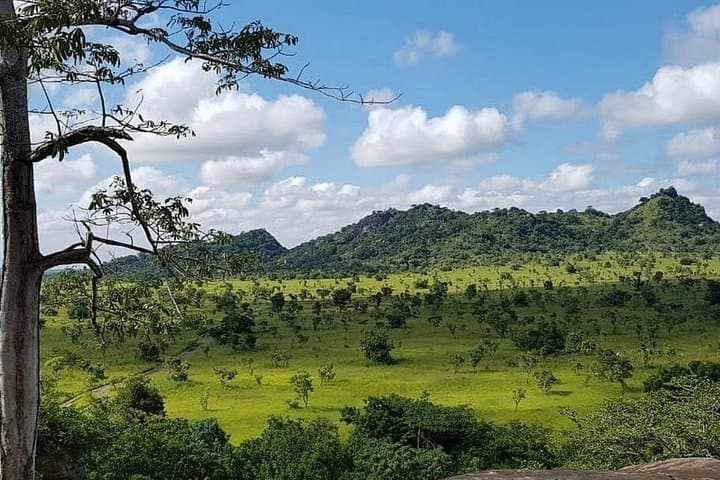
You arrive from the city under a low, bright sky and the traffic unwinds like a long exhale. In less than an hour from Accra the pavement thins and the landscape changes—blotches of scrub and open grass, punctuated by pale, rounded rock that looks older than the map. These are the inselbergs of Shai Hills: pinkish granite islands rising from a savanna sea. They catch the light and refuse to be prettified; they are muscular, patient, and a little blunt. You park, tighten your boots, and the air around you—drier, clearer—feels like it’s been waiting for a walk.
The Shai Hills Wildlife Adventure Tour is a compact, four-hour immersion into this oddly intimate reserve. It’s one of those daytrips that manages to be both straightforward and quietly theatrical: short hikes across sunbaked paths, close encounters with troops of baboons that regard you like interloping cousins, and the slow, exhilarating reveal of antelope-level vistas from rock ledges that look out over a patchwork of farmland and scrub. Guides here read the land like a local newspaper—where the animals like to water, which crevice catches the wind—and they shape the motion of the day so that each stop feels necessary.
Geologically, Shai Hills is arresting in the way very old things are: the granite domes are remnants of a deeply weathered landscape, their rounded faces the result of millions of years of chemical decomposition and erosion. Walk up one and you’re standing on a piece of the planet that predates nearby human settlements; dip down into a shaded gully and the world compresses—a pocket of cooler air, a different suite of birds, a sense of being tucked in.
Culturally, the reserve sits inside the larger story of the Shai people and the Ga-Adangbe communities of southern Ghana. The area has long been a meeting point—between trade routes, between ecological zones, and between the city and the rural interior. Today, the reserve functions as both habitat and a local recreation area. You’ll pass small farms and hear the distant, regular rhythm of market life; everything feels companionable rather than remote. That closeness to Accra—roughly a 45–60-minute drive—makes Shai Hills one of the region’s most accessible wildlife escapes.
Wildlife here isn’t about guaranteed sightings of big game so much as steady, rewarding encounters. Olive baboons move with confident curiosity; small antelopes slip between shrubs; and the bird list rewards patient binocular stares. The reserve’s animals are accustomed to day visitors, which means behavior is less wild than intimate—a nuance that makes photography both easy and ethically fraught: you can get close, but you mustn’t push that proximity.
Practicality underpins the charm. The tour runs about four hours, enough time to hike short loops, climb a couple of rocky ledges, walk past termite mounds, and get to know both the living and the geological layers of the reserve without feeling rushed. Terrain ranges from dusty paths to ledge climbs where good footwear makes a difference. Guides partition the day to maximize shade and animal activity—early mornings and late afternoons are the most rewarding for wildlife and for the light.
Why go? For a traveler based in Accra who wants to scratch an itch for open space, for rocky terrain that doubles as a viewpoint, or for a cultural side-trip without a long drive, Shai Hills is the kind of place that recalibrates expectations. It’s not a safari in the quintessential sense, but those who appreciate geology, birding, and close-up animal observations will find the reserve satisfying. It’s also a good family or mixed-ability outing: there are short circuits and gentler paths, but the rocky features offer palpable payoff for minimal effort.
Practical guidance: aim for the cooler hours—early morning or late afternoon. Leave a buffer for traffic from Accra and for the schedules of local markets if you plan to combine the visit with a stop in Dodowa. Bring water (at least 1–1.5 liters), sun protection, a telephoto lens if you want better wildlife shots, and a guide’s attention—guides here hold the key to safety and to the best sightings. Entrance fees are collected at the gate and day tours are commonly sold through local operators; the Viator listing for the organized Shai Hills Wildlife Adventure Tour begins at USD 256.42 and typically includes transport and guiding for a small group, which is handy if you prefer a turnkey option.
Sustainability and etiquette matter here. The reserve is relatively small and heavily used; stick to trails, don’t feed animals, and leave no trace. Rubbish and plastic are the region’s biggest threats—the rocks will outlast us, but the water sources won’t withstand indifference.
In short: Shai Hills offers a concentrated dose of Ghana’s dry-forest life within easy reach of the capital. It’s tactile, accessible, and quietly impressive—the kind of place that feels like good stewardship when you visit and leave the land better than you found it. If you want a day that mixes geology, wildlife, and a quick cultural glimpse without the logistics of a long drive, this is a smart, satisfying pick.
Booking tip: look for tours that include a local guide and ground transport from Accra to avoid negotiating local logistics. Bring small cash for gate fees and for any small purchases in nearby communities—chip cards may not always be accepted. And keep your lens capped until the guide signals it’s safe; the wildlife here makes a habit of appearing when you least expect it.
Trail wisdom
Small choices, better day.
Go early or late
Wildlife is most active in the cooler morning and late-afternoon windows—schedule your visit around these times for better sightings and softer light.
Wear grippy shoes
Trails include dusty paths and rocky ledges—sturdy trail shoes reduce slips and make summit scrambles comfortable.
Bring water and sun protection
Carry at least 1–1.5 liters of water per person, sunscreen, and a hat; shade is limited on the exposed granite.
Respect wildlife boundaries
Do not feed or approach baboons and antelope—keep a safe distance and follow your guide’s instructions to avoid conflict.
Local knowledge
Read the place, not just the route.
Watch for native species including Olive baboons, Bushbuck and other small antelope species.
Keep an eye out for wildlife during the transition between areas and habitats. Respect distance guidelines.
Shai Hills is a small, heavily visited reserve—stick to trails, avoid feeding wildlife, and pack out all trash to limit human impact on sensitive water sources and habitats.
Follow the guide's instructions on size limits, ethical handling, and leave-no-trace practices.
Climb the western granite domes at sunset for expansive views over the reserve. Visit the nearby Dodowa market for local crafts and fresh street food after your hike
Locally recommended viewpoints and quiet spots known best to local operators.
The reserve is named after the Shai people; the rocky outcrops and surrounding land have long been part of local cultural and hunting landscapes.
Maritime roots and regional tradition shape the waterways and working coasts.
Seasonal guide
Four versions of the same landscape.
Spring
Best forWildlife viewing · Cooler morning hikes · Photography
ChallengesIntermittent rains late in the season · Dustier trails earlier in day
Spring bridges the dry and wet months—mornings are good for animals, with occasional showers picking up toward the end of the season.
Summer
Best forLush birdlife after rains · Greener landscape · Fewer tourists
ChallengesAfternoon storms possible · Paths can become slick in heavy rain
Summer brings more vegetation and active birds; afternoon thunderstorms are more likely, so plan hikes for the morning.
Fall
Best forMigratory bird passage · Warm, clear days · Rock-summit views
ChallengesTransition rains can make some tracks muddy · Variable temperatures
Fall can offer excellent birding and dramatic skies—expect a mix of dry and wet days depending on the year.
Winter
Best forDry, clear hiking · Wildlife visibility · Photography with hazy harmattan light
ChallengesHarmattan dust can reduce air quality and visibility · Cool mornings
Winter is the drier season with clearer trails; harmattan dust can affect visibility but also creates unique light for photos.
Operator details
What the booking data adds.
Included
- ✓Private transportation
- ✓Entrance fees
- ✓Certified Driver
- ✓Tour Guide
- ✓Hotel Pick Up
Not included
- —Accomodation
- —Your meals
- —International air flight
- —Visa and visa fees
- —Travel insurance and immunization
Good to know
- ✓Infants are required to sit on an adult’s lap
- ✓Suitable for all physical fitness levels
Pack with intention
What to bring.
Good to know
Common questions.
The organized tour runs about four hours (240 minutes), typically including transport, guiding, and short walks around the reserve.
Plan the edges
The details that make the day easier.
Shai Hills Resource Reserve lies within the Greater Accra Region and is one of the nearest wildlife reserves to Accra, making it a popular day trip from the capital.
After the hike, head into nearby Dodowa for local dishes at a chop bar—look for grilled goat, jollof rice, and fresh fruit juices; the nearby market is a good place to pick up woven textiles and handmade crafts.
- Closest airport
- Kotoka International Airport (ACC); Driving distance from Accra: ~45–60 minutes (35–45 km); Cell service: generally available but intermittent in shaded gullies; Permits
- passes
- entrance fee collected at gate or included in organized tours.
Shai Hills is a compact reserve with sensitive waterholes—carry out all trash, avoid single-use plastics, and never feed wildlife to reduce human-wildlife conflict.
Explore by topic
Follow the threads.
Keep exploring
Make the story part of the trip.
 Related story
Less than two hours from Nairobi, Kereita Forest pairs hands-on canopy adventure with quiet montane trails and a sobering colonial history—perfect for families, teams, and curious travelers seeking a full-day pulse of nature.
Set out from Bass Harbor for a private, customizable day on Blue Hill Bay — lighthouses, puffins, seals, and the chance to feel Acadia from the water. Small groups, local captains, unforgettable views.
In four hours you can move from shaded canyon ferns to wind-scoured coastal ridgelines, guided by someone who knows where the light—and the hidden views—live. This private half-day hike on the Monterey Peninsula or Big Sur is compact, curated, and perfect for travelers who want depth without a multiday commitment.