
What the day feels like
The first crunch of tire on gravel feels like a handshake with the forest. Spruce trunks stand tall and close, the plateau breathing cool shade as you roll into Pokljuka—Slovenia’s storied karst highland set between the blue magnets of Lake Bled and Lake Bohinj. A breeze threads the needles overhead. Cowbells carry across a clearing. Somewhere ahead, the road tips gently, a ribbon of dirt daring you to see what’s around the bend. This is an all-gravel day, no asphalt, in the heart of Triglav National Park—and the riding is as honest as it gets.
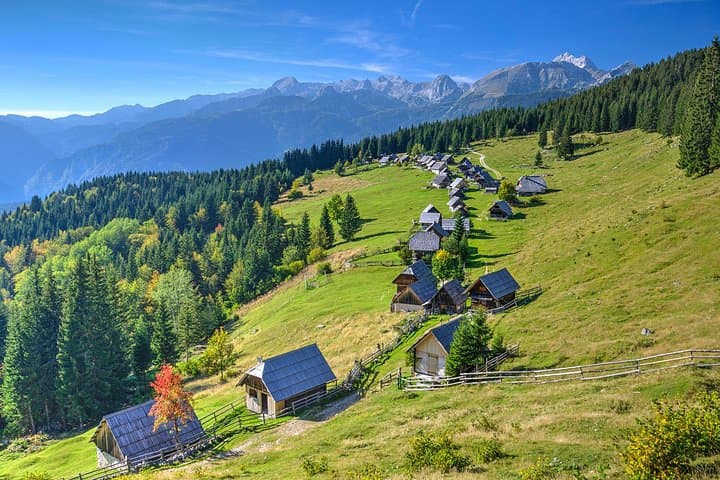
Pokljuka is a plateau built on limestone, a broad green raft lifted above the valleys and folded with sinkholes and meadows. Water disappears here—literally. The rock swallows it, hiding streams underground and feeding springs that emerge down in the valleys. The gravel roads cross this quiet magic in long, rolling lines, sometimes arrow-straight beneath old spruce, sometimes snaking past larch-framed pastures called planinas. You ride through working landscapes. Shepherd huts pop from the grass. Fences click shut behind the herd. Mushrooms show their caps after a rain, and locals know exactly where to look.
A guided ride here keeps you on the best lines, where grades stay reasonable and views open exactly when you want them. One moment the forest closes in and the world turns green; the next, a gap reveals the snow-bitten skyline of the Julian Alps, white teeth on a blue jaw. Below, the far glimmer of Bohinj. Behind, the mirror of Bled. The forest roads are wide and forgiving, but they’re not flat—expect rolling elevation and the occasional punchy rise that reminds you you’re earning those vistas.
If you’ve heard of Pokljuka, you may know it as a winter biathlon venue at Rudno Polje. In summer and fall, the energy shifts from stadium sharp to trail calm. The biathlon loops turn into smooth connectors between deeper forest tracks. Pastures such as Uskovnica and Zajamniki wake to slow mornings, butter and cheese carried out onto wooden tables, hikers drifting by in soft conversation. Cheese-making runs deep here—Bohinj’s heritage dairy tradition threads across these meadows, and you’ll taste it if your guide steers you to a mountain hut serving warm jota stew, buckwheat žganci, or soft slices of local cheese. Culture isn’t a side trip; it’s the lane you ride in.
Karst defines the terrain under your tires. The roads are firm and quick-draining, but loose corners demand a light touch—look through the bend, feather the brakes, let the bike find its line. On straightaways, the gravel hums and the plateau practically nudges you forward. The forest has a personality—patient, at times stern. It prefers you unhurried. Slow down and you’ll hear woodpeckers drumming, maybe catch a red deer ghosting between trunks, or see a capercaillie flash. In late summer, blueberries tint the understory and the air smells like sun-warmed pine.
Triglav National Park is Slovenia’s only national park, a protective ring drawn around the Julian Alps and their rivers, meadows, and forests. Riding here is about sharing space: with nature, with herders who have used these routes for centuries, with hikers who wave as you pass. Gates should close behind you. Trails ask that you stay on them. It’s a fair deal for access to one of the most quietly beautiful cycling zones in Europe.
Logistically, the appeal of this ride is its clarity. It’s gravel and dirt from start to finish. The tour runs about five hours, which is enough to feel like you’ve traveled without tipping into endurance-epic territory. You’ll stop for photos where the trees break and the Alps flex. You’ll skirt peat bogs that store millennia of water and carbon—fragile systems plainly marked, better admired from the road. You’ll glide into villages where window boxes spill color and the pace feels older than your watch.
Bring a gravel bike or hardtail with wide tires, ideally 40 mm or more. A helmet is non-negotiable, and a light rain shell makes sense in a mountain zone where weather shifts quickly. Hydration matters—the plateau rides cool but steady effort adds up. Your guide will carry the local knowledge: which spur road leads to the best panorama, which planina has fresh cheese today, where the gravel runs fastest after last night’s shower. The rest is you, the bike, the road, and the plateau taking your measure.
If you’re new to gravel, don’t let the setting intimidate you. The surfaces here are friendly, and the grades are manageable with pacing. Experienced riders will appreciate the flow—long green miles where you can settle into a rhythm, short steeps to test your legs, and classic Slovenian payoffs in the form of valley-wide views. There’s a fine balance in Pokljuka: enough infrastructure to feel supported, enough wildness to feel real.
When you drop back toward Bled at day’s end, the lake’s blue will feel brighter, the castle above it somehow closer. That’s the plateau working on you. It holds scale differently, reshapes time to match the quiet of the trees and the measured pace of a dirt road under turning wheels. You’ll leave with a bit of spruce in your lungs and a plan to come back—maybe next time for a different loop, maybe in fall when the larches burn gold along the pasture fences. Either way, Pokljuka will be waiting, patient as ever, with another gravel ribbon leading you forward.
Trail wisdom
Small choices, better day.
Go wide on tires
Run 40–45 mm tires or a hardtail setup for better grip and comfort on Pokljuka’s loose-over-hard corners.
Mind the grazing gates
You’ll cross active pastures—open gates, pass through slowly, and close them securely behind you.
Brake before the bend
Gravel can marble on corners; scrub speed early and look through the turn to keep traction.
Pack steady hydration
There are few refill points on the plateau; carry at least 1.5–2 liters, especially in summer.
Local knowledge
Read the place, not just the route.
Watch for native species including Red deer, Capercaillie.
Keep an eye out for wildlife during the transition between areas and habitats. Respect distance guidelines.
Stay on established roads, avoid sensitive peat bogs, and close pasture gates. Drones are restricted in Triglav National Park—use only with proper permits.
Follow the guide's instructions on size limits, ethical handling, and leave-no-trace practices.
Zajamniki Planina: a photogenic string of wooden shepherd huts along a gentle meadow ridge. Blejska koča na Lipanci: a hut near the plateau edge with views toward Debela peč
Locally recommended viewpoints and quiet spots known best to local operators.
Pokljuka’s pastures (planinas) have supported seasonal herding and cheesemaking for centuries; today they preserve Bohinj’s alpine dairy tradition inside Slovenia’s only national park.
Maritime roots and regional tradition shape the waterways and working coasts.
Seasonal guide
Four versions of the same landscape.
Spring
Best forCool temperatures · Wildflowers
ChallengesUnpredictable showers · Lingering mud in shaded sections
Spring brings fresh green forests and quiet roads. Expect variable weather—layers and a light shell pay off.
Summer
Best forLong daylight · Dry, fast gravel
ChallengesAfternoon storms · More visitors near popular planinas
Prime riding with firm surfaces and stable conditions. Start early to beat heat and traffic around Bled.
Fall
Best forGolden larch color · Crisp air
ChallengesShorter days · Cold mornings
Autumn lights up the pastures with color and offers smooth, quiet miles. Bring warm layers and lights.
Winter
Best forSnowy scenery · Alternative activities like XC skiing nearby
ChallengesSnow-covered roads · Tours may pause or require fat bikes
Deep snow often closes gravel routes to standard bikes. Check conditions; consider fat biking or skiing at Rudno Polje.
Operator details
What the booking data adds.
Included
- ✓Professional guide
- ✓Helmet
- ✓Rent of high performance electric bike
- ✓Transfer from Bled
Not included
- —Guided tour of local cheese making with degustation
- —Transfer from Ljubljana
Good to know
- ✓Not recommended for travelers with spinal injuries
- ✓Not recommended for travelers with poor cardiovascular health
- ✓Not recommended for pregnant travelers
- ✓Public transportation options are available nearby
- ✓Travelers should have at least a moderate level of physical fitness
Pack with intention
What to bring.
Good to know
Common questions.
Yes. This guided ride is on gravel and dirt forest roads across the Pokljuka Plateau, with no asphalt sections.
Plan the edges
The details that make the day easier.
Pokljuka hosts regular IBU Biathlon World Cup races at Rudno Polje, transforming this quiet plateau into a global winter sports stage.
Post-ride, head to Bled’s Kavarna Park for the iconic kremšnita (cream cake) and a coffee by the water. For a heartier meal, Gostilna Pri Planincu serves local fare—try jota and a cold Union or Laško beer. If you linger near the plateau, huts like Koča na Uskovnici dish out simple, warming mountain meals with unbeatable meadow views.
- Closest airport
- Ljubljana Jože Pučnik (LJU). Trailheads on Pokljuka are 30–45 minutes by car from Bled. Cell service is intermittent on the plateau; download maps offline. No permits needed for cycling on designated forest roads, but Triglav NP rules apply—stay on roads and respect closures.
Pokljuka’s peat bogs and alpine meadows are sensitive—ride only on established roads, avoid skidding to reduce erosion, and pack out all waste. Support local dairy huts to keep traditional land stewardship thriving.
Explore by topic
Follow the threads.
Keep exploring
Make the story part of the trip.
 Related story
Less than two hours from Nairobi, Kereita Forest pairs hands-on canopy adventure with quiet montane trails and a sobering colonial history—perfect for families, teams, and curious travelers seeking a full-day pulse of nature.
Set out from Bass Harbor for a private, customizable day on Blue Hill Bay — lighthouses, puffins, seals, and the chance to feel Acadia from the water. Small groups, local captains, unforgettable views.
In four hours you can move from shaded canyon ferns to wind-scoured coastal ridgelines, guided by someone who knows where the light—and the hidden views—live. This private half-day hike on the Monterey Peninsula or Big Sur is compact, curated, and perfect for travelers who want depth without a multiday commitment.