
What the day feels like
The trail starts breathing before you do. Leaves bead with last night’s rain, and the forest exhales a cool, loamy hush that swallows the chatter of the road you left behind. A thin path threads between tree ferns and towering gommiers, then dips toward a river that seems to dare you to keep up with its quicksilver rush. The canopy trades light in shifting coins—bright, then dim—as if negotiating how much of the outside world to let in. This is Saint Lucia’s interior at first light: alive, insistent, and ready to pull you toward a waterfall that keeps its own steady time.
Guides set an easy pace, reading the ground like a book they know by heart. Their boots move where the forest invites them—over slick roots varnished by humidity, around buttressed trunks, across stones that test your balance but reward the nimble. Birds call in layered notes. If you’re lucky, you’ll hear the unmistakable squawk of Saint Lucia’s national bird, the Amazona versicolor, winging over the valley in emerald and blue. The current talks too, pushing downstream, urging everything—and everyone—forward.
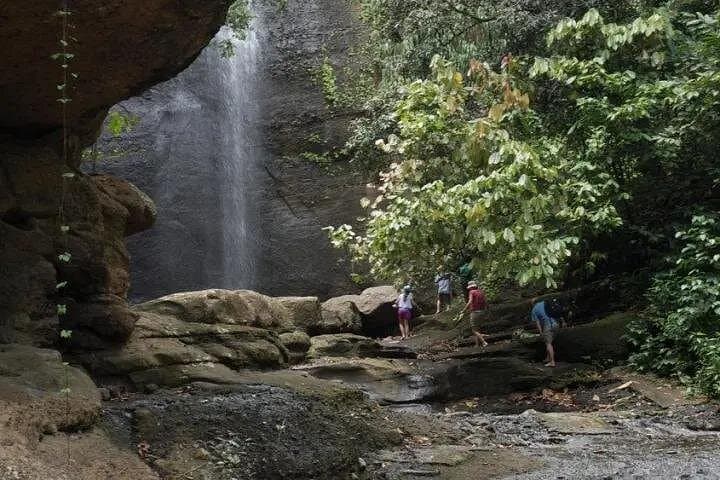
This hike is short by mountain standards, roughly 1.5 hours on foot depending on conditions, but it stacks experiences in quick succession. You’ll pass cinnamon and bay leaf trees, a hint of nutmeg in the air when a branch brushes your shoulder. Giant heliconia drips color. Strangler figs hold silent siege around older trees, while bromeliads collect rain in cupped leaves that brim like tiny cisterns. A final bend, and the forest parts for the star: a waterfall shouldering down black volcanic rock, its pool cool enough to reset your senses in a single breath. The spray lifts and drifts, a passing veil, then clears to reveal fresh detail—cracks in basalt, moss in neon patches, the white seam of falling water pulling the gorge together.
Saint Lucia’s rainforest is the island’s green engine, a remnant of a vast tropical belt that once covered much of the Lesser Antilles. This is a volcanic island—born from the Lesser Antilles arc—and you feel that geology underfoot in the dense, mineral-rich soils and the basalt ledges that edge the stream. Follow any river long enough and it explains the terrain: carving gullies, feeding farms downhill, and finally relaxing into the Caribbean. The Pitons near Soufrière get the postcard fame, but this interior is the island’s everyday miracle. It catches rain, cools the air, and hides species found nowhere else on Earth.
Culture is knotted into these hills. Kweyòl phrases ride the conversation—bonjou to greet, pa ni pwoblem when mud claims a shoe—and history surfaces with every step. Centuries ago, these forests supplied timber and protected the watersheds that kept Castries alive. In the 1970s and 80s, Saint Lucia rallied to save its parrot from the brink, a conservation effort led by local champions that turned schoolchildren into advocates and made the bird a national emblem. The result: the parrot’s numbers rebounded, and guided walks like this one double as quiet lessons in why forests matter.
On the walk out, you notice how the rainforest sets the pace. The path narrows, then relaxes; the river murmurs low, then insists; a breeze gathers uphill, carrying a peppery hint of wild ginger. Nature doesn’t just sit pretty here—it negotiates, nudges, and occasionally challenges. Slick spots will test your footwork. A quick stream crossing asks for commitment. The forest holds you to your choices and rewards the attentive with detail: a land crab tucked beneath a rock, a stick insect measuring distance one deliberate angle at a time, a sapphire-throated hummingbird arrowing from bloom to bloom.
Practicalities add structure to the romance. Plan for moderate exertion on uneven ground with 300–500 feet of rolling elevation. Wear shoes with real traction; this is not a flip-flop outing. Bring one to one-and-a-half liters of water, and carry a lightweight rain shell because showers can sweep in without ceremony. Start early to beat midday humidity and to catch birdlife at its most active. Most guided trips include round-trip transport from Castries and move at a pace friendly to families with older kids and active travelers alike.
The payoff at the falls is flexible: cool your ankles on the edge, wade in for a short soak, or take the brief plunge that erases the stickiness of the hike. The waterfall does its own convincing, bead by bead, as mist settles on your skin and sound fills the gorge. On the return, the forest feels different—less mysterious, more companionable. The current still hurries, but you know where it’s going now. You’ll re-enter the world of cafes and markets with a pocketful of small victories and a mental map of how Saint Lucia holds itself together—rooted, rain-fed, and resilient.
Back in Castries, the day stretches. A roti shop near the market puts spice back into your step, and a fresh lime juice resets your palate. If it’s Saturday night, Dennery’s Fish Fiesta sings with grills and music, an easy coda to a day written in green. The rainforest doesn’t ask for much in return—stay on the path, tread lightly, take only photos and the kind of stories that travel well. The rest it provides: shade, sound, and the steady company of a landscape doing its quiet, essential work.
Trail wisdom
Small choices, better day.
Start Early
Begin by 8 a.m. for cooler temps and better bird activity; afternoon humidity and showers can build quickly.
Footing Matters
Roots and wet rock are the rule—wear grippy hiking shoes and keep strides short on slick sections.
Hydrate Smart
Carry 1–1.5 liters of water per person and sip steadily; the forest is shaded but humidity is high.
Respect the River
Use three points of contact on stream crossings and avoid stepping on algae-covered stones that behave like ice.
Local knowledge
Read the place, not just the route.
Watch for native species including Saint Lucia Parrot (Amazona versicolor), Antillean crested hummingbird.
Keep an eye out for wildlife during the transition between areas and habitats. Respect distance guidelines.
Stay on designated paths to prevent erosion and avoid touching or removing plants. Support licensed guides—your fees help fund forest management and community livelihoods.
Follow the guide's instructions on size limits, ethical handling, and leave-no-trace practices.
Millet Bird Sanctuary lookout for sweeping canopy views. Dennery Fish Fiesta on Saturday night for post-hike eats and music
Locally recommended viewpoints and quiet spots known best to local operators.
Saint Lucia’s interior forests were protected to secure water for Castries; a national campaign in the late 20th century helped save the endemic parrot from near-extinction.
Maritime roots and regional tradition shape the waterways and working coasts.
Seasonal guide
Four versions of the same landscape.
Spring
Best forBirdwatching · Stable trail conditions
ChallengesRising heat · Occasional brief showers
Late March to May brings relatively dry weather with lush foliage and good visibility for birds and blooms.
Summer
Best forFull, powerful waterfalls · Deep green canopy
ChallengesHeat and humidity · Heavier afternoon rain, potential tropical systems
Expect vivid greenery and stronger flows; plan early starts and pack a light rain shell for passing squalls.
Fall
Best forQuieter trails · Photogenic mist and cloud play
ChallengesLingering rains · Slick footing
Shoulder season offers solitude and moody light; tread carefully on muddy sections after storms.
Winter
Best forCooler temps · Lower chance of heavy rain
ChallengesShorter daylight · Popular travel season crowds
December to February is prime for comfortable hiking and clearer skies—book guides and transport ahead.
Pack with intention
What to bring.
Good to know
Common questions.
It’s moderate—expect uneven, sometimes slippery terrain, short climbs, and a stream crossing. Most reasonably fit hikers will be comfortable.
Plan the edges
The details that make the day easier.
Saint Lucia’s national bird, the endemic Saint Lucia parrot (Amazona versicolor), rebounded from fewer than 150 individuals in the 1970s to over 1,000 today thanks to sustained conservation efforts.
Refuel at the Castries Market with hot bakes, saltfish, and fresh lime juice. For an evening cap, head to Gros Islet’s Friday Night Street Party for grilled seafood and rum punch, or try the Dennery Fish Fiesta on Saturdays along the east coast.
- Closest airports
- UVF (Hewanorra International) for most arrivals; SLU (George F. L. Charles) for inter-island flights. Trailheads in the central rainforest are 30–60 minutes from Castries by road. Cell service is spotty to nonexistent in the forest. Guided tours cover access; independent hikers may need a forestry fee—check locally before you go.
These trails traverse protected watershed forests—pack out all trash, use reef-safe sunscreen, stay on durable surfaces, and keep noise low to protect birdlife.
Explore by topic
Follow the threads.
Keep exploring
Make the story part of the trip.
 Related story
Less than two hours from Nairobi, Kereita Forest pairs hands-on canopy adventure with quiet montane trails and a sobering colonial history—perfect for families, teams, and curious travelers seeking a full-day pulse of nature.
Set out from Bass Harbor for a private, customizable day on Blue Hill Bay — lighthouses, puffins, seals, and the chance to feel Acadia from the water. Small groups, local captains, unforgettable views.
In four hours you can move from shaded canyon ferns to wind-scoured coastal ridgelines, guided by someone who knows where the light—and the hidden views—live. This private half-day hike on the Monterey Peninsula or Big Sur is compact, curated, and perfect for travelers who want depth without a multiday commitment.