
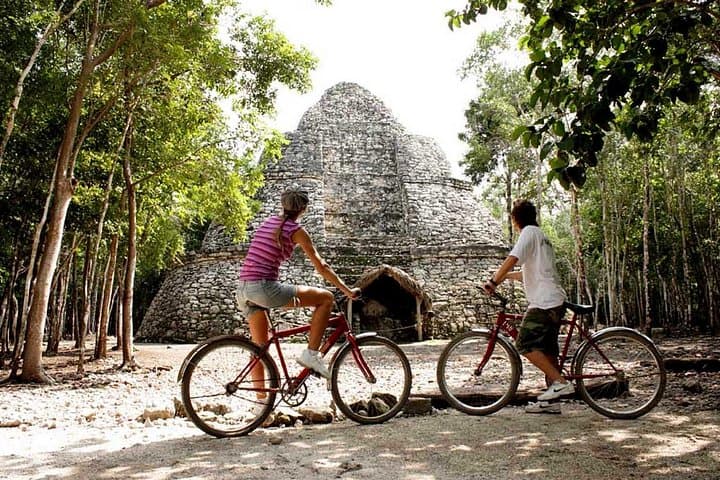
What the day feels like
By late afternoon the jungle has a way of drawing the noise out of you. Tires chew up loose limestone tracks and the air suddenly smells of wet earth and crushed leaf; the trees lean close, as if listening. On the Coba Extreme ATV Adventure, that hush is broken by the low, determined rumble of ATVs, the sudden whoop of a zipline, then the secretive drip of water inside a cave cenote. It’s a day built of contrasts—mechanical grit and ancient stone, adrenaline and the cool hush of underground water—and it moves fast enough to feel like a single continuous exhale.
The itinerary is compact and ambitious: nine hours that stitch together four sensory chapters. You’ll start on ATVs across jungle tracks, cut through a canopy of ceiba and chicozapote, then climb—literally—to Nohoch Mul, the tallest pyramid in the Yucatán. Later, you’ll sail briefly through the treeline on ziplines, and finish by plunging into two cenotes: one a cave with stalactites and stalagmites, the other a wide-open sinkhole that lets sunlight braid through the water. Between those chapters is food: a buffet of regional dishes that folds the day into place with slow-cooked flavors and fresh tropical fruit. Practical and theatrical, the tour is designed to satisfy travelers who want variety without the logistics hassle.
Cobá sits in the soft heart of the northern Yucatán Peninsula, once a major node in a sprawling Classic Maya network of cities linked by sacbéob—raised white-stone causeways that stretched for miles. The ruins at Cobá are less polished than Chichén Itzá or Tulum; panels are mossed, paths tumble into wild grass, and the Nohoch Mul pyramid thrusts through the canopy like a promise. Geologically, the region is a limestone slab riddled with underground rivers; when the bedrock collapses, cenotes form—doorways to aquifers that sustained Maya life and still sustain us. The cenotes you’ll visit are living systems: one protects delicate formations that have grown drip by patient drip for millennia; the open cenote is a chamber of reflected jungle and sky.
Culture here is tactile. The local palate is built around slow-smoked pork (cochinita pibil), citrusy habanero salsa, and tortillas made by hand. The guides—often young people from nearby communities—know jungle trails and family recipes in equal measure, and they’re good at turning a half-day’s worth of logistics into a curated sequence: safety briefings that are short and literal, then a fast pivot to the kind of fun that is unambiguous.
If you’re planning it: expect variable terrain (hard-packed limestone, sand, shallow ruts) and a physical tempo that leans moderate rather than exhausting. The ATVs are typically single-rider models and the route is beginner-friendly, but it’s not a Sunday drive—use the throttle wisely. The zipline segment moves you quickly over canopy; the sensation is emphatic rather than technical. Cenote swims require basic comfort in the water and attention to depth and currents. The full tour runs about nine hours; most of that is allocated to transit, activities, and a generous meal.
Why go? For one, variety: few day trips deliver motorized exploration, an archaeological climb, aerial thrills, and subterranean swimming in a single ticket. For another, the juxtaposition is revealing—standing on Nohoch Mul you can feel how small a modern tourist is against networks of stone and history; an hour later you’re nose-to-nose with a stalactite under a rock ceiling, dripping time back into the pool.
Practical notes: bring closed-toe shoes for the ATVs and a change of clothes for the cenotes; waterproof phone cases and small dry bags are essential. Hydrate early and often—humidity and engine heat add up —and tuck a small amount of cash for site fees or local purchases. Respect the cenotes: avoid sunscreen or insect repellent before entering cave waters unless it’s labeled biodegradable; many guides will provide a place to rinse.
This is not a remote expedition but a curated adventure suitable for confident beginners and experienced travelers who want a high-activity day without complex logistics. The tour’s price point and instant confirmation make it an easy add-on to a Riviera Maya itinerary, and the pace—a blend of full-throttle and slow wonder—leaves you both satisfied and curious to explore more of the peninsula’s living history.
Trail wisdom
Small choices, better day.
Wear protective footwear
Closed-toe shoes are required for ATVs and useful on uneven ruins; sandals are fine for swimming later if you bring a change.
Bring a dry bag
Keep your phone, key items, and wallet safe during cenote swims and on the ATV.
Hydrate before you go
Tropical heat plus engine vibration can dehydrate you quickly—carry a reusable water bottle and refill when offered.
Follow guide instructions on ATVs
Riding can feel instinctive; obey speed and passing rules to avoid accidents on narrow jungle tracks.
Local knowledge
Read the place, not just the route.
Watch for native species including Howler monkeys, Green iguanas and a variety of tropical birds.
Keep an eye out for wildlife during the transition between areas and habitats. Respect distance guidelines.
Cenotes are fragile aquifers—avoid using non-biodegradable sunscreens before swimming, and follow all guide instructions to minimize impact.
Follow the guide's instructions on size limits, ethical handling, and leave-no-trace practices.
Walk the less-traveled stelae paths near the central plaza at Cobá in the early morning light. Stop at a small roadside palapa for cochinita pibil tacos—local flavor often beats town restaurants
Locally recommended viewpoints and quiet spots known best to local operators.
Cobá was a major Maya center connected by sacbéob (stone causeways) to outlying cities; its Nohoch Mul pyramid remains the tallest in the Yucatán.
Maritime roots and regional tradition shape the waterways and working coasts.
Seasonal guide
Four versions of the same landscape.
Spring
Best forModerate temperatures · Fewer crowds than winter · Flora in bloom
ChallengesAfternoon rains possible · Humidity rising late season
Spring (March–May) offers warming temperatures and lush jungle growth—expect brief showers but generally comfortable touring conditions.
Summer
Best forLong daylight hours · Warm cenote swims · Lower airfare in some months
ChallengesHigh heat and humidity · Frequent afternoon storms · Increased insect activity
Summer is hot and humid; cenotes offer a welcome cooling break, but prepare for rain and bugs.
Fall
Best forLower tourist volume · Warm water temperatures · Good value travel deals
ChallengesHurricane season risk (Aug–Oct) · Unpredictable weather
Fall can be quieter and warm, but keep an eye on tropical weather advisories during hurricane season.
Winter
Best forDry weather · Comfortable hiking temps · Peak visibility for views
ChallengesHigher tourist numbers · Prices may rise around holidays
Winter (Nov–Mar) is the most comfortable and reliable season for this tour—cooler, drier, and ideal for combining activities.
Operator details
What the booking data adds.
Included
- ✓Certified guide by the INAH (National Institute of Anthropology and History)
- ✓ATV (double or individual, depending on your reservation)
- ✓Bottles of water during transportation
- ✓Transportation in a van for small groups
Not included
- —Gratuities
- —Souvenir photos (available to purchase)
- —Optional collision insurance payment of $15 USD per ATV (cash only).
Good to know
- ✓Infants and small children can ride in a pram or stroller
- ✓Infants are required to sit on an adult’s lap
- ✓Not recommended for travelers with spinal injuries
- ✓Not recommended for pregnant travelers
- ✓Not recommended for travelers with poor cardiovascular health
- ✓Suitable for all physical fitness levels
- ✓We will contact you by email to confirm your exact pickup time and to confirm the nearest pick up point if your hotel or accommodation is not served by our routes
- ✓The duration of transfers are approximate, the exact duration will depend on the time of day and traffic conditions
- ✓Bring comfortable clothes and shoes, sunglasses, cap, sunscreen and insect repellent for the tour.
- ✓Bring cash or credit card for extra activities, souvenirs and personal shopping, use of video camera.
- ✓All children must be accompanied by and adult.
- ✓Printed proof of purchase of your tour.
Pack with intention
What to bring.
Good to know
Common questions.
No—tours are designed for beginners and include a short safety briefing; however, you should be comfortable operating basic controls and following instructions.
Plan the edges
The details that make the day easier.
Nohoch Mul at Cobá is the tallest pyramid in the Yucatán Peninsula, rising roughly 42 meters (about 138 feet) above the jungle canopy.
After the tour head to Tulum town for authentic bites—try cochinita pibil or a local seafood ceviche, and sample a regional beer or agua fresca at a palapa-style restaurant to round out the day.
- Closest airport
- Cancún International Airport (CUN). Typical drive from Tulum: 45–60 minutes. Cell service: spotty in jungle and cenote areas. Permits
- fees
- Cobá archaeological entrance may require a fee (often included in tour); bring cash for extras.
This tour visits delicate cenote ecosystems—use biodegradable sunscreen, avoid touching formations, pack out all trash, and support certified local guides.
Explore by topic
Follow the threads.
Keep exploring
Make the story part of the trip.
 Related story
Less than two hours from Nairobi, Kereita Forest pairs hands-on canopy adventure with quiet montane trails and a sobering colonial history—perfect for families, teams, and curious travelers seeking a full-day pulse of nature.
Set out from Bass Harbor for a private, customizable day on Blue Hill Bay — lighthouses, puffins, seals, and the chance to feel Acadia from the water. Small groups, local captains, unforgettable views.
In four hours you can move from shaded canyon ferns to wind-scoured coastal ridgelines, guided by someone who knows where the light—and the hidden views—live. This private half-day hike on the Monterey Peninsula or Big Sur is compact, curated, and perfect for travelers who want depth without a multiday commitment.