
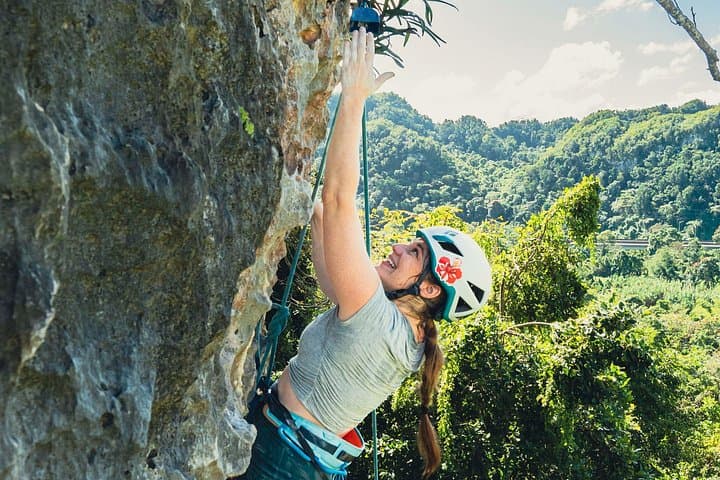
What the day feels like
You swing your leg over a limestone ledge and feel the cliff answer—granular, grippy, a little cool from the shade of a strangler fig. Below, the karst landscape rolls away in a tangle of mogotes—rounded limestone hills that rise like old guardians from a sea of green. The ocean is a pale edge at the horizon; closer in, a river tunnels beneath the island. For two hours, a rope, a belay device, and an AMGA SPI–certified guide are the only things that separate you from the rock.
This guided climb in Puerto Rico’s Northern Karst is designed to be private and adaptable. The operator keeps groups small and relaxed, tailoring routes for absolute beginners—first-time climbers who want to feel the thrill of being vertical—and for experienced climbers seeking varied sport and top-rope lines. Guides hold PR-DRD licenses and more than a decade of guiding behind them, and they bring the kind of calm competence that makes technical learning efficient and confidence-building.
The karst region’s geology is the story beneath every foot placement. Carved from Cretaceous limestone, the cliffs are riddled with pockets, tufas, and seams formed by millennia of dissolution and collapse. The rock has personality: sometimes sharp and pocketed, sometimes slabby and requiring balance rather than brute strength. That variety is part of the appeal—routes that test technique as much as muscle.
Culturally, the Northern Karst has always been a landscape of resources and refuge. Indigenous Taíno people used the caves and springs for food and spiritual practices; later generations farmed its thin soils and relied on the springs that bubble from the limestone. Today, the area around the climbing property sits a short drive from small coastal towns and public beaches—Puerto Nuevo Beach and the spring-fed Tortuguero Natural Spring are both close enough for a post-climb swim or a cold drink at a local roadside eatery.
Practicality sits alongside the romance here. The full experience is a 120-minute private session priced from about $158 per person. That includes professional instruction, top-grade ropes and hardware, helmets, harnesses, and a progressive curriculum: knotwork, belay technique, route reading, and movement drills for those new to climbing; for experienced climbers, guided laps on sport lines and technical coaching to refine footwork and clipping. Guides will adjust the pace to suit children and mixed-ability groups.
Getting the most out of two hours means being punctual and focused. Midday heat on exposed walls can be punishing—start early to take advantage of cool mornings and softer light for photos. Hydrate before you arrive and bring a lightweight daypack; guides supply technical gear, but personal approach shoes and a light, breathable layer make the difference in comfort.
Safety is not an afterthought. Your guides are AMGA SPI trained, meaning they’ve been vetted for single-pitch instruction and safe ropework. Private tours let instructors keep attention tightly focused, so if you want to learn to lead—or simply top-rope confidently—this format accelerates progress without the pressure of a larger class.
Beyond the rock, the Northern Karst rewards curiosity. After your rappel or last top-rope, a short drive takes you to Puerto Nuevo’s shore for a sunset walk, or to Tortuguero’s cool springs if you need a freshwater reset. Local roadside frituras—fried cod fritters (bacalaitos), empanadillas, and mofongo—deliver affordable, satisfying food. If you’re staying in San Juan, the drive out is manageable and scenic; if you’re carless, the operator can advise on transfers.
Who should book? Novices who want safe, high-quality instruction with immediate results; parents traveling with adventurous kids; and climbers who need a quick, well-run session on varied limestone. Expect a moderate physical demand—routes emphasize technique more than sustained endurance—but be prepared for short bursts of exertion and some scrambling on approaches.
Book a morning slot in the dry season (roughly December through April) for the best combination of stable weather and comfortable temperatures. And leave time after climbing to explore local beaches or small inland springs—the region is compact enough to mingle active movement with low-key coastal downtime.
If you go, be present on the rock. The landscape asks you to move deliberately: place your feet, search for pockets, trust a belayer’s voice. The karst will test you, and if you let it, it will teach you the economy of weight, the small corrections that translate to vertical movement. Two hours is brief, but with a good guide it’s long enough to come away with a new skill and the memory of a landscape that looks like it could unravel into caves at any moment.
Trail wisdom
Small choices, better day.
Start early for the best light
Morning sessions avoid the harsh midday sun on exposed limestone and produce cleaner photos and cooler climbing conditions.
Bring a reusable water bottle
Hydrate before the climb and carry 1–2 liters—guides may have refill options but personal water is essential.
Wear grippy approach shoes
Lightweight, sticky-soled approach shoes make the short walk to the crag easier and protect your feet on rocky terrain.
Communicate your goals
Tell your guide whether you want to focus on technique, confidence, or sport climbing so the session is tailored to you.
Local knowledge
Read the place, not just the route.
Watch for native species including Puerto Rican parrot (rare—keep distance), Anoles and other endemic lizards sunning on limestone.
Keep an eye out for wildlife during the transition between areas and habitats. Respect distance guidelines.
Climbing takes place on or near sensitive karst terrain—stay on established approaches, avoid trampling vegetation, and pack out all waste.
Follow the guide's instructions on size limits, ethical handling, and leave-no-trace practices.
Tortuguero’s natural spring pools—great for a post-climb cool-down. Less-trafficked coastal overlook roads for sunset views near Puerto Nuevo Beach
Locally recommended viewpoints and quiet spots known best to local operators.
The Northern Karst has long supported Taíno communities and later Spanish-era settlements; its caves and springs were essential freshwater sources.
Maritime roots and regional tradition shape the waterways and working coasts.
Seasonal guide
Four versions of the same landscape.
Spring
Best forModerate temperatures · Fewer tourists than winter peak
ChallengesOccasional showers late in season · Vegetation growth on approaches
Spring offers milder temperatures and fewer crowds—expect short, scattered showers and lush vegetation on approaches.
Summer
Best forLong daylight hours · Combining climbs with beach time
ChallengesHot, humid conditions · Afternoon thunderstorms
Summer is hot and humid; plan for early starts and avoid afternoon storms that can make limestone slick.
Fall
Best forWarm climbs without peak-season prices · Good visibility after rains
ChallengesHurricane season remnants early fall · Unpredictable storm windows
Fall can be rewarding after rain clears the air, but keep an eye on hurricane-season weather patterns.
Winter
Best forDry, stable conditions · Cooler, comfortable temps
ChallengesHigher visitor demand during peak tourism months · Limited early-morning shade on some walls
Winter (Dec–Apr) is the optimal climbing season with stable, drier weather and comfortable temperatures.
Operator details
What the booking data adds.
Included
- ✓All rock climbing gear and climbing shoes
- ✓Licensed Guide
- ✓Bathroom and shower
Not included
- —Food and water available for purchase
Good to know
- ✓Wheelchair accessible
- ✓Infants and small children can ride in a pram or stroller
- ✓Service animals allowed
- ✓Infants are required to sit on an adult’s lap
- ✓Not recommended for travelers with spinal injuries
- ✓Not recommended for pregnant travelers
- ✓Not recommended for travelers with poor cardiovascular health
- ✓Travelers should have at least a moderate level of physical fitness
Pack with intention
What to bring.
Good to know
Common questions.
Yes—guides are experienced with children and will tailor instruction; guardians should disclose age and comfort level at booking.
Plan the edges
The details that make the day easier.
Puerto Rico’s Northern Karst contains the Río Camuy Cave Park—one of the largest cave systems in the Western Hemisphere and an excellent example of karst topography.
After the climb, head to nearby beachside kiosks for bacalaitos and cold beer, or drive back toward San Juan and stop at a family-run fonda for mofongo and fresh fish—the area’s small restaurants are the best way to taste local life.
- Closest airport
- Luis Muñoz Marín Intl (SJU); Typical driving time from San Juan: 40–60 minutes; Cell service: intermittent near some crags; Permits
- passes
- none for the guided route but tours run on private property—book through the operator.
This is karst terrain with fragile soils and unique hydrology—pack out all trash, avoid chalking beyond need, and stick to established paths to protect springs and cave systems.
Explore by topic
Follow the threads.
Keep exploring
Make the story part of the trip.
 Related story
Less than two hours from Nairobi, Kereita Forest pairs hands-on canopy adventure with quiet montane trails and a sobering colonial history—perfect for families, teams, and curious travelers seeking a full-day pulse of nature.
Set out from Bass Harbor for a private, customizable day on Blue Hill Bay — lighthouses, puffins, seals, and the chance to feel Acadia from the water. Small groups, local captains, unforgettable views.
In four hours you can move from shaded canyon ferns to wind-scoured coastal ridgelines, guided by someone who knows where the light—and the hidden views—live. This private half-day hike on the Monterey Peninsula or Big Sur is compact, curated, and perfect for travelers who want depth without a multiday commitment.