
What the day feels like
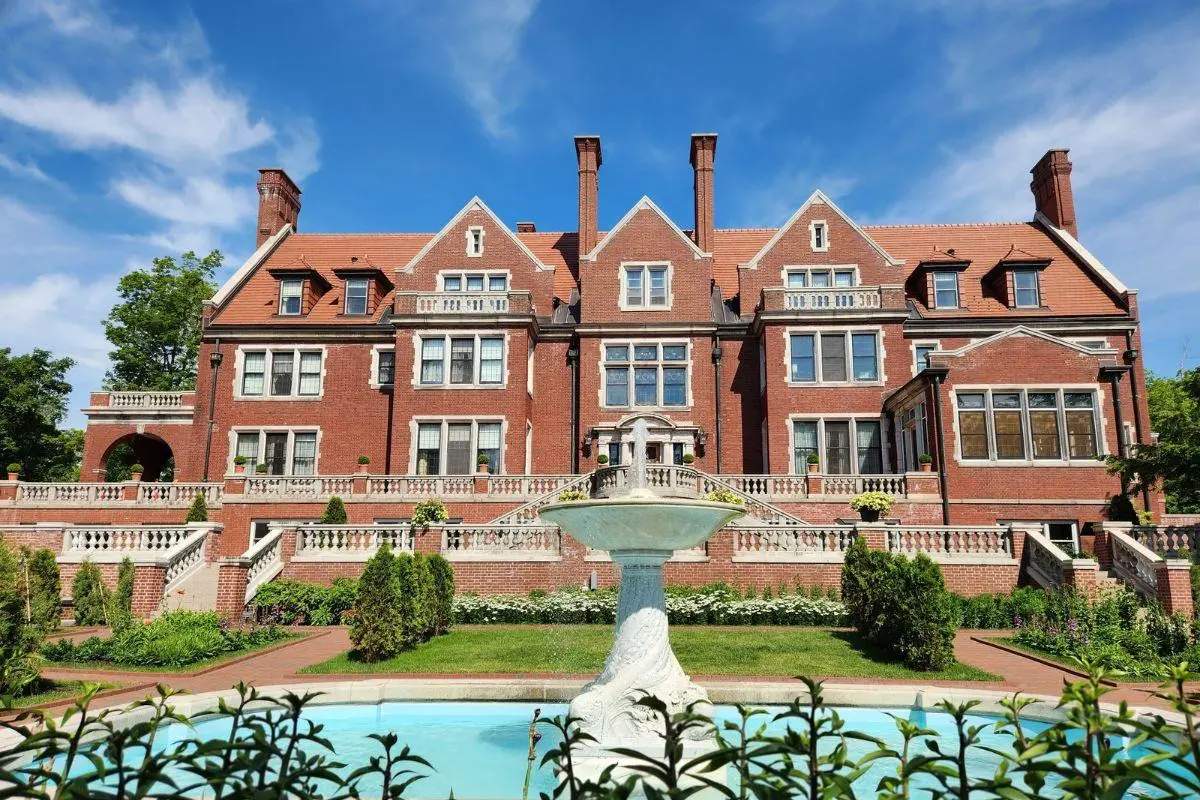
A damp wind from Lake Superior lifts the cedar-scented air as you step off the gravel walk onto the manicured lawn of Glensheen Mansion. The house sits like a storybook anchored to the shore—brick chimneys, gables, and leaded glass that catch the morning light. Inside, rugs whisper underfoot through a series of rooms that still wear the imprint of a single family: Chester Congdon’s fortune-built 39-room estate, intact enough that silverware rests where it did a century ago. Outside, the lake stretches cold and vast. A faint thrum far above reminds you that this is also a place best seen in profile—from the sky.
Glensheen’s particular charm is its dual identity. Up close it’s domestic history—oak-paneled libraries, original period furnishings and gardens designed for both scale and intimacy. From above it becomes part of a larger topography: the Aerial Lift Bridge, the sweep of Canal Park, the ragged spine of the North Shore, and the braided mouths of rivers like Lester and the St. Louis. That is the appeal of pairing a house museum visit with a helicopter tour: one tells the human story, the other the geological one.
Built in 1908 for the Congdon family, Glensheen is a showcase of early-20th-century American wealth and craftsmanship—architectural details that feel precise rather than ostentatious. The mansion sits on roughly 12 acres of shoreline, its rooms numbered and catalogued, its history entangled with Duluth’s boom-era shipping fortunes. In 1977 the estate also became the scene of a tragic murder that reverberated through the community; the story is part of the site’s modern biography and has influenced the mansion’s later stewardship. Today the University of Minnesota Duluth manages the property, balancing public access with preservation.
Geologically, this is Lake Superior country: an ancient basin rimmed with volcanic and gneiss bedrock whose slow, patient erosion has carved the North Shore into a sequence of waterfalls, cliffs and river gorges. From a helicopter—whether on the 30-Mile North Shore Helicopter Tour or the longer 60-Mile Ultimate Helicopter Tour over Duluth and Lake Superior's North Shore—those features read like a topographic map set in motion. You hover over Jay Cooke State Park’s waterfalls, follow the braided channels of the St. Louis River, and watch Spirit Mountain and Ely’s Peak shrink into the landscape. Back at ground level the mansion’s gardens, stone walls and lakeside paths feel intimate and human-sized again.
Culturally, a visit to Glensheen plugs you into Duluth’s maritime and industrial past. The Aerial Lift Bridge, visible from both mansion terrace and helicopter window, was an engineering solution to connect the port to the mainland and remains an emblem of the city’s relationship with Lake Superior. Canal Park’s repurposed brick warehouses now house breweries and galleries; walkable waterfronts make it easy to move between history and modern life in a single afternoon.
Practically: if you want the fullest perspective, make the mansion your first stop in the morning when light slants across the lake and the house is quiet. Take a docent-led interior tour to appreciate the preservation work and stories behind particular rooms and pieces. Reserve an aerial tour for later in the day when thermal conditions are likely smoother and the light softens; both the 30-mile and 60-mile routes circulate over different stretches of shore and city, and each reveals distinct things—the 30-mile tour slings you past Canal Park, Hawks Ridge and Lester River, while the 60-mile itinerary extends farther down the shore toward Jay Cooke and the St. Louis River’s waterfalls.
Comfort and logistics are straightforward but important. Wear sturdy shoes for paths that can be rocky and damp near the shoreline; dress in layers—the wind off Superior can be much cooler than inland. If you’re prone to motion sickness, take precautions before the helicopter ride. Bring a camera with a wide-angle lens for sweeping vistas, and be ready to toggle to telephoto for detail shots of shoreline structures. Book both mansion and helicopter seats in advance during peak season (late spring to early fall); Glensheen’s tours and special events fill quickly, and helicopter availability is weather-dependent.
There’s a rhythm to this kind of day: the hush and human scale of a house museum in the morning; a quick transition to the roar and panorama of a helicopter in the afternoon. Together they give you an unusually complete sense of place—how industry, wealth, carving landscapes and lake weather shaped Duluth’s past and present. For visitors who want a cultural anchor plus an adrenaline stripe, the Glensheen-to-helicopter pairing is efficient, evocative and undeniably photogenic.
If you go: consider a late-summer or fall visit to catch low-angled golden light and, in autumn, the North Shore’s firework show of color. Combine the trip with a Canal Park dinner—fresh-caught fish and a local brew—and you’ll leave with an understanding of Duluth’s geography and a ledger of human stories that make the place more than a postcard. The house will teach you how people lived here; the sky will teach you why they lived here at all.
Trail wisdom
Small choices, better day.
Book timed tours early
Glensheen’s interior tours and the helicopter flights book out in summer—reserve both at least a week ahead to secure preferred times.
Layer up for changing lake winds
Temperatures can drop quickly near the shore; bring a windproof layer for lakeside walks and helicopter ramps.
Protect gear from splash and dust
Use a lens cloth and waterproof pouch—shoreline spray and helicopter rotorwash will find the crevices in your camera bag.
Time your visits by light
Mansion interiors are best in morning light; aerial tours benefit from afternoon thermals and softer shadows for photography.
Local knowledge
Read the place, not just the route.
Watch for native species including Bald eagles nesting near the shore, White-tailed deer in the adjacent woodlands.
Keep an eye out for wildlife during the transition between areas and habitats. Respect distance guidelines.
The University of Minnesota Duluth manages preservation efforts and limits alterations to protect both historic fabric and shoreline ecology.
Follow the guide's instructions on size limits, ethical handling, and leave-no-trace practices.
Stone terraces along the mansion’s shoreline rarely crowded at sunrise. Short lakeside trail that leads to secluded viewpoints of the Aerial Lift Bridge
Locally recommended viewpoints and quiet spots known best to local operators.
Glensheen was completed in 1908 for the Congdon family and preserves original furnishings across 39 rooms on a 12-acre lakeside estate.
Maritime roots and regional tradition shape the waterways and working coasts.
Seasonal guide
Four versions of the same landscape.
Spring
Best forEarly blooms in the mansion gardens · Quieter museum tours
ChallengesUnpredictable weather · Cool lake breezes
Spring brings melting ice and the first green; expect cool, variable conditions and fewer crowds.
Summer
Best forFull access to mansion grounds · Reliable helicopter operations
ChallengesPeak crowds · Higher prices and booked tours
Summer is peak season for both mansion tours and aerial flights—book early and go early to avoid crowds.
Fall
Best forSpectacular North Shore colors · Crisp, clear aerial visibility
ChallengesShorter daylight hours · Potential for early storms
Fall offers the best light and color for both interior and aerial photography, though weather can turn quickly.
Winter
Best forAtmospheric frozen-shore views · Low visitor numbers at the mansion
ChallengesLimited helicopter operations · Cold, icy paths
Winters are dramatic but restrictive—mansion visits continue in limited schedules while flights are often suspended.
Pack with intention
What to bring.
Good to know
Common questions.
Most docent-led tours of Glensheen last about 60–90 minutes, depending on the tour type and seasonal programming.
Plan the edges
The details that make the day easier.
Glensheen Mansion was completed in 1908 and has 39 rooms on a 12-acre estate; it is managed by the University of Minnesota Duluth.
Duluth pairs maritime history with working waterfront culture—after your visit, head to Canal Park for locally smoked fish, craft brews at Fitger’s, and harborfront walking paths.
- Know-before-you-go
- reserve Glensheen tours and helicopter seats in advance; wear layers for lakeside wind; check weather for flight windows; combine with Canal Park for dining and museums.
Choose operators that follow noise-minimizing flight corridors, support the mansion’s preservation fees, and stay on designated paths to protect shoreline vegetation.
Explore by topic
Follow the threads.
Keep exploring
Make the story part of the trip.
 Related story
Aksla is the small mountain that makes Ålesund legible: 418 steps, sweeping panoramas, and a short tour that threads architecture and coastline into 90 minutes of memorable sightlines. Perfect for anyone who wants a quick, high-reward encounter with Norway’s west coast.
 Related story
The New York Public Library’s Main Branch is more than a photo stop—it's a civic living room, an architectural landmark, and a waypoint for walking tours that stitch together Midtown’s history, films, and holiday rituals. Here's how to make the most of a visit.
 Related story
Five miles of riverfront walking that reveal NYC’s quieter rhythms—Riverside Park pairs easy urban hiking with history, birdlife and a front-row view of the city’s climate resiliency efforts. Walk a stretch or follow the Greenway; either way, the Hudson makes its presence felt.