
What the day feels like
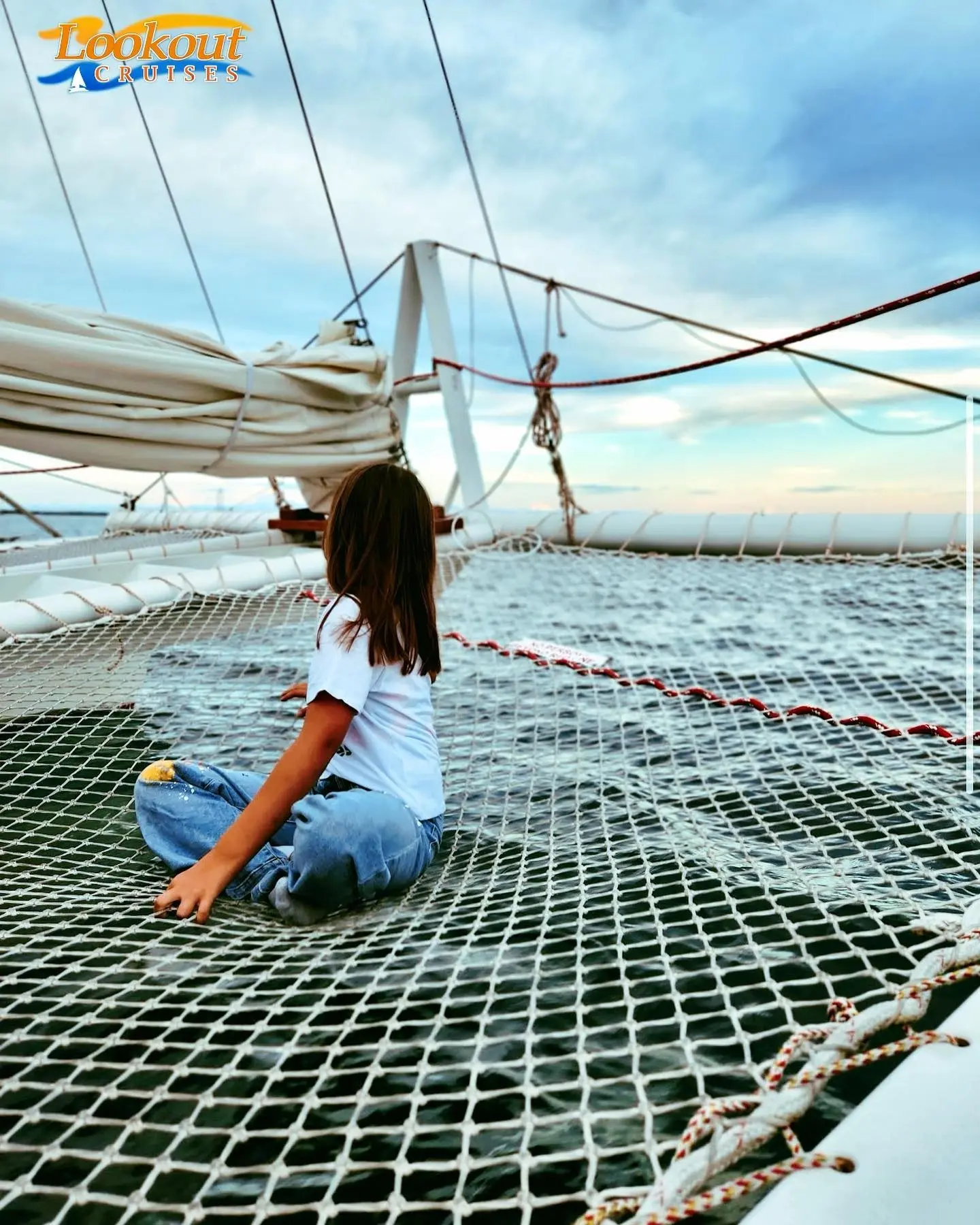
Dawn slips into the harbor like a gentle conspirator, and Beaufort’s waterfront answers back with halyards ticking and gulls heckling the day awake. The Newport River wrinkles under a light southerly, daring you to step aboard and let the current do what it does best—pull you toward the wild edge of the Crystal Coast. By 9:15 a.m., the 37-passenger sailboat pushes off from Front Street, the town receding in a clapboard collage while marsh grass stands at attention. Somewhere upriver, bottlenose dolphins are already at work, corralling breakfast, and the wild horses of the Rachel Carson Reserve flick their tails like they own the morning—which, to be fair, they do.
Lookout Cruises runs this pared-back, two-hour ritual daily: a morning sail into the estuary where dolphins have returned, season after season, as predictably as tide. The crew reads the water’s body language—a riffle here, a V-wake there—and then, just a few feet off the beam, a dorsal fin splits the surface. Another follows, a juvenile shadowing its mother. The river urges them forward; they answer with arcs and breaths, the exhale a soft punctuation. When the boat idles, marsh silence steps closer, and you hear the river’s pulse as clearly as a heartbeat.
It’s not just the dolphins that hold the gaze. Across the channel, the island complex of the Rachel Carson Reserve—Carrot, Town Marsh, Bird Shoal—anchors a piece of Carolina history that moves on four legs. Wild Banker horses, descendants of Colonial-era and possibly shipwrecked Spanish stock, graze on cordgrass within clear view of the deck. Ears flick, manes toss, and the herd keeps its own counsel, as they’ve done for centuries on nearby Shackleford Banks. The captain maintains respectful distance; these are neighbors, not performers. The water does the introducing.
Beaufort itself is a study in maritime persistence. Established in 1709, this was a working port long before it charmed weekenders with pastel porches and shrimp-and-grits menus. The estuary is the engine—where salt and freshwater mingle to feed the web of life that brings dolphins back year-round and migratory birds in dense, seasonal waves. Barrier islands—Bogue Banks to the west, the Core Banks to the east—channel wind and tide into the Newport River’s wide mouth, a brackish trough that breeds baitfish and surprises. On the right day you might see an osprey dive like a thrown spear or a pelican skim the chop, wingtips daring the surface.
The morning schedule matters. Early light softens the water and winds are typically lighter, keeping seas calm and the ride easy for families. Even on choppier days, the boat handles Beaufort’s waters with steady confidence, and seasickness is rare in the river’s protected fetch. Shade is available, there’s an onboard restroom, and the boat is open-air—breezy enough that the day feels good in your lungs. Pack a hat, polarized sunglasses, and reef-safe sunscreen, and let the crew mind the details, from safety briefings to spotting fins before you do.
Lookout Cruises has watched some dolphins long enough to recognize individuals by their dorsal fins—a notch here, a scallop there. That familiarity doesn’t dull the encounter; it deepens it. Each sighting is a moment you share with the animals on their terms. Federal guidelines recommend at least 50 yards of distance, and the captain plays by those rules, reducing speed and letting curiosity—not pursuit—dictate the show. On a good day, the dolphins stitch along the boat like tailors with a silver thread; on a quieter day, the river asks for patience and repays it with subtlety.
Between sightings, the crew threads the boat along marsh edges, where the island whispers its own stories: Rachel Carson studied these flats in the 1940s, and her name now graces the reserve that protects this nursery of life. The North Carolina National Estuarine Research Reserve—including this very cluster of islands—was established in 1985 to safeguard habitats like these. The water pushes forward; the land yields in a long conversation with wind and tide. You catch yourself listening to it.
Back on shore by 11:15 a.m., Beaufort unfurls in walkable scale. A few blocks away, you can browse the North Carolina Maritime Museum or grab lunch facing the harbor you just sailed. The trip’s easy arc—from anticipation to encounter to return—makes it ideal for families, multi-generational groups, or anyone who wants a clean, salt-aired reset without committing an entire day. If you want tailored planning advice or to connect with seasoned pros who know the local rhythms, tap into our network of <a href="https://app.advcollective.com/local-experts/undefined">local experts in Beaufort</a>. They’re a smart first call for timing a visit around tides, winds, and seasonal wildlife behavior.
If you’re building a longer Crystal Coast itinerary, consider pairing the sail with a late-afternoon beach walk on Atlantic Beach or a sunset sit along Taylor’s Creek. For more trip-planning intel—from family-friendly dining to photography-perfect vantage points—our <a href="https://app.advcollective.com/local-experts/undefined">Crystal Coast guides</a> make the logistics simple. And if dolphin behavior, estuary ecology, or sustainable wildlife viewing are interests of yours, our team can connect you to <a href="https://app.advcollective.com/local-experts/undefined">knowledgeable local naturalists</a> who bring the science to life without lightening the mood.
In a region where water is the main character, this outing lets you learn the language it speaks: an easy morning cadence, a chorus of breaths and wingbeats, horses keeping schedule with the tides. You step off with sea salt on your skin, the boat’s gentle sway still in your balance, and a better sense of how life arranges itself where river meets sea. Simple, memorable, and right on time.
Trail wisdom
Small choices, better day.
Arrive 20 Minutes Early
Parking and check-in on Beaufort’s waterfront can take a few minutes—arrive early so you’re aboard and relaxed by 9:15 a.m.
Dress in Light Layers
Morning breezes can be cool even in summer. A light windbreaker keeps you comfortable while the sun warms up.
Polarized Sunglasses = Better Wildlife Spotting
Polarization cuts glare so you can see dorsal fins and horses across the flats more easily.
Skip the Cooler
Personal coolers aren’t allowed. Bring a water bottle and small snacks if permitted; ask the crew what’s allowed.
Local knowledge
Read the place, not just the route.
Watch for native species including Bottlenose dolphins, Wild Banker horses.
Keep an eye out for wildlife during the transition between areas and habitats. Respect distance guidelines.
Observe NOAA guidelines by keeping at least 50 yards from dolphins and giving wild horses ample space; minimize wake and pack out all trash.
Follow the guide's instructions on size limits, ethical handling, and leave-no-trace practices.
Carrot Island boardwalk overlook for a quiet post-cruise wildlife scan. Side streets of the Beaufort Historic Site for shaded, story-packed strolls
Locally recommended viewpoints and quiet spots known best to local operators.
Founded in 1709, Beaufort grew as a maritime hub; the Rachel Carson Reserve across the channel protects estuarine habitats central to that heritage.
Maritime roots and regional tradition shape the waterways and working coasts.
Seasonal guide
Four versions of the same landscape.
Spring
Best forMild temps · Active dolphin behavior
ChallengesBreezy mornings · Variable weather fronts
Spring offers comfortable sailing and frequent wildlife activity as waters warm and crowds remain light.
Summer
Best forFamily outings · Calm morning seas
ChallengesHigh UV index · Heat and humidity
Morning departures beat the heat and typical afternoon winds; bring sun protection and hydrate.
Fall
Best forClear skies · Fewer crowds
ChallengesOccasional coastal storms · Cooler early starts
Dry, clear air makes for sharp views of horses and birds; a light layer keeps dawn chill at bay.
Winter
Best forCrisp visibility · Quiet waterways
ChallengesCold winds · Limited departures during weather systems
Cool, bright days can be stunning, but bundle up and check forecasts for wind and fronts.
Pack with intention
What to bring.
Good to know
Common questions.
Yes, there is an onboard restroom for guest use.
Plan the edges
The details that make the day easier.
The Rachel Carson Reserve across from Beaufort is part of the North Carolina National Estuarine Research Reserve, established in 1985 to protect vital coastal habitats—home to the area’s famous wild Banker horses.
Post-sail, wander to Front Street and order peel-and-eat shrimp with a local beer at a harbor-view spot; the North Carolina Maritime Museum is a short walk for maritime history, while ice cream on the boardwalk lets you keep an eye on Taylor’s Creek for one more fin or horse sighting.
- Closest airports
- EWN (New Bern, ~38 miles) and OAJ (Jacksonville, ~60 miles). Dock: Beaufort waterfront on Front Street—walkable from most in-town stays. Cell service: Good near town; may dip briefly on the water. Permits: None required; personal coolers not permitted; arrive early for boarding.
These tidal flats are sensitive nurseries—use reef-safe sunscreen, keep voices low around wildlife, and follow crew instructions to maintain legal viewing distances. Pack out all trash and minimize single-use plastics.
Explore by topic
Follow the threads.
Keep exploring
Make the story part of the trip.
 Related story
Aksla is the small mountain that makes Ålesund legible: 418 steps, sweeping panoramas, and a short tour that threads architecture and coastline into 90 minutes of memorable sightlines. Perfect for anyone who wants a quick, high-reward encounter with Norway’s west coast.
 Related story
The New York Public Library’s Main Branch is more than a photo stop—it's a civic living room, an architectural landmark, and a waypoint for walking tours that stitch together Midtown’s history, films, and holiday rituals. Here's how to make the most of a visit.
 Related story
Five miles of riverfront walking that reveal NYC’s quieter rhythms—Riverside Park pairs easy urban hiking with history, birdlife and a front-row view of the city’s climate resiliency efforts. Walk a stretch or follow the Greenway; either way, the Hudson makes its presence felt.