
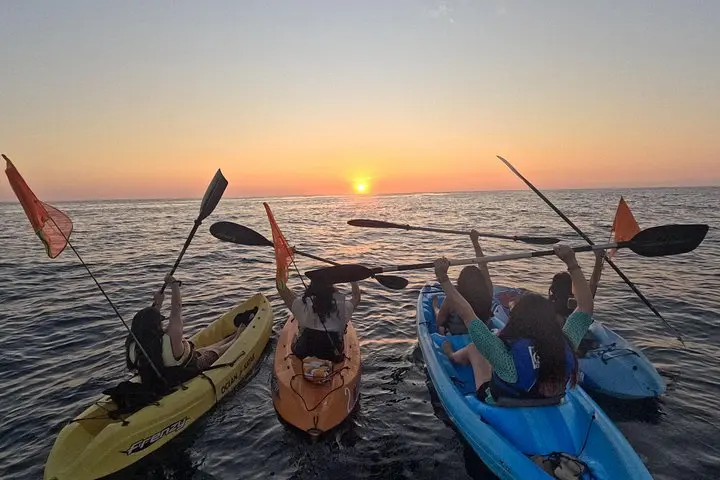
What the day feels like
The sun hovers just over the Pacific when your guide pushes the kayak into a pocket of glassy water and the bay inhales. Light threads across the hull, gulls argue with the breeze, and the sea seems to move with intention—inviting, testing, guiding. Paddling out of the small cove, the shoreline slides by: coconut palms, a scatter of painted houses, then a long sweep of cliffs that have held the same rhythm for millennia. The ocean here doesn’t wait for you to decide. It nudges, it reveals, and if you pay attention it will reward you with company—turtles popping up like curiosity, pods of dolphins cutting lines in the distance, and, at certain seasons, the slow shadow of a whale passing far offshore.
This is the rhythm of kayaks in Bahías de Huatulco, an archipelago of nine sheltered bays on Mexico’s southern Pacific coast. Small-group outings—often about three and a half hours—are timed for calm water and the best light. Guides steer you into coves where cliffs and reefs create sanctuaries; here the swell softens and the ocean’s life grows confident. According to local operators, wildlife encounters are the rule rather than the exception: dolphins and rays are daily visitors, green and olive ridley turtles are frequent, and migratory whales can be seen in the winter months, turning the sea into an enormous, living map.
The geological story reads along the coast. Huatulco’s bays were carved by tectonic uplift and coastal erosion; the result is a mosaic of rocky headlands, hidden beaches, and fringing coral. The shallow reefs hold a surprising density of marine life because these bays are protected from the open ocean’s pummeling—perfect conditions for exploring from a sit-on-top kayak or tandem sea kayak. Human history here is layered: the coastline has been a seasonal fishing ground for generations, and the modern tourist economy grew carefully around those bays in the late 20th century to preserve both community and ecology.
Culturally, Bahías de Huatulco blends indigenous Oaxacan traditions with coastal livelihoods. Local villages, many clustered near La Crucecita and Tangolunda, are places of small markets, fresh seafood, and the particular cadence of a place dependent on the tides. Guides are often local—staunch stewards who pride themselves on low-impact touring and on sharing stories as much as directions. Operators advertise a high contact rate with wildlife and tailor routes to minimize disruption: staying offshore from nesting beaches, avoiding sensitive reef patches, and keeping group sizes small.
Practicalities: Most guided tours last about 3–4 hours and cost in the neighborhood of US$71–80 per person. Expect early starts—sunrise departures are common because the wind is usually light and wildlife is most active in low light. Sea conditions in the bays are typically calm; distances paddled can vary, but plan for 4–7 kilometers of easy to moderate paddling. No advanced technical skills are required, but you should be comfortable sitting and paddling for a couple of hours and able to follow basic safety instructions.
What the trip actually feels like is both intimate and big. Paddling through a narrow inlet feels like slipping into a secret room; pulling up to a reef and slipping a mask into the water brings an underwater world into focus—the reef’s faded blues and golden sponges, a parrotfish scraping at coral, a hawksbill gliding slow as a thought. Guides often combine kayaking with a snorkel stop, so you alternate motion and stillness, surface and depth. Between breaths you’ll trade facts with the person next to you: which turtle species nests nearby, where the best local cevichería is, which headland offers the cleanest sunset.
Safety and stewardship are part of the story. Bring reef-safe sunscreen, respect wildlife distances (guides will set the pace), and avoid single-use plastics. Many local operators emphasize conservation—some contribute to turtle nesting programs or reef monitoring—so booking with a guide who gives back ensures your dollars support the place you’re exploring.
Timing, gear, and a few tactical moves will make the morning sing. Aim for sunrise departures for mirror-flat water and cooler air. Wear a hat and quick-dry clothing, and keep water, electrolytes, and salty snacks within reach. If you’re prone to sunburn, bring an extra layer—long-sleeve shirts with UPF and light gloves are small investments that pay off. Photography-wise, low-angle shots at dawn flatten the horizon and make dolphins look cinematic, while snorkeling after a calm paddle produces the richest colors.
Booking is straightforward: many tours confirm instantly and offer free cancellation if plans change. If you want private time or a more personalized wildlife focus—photo-centric stops, for instance—ask about private departures. For a built-in, community-minded option, consider an operator who partners with local conservation efforts; they tend to know the bays’ quieter corners and best snorkeling reefs. If you’re curious about a specific sunrise kayak and snorkel option, this local expert listing is a good place to start: <a href="https://app.advcollective.com/local-experts/sunrise-kayak-snorkel-huatulco-bays">sunrise kayak and snorkel in Huatulco bays</a>.
In the end, what makes kayaking in Huatulco more than a tick on a list is the scale of access. You can approach marine animals without the roar of a motor, move slowly enough to notice small things, and leave when the tide tells you to. The sea here is not an adversary; it’s an active collaborator—shaping the route, hiding a cove, revealing a turtle. If you go with curiosity and respect, you’ll come away with better pictures, livelier stories, and a clearer sense of why these bays have always been held close by the people who live beside them. For practical bookings and more details on what to expect from a morning departure, see this local guide’s listing: <a href="https://app.advcollective.com/local-experts/sunrise-kayak-snorkel-huatulco-bays">sunrise kayak and snorkel Huatulco bays</a>.
Trail wisdom
Small choices, better day.
Start at Sunrise
Mornings usually have the calmest water and the best wildlife activity—plan for an early departure.
Use Reef-Safe Sunscreen
Protect both your skin and coral ecosystems by choosing mineral-based sunscreen.
Hydrate and Snack
Bring at least 1–2 liters of water and a salty snack to maintain energy during the paddle.
Respect Wildlife Distance
Let guides set the pace—approach animals slowly and never chase or block their path.
Local knowledge
Read the place, not just the route.
Watch for native species including Dolphins, Green and Olive Ridley Turtles.
Keep an eye out for wildlife during the transition between areas and habitats. Respect distance guidelines.
Local operators often practice low-impact touring and some contribute to turtle nesting and reef monitoring programs.
Follow the guide's instructions on size limits, ethical handling, and leave-no-trace practices.
Small, shell-strewn cove accessible only by kayak. Secluded reef shelf where sea turtles frequently feed
Locally recommended viewpoints and quiet spots known best to local operators.
The bays grew into a managed tourist area in the late 20th century to balance development with local fishing and ecology.
Maritime roots and regional tradition shape the waterways and working coasts.
Seasonal guide
Four versions of the same landscape.
Spring
Best forCalm seas · Snorkeling clarity
ChallengesIntermittent wind · Higher temperatures
Spring brings generally calm conditions and clear water, though afternoons can warm quickly—mornings are best for paddling.
Summer
Best forWarm water · Dense marine life
ChallengesOccasional afternoon storms · Strong sun
Summer offers warm sea temps and abundant life; plan for early starts to avoid afternoon squalls and heat.
Fall
Best forQuiet bays · Good visibility
ChallengesOccasional swell from storms farther south
Fall is often quieter with stable wildlife patterns—visibility for snorkeling remains excellent.
Winter
Best forWhale watching · Cooler air
ChallengesChoppier open water on rare days · Cool mornings
Winter can bring migratory whales offshore and brisk mornings—dress in layers and watch weather forecasts.
Operator details
What the booking data adds.
Included
- ✓Private transportation
- ✓fruit, energy bars
- ✓Use of Snorkelling equipment
- ✓Coffee and/or Tea
Good to know
- ✓Service animals allowed
- ✓Public transportation options are available nearby
- ✓Not recommended for travelers with poor cardiovascular health
- ✓Travelers should have at least a moderate level of physical fitness
Pack with intention
What to bring.
Good to know
Common questions.
No—most tours are suitable for beginners; guides provide a short skills briefing and basic paddling techniques.
Plan the edges
The details that make the day easier.
Bahías de Huatulco is part of a federally protected park established to conserve marine and coastal habitats around the nine bays.
After the paddle, head to La Crucecita for freshly grilled fish or a ceviche tostada and a cold artesanal cerveza; try Oaxacan chocolate or mezcal if you want a deeper taste of the region.
- Closest airport
- Bahías de Huatulco International Airport (HUX)
- Trailhead
- local bay launch near La Crucecita
- Driving from La Crucecita
- 10–20 minutes depending on bay
- Cell service
- intermittent in coves
- Permits
- none for day tours, but operators manage access
Choose guides who use reef-safe sunscreen policies, avoid entering nesting beaches, and support local conservation projects to minimize your impact.
Explore by topic
Follow the threads.
Keep exploring
Make the story part of the trip.
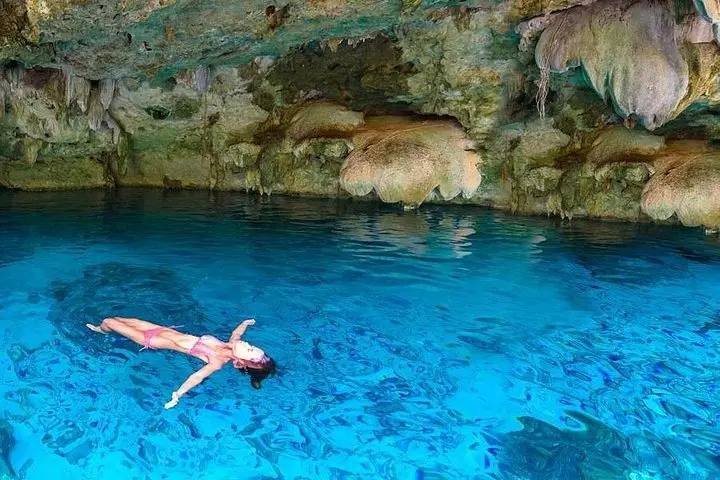 Related story
Dive into the Yucatán’s secret freshwater caverns and drift over the shallow reef gardens of Yalku Lagoon—an accessible, half-day snorkel pairing that blends geology, Mayan history, and vivid marine life.
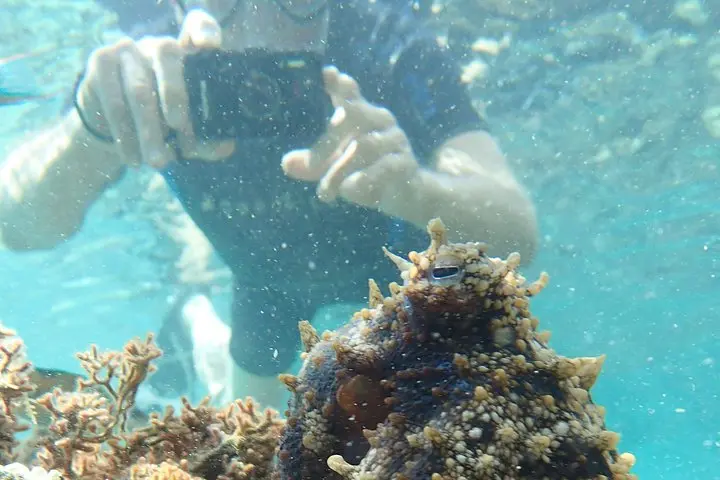 Related story
Slip beneath Porto Santo’s sunlit surface to find a mosaic of seagrass meadows, volcanic shelves, and playful schools of fish. This three-hour snorkeling tour pairs small-group access with local stewardship—ideal for travelers who value marine life over crowds.
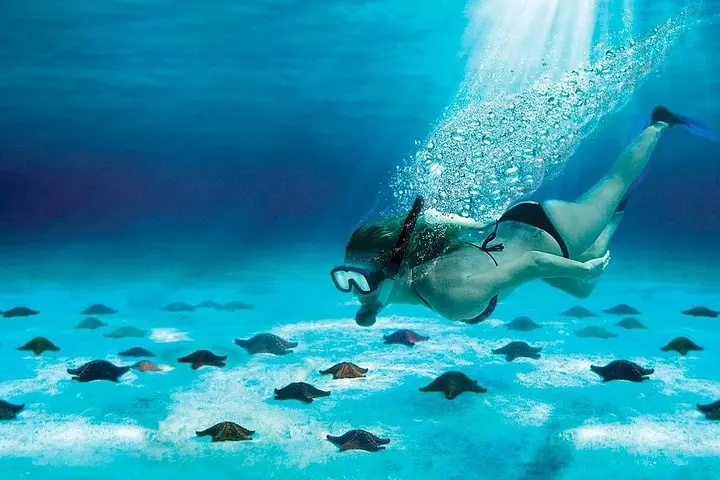 Related story
Spend a day on a high-speed boat exploring Cozumel’s famed reefs and the shallow sand flats of El Cielo. This full-day trip offers clear water, abundant marine life, and guided snorkeling at three prime sites—ideal for both first-timers and seasoned reef lovers.