
What the day feels like
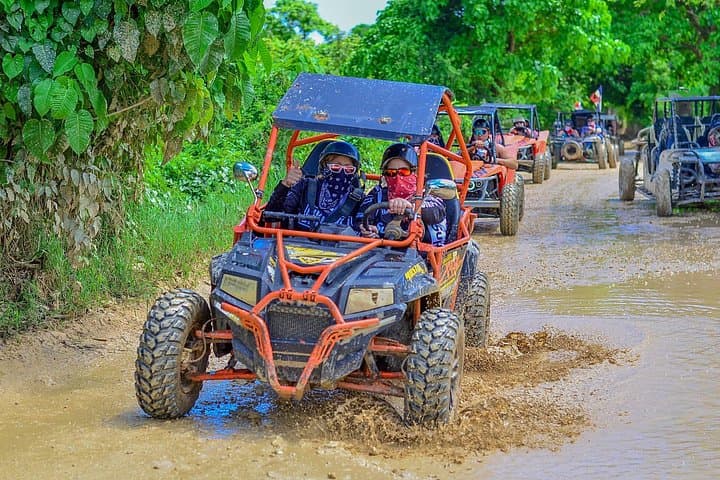
By the time the sun climbs high enough to make the palms glitter, the line of Polaris buggies hums like a small, obedient swarm. You strap in, the guide runs a quick safety brief in Spanish and English, and the engine answers like a dog eager to run. The first minutes out of the staging area are civilized—gravel turning to packed dirt and the occasional whiff of sea salt—then the road folds into white tracks between sugarcane and scrub. Within half an hour the ride has become less about the destination and more about the physics of motion: mud daring you to pick a line, ruts pushing against the suspension, low branches brushing the roof like a nervous crowd. It’s loud and tactile and immediate in a way that tropical resorts rarely are.
This half-day Terracross Polaris tour is an education in contrasts. You cross old agricultural landscapes where cane fields still dominate the horizon and pass through small rural communities—bateyes—whose rhythms are set by sun and harvest. Geologically, you’re still on the flat, limestone strand that defines eastern Hispaniola, but the surface hides pockets of mangrove, shallow lagoons, and coral reef systems offshore. The ecology here is resilient and weathered; trees lean into the trade winds, and the occasional iguana lounges like a sunbather on a rock.
The Dominican Republic’s eastern corridor only became the tourism engine it is today in the late 20th century; Punta Cana was once undeveloped coastline and farmland until investors and developers saw the same wide beaches and protective reefs that now draw sun-seeking travelers. Off-road tours like this thread the needle between two worlds: modern tourism infrastructure on one side and a living, working rural landscape on the other. Along the way you’ll see signs of that shift—small tiendas selling cold drinks, rum bottles tucked into displays, and the occasional pickup truck carrying machetes and produce.
Culturally, drivers and guides are often local, and small interactions—hand waves, roadside fruit vendors offering chunks of mango, or a child watching a passing convoy—feel genuine. Respect these moments: ask before photographing, buy a snack from a vendor if you can, and consider tipping your guide for local knowledge. Beyond the human interactions, there is wildlife to spot. Eastern Hispaniola supports a surprising variety of birdlife, and the fringes of mangroves and ditches harbor crabs, iguanas, and small mammals that know how to keep a low profile.
Practically, this is a three-hour, high-adrenaline loop that is accessible to most people who can climb into a UTV and tolerate bumps. The terrain varies from firm tracks to sand, shallow water crossings, and muddy patches after rains. Drivers should be alert and willing to work with the vehicle—this isn’t a chauffeured tour where you only sip juice; you’ll get muddy and exhilarated. The operator typically supplies helmets, goggles, and a guide per vehicle, so safety is layered but not absolute. Expect your skin to catch sun and dust in equal measure; a light windbreaker and long-sleeve sun shirt are more useful than you might think.
Timing makes the difference between a pleasant cruise and a slog. Morning runs (before 10:30 a.m.) tend to have firmer tracks and softer light for photos. After heavy rain—most common during the late summer and early fall—sections turn into thick, sticky mud that can slow the convoy and demand more driver skill. This is part of the fun for many, but if you prefer less mess, aim for the dry season between December and April.
Cost is straightforward: expect to pay from about USD 60 per person for the half-day format. That price generally includes vehicle, helmets, goggles, a bilingual guide, and bottled water; it does not usually include hotel transfers or gratuities. The ride’s three-hour duration includes staging, safety talk, and a few stops to take photos and explore small roadside features.
What to prepare for: comfortable closed-toe shoes that can handle mud, a small daypack for sunscreen and water, and a phone in a waterproof pouch if you want pictures—your guide may also pose the group at scenic points for a better photo than you can get while driving. If you suffer from motion sensitivity, consider anti-nausea measures: the combination of dust, speed, and lateral motion can unsettle some riders.
For travelers who want more than a thrill, pair the ride with cultural context: visit a local market in Higüey afterward to taste Dominican staples, or stop at a beachside paladar for fried red snapper and cold Presidente beer. If you care about footprint, choose operators who emphasize responsible driving—sticking to established trails, avoiding private crop damage, and not chasing or disturbing wildlife.
At the end of the loop you’ll find yourself rinsing off mud and trading laughter with strangers who felt, for a few hours, like co-conspirators. There’s an elemental honesty to a day in the buggies: you return a little dirtier and a lot more awake. That’s the selling point of this half-day in northern Punta Cana—quick to join from resort bases, efficient in delivery, and honest in its thrills. For people who want to add a raw, tactile edge to their beach vacation, it’s one of the most effective ways to feel the landscape move under you.
Trail wisdom
Small choices, better day.
Book morning departures
Tracks are firmer and photos are better before mid-morning heat and tourist traffic pick up.
Bring a waterproof pouch for your phone
Dust, mud, and occasional splash crossings make a protective pouch essential for photos.
Wear closed-toe shoes
Sturdy sneakers or lightweight hiking shoes protect feet during on/off vehicle moments and wet patches.
Tip your guide
Guides manage safety, vehicle handling, and local interpretation—plan to tip if service is good.
Local knowledge
Read the place, not just the route.
Watch for native species including Green iguana, Tropical shorebirds (egrets, herons).
Keep an eye out for wildlife during the transition between areas and habitats. Respect distance guidelines.
Choose operators that stick to established tracks to avoid damaging fragile coastal scrub and support local communities by hiring guides and buying local goods.
Follow the guide's instructions on size limits, ethical handling, and leave-no-trace practices.
Small roadside fruit stands selling fresh coconut or mango chunks. Quiet beach pulls near the route where local fishers launch in the morning
Locally recommended viewpoints and quiet spots known best to local operators.
Punta Cana’s transformation into a tourism hub began in the late 20th century; much of the surrounding countryside retains agricultural uses like sugarcane farming.
Maritime roots and regional tradition shape the waterways and working coasts.
Seasonal guide
Four versions of the same landscape.
Spring
Best forStable dirt tracks · Moderate temperatures · Fewer afternoon showers
ChallengesOccasional rain squalls · Some sections still soft after winter rains
Spring offers warm, comfortable weather and generally good trail conditions—expect some intermittent showers but mostly solid driving.
Summer
Best forLush green scenery · Lower rates · Long daylight hours
ChallengesHigher afternoon heat · More frequent rain and sticky mud
Summer’s green landscapes are beautiful but expect sudden downpours that can turn routes muddy and slow progress.
Fall
Best forFewer crowds · Warm water temperatures · Good light for photos
ChallengesGreater hurricane-season risk (Aug–Oct) · Variable trail conditions
Fall can be a sweet spot outside intermittent storm weeks, but keep an eye on weather forecasts during hurricane season.
Winter
Best forDry trails · Crisp mornings · Peak tourist season activities
ChallengesHigher prices · Busier departure times
Winter is the most reliable season for dry, fast tracks and predictable weather—book early for holiday windows.
Operator details
What the booking data adds.
Included
- ✓Taino Cave and Macao Beach
- ✓Hotel pickup and drop-off
- ✓Profesional Guide- Escort
Not included
- —Souvenir photos & DVD (available to purchase)
- —Towel
- —The client must be aware of their belongings, our company is not responsible for lost items.
- —This tour does not include pickup in Verón/Bávaro Pueblo, but we can arrange a nearby meeting point.
- —This tour does not have pick-up in Cap Cana or the airport area, the taxi is at the client's expense
Good to know
- ✓Not recommended for pregnant travelers
- ✓Suitable for all physical fitness levels
- ✓This tour does not include pickup in Verón/Bávaro Pueblo, but we can arrange a nearby meeting point.
- ✓This tour does not have pick-up in Cap Cana or the airport area, the taxi is at the client's expense
Pack with intention
What to bring.
Good to know
Common questions.
No. Tours usually allow any adult passenger to drive after a brief familiarization and safety check by the guide, but age and weight restrictions may apply.
Plan the edges
The details that make the day easier.
Punta Cana International Airport (PUJ) opened in 1983 and played a major role in opening the eastern Dominican Republic to international tourism.
After the ride, head to Bávaro or a nearby beach paladar for fried fish, rice and beans, and a cold Presidente. Look for family-run eateries and small artisan stalls to sample local flavors and support the community.
- Closest airport
- Punta Cana International Airport (PUJ); Typical drive from resort area: 20–60 minutes depending on hotel; Cell service: generally available but patchy on backcountry tracks; Permits: none for visitors, but guided tours required by operator.
Keep to marked trails, avoid disturbing mangroves and shoreline, pack out trash, and support operators who employ local guides and respect private land.
Explore by topic
Follow the threads.
Keep exploring
Make the story part of the trip.
 Related story
Less than two hours from Nairobi, Kereita Forest pairs hands-on canopy adventure with quiet montane trails and a sobering colonial history—perfect for families, teams, and curious travelers seeking a full-day pulse of nature.
Set out from Bass Harbor for a private, customizable day on Blue Hill Bay — lighthouses, puffins, seals, and the chance to feel Acadia from the water. Small groups, local captains, unforgettable views.
In four hours you can move from shaded canyon ferns to wind-scoured coastal ridgelines, guided by someone who knows where the light—and the hidden views—live. This private half-day hike on the Monterey Peninsula or Big Sur is compact, curated, and perfect for travelers who want depth without a multiday commitment.