
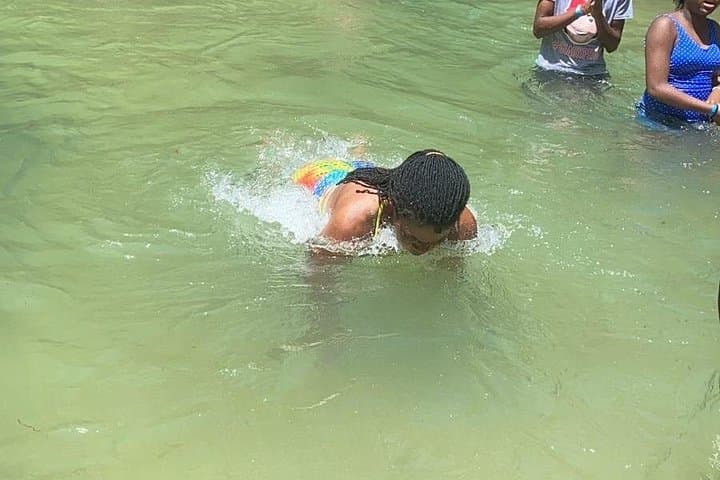
What the day feels like
You slide off the mud buggy at a clearing where the jungle opens up like a door. There is the river—a narrow, restless ribbon threading through limestone and palms, dragging light over yellow stones—and above it, waterfalls, one after another, stepping down the slope like a hidden staircase. The air smells of wet earth and citrus. Somewhere upstream kids laugh as they launch from a rock into a deep, dazzling pool the company calls a blue lagoon. For six to eight hours, the island reconfigures itself into a playground of two very different rhythms: the rush of ATVs through root and rut, and the slow, insistently patient pull of water over stone.
Benta River and ATV Adventures is a compact, all-in-one Jamaican day: off-road adrenaline, a sequence of seven waterfalls, a blue lagoon for cooling off, and a homestyle meal to bring you back. It is family friendly but uncensored—the trails will get you muddy, the pools will chill you, and the guides will cheer when you commit to the cliff jump. The tour packages transport from Montego Bay, folds in local interpretation about the river and land stewardship, and even offers campsite space for groups wanting overnight immersion. There are no dramatic vertical gains to log; the terrain is tropical lowland with narrow ravines, rocky creek beds, and single-track through thick understory. What it lacks in alpine drama it makes up for with kinetic variety: engine rumble, palm canopies, waterfalls, and the chance to drop into a natural pool.
Geologically, Jamaican rivers like Benta are carved through limestone and alluvial deposits, and their waterfalls are seasonal expressions of that bedrock logic. Historically, the lowland parishes were rearranged by plantation agriculture during colonial times; today, many of these river valleys are part of a quieter rural economy where small tourism enterprises coexist with farming. Benta has been deliberately developed with an eye toward preserving flora and natural corridors, so the experience feels less like a commercial waterpark and more like carefully managed access to a lively ecosystem. Guides often point out fruit trees, medicinal plants, and birdlife while emphasizing low-impact practices.
Culturally, the tour is a taste of Jamaica beyond the resort strip. The day includes a Jamaican meal at the site restaurant—expect rice and peas, stewed chicken or jerk pork, fresh fruit, and local drinks. If the mood strikes, guides will chat about local farming initiatives, the campsite, and plans for expanded farm tours focused on exotic flowers and fruits. There is a civic pride in the place; Benta is pitched as one of the island's quieter treasures, where hospitality is uncompromising and the schedule is about rhythm rather than speed.
Practicalities: the experience lasts roughly 6 to 8 hours door to door, and the listed starting price reflects a private package with transportation from Montego Bay. Most of that time is split between about 60–90 minutes of round-trip transit depending on pickup location, two to three hours of ATV/mud-buggy time on jungle trails, and another one to two hours moving between waterfall stops, swimming, and eating. Trails are muddy and rocky; expect splatter, shallow wading, and uneven footing at waterfall pools. No technical climbing is required, but you will want good balance and a willingness to get wet.
Timing matters. Book in the dry season for cleaner trail conditions and clearer water; rainy-season runs are still fun but muddier and sometimes pushier at the river crossings. Safety is taken seriously: helmets are standard for ATVs and buggies, and guides brief riders on vehicle handling, lane discipline, and how to approach river crossings.
If you are traveling with kids, the family-friendly label generally holds, but check age and weight limits on ATVs. For solo adventurers, this day offers social moments without feeling choreographed. For groups, the campsite option gives a straightforward way to extend the vibe into an overnight around a fire.
Why go? Because it compresses Jamaica into a single, satisfying day: adrenaline, nature, food, and a blunt reminder that the island still has places where water shapes the land and people still know how to coax a meal out of what grows nearby. It is the kind of trip that rewards modest planning—decent shoes, a waterproof bag, and a readiness to trade pristine white-sand photographs for messy, memorable ones—while delivering a variety of experiences that are both accessible and distinctively local.
If you go, move deliberately: arrive hydrated, let the guides show you the safest lines through the mud, and leave room in your stomach for the restaurant's portions. The blue lagoon, when it turns that astonishing Caribbean blue, is worth the whole trip; the ride home, quiet and tired, affirms why you came.
Trail wisdom
Small choices, better day.
Expect Mud and Spray
Choose sturdy, closed-toe shoes and clothing that can get wet and muddy; trail sections include shallow river crossings and slippery rocks.
Bring a Small Dry Bag
Protect phone, wallet, and a spare layer in a waterproof pouch for swims and sudden showers.
Follow Guide Instructions
ATV lines and waterfall edges are safe when you follow local briefings; ask questions before attempting jumps or steep descents.
Plan for a Hearty Meal
Youll be hungry after off-roading and swimming—save appetite for the included Jamaican lunch at the site restaurant.
Local knowledge
Read the place, not just the route.
Watch for native species including Mangrove and river birds such as kingfishers, Small mammal sightings including mongoose.
Keep an eye out for wildlife during the transition between areas and habitats. Respect distance guidelines.
Benta has been developed with environmental care to preserve flora and vegetation; visitors are encouraged to stay on designated paths and pack out all trash.
Follow the guide's instructions on size limits, ethical handling, and leave-no-trace practices.
A secluded upper pool above the main waterfall that often has fewer visitors. A shaded mango grove near the campsite where birds and butterflies gather
Locally recommended viewpoints and quiet spots known best to local operators.
The river valleys of Jamaica were shaped by plantation-era agriculture; many lowland communities have shifted toward small-scale farming and eco-tourism in recent decades.
Maritime roots and regional tradition shape the waterways and working coasts.
Seasonal guide
Four versions of the same landscape.
Spring
Best forClearer trails after winter dry spells · Prime wildflowers along the trail
ChallengesOccasional showers · Trails can be soft in low-lying sections
Spring carries lingering dry-season conditions with pockets of rain; waterfalls run steady and trails are generally rideable.
Summer
Best forLush foliage and fuller waterfalls · Warm water for swimming
ChallengesHeavier rainstorms and muddier trails · Higher humidity
Summer feels luxuriant and green but expect wetter trails and more splash; bring quick-dry clothing.
Fall
Best forFewer tourists and pleasant temperatures · Great light for photography
ChallengesIntermittent tropical showers · Trail maintenance may be sporadic
Fall balances warm water and thinning crowds; rainfall is variable so check conditions before you go.
Winter
Best forDrier trails and clearer skies · Ideal conditions for off-road driving
ChallengesHigher tourist numbers in peak months · Cooler mornings
Winter is the optimal season for cleaner tracks and more predictable weather; mornings can be cool but the day warms quickly.
Operator details
What the booking data adds.
Included
- ✓Air-conditioned Vehicle
- ✓All Fees and Taxes
- ✓Private Transportation
Not included
- —Gratuities
Good to know
- ✓Suitable for all physical fitness levels
- ✓Overall time 6 hours which includes the drive time
Pack with intention
What to bring.
Good to know
Common questions.
No previous experience is required; guides provide a safety briefing and basic handling instruction before you head out.
Plan the edges
The details that make the day easier.
Jamaica is the third-largest island in the Caribbean, after Cuba and Hispaniola.
After the day on the river, dig into a Jamaican lunch at the site restaurant and try jerk pork or stewed chicken with rice and peas. Back in Montego Bay, head to a local jerk shack such as Scotchies or a seaside bar for rum punch and live music to round out the day.
- Closest airport
- Sangster International Airport (MBJ). Typical drive from Montego Bay: 45–75 minutes depending on pickup. Cell service: intermittent in jungle sections. Permits: none required for day visits. Tour includes transportation and is private with free cancellation.
Benta emphasizes low-impact development and preservation of flora; visitors should avoid disturbing shoreline habitats, pack out trash, and stick to designated trails.
Explore by topic
Follow the threads.
Keep exploring
Make the story part of the trip.
 Related story
Less than two hours from Nairobi, Kereita Forest pairs hands-on canopy adventure with quiet montane trails and a sobering colonial history—perfect for families, teams, and curious travelers seeking a full-day pulse of nature.
Set out from Bass Harbor for a private, customizable day on Blue Hill Bay — lighthouses, puffins, seals, and the chance to feel Acadia from the water. Small groups, local captains, unforgettable views.
In four hours you can move from shaded canyon ferns to wind-scoured coastal ridgelines, guided by someone who knows where the light—and the hidden views—live. This private half-day hike on the Monterey Peninsula or Big Sur is compact, curated, and perfect for travelers who want depth without a multiday commitment.