
What the day feels like
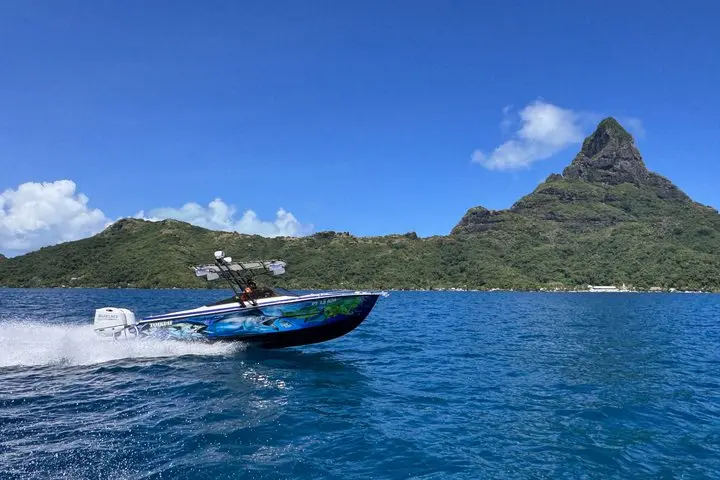
The Toiki II slips out of the small marina like a thought becoming real: quiet, purposeful, and perfectly aligned with the lagoon’s palette. Early light drapes the sugar-sand motus in a soft wash of gold while the lagoon itself seems to inhale and exhale turquoise and teal. Mount Otemanu cuts a dramatic silhouette across the horizon—older than human memory, a monument to volcanic violence now softened by coral and reef. For a 90-minute stretch you’re not rushing anywhere. The ocean dares you to look away; you don’t.
This 1.5-hour cruise aboard the brand-new Toiki II is compact by design and generous in payoff. It’s the kind of short-experience that solves a traveler’s two biggest problems in Bora Bora: too much beauty to process in a single afternoon and too little time to force an entire day into your schedule. The boat’s shallow draft carves close to the motus where the lagoon becomes a living kaleidoscope—schools of fish flash in cobalt streaks, and rays drift as if tethered to the reef by a slow current. The guide narrates with a practiced economy: names of motus, the best angle for Mount Otemanu, where to spot a queen conch or a lone frigatebird. It’s a tour that privileges sightlines and stories in equal measure.
Geology and coral build the stage here. Bora Bora is the exposed crown of an extinct volcano, its steep inner slopes dropping into a lagoon formed by decades of reef growth. That reef is the architect of the island’s personality: it shelters the lagoon, scatters light into impossible blues, and cultivates life in a way open ocean cannot. Polynesian settlers navigated these currents centuries ago, weaving motus into family life and creating passage routes that remain in local memory. Today the motus are dotted with guest bungalows and small private hides, but they also function as living cultural markers—places where fishing, coconut harvesting, and traditional boat building still occur.
There’s a polite intimacy to a short lagoon cruise like this. It’s not an adrenaline headline; it’s the slow, accumulating pleasure of detail. Guides will point out white-sand pockets where families picnic, the submerged terraces where ancient corals logged centuries of ocean change, and the small channels where surgeonfish gather like punctuation marks. If you listen, you’ll hear the lagoon’s tempo change: a breeze lifts at mid-ride, gulls call, the hull finds a patch of glass, then wakes up into chop as the wind skates across open water. Nature here has opinions—about where you anchor, how close you get to the reef, when to watch for cloud shadows on Otemanu—and the Toiki II follows them.
Practicality matters when you want to make one hour and a half count. The cruise is private by default and bookable with instant confirmation. Price starts from roughly $359 per private outing, which places it in the premium-but-sensible range for Bora Bora, where value is often measured in views rather than miles. The boat is new, with sheltered seating and an open deck for photos. The itinerary is straightforward: the captain will thread the lagoon’s best vantage points, pause for photographs, and narrate the natural and cultural highlights.
Timing is everything. Morning light (around sunrise to mid-morning) gives you soft colors and calmer water; late afternoon offers warmer tones on Otemanu and the kind of golden light photographers queue for. Wind can pick up mid-day, so if you’re prone to motion sickness, plan earlier. Bring reef-safe sunscreen; the coral and the aquarium-like shallows need protection as much as your skin does.
Logistics are forgiving. Boats leave from the main Vaitape area; transfers from most resorts and pensions are standard. Cell service is patchy once you’re out of the lagoon, which is part of the charm: the world narrows to water, sky, and the rising bulk of Otemanu. Ask your operator beforehand if snorkeling stops are possible—this cruise is focused on scenery and storytelling, but many operators can adapt the route to include a quick snorkel if requested.
What makes this cruise worth it goes beyond checklist items. It’s how the water frames familiar images into new ones: Otemanu’s cragged teeth soften when reflected in still shallows; a cluster of motus becomes an architectural plan of private life; a passing manta looks like an ink stroke beneath glass. In 90 minutes you get context for the rest of a trip—an orientation to currents, colors, and stories that will make future swims, hikes, and meals feel better informed.
Who should book it? Anyone with a short window in Bora Bora who wants a high-return, low-effort way to see the lagoon. It’s ideal for couples, families with young kids who favor shorter activities, and travelers who prefer a private experience to a crowded boat. If you want long snorkels or open-ocean diving, pair this cruise with a dedicated snorkeling or scuba day. If you want to collect photos that look like postcards without the uphill hike, reserve the morning or late-afternoon slot and bring a fast lens and a calm habit.
Leave with a small ritual: a last look at the lagoon from the stern as the Toiki II eases back to shore, a palm that seems to wave goodbye, the hush of a place that resettles after you pass through. Bora Bora can be overwhelming in its perfection; this well-paced cruise gives the island a shape and a rhythm you can carry into the rest of your stay.
Trail wisdom
Small choices, better day.
Choose the Right Light
Book morning or late-afternoon departures for calmer water and richer light for photography.
Use Reef-Safe Sunscreen
Bring mineral-based SPF to protect coral and avoid oxybenzone-containing lotions that harm reefs.
Secure Motion-Sickness Remedies
If you’re prone to seasickness, take or bring medication an hour before departure and sit mid-boat for the smoothest ride.
Protect Your Gear
Use a floating strap for cameras and a waterproof case for phones—spray and splash are common near the motus.
Local knowledge
Read the place, not just the route.
Watch for native species including Eagle rays, Tropicbirds and frigatebirds.
Keep an eye out for wildlife during the transition between areas and habitats. Respect distance guidelines.
The lagoon’s reefs are fragile—opt for reef-safe sunscreen, avoid touching coral, and support operators who follow no-anchor reef protocols.
Follow the guide's instructions on size limits, ethical handling, and leave-no-trace practices.
Matira Point at sunrise for a beachside extension after your cruise. Small family-run motu stalls where locals sell coconut snacks and handicrafts
Locally recommended viewpoints and quiet spots known best to local operators.
Bora Bora formed from an extinct volcanic cone; Polynesian navigators settled the island centuries ago and the motus have long been centers for fishing and coconut cultivation.
Maritime roots and regional tradition shape the waterways and working coasts.
Seasonal guide
Four versions of the same landscape.
Spring
Best forCalm seas · Wildlife viewing · Photography
ChallengesIntermittent rain showers · Variable winds
Spring (Sept–Nov in local high season terms) provides moderate crowds and good visibility; expect occasional showers that can clear quickly.
Summer
Best forWarmest water · Lush motu vegetation · Fewer tourists
ChallengesHigher humidity · Occasional squalls
Summer brings warm lagoon temperatures and lush scenery but also higher humidity and the chance of short tropical squalls.
Fall
Best forClear water · Mild winds · Great light for photos
ChallengesTourist season ramping up · Higher prices
Fall offers stable conditions and clear water, making it ideal for scenic cruising—note that demand increases and prices can rise.
Winter
Best forCalmest seas · Best visibility · Comfortable temperatures
ChallengesCooler mornings · Popular travel season
The local dry season (May–October) often brings the calmest seas and superb visibility for photography and wildlife spotting.
Operator details
What the booking data adds.
Included
- ✓Private transportation
- ✓Bottled water
Not included
- —Snacks
- —Soda/Pop
- —Lunch
Good to know
- ✓Wheelchair accessible
- ✓Infants and small children can ride in a pram or stroller
- ✓Service animals allowed
- ✓Public transportation options are available nearby
- ✓Infants are required to sit on an adult’s lap
- ✓Transportation options are wheelchair accessible
- ✓All areas and surfaces are wheelchair accessible
- ✓Suitable for all physical fitness levels
Pack with intention
What to bring.
Good to know
Common questions.
The excursion lasts 1.5 hours (90 minutes) and focuses on scenic viewpoints and narration rather than extensive snorkeling.
Plan the edges
The details that make the day easier.
Mount Otemanu is the remnant of an extinct volcano rising about 727 meters (2,385 feet) and is the island’s most prominent geological feature.
After the cruise, head to Vaitape for a cold Hinano beer and grilled poisson cru, or try Bloody Mary’s for a lively, long-standing island meal; Matira Beach makes a fine post-cruise swim spot and local vendors sell fresh coconut snacks.
- trailhead
- Bora Bora Airport (BOB) on Motu Mute; Driving distance from nearest town: 10–20 minutes transfer from Vaitape marina; Cell service: limited offshore, expect spotty coverage; Permits or passes: none required for this private scenic cruise.
This lagoon is ecologically sensitive—use reef-safe sunscreen, avoid anchoring on coral, and choose operators who follow responsible wildlife and reef-protection practices.
Explore by topic
Follow the threads.
Keep exploring
Make the story part of the trip.
 Related story
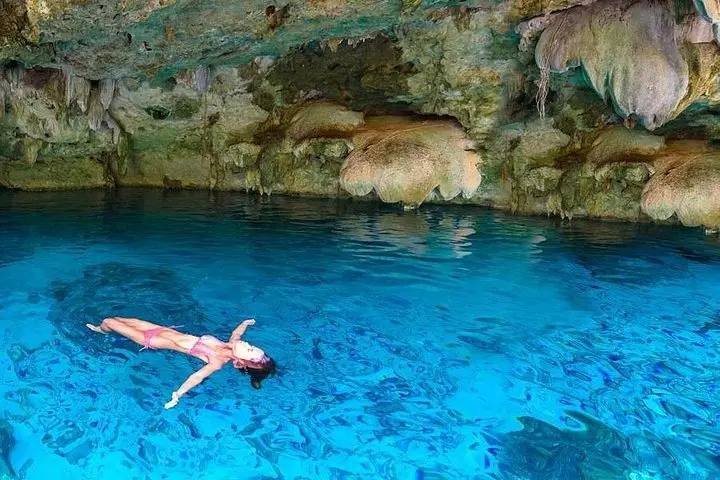
Dive into the Yucatán’s secret freshwater caverns and drift over the shallow reef gardens of Yalku Lagoon—an accessible, half-day snorkel pairing that blends geology, Mayan history, and vivid marine life.
 Related story
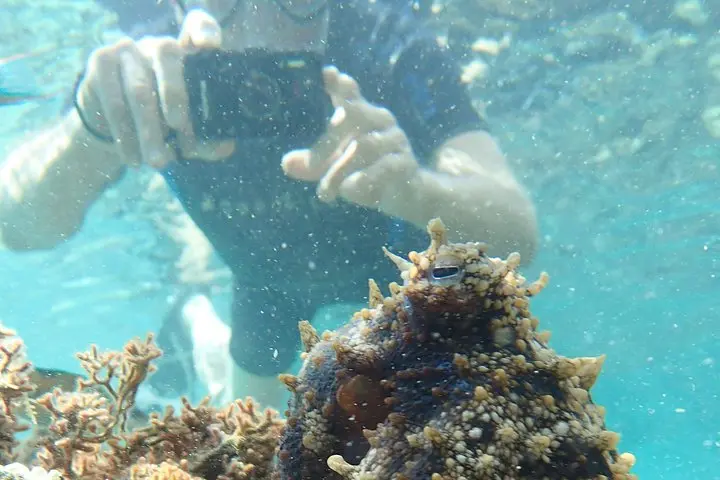
Slip beneath Porto Santo’s sunlit surface to find a mosaic of seagrass meadows, volcanic shelves, and playful schools of fish. This three-hour snorkeling tour pairs small-group access with local stewardship—ideal for travelers who value marine life over crowds.
 Related story
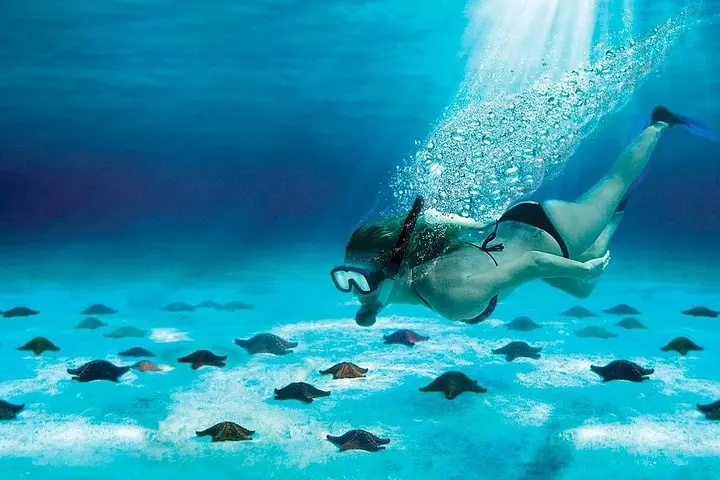
Spend a day on a high-speed boat exploring Cozumel’s famed reefs and the shallow sand flats of El Cielo. This full-day trip offers clear water, abundant marine life, and guided snorkeling at three prime sites—ideal for both first-timers and seasoned reef lovers.