
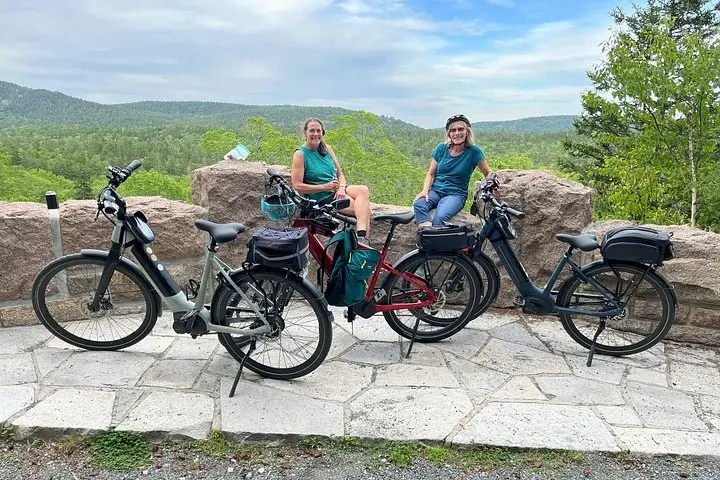
What the day feels like
The morning opens like a map: low cloud lifting from the lake, a ribbon of crushed stone cutting through spruce and beech, and the soft whir of a motor that only helps you get where your legs want to go. On Mount Desert Island, Acadia’s carriage roads are both a museum and a playground—man-made corridors that curl around ponds, cross granite bridges, and push your perspective outward toward ocean and mountain at once. On the <a href="https://app.advcollective.com/local-experts/guided-e-bike-tour-of-acadia-national-park-carriage-roads-22-mile-scenic-ride-from-hulls-cove">Guided E‑bike tour of Acadia National Park Carriage Roads</a>, the day is paced to let the landscape speak: short climbs softened by Class I motor assist, long easy stretches beside still water, and enough stops to drink in the light from Jordan Pond to Eagle Lake.
You start in Hulls Cove, the initial pedal turning into a rhythm—tap, glide, hum—each push rewarded by rock walls, the occasional granite bridge designed to be admired up close, and the hush of forest. Guides on this 22‑mile route keep the group small (just eight riders), and their stories give the roads a spine: John D. Rockefeller Jr. funded their construction in the early 20th century, carving 45 miles of carriage roads and building 16 stone bridges to create a network that felt at once elegant and utilitarian. Today, those roads invite cyclists to move through a curated version of nature—intimate, respectful, and deliberately paced.
The tour is practical luxury. Premium e‑bikes from Gazelle, Cannondale, or Specialized let riders of different fitness levels keep up without losing the sensation of exertion; the park requires pedaling, so you still earn the views. Stops are well-timed: a quiet shore for a photo, Jordan Pond House for popovers and panoramic water‑and-mountain vistas, Eagle Lake for a reflective fifteen minutes where loons sometimes call and the wind seems to test your attention. The carriage roads’ crushed‑stone surface is forgiving on tired knees but demands steady attention on corners and descents; it’s scenery that rewards being present.
Acadia is a compact place with layered geology and layered human history. The glacial grooves and exposed granite are older than any map, and the carriage roads are a deliberate act—an attempt to shape access without smothering wildness. Guides blend those threads: geology one minute, a local lobster tale the next, an explanation of how certain bridges were engineered so that horse‑drawn carriages could take the curves. That mix—natural history, human design, and good mechanics—makes the ride more than a loop; it’s a small masterclass in how to move through a protected landscape.
For travelers, the value is as much logistical as scenic. The tour lasts roughly four hours and covers a full 22 miles at a comfortable pace with multiple stops, meaning you leave with the satisfaction of a day well used and time left for a post‑ride beer or a walk through downtown Bar Harbor. Pricing begins around $190 and includes bike rental, helmet, and a guide; groups are capped to keep the experience intimate. Because the tours are top‑rated and limited, booking ahead is necessary, especially during peak seasons.
Practicalities are simple but important. The carriage roads are crush‑gravel; a hybrid or gravel bike platform on an e‑bike is ideal, and helmets are required. Expect patchy cell service in the park—your guide is your map. The park charges a fee for entrance and allows only Class I e‑bikes (pedal assist) on these roads, so confirm your rental and the e‑bike class with the operator. In exchange for these small constraints, you get a reason to slow down: fewer cars, better light for photos, and the kind of conversations that happen when a group is moving together rather than hurrying past.
Wildlife is shy but present: you might see white‑tailed deer slipping through birch, harbor seals off the coast if you detour to a viewpoint, and if you’re lucky, a peregrine falcon riding a thermal above the cliffs. Respect for habitat is built into the ride—stick to the roads, don’t feed wildlife, and leave no trace. That ethic is also why these tours are limited in group size: fewer riders means less compaction and more opportunity to observe.
At the end of the loop you’re quieter than when you began—not because the land seduced you into silence, but because it gave you room to breathe. If you want a structured way to experience Acadia that balances challenge and comfort, history and geology, this is it. Book early, bring layers, and plan to linger at Jordan Pond House; the popovers are exactly the small, calculated indulgence a four‑hour ride deserves.
For more details and to secure a spot on one of the most considered ways to experience Acadia, check the operator’s full listing and availability here: <a href="https://app.advcollective.com/local-experts/guided-e-bike-tour-of-acadia-national-park-carriage-roads-22-mile-scenic-ride-from-hulls-cove">Guided E‑bike tour of Acadia National Park Carriage Roads</a>.
Trail wisdom
Small choices, better day.
Book early
Groups are limited to eight riders; reserve at least several weeks ahead during summer and peak foliage.
Bring cash for Jordan Pond
Jordan Pond House can get busy—having cash speeds snack or popover purchases during the stop.
Pedal‑assist etiquette
Use motor assist on climbs but keep a steady cadence to avoid sudden surges that surprise other riders.
Respect wildlife and trails
Stay on carriage roads, keep distance from animals, and pack out any trash to protect fragile shoreline habitats.
Local knowledge
Read the place, not just the route.
Watch for native species including White‑tailed deer, Peregrine falcon.
Keep an eye out for wildlife during the transition between areas and habitats. Respect distance guidelines.
Stay on carriage roads to minimize erosion; group size limits and Class I bike restrictions help protect soils and shoreline habitats.
Follow the guide's instructions on size limits, ethical handling, and leave-no-trace practices.
A quiet viewpoint on the east side of Eagle Lake for sunrise photos. The quieter loop near Witch Hole Pond for intimate forest riding
Locally recommended viewpoints and quiet spots known best to local operators.
John D. Rockefeller Jr. funded and oversaw construction of Acadia’s carriage roads and stone bridges in the early 20th century to create controlled, scenic access across Mount Desert Island.
Maritime roots and regional tradition shape the waterways and working coasts.
Seasonal guide
Four versions of the same landscape.
Spring
Best forWildflowers · Quiet roads · Migratory birdwatching
ChallengesMud in low spots · Cool mornings · Unpredictable rain
Spring offers quiet trails and early blooms; expect cooler temps, occasional muddy sections, and the chance to hear migratory birds returning.
Summer
Best forFull services open · Long daylight · Family groups
ChallengesCrowds at Jordan Pond · Warmer temps · Higher demand
Summer is prime for reliable services and long days; book ahead and start early to avoid the busiest windows.
Fall
Best forFoliage · Crisp riding conditions · Smaller crowds
ChallengesCooler mornings · Shorter daylight · Variable road debris
Autumn is ideal—fall color and cool air make the ride spectacular, though layers and an early start are recommended.
Winter
Best forSolitude · Snow‑scenic views · Cross-country skiing nearby
ChallengesCarriage roads often closed or icy · Limited services · Cold temperatures
Winter sees limited operation; when available, expect very cold, icy conditions and fewer facilities—check operator schedules.
Pack with intention
What to bring.
Good to know
Common questions.
The tour is rated moderate; Class I e‑bike assist reduces effort on climbs, but riders should be comfortable pedaling for several hours.
Plan the edges
The details that make the day easier.
John D. Rockefeller Jr. funded construction of Acadia’s 45 miles of carriage roads and 16 stone bridges between 1913 and 1940 to create carriage‑friendly, scenic routes across the island.
After the ride, head to Jordan Pond House for classic popovers and tea with views of The Bubbles; later, stroll Bar Harbor’s Main Street for lobster rolls, local breweries, and galleries featuring Maine artists.
- Closest airport
- Hancock County‑Bar Harbor Airport (BHB) or Bangor International (BGR); Trailhead
- Departure
- Hulls Cove area, ~5–10 minutes from downtown Bar Harbor; Driving from Bar Harbor: 5–15 minutes; Cell service: Patchy in the park; Permits: Acadia entrance fee required; e‑bike class rules enforced.
These carriage roads were designed to limit vehicle impact—stick to the roads, pack out waste, and follow guide instructions to protect fragile shorelines and forest soils.
Explore by topic
Follow the threads.
Keep exploring
Make the story part of the trip.
 Related story
Aksla is the small mountain that makes Ålesund legible: 418 steps, sweeping panoramas, and a short tour that threads architecture and coastline into 90 minutes of memorable sightlines. Perfect for anyone who wants a quick, high-reward encounter with Norway’s west coast.
 Related story
The New York Public Library’s Main Branch is more than a photo stop—it's a civic living room, an architectural landmark, and a waypoint for walking tours that stitch together Midtown’s history, films, and holiday rituals. Here's how to make the most of a visit.
 Related story
Five miles of riverfront walking that reveal NYC’s quieter rhythms—Riverside Park pairs easy urban hiking with history, birdlife and a front-row view of the city’s climate resiliency efforts. Walk a stretch or follow the Greenway; either way, the Hudson makes its presence felt.