
What the day feels like
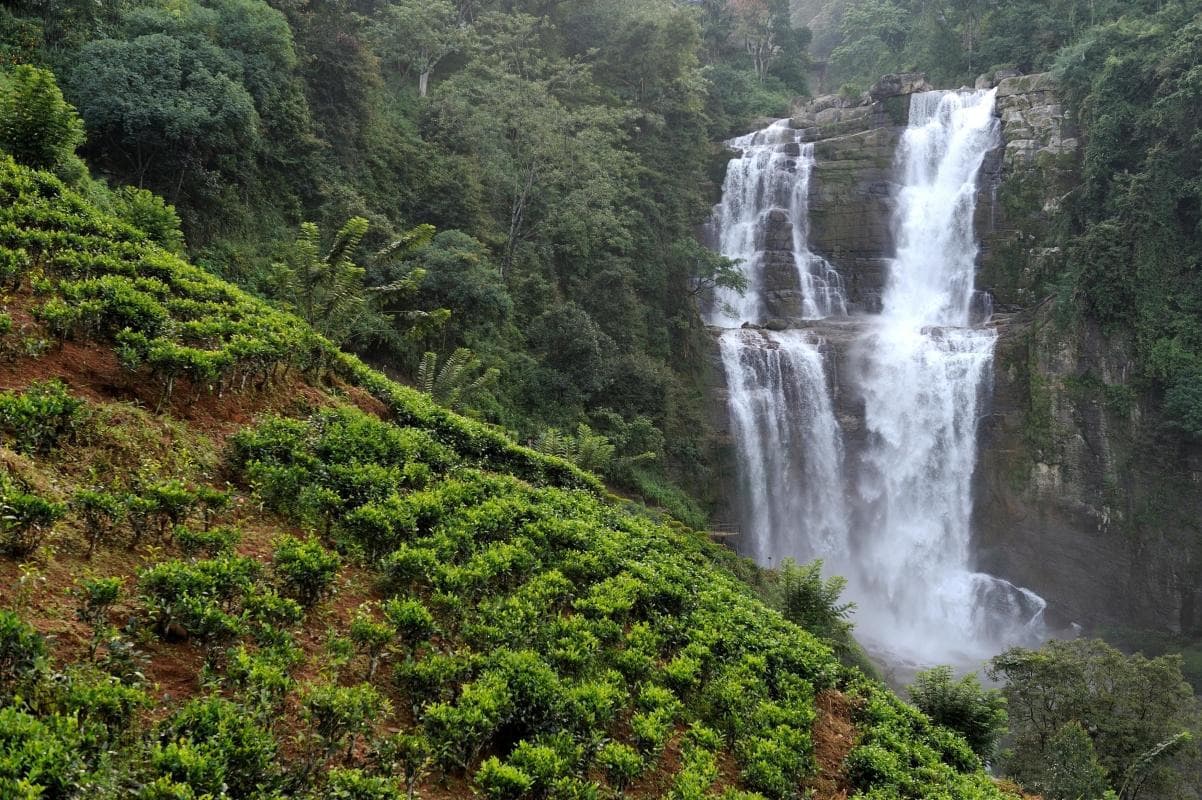
You feel it before you see it — a hush that ripples through the tea bushes, a sudden coolness in the air and then the waterfall’s voice: a low, steady thunder that tightens as you round the bend on the A5. Ramboda Falls doesn’t announce itself with bravado; it pulls you close. The road drops and the valley opens, and there, framed by mist and emerald terraces, the water unravels in a long, layered fall that seems to have been carved to show off every shade of green Sri Lanka’s central highlands can grow.
Standing at the roadside viewpoint, you get a sense of why this place is a staple of hill-country circuits. Ramboda is not a single sheet of water but a sequence of cascades dropping through a narrow gorge; it’s a vertical accordion, 109 meters of flow that changes character with the seasons. In the dry months it’s a silver ribbon; during monsoon surges it becomes a roiling column, daring the rocks below to hold fast. The wind off the fall plays with the tea bushes that cling to the slopes; a brainstorm of scent — wet earth and new leaves — follows you back to the car.
This landscape exists because of heat and pressure that folded Sri Lanka’s highlands into knuckles of rock a few million years ago. Erosion and rainfall have since sculpted dramatic relief, sending streams like the one that feeds Ramboda down steep, narrow valleys. The result is the hill country’s typographic signature: steep roads, switchbacks, and viewpoints where a single stop can feel like a private theater of water and cloud.
Ramboda is also stitched into Sri Lanka’s cultural fabric. The falls sit on a corridor between Kandy and Nuwara Eliya, a route carved out during colonial times as planters sought cooler ground and new tea fields. Many of the surrounding estates still operate using time-honored methods — pluckers rhythmically moving through terraces, factories where bruised leaves begin an alchemy that will end in hot, dark cups worldwide. Day tours that stop at Ramboda often pair the short walk to the viewpoint with tea factory visits and village glimpses; it’s a neat story arc of sight and taste: water, leaf, cup.
Why plan a trip here? Ramboda is one of the most efficient highland nature experiences: minimal hiking, maximum drama. It works as a morning detour on a longer route between Kandy and Nuwara Eliya, or as part of the scenic train-and-road circuits that take in Ella, the Nine Arches Bridge, and Ravana Falls. Product offerings around Ramboda — from one-day jaunts from Kandy to multi-day upcountry tours or private day trips that include the Nanu Oya–Ella train ride — emphasize variety: a viewpoint, a short scramble to a lower vantage, a tea tasting, and sometimes a longer hike if you want to trace the stream upstream.
Practicalities are straightforward but matter. The main viewpoint is roadside and accessible by vehicle; if you want to get closer, expect uneven paths and slippery rocks. Footwear matters — no flip-flops — and a light waterproof layer is useful even in the dry season because spray and mountain mist can make the air damp and cool. The best light is morning or late afternoon when the sun hits the fall at an angle that highlights tiers and depth; midday flattens them. Combine Ramboda with a tea-factory visit — the Damro center and smaller estate tours are common pairings — and you’ll turn sight into context: the tea you sip grew on slopes that drink the very same mist.
Getting there: from Kandy it’s roughly a 1.5–2.5 hour drive depending on traffic and how many photo stops you make; from Nuwara Eliya it’s shorter. Many operators include Ramboda in itineraries that offer guided transport, which is useful if you’re travelling by train between Nanu Oya and Ella. Parking at the main viewpoint is available but limited; early arrival avoids bus-tour clusters.
For the adventurous, there are short hikes that let you trade the roadside frame for a riverside perspective. These are unmarked in places, and during heavy rains the gorge becomes treacherous — stick to established paths and local guides if you want to explore away from the car park. Respect local signage and private property: much of the land around the fall is part of tea estates.
Who should go: travelers who appreciate compact, high-impact nature stops; those combining cultural and scenic hill-country travel; photographers chasing texture and motion; tea lovers who want side-by-side context for their tasting.
When to go: the cool, relatively drier months of December through February offer crisp air and clearer views; shoulder months can be wonderfully atmospheric with clouds and mist — just bring waterproofs. Avoid peak monsoon road travel if you’re sensitive to wet driving conditions.
Ramboda is small enough to visit as a single stop but generous enough to reward lazy, slow travel — linger over a roadside tea, listen as the falls negotiate the rocks, and let the high-country cadence settle your pace. It’s a hill-country classic: easy to reach, deeply scenic, and a perfect hinge linking the region’s natural and human stories.
Recommended itineraries that include Ramboda Falls range from single-day excursions from Kandy or Nuwara Eliya to multi-day upcountry loops and private motorhome circuits that let you chase light and cloud on your own timetable. If you only have a day, pair Ramboda with a tea-estate tour and Gregory Lake in Nuwara Eliya; if you have more, thread it into the train-to-Ella experience and tack on a short hike or a village visit for texture. However you do it, Ramboda rewards those who move slowly enough to hear the water and fast enough to catch the light.
Trail wisdom
Small choices, better day.
Wear grippy shoes
If you plan to get off the main viewpoint and scramble nearer the water, choose shoes with good traction — rocks are wet and slippery even in dry months.
Combine with tea factory visits
Many tours pair the falls with nearby tea plantations; bring time to learn and taste — it adds cultural context to the scenery.
Best light early or late
Visit in the morning or late afternoon when angled light brings out the tiers and depth of the falls.
Watch the weather
Highland weather changes fast — carry a light rain shell and avoid lower-gorge exploration during heavy rains.
Local knowledge
Read the place, not just the route.
Watch for native species including purple-faced langur (in higher forest patches), various hill-country butterflies.
Keep an eye out for wildlife during the transition between areas and habitats. Respect distance guidelines.
The hill country is sensitive to erosion and runoff; stay on paths, avoid trampling estate edges, and patronize local businesses that implement sustainable tea practices.
Follow the guide's instructions on size limits, ethical handling, and leave-no-trace practices.
Walk the short estate access paths just above the falls for quieter viewpoints away from the roadside. Stop at a small roadside tea stall for fresh-brewed Ceylon tea and homemade snacks — a better local experience than the big factory canteens
Locally recommended viewpoints and quiet spots known best to local operators.
The road corridor around Ramboda developed during colonial tea expansion; many nearby estates retain colonial-era bungalows and processing sheds tied to Sri Lanka’s tea industry.
Maritime roots and regional tradition shape the waterways and working coasts.
Seasonal guide
Four versions of the same landscape.
Spring
Best formisty views · tea-picking glimpses
Challengesintermittent showers · fog reducing visibility
Spring brings fresh greens and frequent mist — dramatic for atmosphere though visibility can be patchy; pack a rain layer.
Summer
Best forlivelier water flow after early rains · lush tea fields
Challengesoccasional heavy rains · slippery trails
Summer months feature strong cascades after seasonal downpours; expect wet conditions underfoot and bring waterproof protection.
Fall
Best forclearer skies · cooler temperatures
Challengesvariable light for photos · tourist season crowds on weekends
Fall offers crisp air and good visibility for panoramic shots; arrive early to avoid tour buses and enjoy fresher light.
Winter
Best forclear views · cool, dry days
Challengeschilly mornings · clouds can build by afternoon
The highland ’winter’ (Dec–Feb) is the best time for clear vistas and comfortable walking; mornings are coolest and most photogenic.
Pack with intention
What to bring.
Good to know
Common questions.
Ramboda Falls drops approximately 109 meters in a series of tiers, making it one of the more dramatic waterfalls in Sri Lanka’s central highlands.
Plan the edges
The details that make the day easier.
Ramboda Falls plunges about 109 meters and is fed by a tributary of the Kothmale Oya river system, making it one of the more notable cascades in Sri Lanka’s Central Province.
Hill-country communities around Ramboda are centered on tea — try a cup at a small roadside stall and chat with pluckers for a human-side insight into Ceylon tea culture.
- Nearest major bases
- Nuwara Eliya (30–60 min) and Kandy (1.5–2.5 hours). Roadside viewpoint with limited parking. Accessible via guided day trips, private cars, or multi-day upcountry tours.
Support small estate tours, avoid single-use plastics, stay on marked paths, and tip local guides; these small actions help conserve fragile upland waterways.
Explore by topic
Follow the threads.
Keep exploring
Make the story part of the trip.
 Related story
Less than two hours from Nairobi, Kereita Forest pairs hands-on canopy adventure with quiet montane trails and a sobering colonial history—perfect for families, teams, and curious travelers seeking a full-day pulse of nature.
Set out from Bass Harbor for a private, customizable day on Blue Hill Bay — lighthouses, puffins, seals, and the chance to feel Acadia from the water. Small groups, local captains, unforgettable views.
In four hours you can move from shaded canyon ferns to wind-scoured coastal ridgelines, guided by someone who knows where the light—and the hidden views—live. This private half-day hike on the Monterey Peninsula or Big Sur is compact, curated, and perfect for travelers who want depth without a multiday commitment.