
What the day feels like
By the time the minivan peels off the coastal ribbon of Bentota and snakes inland, the air thickens with green. Rubber plantations give way to a forest that smells like wet wood and citrus; the road narrows, and then you are beside the Kelani River, which moves as if it has a destination of its own—at times a polite guide, at others a dare. Here, in Kithulgala, the river runs quick and honest, and the hills around it hide caves worn by older weather and older hands. Over two days you’ll paddle, pedal, and step into both the current and a quiet archaeology of place.
Kithulgala’s claim to adventure is simple: water that asks for attention. The Kelani cuts through crystalline schist and laterite, creating rapids that read as a practical thrill—typically Class II–III, spiking to Class III–IV after heavy rains—enough to get your heartbeat ahead of your footing but not so feral you can’t laugh when the boat angles wrong. Downstream, the river has an unselfconscious way of showing you a route; upstream, the surrounding ridges are patient, carpeted in rain-forest and tea, their slopes broken by trails that lead to Belilena cave, an archaeological site where early human activity in Sri Lanka is still being studied. Locals point to these caves with the same pride as they do to a particularly good curry.
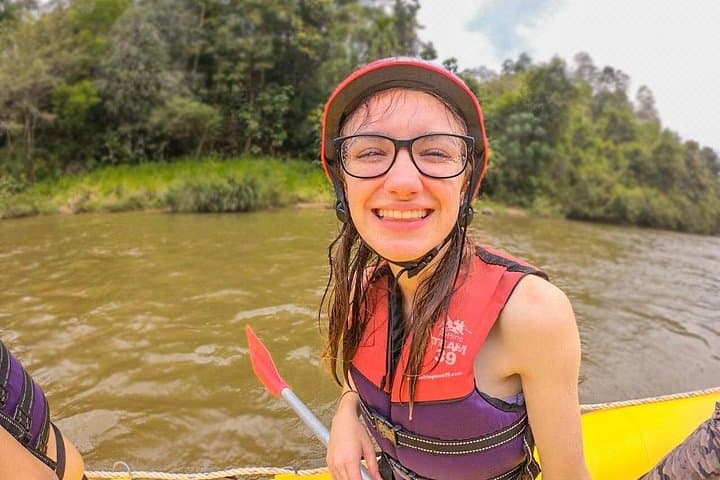
This tour is heritage and horsepower in one tight package. The first day is kinetic: a morning transfer from Bentota (roughly 2.5–3 hours by road), an extended whitewater run where guide calls are half command, half poetry, and an afternoon of cycling along country lanes that pass small temples and rice paddies. You’ll spend a night in homestay-style lodging or a small riverside inn—simple, clean, and close enough to the water to count the frogs’ chorus. Day two favors a deliberate pace: a hike into Belilena, narrow paths that open into limestone overhangs where archaeologists have found evidence of human occupation tens of thousands of years ago. The cliffs hold stories; the mud is recent. Walking here feels like moving through an edited history.
Geologically, the area is a folded margin between lowland plains and the central highlands, and the Kelani’s behavior reflects that—sudden drops, riffles, and pools. Culturally, Kithulgala is a village whose economy now balances traditional agriculture with small-scale tourism. Guides are often lifelong residents; their knowledge of the river and the forest is practical and nuanced, and they double as informal cultural interpreters—pointing out medicinal plants used in local homes, explaining the rice cycle, or translating the local temple bell pattern.
This trip is ideal for travelers who want a two-day adrenaline loop that doesn’t feel like a production. It’s short enough to fit into a longer coastal itinerary based in Bentota and robust enough to satisfy a seasoned paddler looking for technical fun or a casual hiker after something more animated than a beach walk.
Practical realities: expect two full days (about 48 hours) with roughly 3–5 hours of active paddling and cycling spread across the trip and a moderate hike to Belilena (2–4 km round-trip with some steep sections). The most crucial variable is water level—rafts and difficulty adjust to river conditions, but that also affects photos, footwear choice, and how much of a soaking you’ll take. Safety standards are generally good; outfitters provide helmets, life jackets, and briefings, and crews are experienced with swift-water protocols.
Packing is pragmatic: quick-dry layers, a good pair of water shoes with toe protection, a lightweight dry bag for electronics, and insect repellent. Timing-wise, mornings are cooler and calmer for cycling and hiking; rafting runs can be scheduled whenever flows are optimal, but expect more dramatic water in the monsoon shoulder months. If your trip is weather-flexible, prioritize trip dates after some rain—you’ll get more ride on the river.
For those who want to stretch the trip: arrive in Bentota the day before to acclimate to the coastline; leave the day after and take a slow train north toward Colombo, watching the lowlands unfold. For photographers, the river gives you motion and texture—midday light can be harsh, so aim for golden-hour edges along the banks and use a fast shutter for rapids.
Kithulgala does not feel curated for tourists; it feels earned. You come away with a basic lesson in Sri Lankan inland life (how a river shapes a village, how a cave can store human memory), and with a very practical thrill: a clear, wet proof that nature still has the power to make you pay attention. If you want fast water, thoughtful local guides, and a short burst of authentic inland adventure without a big commitment, this two-day loop from Bentota is a smart, satisfying route.
Trail wisdom
Small choices, better day.
Respect the River’s Mood
River levels change rapidly—ask guides about current difficulty and follow briefings; higher water means bigger rapids and fewer exposed rocks.
Footwear for Wet and Rocky Terrain
Wear closed-toe water shoes or lightweight approach shoes with good tread to protect toes on river rocks and cave trails.
Protect Your Electronics
Use a small dry bag or waterproof case for phones and cameras—expect splashes and the occasional full soak.
Hydrate and Pace Yourself
Sri Lankan humidity makes exertion feel harder—carry water and take the guide’s rest breaks during cycling and hiking sections.
Local knowledge
Read the place, not just the route.
Watch for native species including Purple-faced langur (local endemic monkey), Kingfishers along the river banks.
Keep an eye out for wildlife during the transition between areas and habitats. Respect distance guidelines.
Local guides rely on the river for livelihood—pack out trash, avoid single‑use plastics, and follow guide instructions to minimize erosion and disturbance to riverbanks.
Follow the guide's instructions on size limits, ethical handling, and leave-no-trace practices.
Early‑morning birding along the smaller Kelani tributaries where kingfishers and lesser adjutants feed. A short walk upstream to small tea terraces and roadside snack stalls serving freshly made pol sambol and hoppers
Locally recommended viewpoints and quiet spots known best to local operators.
Belilena and surrounding caves are part of Sri Lanka’s deep prehistory, with archaeological finds in the region indicating human occupation tens of thousands of years ago.
Maritime roots and regional tradition shape the waterways and working coasts.
Seasonal guide
Four versions of the same landscape.
Spring
Best forModerate rafting flows · Cycling on less-muddy lanes · Comfortable hiking
ChallengesUnpredictable showers · Variable river clarity
March–May is a shoulder period with generally stable conditions and balanced river levels—good for mixed-activity days and clear trail passages.
Summer
Best forHighest-water rafting thrills · Lush rainforest scenery
ChallengesHeavy rains and possible flash flows · Trail muddiness and limited visibility
June–August brings higher flows and dramatic rapids; expect wet-weather logistics and dress accordingly.
Fall
Best forPost-monsoon clarity · Strong rapids without extreme runoff
ChallengesIntermittent storms · Variable access after heavy rains
September–November often offers strong but manageable water levels—ideal if you want lively rapids with calmer weather windows.
Winter
Best forDrier hiking to caves · Easier cycling on firm roads
ChallengesLower river levels can reduce rafting intensity · Higher daytime heat in lowlands
December–February tends to be drier; expect gentler river runs and better hiking conditions, but less whitewater punch.
Operator details
What the booking data adds.
Included
- ✓Service of an English-Speaking Chauffeur Guide throughout the tour.
- ✓Transport in a Private Car, inclusive of all chauffer accommodation, cost of fuel, parking & highway tolls.
- ✓1-Cycling Tour to Belilena Cave.
- ✓All prevailing taxes and service charges
- ✓Accommodation at Borderland.
- ✓Breakfast
- ✓1-White Water Rafting
- ✓1-Canyoning
- ✓1-Flat Water Kayaking
- ✓Meal plan on Full Board basis.
Not included
- —Entry Visa Fees / submit your individual visa application.
- —International / Domestic Airfare
- —Any expenses of personal nature.
- —Tips & Portages.
- —Cost of Beverages
- —Entrance fees where not specified.
Good to know
- ✓Public transportation options are available nearby
- ✓Specialized infant seats are available
- ✓Not recommended for travelers with spinal injuries
- ✓Not recommended for pregnant travelers
- ✓Not recommended for travelers with poor cardiovascular health
- ✓Travelers should have at least a moderate level of physical fitness
- ✓Comfortable clothes and hats recommended
Pack with intention
What to bring.
Good to know
Common questions.
Most tours include round‑trip transport from Bentota; driving time is roughly 2.5–3 hours each way depending on traffic and stops.
Plan the edges
The details that make the day easier.
Kithulgala was used as a filming location for scenes in the 1957 movie The Bridge on the River Kwai; the area’s rainforest doubled for Southeast Asian jungle.
After a day on the river, try a riverside homestyle meal—rice and curry with freshwater fish, pol sambol, and a local toddy or arrack. In Bentota, reward yourself with fresh seafood and a cold lion beer by the beach.
- Closest airport
- Bandaranaike International (Colombo, CMB) — 1.5–2.5 hours from Bentota; Typical driving: Bentota to Kithulgala ~2.5–3 hours (90–110 km); Cell service: patchy in river gorges; Permits: none required for visitors, but follow guide rules.
Kithulgala’s river ecosystem is sensitive—support local guides, avoid single‑use plastics, and stay on designated trails to prevent bank erosion and habitat loss.
Explore by topic
Follow the threads.
Keep exploring
Make the story part of the trip.
 Related story
Less than two hours from Nairobi, Kereita Forest pairs hands-on canopy adventure with quiet montane trails and a sobering colonial history—perfect for families, teams, and curious travelers seeking a full-day pulse of nature.
Set out from Bass Harbor for a private, customizable day on Blue Hill Bay — lighthouses, puffins, seals, and the chance to feel Acadia from the water. Small groups, local captains, unforgettable views.
In four hours you can move from shaded canyon ferns to wind-scoured coastal ridgelines, guided by someone who knows where the light—and the hidden views—live. This private half-day hike on the Monterey Peninsula or Big Sur is compact, curated, and perfect for travelers who want depth without a multiday commitment.