
What the day feels like
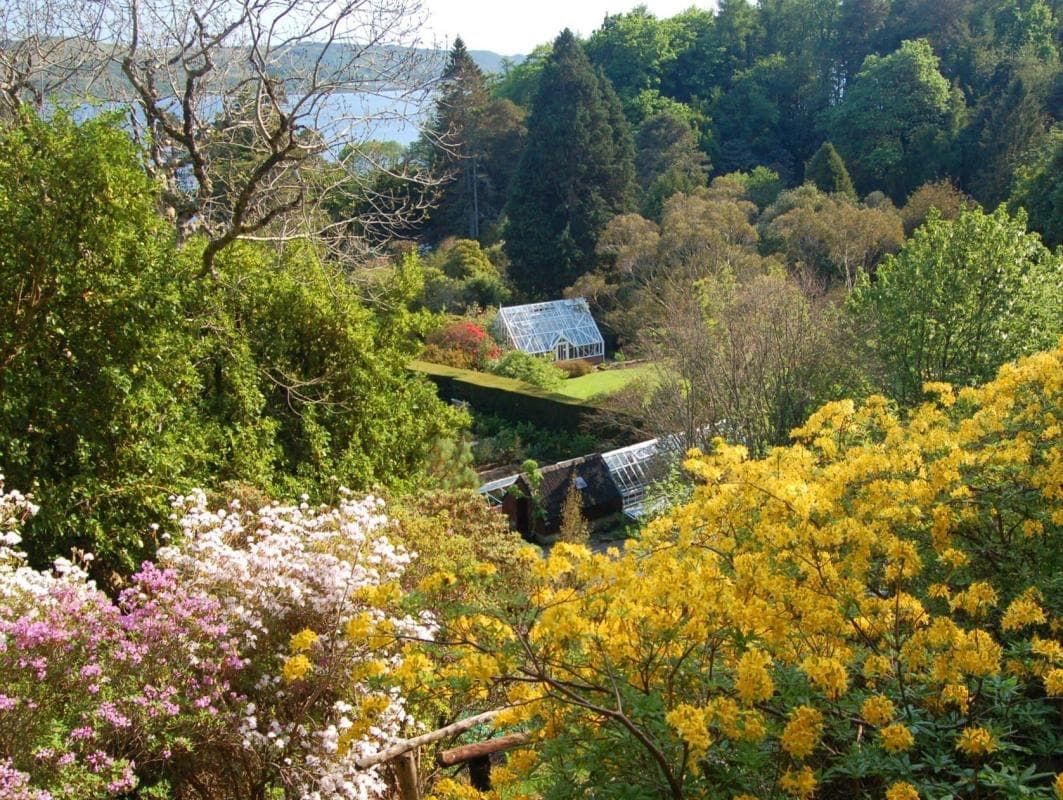
The path to Arduaine Garden begins with a taste of wind and salt. You turn off a narrow single-track road, pass a cluster of stone cottages, and the land drops toward the sea: slate-grey water threaded with silver light, islands stacked on the horizon. From the garden’s terraces you feel the current of the Atlantic at your back and a riot of colour at your feet—camellias and rhododendrons in midspring bloom, palm-like cordylines fending off the breeze, and pockets of subtropical foliage that somehow thrive here where oceanic air keeps frost at bay.
Arduaine Garden is compact in footprint but ambitious in personality. It sits on a headland of Argyll, where the Gulf Stream’s influence softens the climate just enough to let tender exotics share space with native coastal heath. The layout is an old-fashioned delight: winding woodland paths, a sheltered walled garden, and a sequence of viewpoints that tease the Sound of Jura into the picture. The place never tries to be immaculate; moss clings to stone walls and weathered benches sit with panoramic indifference. That friendly roughness is part of the charm—the garden feels like a curated conversation between plant collectors’ zeal and a dramatic Scottish shoreline.
The story here is one of plant exploration and maritime microclimate. While many British gardens impressed Victorian and Edwardian botanists with their ability to cultivate foreign species, Arduaine’s real claim to fame is how the coast’s mild winters and abundant rainfall create conditions for unusual specimens. Geologically, the headland is a patchwork of metamorphic rock and exposed shoreline—rugged enough to look wild, yet gentle enough to host winding paths. The culture around Arduaine is quietly local: small villages, family-run B&Bs, and tidal rhythms that have shaped fishing and crofting life for generations.
For travelers the appeal is immediate and layered. There’s the simple pleasure of a garden walk—scented, sheltered, and unexpectedly warm in late May—combined with the broader dramatic setting of west-coast Scotland. Hike the coastal fringe to watch waves batter basalt outcrops; lean into the wind at the highest viewpoint and let the ocean demand your attention. Birdsong and the occasional croak of grazing seals offshore punctuate the quiet. For photographers and botanists alike it’s a place where intimate detail (a camellia bloom catching raindrops) meets wide, cinematic seascape.
Practicalities are straightforward. Expect a loop walk of roughly 1–2 miles with gentle slopes and a few stone steps—suitable for casual walkers but with enough uneven ground to require decent footwear. The garden’s paths thread through woodland and terraces, with brief exposed sections where wind and spray are part of the experience. There is minimal elevation gain; the key challenge is weather variability. On a clear day the views extend past the Sound of Jura; on a blustery day the garden’s sheltering groves become especially welcome.
Timing matters. Visit in late May into June to see rhododendrons and camellias at their peak; late summer offers richer greens and late-blooming shrubs with fewer visitors. Sunrise and late afternoon provide the warmest light for photography, and the wind usually drops a touch in the morning making the sea calmer and coastal features more defined.
What to prepare: layers, a wind- and waterproof shell, good walking shoes, and binoculars if you want to scan the shoreline for seals and seabirds. The garden sits in a rural area—allow extra time for single-track roads and for the possibility that parking is limited at peak times. Locally run cafes and tearooms in nearby villages cater to the post-walk appetite, but bring snacks if you’re working on a tight schedule.
For families and day-trippers Arduaine is a tidy, manageable taste of west-coast botany that pairs well with neighboring coastal drives or a ferry hop to explore islands. For plant lovers it’s a compact case study in how mild maritime climates enable surprising botanical variety. For photographers and slow travelers it’s a space that rewards patient wandering—watching blooms open as clouds pass off the ocean, or sitting on a bench while the light rearranges the headland.
Conservation here is quiet but intentional. Gardens like Arduaine rely on careful planting choices, invasive species management, and visitor stewardship to keep fragile coastal flora healthy. Stick to marked paths, resist the temptation to pick flowers, and support local stewards when possible—your small footprint helps keep these plant communities thriving.
Arduaine Garden is not a destination that overwhelms; it’s a place that persuades. There’s a calming insistence in the way the wind moves through the rhododendrons, a modest grandeur in the way the sea frames the garden’s edges. It’s an elegant half-day outing or a meditative addition to a longer west-coast route—one that leaves you with an easy sense that, for all the grandeur of the Highlands, sometimes the most memorable scenes are those where ocean, rock, and rare plants meet and get on with each other.
How to get there: plan for a rural drive on single-track roads; the nearest village for base-stays is Kilmelford, with Oban offering more services and accommodations about a 30–45 minute drive away. Bring patience for narrow roads and an appetite for slow travel; Arduaine rewards the traveler who arrives ready to listen—to wind, to waves, and to the quiet choreography of coastal plants.
Trail wisdom
Small choices, better day.
Wear sturdy, waterproof footwear
Paths are mostly short and easy but can be muddy and uneven after rain—good shoes keep the walk comfortable.
Bring binoculars
Scan the Sound of Jura for seals and seabirds from the viewpoints—binoculars bring the coastline to life.
Time your visit for late spring
May–June brings peak rhododendron and camellia blooms and milder mornings for calmer sea conditions.
Respect plantings and stay on paths
The garden contains fragile and rare specimens; staying on trails protects roots and prevents erosion.
Local knowledge
Read the place, not just the route.
Watch for native species including harbour seal, various seabirds (gulls, terns).
Keep an eye out for wildlife during the transition between areas and habitats. Respect distance guidelines.
Local stewards focus on preventing invasive species, protecting rare shrubs, and managing foot traffic to limit erosion along coastal edges.
Follow the guide's instructions on size limits, ethical handling, and leave-no-trace practices.
A sheltered walled garden tucked below the terraces that offers calm and close-up views of camellias. A short coastal footpath west of the upper viewpoint where rock pools and seabirds are often present
Locally recommended viewpoints and quiet spots known best to local operators.
Arduaine’s plantings date to the era when botanical collecting and acclimatisation were popular on Britain’s west coast, taking advantage of the region’s mild maritime climate.
Maritime roots and regional tradition shape the waterways and working coasts.
Seasonal guide
Four versions of the same landscape.
Spring
Best forRhododendron and camellia bloom · Mild temperatures · Birdwatching
ChallengesChangeable weather · Mud on paths
Late spring is peak bloom season with the most colourful displays, though showers are common—dress in layers.
Summer
Best forExtended daylight · Calmer seas · Wildflower displays
ChallengesMore visitors · Tidal midges in some years
Summer offers long days and lush growth; arrive early to avoid crowds and midges on warm, still days.
Fall
Best forAutumn foliage · Quieter trails · Clear coastal light
ChallengesShorter daylight · Windier conditions
Autumn brings crisp air and clear light over the sound; expect cooler, blustery days and earlier sunsets.
Winter
Best forStorm-watching · Dramatic sea views · Off-season solitude
ChallengesCold, wet weather · Some paths may be slippery or closed
Winter is raw and dramatic—ideal for storm-watchers but dress for wet, windy conditions and limited facilities.
Pack with intention
What to bring.
Good to know
Common questions.
Dogs are usually allowed on leads in the grounds, but check local notices for seasonal restrictions—always clean up after your pet and keep them on paths.
Plan the edges
The details that make the day easier.
Arduaine Garden benefits from the warming influence of the Gulf Stream, which allows a number of tender, non-native plants to thrive on Scotland’s west coast.
Local tearooms, seafood-focused pubs, and family-run B&Bs in nearby villages offer simple, hearty fare—think smoked fish, oatcakes, and soups that match a day on the coast.
- Nearest base
- Kilmelford; drive single-track roads; visit time 1–2 hours; best months May–June; basic facilities—check ahead.
Support local conservation by staying on paths, avoiding picking, and contributing to local stewards; these actions help protect rare coastal plant communities.
Explore by topic
Follow the threads.
Keep exploring
Make the story part of the trip.
 Related story
Less than two hours from Nairobi, Kereita Forest pairs hands-on canopy adventure with quiet montane trails and a sobering colonial history—perfect for families, teams, and curious travelers seeking a full-day pulse of nature.
Set out from Bass Harbor for a private, customizable day on Blue Hill Bay — lighthouses, puffins, seals, and the chance to feel Acadia from the water. Small groups, local captains, unforgettable views.
In four hours you can move from shaded canyon ferns to wind-scoured coastal ridgelines, guided by someone who knows where the light—and the hidden views—live. This private half-day hike on the Monterey Peninsula or Big Sur is compact, curated, and perfect for travelers who want depth without a multiday commitment.