
What the day feels like
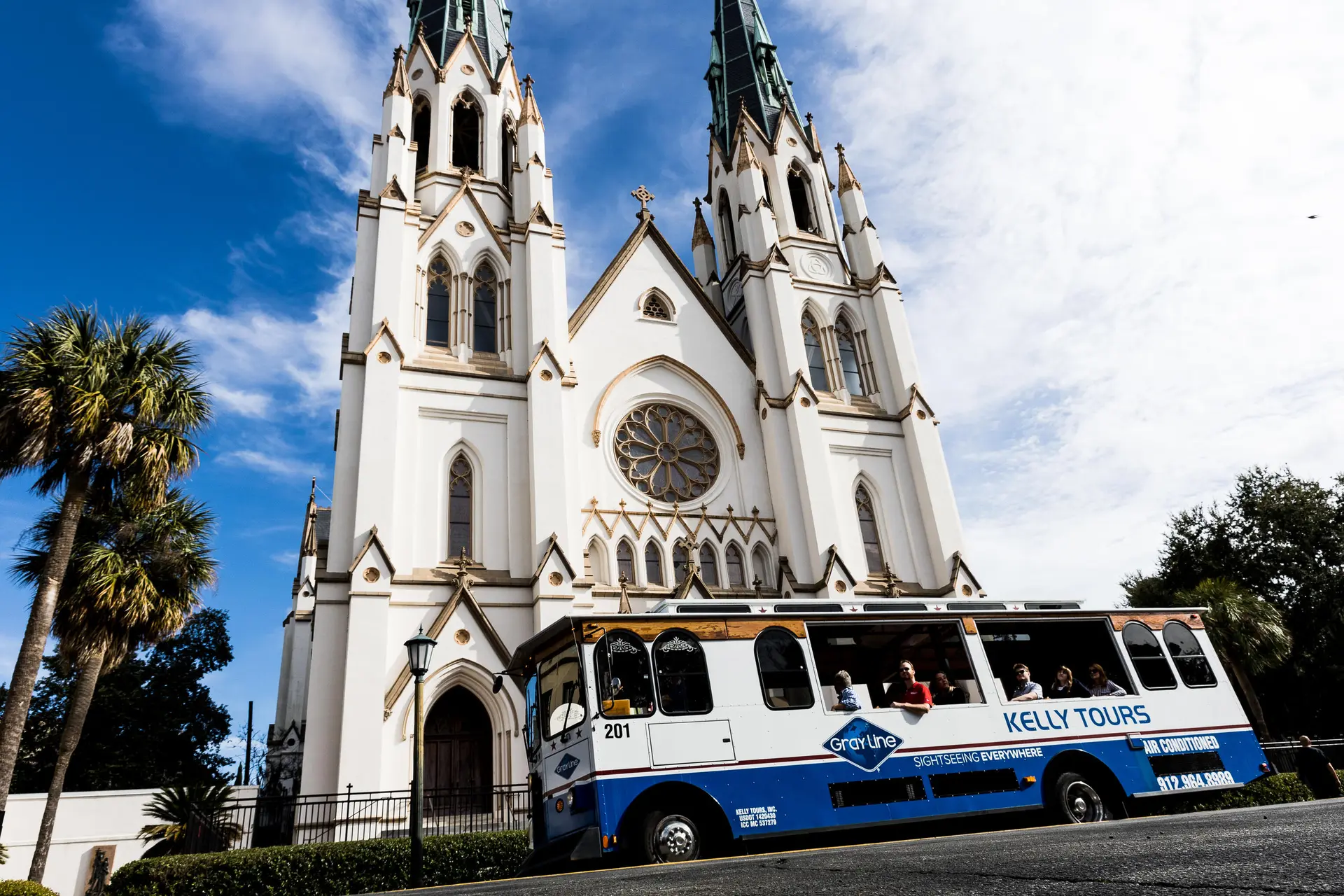
Morning breaks soft and honey-tinted over Savannah’s historic grid, and the live oaks start their slow conversation with the breeze. Spanish moss hangs like quiet commentary, nodding as the first open-air trolley hums to life. You climb aboard, the bench seat worn smooth by a century of curious travelers, and watch as the city begins to assemble itself: brick by brick, square by square, story by story. This is the kind of ride that gets under your skin—not for the speed, but for the way Savannah sets its own pace and dares you to fall in step. The 90-minute Explore Savannah Trolley Tour eases you into the city’s core, then hands you two days of shuttle service so you can keep the conversation going on your own terms. In a place where the river urges everything forward, this trolley slows the clock just enough to take it all in. The circuit loops through the Historic, Victorian, Colonial, and Starland districts, guided by a local voice that stitches the city’s layered past into a tight, vivid narrative. You get the architecture greatest hits—Greek Revival porticos that posture politely, Gothic spires trying to outstretch the oaks, Federal-style facades with a quiet kind of swagger. But the guide’s anecdotes—pirates and preservationists, planters and ports—give these buildings a pulse. One square later, you feel like Savannah’s been speaking to you directly. Savannah’s story begins in 1733 when General James Oglethorpe laid out a city plan as clever as it was humane: a modular grid anchored by public squares. The plan was an experiment in civic life, and you can still feel its intent when the trolley drifts around the corners. Today, 22 of the original 24 squares remain—a rare feat of survival and restoration. During the Civil War, Union General Sherman spared Savannah, gifting the city to President Lincoln like a meticulously wrapped package. Some say the live oaks remember that winter; the branches certainly seem to lean closer when the guide mentions it. Geographically, Savannah perches on a natural bluff above the Savannah River, a back-of-house advantage that kept floodwaters at arm’s length and encouraged trade to thrive along River Street’s old cotton warehouses. The ground underfoot is a patchwork of tabby (a coastal concrete made from oyster shells), ballast stones, and deep roots. When the trolley climbs a slight rise and you glimpse the river’s working waterway, the present and past meet in a handshake that feels entirely Savannah—blue cranes, ironwork balconies, and the smell of brine snaking in from the marsh. Culture here isn’t confined to museums. It’s in the cadence of a guide’s story, the way a church bell cues the hour, the clink of glasses on a shady porch. The trolley windows frame a moving gallery: family-run inns tucked into 19th-century mansions, corner groceries that survived waves of reinvention, and the Cathedral Basilica of St. John the Baptist lifting the skyline in Carrera-marble elegance. In Starland, the mood shifts—murals brighten brick, indie cafés breathe new life into old storefronts, and the creative energy nudges you to hop off later and wander on foot. That’s the advantage of the Explore Savannah Trolley Tour: when your introduction wraps, you have unlimited shuttle service within the Historic District for two days. It’s not a hop-on/hop-off loop—think on-demand point-to-point drop-offs and pickups you arrange by calling the operator. Start with the 90-minute narrative, then spend the next day and a half stitching together your own Savannah: maybe coffee near Forsyth Park, an hour in the shade at Monterey Square, a stroll along Jones Street’s handsome row. The current nudges; you choose when to drift and when to dock. If you’re plotting your time, morning departures beat the heat, especially in late spring and summer. Seats on the left side can offer cleaner views of certain squares on clockwise loops, while the right side gives you an angle on ornate facades along Bull Street. Pack water, slip on breathable clothing, and bring a light rain shell—the Gulf Stream is a generous neighbor that sometimes sends afternoon showers as a reminder of who’s really in charge here. From a practical perspective, this tour is easy on the legs and big on context. You’ll see the bones of the city, learn how they grew, and then have the mobility to dive deeper. Architecture buffs get their fill; photographers find compositions at every turn—ironwork against brick, moss-draped limbs as leading lines, pastel row houses glancing golden in late light. Families appreciate that the route keeps everyone moving, with the shuttle taking the friction out of logistics. And solo travelers can ride, listen, and step into the city’s rhythms without fuss. Savannah’s strength is how it invites you to participate: sit in Lafayette Square and let the fountains keep time; trace the riverfront’s old granite steps and feel the city’s maritime heartbeat; duck into a cool museum when the sun leans heavy. When you’re ready, call for a pickup and the shuttle will thread you back through the oaks, returning you to the narrative where you left off. For a concise, well-organized overview, this is the move—a smart first chapter to any Savannah itinerary, especially if you’re new to the city. Ready to ride? Learn more and book through the Explore Savannah Trolley Tour page, a 90-minute guided journey through Georgia’s historic gem, and use the two-day shuttle to design your own neighborhood-by-neighborhood exploration. For details on stops, what’s included, and how the shuttle system works, see this guide to the Savannah trolley tour experience. Whichever seat you choose, Savannah does the rest. The moss gestures you forward. The river nudges the breeze down the streets. And the squares—ever generous—make space for your story alongside all the others. Links: Explore Savannah Trolley Tour and 90-minute guided journey through Georgia’s historic gem both refer to the same resource at https://app.advcollective.com/local-experts/explore-savannah-trolley-tour-a-90-minute-guided-journey-through-georgias-historic-gem.
Trail wisdom
Small choices, better day.
Ride early for cooler temps and softer light
Book a morning departure to beat heat and crowds and to catch the city’s best photography light under the live oaks.
Use the 2-day shuttle strategically
After the narrated loop, plan 3–4 clusters (Forsyth Park, Jones Street, River Street, Starland) and call for pickups to maximize time.
Choose your side for views
Left-side seats often frame square interiors; right-side seats can give cleaner angles on facades along major corridors.
Hydrate and dress for humidity
Savannah’s subtropical climate can be steamy; bring water and breathable fabrics even on overcast days.
Local knowledge
Read the place, not just the route.
Watch for native species including Northern mockingbirds in the squares, Red-tailed hawks riding thermals above Forsyth Park.
Keep an eye out for wildlife during the transition between areas and habitats. Respect distance guidelines.
Historic preservation here is community-powered—support local museums and follow Leave No Trace principles in parks; never pull Spanish moss from live branches.
Follow the guide's instructions on size limits, ethical handling, and leave-no-trace practices.
Massie Heritage Center’s exhibits on Savannah’s city plan. Jones Street’s brick and oaks for a quintessential Savannah stroll
Locally recommended viewpoints and quiet spots known best to local operators.
Savannah’s Oglethorpe Plan established wards centered on squares, balancing civic space with residential blocks; 22 of the original 24 squares remain today.
Maritime roots and regional tradition shape the waterways and working coasts.
Seasonal guide
Four versions of the same landscape.
Spring
Best forAzalea blooms · Mild temperatures
ChallengesPollen · Variable showers
Spring is prime time—cool mornings, vivid gardens, and comfortable trolley rides before summer humidity spikes.
Summer
Best forLong daylight · Lush tree canopies
ChallengesHeat and humidity · Afternoon thunderstorms
Expect sultry conditions; ride early or late and use the shuttle to minimize long mid-day walks.
Fall
Best forComfortable temps · Golden afternoon light
ChallengesOccasional storm remnants · Busy weekends
Fall brings warm, manageable days and crisp evenings—great for lingering in the squares after your tour.
Winter
Best forLight crowds · Clear air for photography
ChallengesChilly mornings · Shorter daylight
Mild winters keep the city green; pack a light layer for cool starts and enjoy quieter streets.
Pack with intention
What to bring.
Good to know
Common questions.
The tour operates in Savannah’s Historic District; confirm your exact pickup or starting point when booking or at the Visitor Center area.
Plan the edges
The details that make the day easier.
Savannah retains 22 of its original 24 public squares, a rare preservation of General Oglethorpe’s 1733 city plan that continues to shape daily life and urban flow.
After your loop, head to The Grey for a standout dinner in a restored Greyhound station, or line up for classic scoops at Leopold’s Ice Cream. For Lowcountry comfort, try Mrs. Wilkes Dining Room at lunch. Craft beer fans can slip into Service Brewing near the river, and Savannah Bee Company offers honey tastings that are as local as it gets.
- Closest airport
- Savannah
- Hilton Head International (SAV), ~20 minutes by car. Starting area
- Savannah Visitor Center
- Historic District. Driving
- Most Historic District hotels are a 5–10 minute drive or easy walk. Cell service: Generally strong throughout the Historic District. Permits: None required; parking fees may apply at the Visitor Center garage.
Riding the trolley and using the shuttle reduces individual car trips in the Historic District. Respect fragile live oak ecosystems—don’t pull Spanish moss—and pack out all trash to keep squares and parks pristine.
Explore by topic
Follow the threads.
Keep exploring
Make the story part of the trip.
 Related story
Aksla is the small mountain that makes Ålesund legible: 418 steps, sweeping panoramas, and a short tour that threads architecture and coastline into 90 minutes of memorable sightlines. Perfect for anyone who wants a quick, high-reward encounter with Norway’s west coast.
 Related story
The New York Public Library’s Main Branch is more than a photo stop—it's a civic living room, an architectural landmark, and a waypoint for walking tours that stitch together Midtown’s history, films, and holiday rituals. Here's how to make the most of a visit.
 Related story
Five miles of riverfront walking that reveal NYC’s quieter rhythms—Riverside Park pairs easy urban hiking with history, birdlife and a front-row view of the city’s climate resiliency efforts. Walk a stretch or follow the Greenway; either way, the Hudson makes its presence felt.