
What the day feels like
By the time the minivan peels away from Skopje’s grid of concrete and coffee shops, the city’s glassy apartment blocks are still caught in a late-morning glow. The road climbs, then narrows, and within 30 minutes you’re already getting a sense for why locals treat Vodno and Matka as twin escapes—Vodno’s tree-browned slopes rising to the city’s watchful Millennium Cross, Matka’s limestone walls dropping suddenly into a ribbon of green water.
The tour moves at a pragmatic pace: an early stop at the Millennium Cross, a short look inside the frescoed Church of Saint Panteleimon, and then the slow, restorative half of the day at Matka Canyon. That structure gives the outing a pleasing rhythm—an architectural high point, a cultural pause, then pure geology and quiet water. For anyone who wants a densely packed taste of Skopje’s outdoors and history without an overnight commitment, it’s a calibrated half-day that keeps calories and curiosity in balance.
The Cross itself—installed in 2002 and standing 66 meters tall—is both literal landmark and symbolic vantage. When the van drops you off near the summit, the city unfurls below in a neat patchwork: the Vardar River threading through the center, Ottoman-era domes near the Old Bazaar, and the faces of the modern civic monuments. The climb to the monument from the nearest parking lot is short (roughly 0.5–1 km of paved trail, largely accessible), but if you’re hiking Vodno from city level expect a steeper mission—3.5–6 km depending on route and roughly 600–900 m of gain to the summit. On this tour you’ll get the view without committing to the full ascent, though the air at the top still insists on your attention.
Back down, the Church of Saint Panteleimon offers a quieter sort of awe. Its frescoes are vivid and intimate: saints and biblical scenes whose colors have held through years of dust, weather and pilgrim candles. The guide typically points out iconography and historical markers, helping bridge centuries in a few short minutes. It’s a good reminder that Macedonia’s identity is braided—Byzantine mosaics, Ottoman-era bazaars, and 20th-century urban plans all share the same skyline.
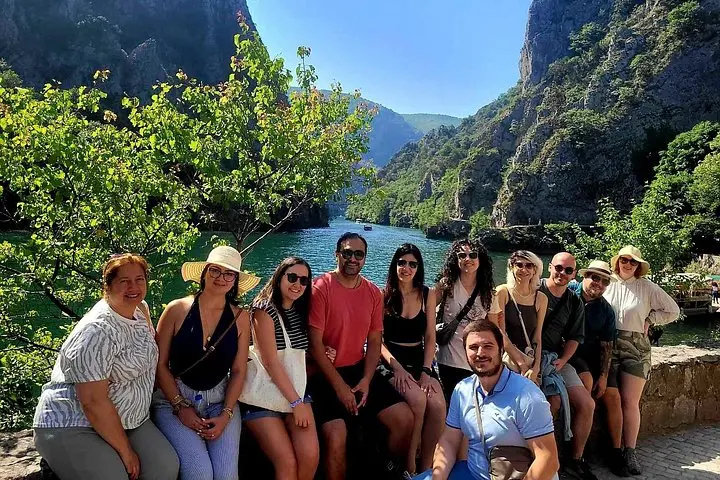
Then comes Matka Canyon, a sudden palate cleanse. The canyon is carved into Triassic and Jurassic limestone; its steep cliffs and narrow inlet create a dramatic, inward-facing landscape. The canyon’s artificial lake—created by a dam in the 1930s—is the oldest of its kind in the country, and the boat glide into the canyon is the portion of the trip that slows everyone down. From the harbor you can see the mouth of Vrelo Cave, one of the deepest underwater caves in Europe; the water below the boat is dark and infinitely layered. A typical exploration in Matka involves a 2–3 km combined shoreline stroll and short boat ride, with a few easy rock steps at monastery sites and viewpoints.
For the pragmatic traveler, the tour is compact but forgiving. Terrain varies from paved hilltop approaches at Vodno to single-track footpaths and wooden pier access at Matka. Expect easy walking shoes for village and hilltop visits and a grippier pair or trail runners if you want to explore canyon trails beyond the piers. The overall active miles you’ll cover on foot during the half-day are modest—roughly 3–5 km total—while vertical gain can be minimal unless you choose to hike Vodno in full.
Timing matters here. Spring and early autumn deliver the sharpest light and the most comfortable temperatures; mid-summer brings strong sun and hotter boat crossings. If you want reflections in the canyon’s water and softer crowds, aim for a morning slot and ask your operator for a midday lunch at a riverside konoba (traditional tavern). The included lunch is typically a straightforward local meal: grilled meats, fresh salads, and bread, served in a family-run spot that lets you taste Macedonian hospitality without pretense.
Practicalities are simple. The trip is roughly six hours from pick-up to drop-off, good for travelers on a constrained schedule or a cruise port day. Currency is the Macedonian denar—carry small bills for coffee, tips, and entrance donations to monasteries. Cell service is reliable at the Cross and in town; expect weaker signals in the deeper stretches of the canyon. Respect cultural spaces: modest dress at churches and low voices at monasteries are appreciated.
What makes the tour sticky in memory is not a single monument but the way the three settings interact: a modern cross that frames a thousand-year city, frescoes that compact centuries of faith into a single interior, and a canyon where geology forces time to move differently. It’s an effective half-day that lets you stand in three different centuries of Macedonian landscape and culture without feeling rushed.
If you’re planning—but not plotting—a full outdoor itinerary, pair Matka with a longer hike on Vodno or a separate day dedicated to the Old Bazaar and the archaeological museum. For photographers, Matka during the golden hour offers mirrored cliffs and an absence of bustle; for families, the short boat rides and easy monastery paths are accessible and engaging. Above all, bring curiosity. The tour is small in scale but rich in contrast, and it rewards travelers who want the tangible, tactile parts of a place—stone, water, and painted plaster—more than one more museum plaque.
Practical snapshot: the tour is an excellent half-day pick for travelers based in Skopje who want nature and culture without a full day out; budget about six hours, wear good shoes, and bring an extra layer for the canyon’s cool pockets. On return, there’s often time for a coffee in the Old Bazaar or a beer by the Vardar—an easy cultural landing to finish a compact encounter with one of the Balkans’ smaller but surprisingly complete capitals.
Trail wisdom
Small choices, better day.
Start early
Morning light makes the canyon and city views crisper and the boat rides calmer—aim for the first departure to avoid crowds and heat.
Layer for the canyon
Temperatures can drop under the cliffs; pack a lightweight windbreaker even on warm days.
Footwear matters
Wear sturdy trail runners or hiking shoes—stone steps and wet docks are common around monastery access points.
Carry local cash
Small donations at monasteries and tips for boat crews are easier with Macedonian denars on hand.
Local knowledge
Read the place, not just the route.
Watch for native species including Common kingfisher, European otter (occasional sightings in quieter coves).
Keep an eye out for wildlife during the transition between areas and habitats. Respect distance guidelines.
Matka is a protected area with fragile cave ecosystems; visitors should stay on marked paths, avoid feeding wildlife, and dispose of waste properly.
Follow the guide's instructions on size limits, ethical handling, and leave-no-trace practices.
Small riverside konobas in Matka where locals dine—ask for trout or grilled kebapi. A short ridge walk overlooking the canyon beyond the main piers for quieter views
Locally recommended viewpoints and quiet spots known best to local operators.
Vodno’s Millennium Cross was erected in 2002 to mark 2,000 years of Christianity, while Matka Canyon houses medieval monasteries dating back to the 14th century.
Maritime roots and regional tradition shape the waterways and working coasts.
Seasonal guide
Four versions of the same landscape.
Spring
Best forWildflower displays · Cool hiking · Clear photography
ChallengesOccasional rain showers · Mud on some trails
Spring is arguably the best balance of mild temperatures and green canyon walls—bring a light rain layer and you'll be rewarded.
Summer
Best forLong daylight · Boat-friendly weather · Picnic lunches
ChallengesHot midday sun · Higher visitor numbers
Summer delivers warm water and reliable boat trips, but plan excursions for morning or late afternoon to avoid the hottest hours.
Fall
Best forCrisp air for viewpoints · Autumn color on vineyards · Lower crowds
ChallengesShorter daylight · Cooler canyon microclimates
Early autumn gives clear skies and softer light—ideal for photos and comfortable walking.
Winter
Best forSnow-dusted panoramas · Off-season quiet
ChallengesPotential snow/ice on Vodno approaches · Reduced boat operations
Winter can be dramatic at the Cross but expect limited boat trips and colder conditions—dress warmly and check operations ahead.
Operator details
What the booking data adds.
Included
- ✓WiFi on board
- ✓Free time for exploration and photos
- ✓Macedonian "Breakfast of Champions" included in the price ( If you book this trip - come hungry :)))
- ✓English-speaking local Guide
- ✓Air-conditioned vehicle
Not included
- —Boat trip to Cave Vrelo
- —Entry fee to The Church of Saint Panteleimon
- —Cable car ticket
Good to know
- ✓Public transportation options are available nearby
- ✓Not recommended for pregnant travelers
- ✓Not recommended for travelers with poor cardiovascular health
- ✓Suitable for all physical fitness levels
Pack with intention
What to bring.
Good to know
Common questions.
The tour is approximately six hours from pick-up to drop-off and includes stops at the Millennium Cross, Church of Saint Panteleimon, and Matka Canyon with a short boat segment and included lunch.
Plan the edges
The details that make the day easier.
Matka’s Vrelo Cave is one of Europe’s deepest underwater cave systems—explorations there have revealed depths exceeding 200 meters.
After the tour, head back to Skopje’s Old Bazaar for ajvar, burek or a plate of grilled trout; for a local beer or rakija tasting, try one of the riverside cafés along the Vardar—authentic flavors and friendly conversation perfect a half-day escape.
- Closest airport
- Skopje Alexander the Great International Airport (SKP) ~25 minutes by car; Typical drive: 20–40 minutes from central Skopje to Vodno or Matka depending on traffic; Cell service: reliable in town and at the Cross, spotty in deeper canyon nooks; Permits: No special permits required for day tours, small donations at monasteries are customary.
Matka is ecologically sensitive—stay on marked trails, avoid single-use plastic where possible, and respect monastery sites and wildlife; consider using a reusable bottle and tipping boat crews for safe operations.
Explore by topic
Follow the threads.
Keep exploring
Make the story part of the trip.
 Related story
Aksla is the small mountain that makes Ålesund legible: 418 steps, sweeping panoramas, and a short tour that threads architecture and coastline into 90 minutes of memorable sightlines. Perfect for anyone who wants a quick, high-reward encounter with Norway’s west coast.
 Related story
The New York Public Library’s Main Branch is more than a photo stop—it's a civic living room, an architectural landmark, and a waypoint for walking tours that stitch together Midtown’s history, films, and holiday rituals. Here's how to make the most of a visit.
 Related story
Five miles of riverfront walking that reveal NYC’s quieter rhythms—Riverside Park pairs easy urban hiking with history, birdlife and a front-row view of the city’s climate resiliency efforts. Walk a stretch or follow the Greenway; either way, the Hudson makes its presence felt.