
What the day feels like
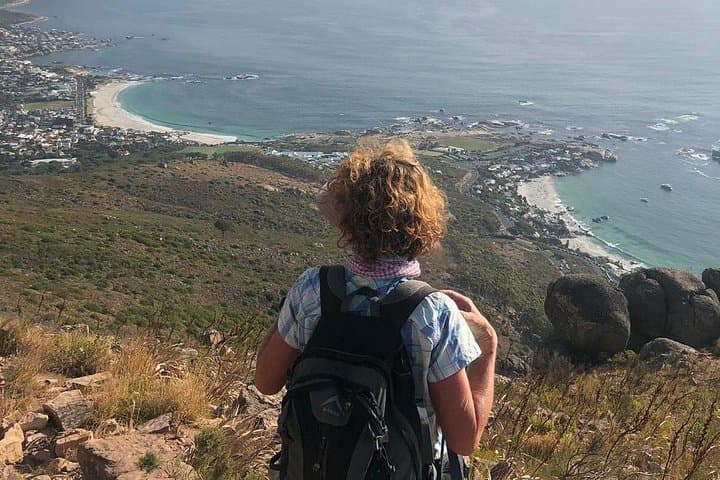
Dawn slips over Cape Town like a well-practiced trick, first brightening the Atlantic into a sheet of hammered silver and then sketching the line of Table Mountain with a precise hand. On Lion’s Head—the conical sibling that stands between the city and the sea—the trail leans into the slope and invites you upward. The mountain doesn’t shout; it beckons, as if to say, Let’s see what you’re made of before breakfast.
The path starts gently from the parking pull-off on Signal Hill Road, coiling around the flank of sandstone and fynbos like a loose spring. Within minutes, the city falls away. Cape Town’s grid softens into texture—Bo-Kaap’s painted facades, the stadium’s clean ellipse, the long run of Sea Point Promenade. The trail underfoot is a mix of compact earth and pebble, occasionally stepping up on rough-hewn rock. Proteas hold their ground like sentries. The air, when it’s calm, tastes faintly of ocean salt and tea-like shrubs.
Halfway up, Lion’s Head asks you to decide what kind of morning you want. The Spiral Route keeps to a manageable grade, wrapping around the mountain’s shoulders with steady, confident steps. It’s the easier option—no ladders, no chains—just a rising loop with uninterrupted views down to Camps Bay and Clifton’s blue coves. The Lions Head Chains route, by contrast, throws a playful challenge into the mix: a short, steep section of iron rungs and chain-assisted rock that climbs a vertical face for roughly 12 meters. For many, it’s a thrill; for others, a brief detour to watch the brave and continue on the spiral. Either way, the summit draws you onward.
Up top, the world opens. Table Mountain squares its massive jaw across the valley, Devil’s Peak elbows in from the left, and the Twelve Apostles march away to the south, cliff after cliff like a stone chorus line. The Atlantic spreads to the horizon, tugging at the edge of Africa as if asking for one more dance. Cape Town stirs below, tiny cars threading through neighborhoods that now feel like a map you’ve earned. You note the scale of it: big city, bigger landscape, all close enough to touch.
Lion’s Head has always been a lookout. The Dutch called it Leeuwen Kop in the 17th century, pairing it with Signal Hill (then Leeuwen Staart) as a head and tail. It served as a vantage point for watchmen and signal flags, a role it still performs—only now the signals are sunrise headlamps and the bright buzz of hikers sharing the trail. The mountain sits inside Table Mountain National Park, which protects the Cape Floristic Region—one of the world’s most biodiverse plant kingdoms and a UNESCO World Heritage Site. The fynbos here isn’t just pretty; it’s rare and stubborn, clinging to shallow soils and bitter winds with a patience that humbles nervous feet.
The climb itself is straightforward by mountain standards: roughly 5–5.5 kilometers round-trip, 400–500 meters of elevation gain, and 1–2 hours to the top for a steady hiker. The surface demands attention—loose gravel in places, chunky stone steps in others—but no technical skills are required if you follow the spiral. Still, Lion’s Head carries its own set of rules. The wind can turn fickle, shouldering you on exposed sections without apology. Heat bounces off the rock on summer afternoons, consuming water faster than you expect. And the crowds—especially at sunrise, sunset, and full moon—can create bottlenecks at the chain section. This is a mountain that rewards timing, not bravado.
If you can, catch the first light. Start early with a headlamp and let the path reveal itself with the day. The city glows from blue to gold, and you sidestep the heat and most of the foot traffic. Sunset is equally dramatic—alpenglow tints Table Mountain pink and the ocean swallows the sun whole—but build in extra time for the descent in the dark and bring a reliable light. Fire season (typically late summer into early autumn) brings additional caution: check local advisories and respect temporary closures.
Culture threads through the trail in subtle ways. Near the base, a kramat—a Muslim shrine—reminds hikers that Cape Town’s spiritual and cultural histories are layered into the landscape. Locals use Lion’s Head as their gym, their therapy session, their weekly meet-up. Families climb on school holidays. Runners treat the spiral like a track workout, legs ticking uphill in an unbroken metronome. You go at your pace, and the mountain meets you there, pushing when you need pushing and letting you pause when the view dares you to stop.
Practicalities seal the experience. Wear grippy footwear; the rock is honest but not forgiving. Carry at least a liter of water per person; two in summer heat. Pack a light windbreaker even on bluebird days; the Atlantic drafts can appear out of nowhere. Cell service is generally decent, but you’re still in a wild space—know your route, listen to your gut, and turn around if the weather shifts.
And when it’s over, you’ve earned the city. Drop into Bo-Kaap for a fragrant curry, wander the markets along the waterfront, or watch the sea do its endless work along the promenade. From down there, you’ll look back up at Lion’s Head—one clean pyramid against the sky—and feel the day settle in. The mountain nudged you up and, just as gently, sent you back down with a clearer view of where you are.
Short, approachable, and endlessly photogenic, Lion’s Head is the rare urban hike that feels both casual and consequential. You don’t need days to prepare or a quiver of technical skills. You just need a morning, some water, and a willingness to let the city shrink until all that’s left is rock, wind, and the crisp line where ocean meets light.
Trail wisdom
Small choices, better day.
Choose Your Route Early
Opt for the Spiral Route to avoid the chain section, or commit to the Lions Head Chains for a brief, airy scramble. Both rejoin near the summit.
Beat Heat and Crowds
Start at first light for cooler temps and fewer bottlenecks at the chains. Sunset is beautiful but expect a headlamp descent.
Wind Can Change Fast
Atlantic gusts can pick up quickly. Carry a lightweight shell and be cautious on exposed steps and the chain ladders.
Stay on the Main Path
Shortcuts erode fragile fynbos and increase rockfall risk. Follow painted markers and established steps.
Local knowledge
Read the place, not just the route.
Watch for native species including Rock hyrax (dassie), Sunbirds flitting among proteas.
Keep an eye out for wildlife during the transition between areas and habitats. Respect distance guidelines.
Fynbos is fragile; step only on durable surfaces and never cut switchbacks. Fire is a constant risk—follow all closures and never use open flames.
Follow the guide's instructions on size limits, ethical handling, and leave-no-trace practices.
Signal Hill sundowner lookout a short drive from the trailhead. The kramat near the lower trail—pause quietly and be respectful
Locally recommended viewpoints and quiet spots known best to local operators.
Named Leeuwen Kop (Lion’s Head) by Dutch settlers, the mountain once served as a signal station alongside Signal Hill and now sits within Table Mountain National Park, part of the UNESCO-listed Cape Floristic Region.
Maritime roots and regional tradition shape the waterways and working coasts.
Seasonal guide
Four versions of the same landscape.
Spring
Best forWildflowers in fynbos · Mild temperatures
ChallengesOccasional wind · Changeable weather
September–November bring fresh blooms and stable hiking windows, with crisp air and lively bird activity.
Summer
Best forSunrise/sunset hikes · Clear ocean views
ChallengesHigh heat · Crowds and limited parking
December–February runs hot and busy. Start early or go late, pack extra water, and plan for a headlamp descent.
Fall
Best forSettled weather · Golden light for photography
ChallengesFire risk on hot, dry days · Shorter daylight by late season
March–May is prime: calmer winds, warm days, and superb visibility. Check fire advisories before you hike.
Winter
Best forClear post-front vistas · Cooler climbing temps
ChallengesRain and slick rock · Strong frontal winds
June–August sees cold fronts and wet stone. Pick bluebird windows and wear layers with good traction footwear.
Operator details
What the booking data adds.
Included
- ✓Guide
Not included
- —Private transportation
Good to know
- ✓Wheelchair accessible
- ✓Not recommended for travelers with spinal injuries
- ✓Not recommended for travelers with poor cardiovascular health
- ✓Travelers should have at least a moderate level of physical fitness
- ✓Not recommend for Very unfit people
Pack with intention
What to bring.
Good to know
Common questions.
No permit or fee is required for the main Lion’s Head trail within Table Mountain National Park.
Plan the edges
The details that make the day easier.
Table Mountain National Park, which includes Lion’s Head, forms part of the Cape Floristic Region—one of the world’s six floral kingdoms and a UNESCO World Heritage Site with over 9,000 plant species.
Refuel with Cape Malay flavors in Bo-Kaap, grab a seafood bite at the V&A Waterfront, or sip a local craft beer along Kloof Street. Evening strolls on the Sea Point Promenade pair well with gelato and a view back to the mountain you just climbed.
- Closest airport
- Cape Town International (CPT). Trailhead: Lion’s Head Parking on Signal Hill Road, ~10–20 minutes’ drive from central Cape Town. Cell service: generally good but can drop in pockets. Permits
- fees
- none for the main trail; arrive early for parking and heed temporary fire or weather closures.
Lion’s Head sits within a fire-adapted, water-stressed ecosystem. Stay on marked paths to protect fynbos, carry all trash back out, avoid open flames, and conserve water when rinsing off in the city.
Explore by topic
Follow the threads.
Keep exploring
Make the story part of the trip.
 Related story
Less than two hours from Nairobi, Kereita Forest pairs hands-on canopy adventure with quiet montane trails and a sobering colonial history—perfect for families, teams, and curious travelers seeking a full-day pulse of nature.
Set out from Bass Harbor for a private, customizable day on Blue Hill Bay — lighthouses, puffins, seals, and the chance to feel Acadia from the water. Small groups, local captains, unforgettable views.
In four hours you can move from shaded canyon ferns to wind-scoured coastal ridgelines, guided by someone who knows where the light—and the hidden views—live. This private half-day hike on the Monterey Peninsula or Big Sur is compact, curated, and perfect for travelers who want depth without a multiday commitment.