
What the day feels like
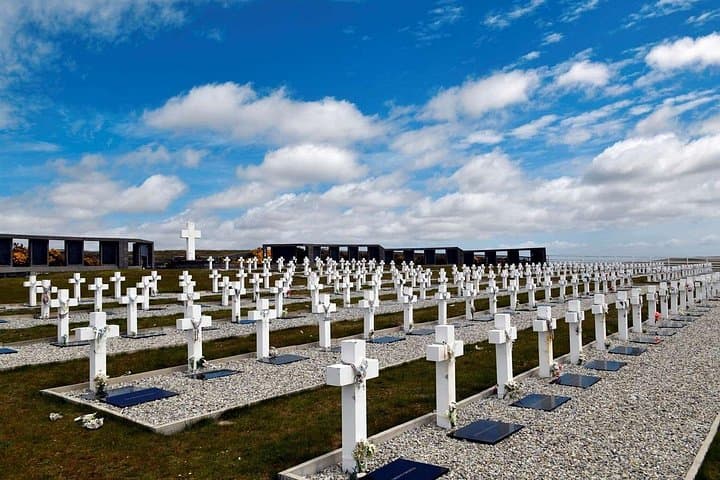
When the gangway comes down and the harbor air bites with salt and wind, Port Stanley announces itself slowly—sheep-scattered hills, corrugated roofs, and a scattering of Union flags that look like small, stubborn sails. A local guide is waiting with a minivan and a map of stories: the Liberation Monument that still hums with memory, the Lady Elizabeth wreck posed like a photograph by the water, and the Argentine Cemetery, a quiet line of stones that flips the script on what a shore excursion can teach you in an hour. The tour moves like a well-told short story—compact, specific, and heavy with detail—and because it's small-group, the guide has time to pause at viewpoints, answer awkward questions about 1982, and point out where the sea seems to keep trying to reclaim the shoreline.
Stanley is not the kind of place that overwhelms by size. Its power is in intimacy: a town shaped by maritime weather, Scottish and British settlers, and the political detours of modern history. The cemetery itself is a clear, respectful marker of that history: Argentine soldiers who died during the 1982 Falklands War are buried there, and their graves draw relatives, historians, and curious travelers. Nearby, the Liberation Monument names the moment that reshaped this place, a sober bronze counterpoint to the playful gulls overhead.
Geologically, East Falkland is a patchwork of heath, peat, and rocky shorelines formed by ancient sedimentary rocks worn into rounded hills. The wind is a sculptor here; it brushes the grasses into waves and scours the harbor, making the light hard and brilliant for photos. Culturally, Stanley is a working capital—fish and sheep shape both the economy and the diet—and its landmarks are compact enough to visit in a single drive, but meaningful enough to linger over if you have the time.
This tour trades hiking boots for a comfortable seat and local context. Guides narrate with a mix of history and earnest local pride, connecting monuments to family stories and the town’s museums. You'll see places that read like postcards—colorful houses clinging to slopes, rusting ship bones at low tide, and vistas where the horizon seems to tilt toward the sea. But the trip is practical as well: guides manage timing to ensure cruise passengers return to port on schedule, and small groups mean fewer bottlenecks at photo stops.
Why go? Because the Falklands are often reduced to headlines, but here you get texture: faces in the museum photos, fresh seafood on a local plate, and the quiet of a cemetery that provokes questions rather than answers. The guide’s context turns the scenery into a conversation about sovereignty, memory, and island life. For travelers who want a low-effort introduction that still feels substantive, this mix of history, culture, and coastal scenery is unusually effective.
Practical notes: the standard experience is flexible—some cruise-friendly versions are condensed to an hour of highlights, while the full itinerary is designed to run several hours to include museum stops and a relaxed shoreline walk. Expect wind, variable weather, and lots of photo opportunities. Bring layers, a windproof shell, and a charger for a camera that will be busy. If you want wildlife—gentoo penguins, striated shags, and sea lions are common in nearby coves—ask your guide to include a short visit to spots where animals haul out safely.
This is not a wilderness trek; it’s a guided cultural drive with easy, short walks. Accessibility is generally good for curbside stops and paved sections, but some viewpoints and shorelines involve uneven ground. The best time to visit is the Falklands’ austral summer (December–February), when daylight lasts long and seabirds nest. Winter is stark and dramatic but colder and windier, better suited to travelers who know the weather won’t cooperate.
For photographers, the light is a gift—hard, cool, and clear. For history buffs, the cemetery and Liberation Monument are direct, unvarnished entries into a conflict that still affects lives here. For casual travelers, the tour is a tidy, well-informed way to get off the ship and return with a sense of place instead of just a checklist.
If you go, leave time for a quick stop at the Falkland Islands Museum and for a late lunch on the waterfront. The town’s food is straightforward—fresh seafood and island lamb—and there is something satisfying about a hot plate and a local beer after a bracing coastal drive. Above all, listen to the guides: their local stories are what turn landscapes into memories.
Trail wisdom
Small choices, better day.
Dress for wind and changeable weather
Pack a windproof shell and a midlayer—the harbor wind can make temperatures feel much cooler.
Charge your camera
Stops are frequent and photogenic; a portable battery keeps you shooting through the day.
Be respectful at the cemetery
The Argentine Cemetery is a place of mourning—observe silence and follow the guide’s protocols.
Ask about wildlife detours
Guides can often add short stops for penguin and sea lion viewing when local conditions allow.
Local knowledge
Read the place, not just the route.
Watch for native species including Gentoo penguin, Southern sea lion.
Keep an eye out for wildlife during the transition between areas and habitats. Respect distance guidelines.
Wildlife viewing is regulated informally by local custom—keep distance, stay on marked paths, and avoid disturbing nesting birds.
Follow the guide's instructions on size limits, ethical handling, and leave-no-trace practices.
Gypsy Cove—close to Stanley with good birdlife and shoreline views. Falkland Islands Museum & National Trust for local context and photographs
Locally recommended viewpoints and quiet spots known best to local operators.
Port Stanley was the center of the 1982 Falklands War and contains memorials and cemeteries that reflect the island’s recent history.
Maritime roots and regional tradition shape the waterways and working coasts.
Seasonal guide
Four versions of the same landscape.
Spring
Best forMigratory birds · Brighter days emerging · Fewer tourists
ChallengesVariable weather · Cool temperatures
September–November brings nesting seabirds and lengthening days, but expect blustery conditions and chilly mornings.
Summer
Best forLong daylight hours · Best wildlife viewing · Calmer seas
ChallengesWind can still blow · Peak cruise season
December–February is the optimal window—mildest weather, abundant wildlife, and maximum daylight for shore excursions.
Fall
Best forDramatic light · Fewer crowds
ChallengesShortening days · Cooler evenings
March–May offers crisp light and quieter streets, though evenings cool quickly and some services may close.
Winter
Best forStark landscapes · Auroral moods
ChallengesCold, windy conditions · Limited services
June–August is dramatic and empty, but travel is for the prepared—expect sharp winds and reduced daylight.
Operator details
What the booking data adds.
Included
- ✓Bottled water
- ✓Snacks
- ✓Air-conditioned vehicle
Not included
- —Gratitudes
Good to know
- ✓Wheelchair accessible
- ✓Infants and small children can ride in a pram or stroller
- ✓Specialized infant seats are available
- ✓Not recommended for travelers with spinal injuries
- ✓Not recommended for pregnant travelers
- ✓Not recommended for travelers with poor cardiovascular health
- ✓Suitable for all physical fitness levels
Pack with intention
What to bring.
Good to know
Common questions.
The full itinerary is designed to run about 4–5 hours, but guides can condense highlights into a cruise-friendly ~1-hour loop if needed.
Plan the edges
The details that make the day easier.
The Argentine Cemetery in Port Stanley contains the graves of Argentine soldiers who died during the 1982 Falklands War and is maintained as a place of remembrance.
After the tour, head to the waterfront for fresh seafood or a plate of island lamb and a pint; pop into the Falkland Islands Museum for photographs and local exhibits, then browse small craft shops for wool goods or prints.
- Closest airport
- Mount Pleasant Airport (MPN) – ~2 hours drive to Stanley; Port
- Trailhead
- Stanley harbor; Driving distance: short local drives within town; Cell service: patchy outside Stanley; Permits: none required for standard tourist stops.
Support local guides and businesses, keep to paths to protect nesting birds, do not feed wildlife, and pack out any trash to help preserve fragile island habitats.
Explore by topic
Follow the threads.
Keep exploring
Make the story part of the trip.
 Related story
Less than two hours from Nairobi, Kereita Forest pairs hands-on canopy adventure with quiet montane trails and a sobering colonial history—perfect for families, teams, and curious travelers seeking a full-day pulse of nature.
Set out from Bass Harbor for a private, customizable day on Blue Hill Bay — lighthouses, puffins, seals, and the chance to feel Acadia from the water. Small groups, local captains, unforgettable views.
In four hours you can move from shaded canyon ferns to wind-scoured coastal ridgelines, guided by someone who knows where the light—and the hidden views—live. This private half-day hike on the Monterey Peninsula or Big Sur is compact, curated, and perfect for travelers who want depth without a multiday commitment.