
What the day feels like
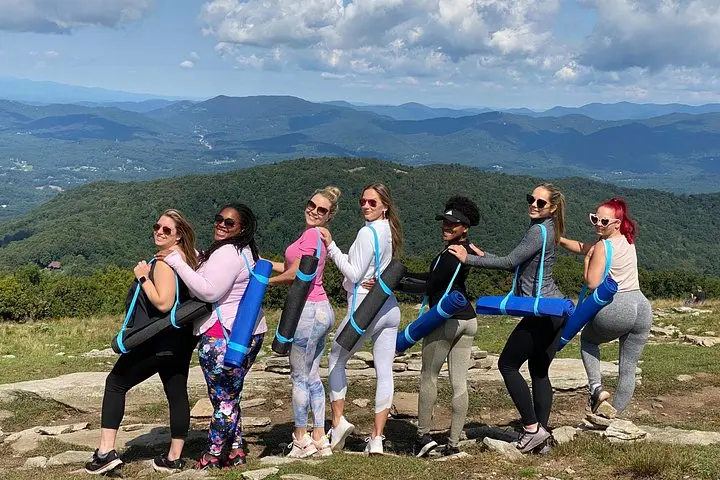
You crest a low ridgeline and the forest opens like a well-timed breath. Morning light threads through hemlock and oak, the path soft with decades of leaf litter, and ahead a narrow clearing frames a wide, sitting-room view of the Blue Ridge. Someone rolls a mat; the guide smiles and asks you to take your place. For the next hour the world narrows to inhale, exhale, and the slow geometry of your body against an endless mountain horizon. It’s the kind of outdoor experience that feels both purposeful and unexpectedly simple: two miles round trip, three hours on the clock, and a small uncluttered summit where the noise of the valley recedes enough that your own breath becomes the loudest thing.
The Mountaintop Yoga & Meditation Hike in Asheville blends a short, accessible hike with guided yoga and mindfulness. It’s framed by the region’s deep natural history—this is the Southern Blue Ridge, a landscape carved by ancient rock uplift and glaciation farther north, then honed by millions of years of weather. The Blue Ridge is a mosaic of hardwood forest, spruce-fir pockets at higher elevation, and persistent rhododendron tunnels that give late spring and early summer a sense of cathedral-like enclosure. Locally, these ridgelines were part of Cherokee hunting grounds and, later, routes for early settlers. Today they’re public and private preserves stitched together by the Blue Ridge Parkway and a network of small conservation organizations.
Culturally, Asheville has become a national model for how a small city leans into craft and wellness without losing its mountain identity—farm-to-table restaurants, craft breweries, and a thriving arts scene sit within a short drive of trailheads. That proximity is part of the appeal: you spend a morning in deliberate physical practice and can be back for lunch at a local café that sources produce from regional farms.
The hike itself is efficient: about two miles round-trip along a maintained trail with moderate grade; mats are provided, and classes are suitable for all levels. The rhythm is deliberate—steady steps up through mixed hardwood, short switchbacks, and a final opening where the instructor lays down a few grounding prompts before you move through sequences. For those who prefer lower light, organizers now run sunset sessions and private bookings; for others, weekday morning classes are often quieter. Book early—these tours are popular, with many dates selling out.
Why do this trip? It’s an antidote to noise: a short commitment that delivers mountain exposure, guided movement, and the restorative psychology of doing something both physical and meditative outdoors. If you’re new to yoga, the gentle instruction makes the practice accessible. If you’re a regular, the novelty is the setting—a moving meditation with a sweeping view and the predictable comforts of a guided group. For travelers who want to extend the experience, the operator advertises add-ons: massage at your rental, cooking classes, or other local wellness experiences to compose a full-day wellness itinerary.
Practicalities matter here as much as the view. The trail is best in sturdy shoes, not flip-flops; weather on ridgelines changes fast; and even a short hike can feel longer if you’re under-hydrated or over-dressed. Expect a three-hour window that includes arrival, the hike, the session, and the return. Mats are provided but wear layers you can move in, and bring a small daypack that holds water, sunscreen, and a camera. If you want a quieter experience consider a weekday booking or the private option; for golden-hour photos and a different mood, the sunset hikes are a clear favorite.
There’s a broader reason to pick this particular experience over a generic studio class: context. Doing yoga on a ridge connects movement to landscape. The rocks, the wind, the scent of damp leaves become partners in practice—rivers of air push and pull; clouds pass and kneel on the distant peaks; and the guide threads local natural history into the session so you’re breathing with the place, not just in it. To preview, read more or book directly with the local operator at this link: <a href="https://app.advcollective.com/local-experts/asheville-mountaintop-yoga-hike-on-bearwallow-mountain-blue-ridge-views-breath-and-balance">Asheville Mountaintop Yoga Hike on Bearwallow Mountain</a>.
Who should sign up? Hikers who want a calm, purposeful outing; city travelers craving green-space immersion; yoga practitioners who love outdoor classes; and small groups looking for a memorable shared moment. It’s family-friendly for teens and older kids with a moderate tolerance for uphill walking. Note that the experience is not a strenuous backpacking expedition—it’s intentional, accessible, and built around breathwork and gentle movement.
How to make the most of it: time your visit for late spring when the understory blooms, or early fall when the ridgelines pick up color. Start with a light breakfast, avoid heavy caffeine right before class if you plan to meditate, and leave your large daypack in the car so the summit remains uncluttered. If you’re traveling with companions who prefer a low-key alternative, Asheville’s trails and breweries offer easy post-session options.
If this combines two things you love—movement and the mountains—you’ll leave with the small, cumulative benefits of both: a clearer head, a stretched body, and a story about a morning you folded yourself into a mountain and found the terrain reciprocated.
Trail wisdom
Small choices, better day.
Bring a small daypack
Keep water, sunscreen, and a light layer handy—the summit can be windy even on warm days.
Wear grippy shoes
The trail is short but uneven; trail runners or hiking shoes help steady your practice on rocky ground.
Arrive early for parking
Trailhead parking can fill fast on weekends—arrive 20–30 minutes early to check in and get fitted with a mat.
Book the sunset slot for photos
If you want a golden-hour session, reserve the sunset hikes or a private group—lighting changes the mood dramatically.
Local knowledge
Read the place, not just the route.
Watch for native species including Eastern gray squirrel, Wild turkey (and occasional black bear in remote areas).
Keep an eye out for wildlife during the transition between areas and habitats. Respect distance guidelines.
Local conservation groups protect ridge habitats—stick to trails, avoid trampling sensitive plants, and pack out all trash to preserve fragile summit ecosystems.
Follow the guide's instructions on size limits, ethical handling, and leave-no-trace practices.
Craggy Gardens overlook on the Blue Ridge Parkway—an expansive wildflower meadow and an easy detour. Folk Art Center (near milepost 382)—folk crafts and local artisan work that connect Appalachian culture to Asheville
Locally recommended viewpoints and quiet spots known best to local operators.
The Southern Blue Ridge was historically Cherokee land and later a corridor for early mountain settlers; trails here trace old ridge routes and seasonal hunting paths.
Maritime roots and regional tradition shape the waterways and working coasts.
Seasonal guide
Four versions of the same landscape.
Spring
Best forWildflower displays · Mild temperatures · Calm mornings
ChallengesMud on shaded slopes · Variable spring storms
Spring offers blooming understories and comfortable temps—expect some muddy patches after rain and bring traction-appropriate footwear.
Summer
Best forLonger daylight · Early-morning coolness · Accessible trails
ChallengesAfternoon thunderstorms · Warmer summit winds
Summer sessions are best early to avoid storms; pack sun protection and extra water for warm days.
Fall
Best forFall color · Crisp air · Clear vistas
ChallengesShorter daylight · Cool mornings
Autumn delivers peak views and cool, clear air—dress in layers for chilly starts and fading light.
Winter
Best forQuiet trails · Crisp summit views · Fewer crowds
ChallengesIcy spots on the trail · Colder temperatures
Winter hikes are serene but can have icy sections—wear traction devices and warm layers for safety and comfort.
Operator details
What the booking data adds.
Included
- ✓Yoga Mat
- ✓1hr All-Levels Yoga (weather permitting)
- ✓Guide
Good to know
- ✓Service animals allowed
- ✓Not recommended for travelers with poor cardiovascular health
- ✓Travelers should have at least a moderate level of physical fitness
Pack with intention
What to bring.
Good to know
Common questions.
Yes—mats are provided for the summit practice, but many people bring a thin travel mat or towel for extra comfort.
Plan the edges
The details that make the day easier.
Bearwallow Mountain and nearby ridgelines are part of a network of conserved lands in the Southern Blue Ridge; local groups like Conserving Carolina have protected key parcels to maintain wildlife corridors and scenic views.
After your session, head back to Asheville for farm-to-table fare at a downtown restaurant or a local brewery—Tupelo Honey and Burial Beer Co. are popular nearby stops that pair regional flavors with post-hike atmosphere.
- Closest airport
- Asheville Regional (AVL); Typical drive from downtown Asheville: 20–45 minutes depending on trailhead; Cell service: intermittent on ridgelines; Permits: none for guided hike; Parking: limited—arrive early
This guided hike visits sensitive ridge habitats—stay on the trail, pack out waste, and avoid introducing non-native plants or leaving gear behind.
Explore by topic
Follow the threads.
Keep exploring
Make the story part of the trip.
 Related story
Aksla is the small mountain that makes Ålesund legible: 418 steps, sweeping panoramas, and a short tour that threads architecture and coastline into 90 minutes of memorable sightlines. Perfect for anyone who wants a quick, high-reward encounter with Norway’s west coast.
 Related story
The New York Public Library’s Main Branch is more than a photo stop—it's a civic living room, an architectural landmark, and a waypoint for walking tours that stitch together Midtown’s history, films, and holiday rituals. Here's how to make the most of a visit.
 Related story
Five miles of riverfront walking that reveal NYC’s quieter rhythms—Riverside Park pairs easy urban hiking with history, birdlife and a front-row view of the city’s climate resiliency efforts. Walk a stretch or follow the Greenway; either way, the Hudson makes its presence felt.