
What the day feels like
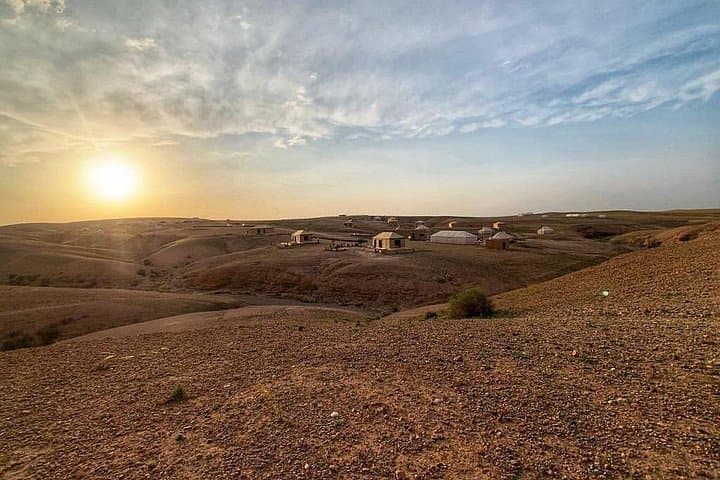
The sun is a slow, deliberate thing here—dipping behind a ragged line of the High Atlas foothills and turning the stony plains of Agafay into a soft, burnished map. You arrive by paved road, minutes from the bustle of Marrakech, and within an arm’s reach of silence: the clack of camel bells, the whisper of wind across weathered rock, the distant call of a shepherd. That stillness is the first permission slip of the afternoon; the rest of the experience hands you new rhythms—quad bike throttle, the bob of a camel’s gait, and eventually the crackle of a small nomadic stove as a dinner is set beneath a low Berber tent.
Agafay is not the Sahara—it's a hamada, a stone desert: an open expanse of gravel and bedrock shaped by wind and ancient waterways at the edge of the High Atlas. That geology explains the palette—chrome grays and ochres that heat up into molten color at golden hour—and why the place feels immediate and intimate, not infinite. Historically, these plateaus have been a corridor between mountain and city, where Berber villages and seasonal shepherds have grazed flocks and brewed tea for generations. In recent years the proximity to Marrakech has turned this terrain into a playground for short escapes: camel rides that map a gentle route across rock, quad-biking over designated tracks, and staged nomadic dinners that celebrate local flavors and hospitality.
This particular outing compresses the essentials into four hours: a private transfer from Marrakech, a herbal tea break with local hosts, a camel ride timed for sunset, a short quad-bike loop for anyone craving speed, and a traditional dinner under a tent. For travelers, that makes Agafay an ideal half-day or late-afternoon excursion—accessible without the days-long commitment of a true Sahara crossing, but still far enough from the city to feel like an honest change of scene. Practical elements are tidy: the tour is private, confirmed instantly, and priced from about $76.89, which bundles the activities and the meal. Nearly all participants report high satisfaction—this product carries very positive feedback and a simple, hospitable structure that’s beginner-friendly.
The terrain is low and steady—no long climbs or tricky ridge routes—so physical demands are modest. Camel riding asks for balance and a relaxed center; quad riding requires attention and respect for local rules and terrain. Weather is the real variable: summer afternoons bake the plateau and make mid-day movement tough, while winter evenings can drop cool enough to need a layer. Timing your visit for late afternoon is both aesthetic and practical: the low sun softens the rock underfoot, temperatures moderate, and photographers get that stretched, directional light everyone wants.
Beyond the adrenaline of a quick quad loop and the novelty of camel travel, the real takeaway is the way the landscape reframes scale. The rock has a patience that seems to slow even hurried travel; people and machines move across it in small, deliberate arcs. Local tea rituals and the shared dinner under a tent are reminders that this is still home for nearby rural communities—sandwiching modern tourist pleasures between long-standing cultural threads.
For planning: bring closed-toe shoes that can handle gravel, hydration (1–1.5 liters at least), sun protection, and a light layer for evenings. If you’ll pilot a quad, wear long sleeves and pants to protect from spray and dust; if you’re riding a camel, expect a gradual, rocking cadence rather than a stiff mount. Camera gear should include a mid-range zoom and a polarizing filter if you want to tame glare and deepen skies. Respect local customs—modest dress in transit and polite behavior around hosts—and take care where you drive the quad. Many operators emphasize designated tracks for environmental protection; adhere to those limits.
Why go? It’s an accessible desert primer—big-sky feeling without the logistics of an extended expedition—paired with cultural taste-offs (tea, Berber hospitality, local cuisine) and just enough motion to keep restless travelers engaged. Families, couples, and solo adventurers who want a straddling of comfort and authenticity will find the Agafay formula appealing. If you want a longer jaunt into real sand dunes, the Sahara still awaits farther afield, but Agafay excels at being close, scenic, and performatively restorative.
A responsible visit leaves the place as you found it: pack out waste, avoid widening informal tracks, and resist the urge to collect stones or plants. The desert’s ecology is subtle and fragile; what looks hard and empty is part of a slow system of life. Do that and Agafay rewards you with a desert condensed—short on fuss, long on light.
Trail wisdom
Small choices, better day.
Time it for golden hour
Start late afternoon to avoid midday heat and get the best light for photos and sunset camel rides.
Hydrate and bring snacks
Pack at least 1–1.5L of water per person and a small energy snack—desert air dries you out faster than you think.
Footwear matters
Closed-toe hiking shoes or sturdy trainers handle gravel and quad dust better than sandals.
Respect vehicle zones
Keep quad riding to marked tracks to protect fragile desert surfaces and local grazing areas.
Local knowledge
Read the place, not just the route.
Watch for native species including Desert lark, Small rodents and migratory birds.
Keep an eye out for wildlife during the transition between areas and habitats. Respect distance guidelines.
Choose operators that keep quad riding to marked tracks, avoid leaving waste, and support local camps that employ nearby communities.
Follow the guide's instructions on size limits, ethical handling, and leave-no-trace practices.
Low rock outcrops that create intimate viewing pockets for sunset photos. A small herbal tea ritual with a local host—simple but revealing of daily life
Locally recommended viewpoints and quiet spots known best to local operators.
Agafay has long been a grazing and transit area on the edge of the Atlas Mountains; modern tourism there leverages its proximity to Marrakech.
Maritime roots and regional tradition shape the waterways and working coasts.
Seasonal guide
Four versions of the same landscape.
Spring
Best formoderate temperatures · clear skies · wildflower contrasts in low-lying areas
Challengeswindy afternoons · occasional dust
Spring offers mild temperatures and comfortable riding conditions, though brief windy spells can kick up dust—bring a scarf.
Summer
Best forlate-evening sunsets · long daylight hours
Challengesextreme heat midday · dehydration risk
Summer can be very hot; aim for late-afternoon departures and prioritize hydration and sun cover.
Fall
Best forideal temperatures · crisp sunsets · photography
Challengesbusy tourist weekends · cooler nights
Fall is arguably the best season: warm days and cool evenings make the full experience pleasant and photogenic.
Winter
Best forclear skies · stargazing after dinner
Challengeschilly nights · possible morning fog
Winter days are mild, but evenings are cool—bring a warm layer for the tented dinner.
Operator details
What the booking data adds.
Included
- ✓English or French-speaking driver
- ✓Transport by a comfortable and air-conditioned vehicle
- ✓Sunset camel Ride Tour with a professional guide (Use of all necessary equipment))
- ✓Typical dinner & show, Bottled Water and traditional Mint Tea
- ✓Limited liability insurance and Safety orientation
- ✓1h Quad Biking in foothills and dunes of agafay desert
Not included
- —Tips and gratuities
- —Soft drinks
- —Any personal expenses
Good to know
- ✓Infants and small children can ride in a pram or stroller
- ✓Specialized infant seats are available
- ✓Suitable for all physical fitness levels
- ✓Starting time of the tour depends on sunset time for each season. You will receive a pick up time before the tour starts
- ✓A minimum of 2 people per booking is required
Pack with intention
What to bring.
Good to know
Common questions.
The full private experience runs about 4 hours, typically organized as late-afternoon through dinner.
Plan the edges
The details that make the day easier.
Agafay is a rocky hamada—not sandy dunes—and sits roughly 30–40 km southwest of Marrakech, formed by ancient riverbeds and erosion rather than shifting Saharan sands.
After the desert, head into Marrakech’s medina for tagine, fresh mint tea, and rooftop terraces overlooking Jemaa el-Fnaa—basic Moroccan flavors and lively square life pair well with the quiet of Agafay.
- Closest airport
- Marrakech Menara (RAK); Driving distance from Marrakech: ~30–40 km (≈45 minutes); Cell service: intermittent—fair near camps but expect patchy coverage; Permits: none required for private tours, but follow operator rules for quad use.
Stay on designated tracks, pack out all trash, and favor local hosts who use renewable practices—these measures protect fragile desert soils and local grazing areas.
Explore by topic
Follow the threads.
Keep exploring
Make the story part of the trip.
 Related story
Less than two hours from Nairobi, Kereita Forest pairs hands-on canopy adventure with quiet montane trails and a sobering colonial history—perfect for families, teams, and curious travelers seeking a full-day pulse of nature.
Set out from Bass Harbor for a private, customizable day on Blue Hill Bay — lighthouses, puffins, seals, and the chance to feel Acadia from the water. Small groups, local captains, unforgettable views.
In four hours you can move from shaded canyon ferns to wind-scoured coastal ridgelines, guided by someone who knows where the light—and the hidden views—live. This private half-day hike on the Monterey Peninsula or Big Sur is compact, curated, and perfect for travelers who want depth without a multiday commitment.