
What the day feels like
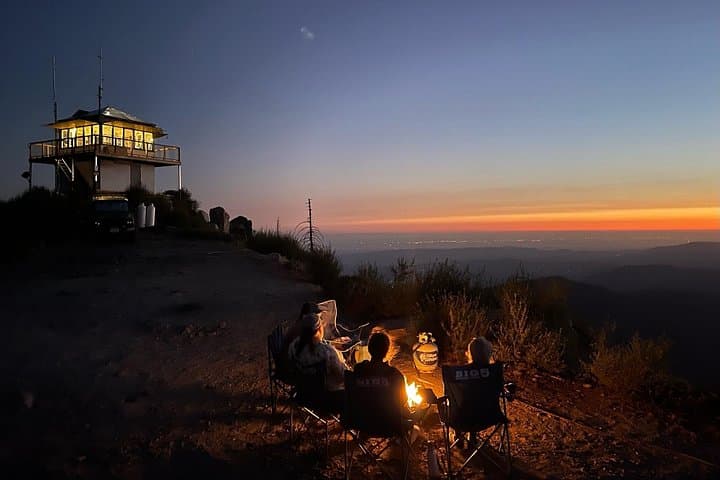
The Jeep shudders, the tires finding purchase on an old logging road chiseled out of the Sierra’s flank in the 1800s. Pine boughs slap the canvas overhang. The sun is a slow coin, sinking behind serrated ridgelines, and each switchback opens a deeper, quieter view of a valley that has held timber crews, lookouts and night skies for generations. On this three-hour 4x4 tour you don’t just chase a sunset — you are delivered to it, to a high perch at Signal Peak (historically called Devils Peak) where the last light and a ranger’s lantern share the night.
It’s a short, cinematic trip: a private jeep climb through mixed conifer forests and chaparral, a bit of hard-rock road that remembers loggers and packers, and a final, airy approach to the old lookout. Signal Peak stands at about 6,900 feet, and the ride feels like an ascent through a cross-section of Sierra history: giant sequoia elsewhere in these ranges, charred stumps from past fires, and switchbacks that follow the bone of the land. The lookout you meet on top is one of the few still manned in California, a living remnant of the state’s wildfire-detection system. Tonight the ranger’s job is ceremonial and practical — to point out constellations, to chat about fire ecology, and to keep a watchful eye on the horizon.
Geology is a quiet but thorough presence here. The Sierra Nevadas are a tilted block of granite — uplifted, frost-wedged, glacially polished. From Signal Peak the lake-dimples and east-facing escarpments tell that story: broad domes, talus fields and ridgelines that fall away into younger volcanic and sedimentary layers. The road itself follows benches of resilient soils; in places the bedrock peeks through like a spine.
Locally, the culture is a blend of forest-service lore and small-town hospitality. Most travelers stage from Oakhurst or the south entrance to Yosemite: a motel lobby full of maps, a hardware store that sells rope and conversation, and a brewery with a rotating tap list that reads like the region’s seasonal mood. The 4x4 tour operator leans into that history, framing the drive as both a wilderness rite and a comfortable, private experience: instant confirmation, a set departure window, and room to gather round a small campfire for marshmallows once the sun has dropped.
Why go? The sunset itself is a tourist-grade spectacle, but the real draw is the mix: a short time commitment (three hours), minimal hiking, and a high-elevation sky that goes from gilded to astronomic in minutes. It’s an especially good option for travelers who want a big view and to feel like they’ve gone deep into the Sierra without the logistics of overnight backcountry travel. Guides who run these tours are typically versed in local natural history and safety protocols; the experience skews private and curated, and the price reflects that (from USD 849 as noted on the booking page).
Practicalities matter. The access road is rough: expect a bumpy ride and pockets of dust. The summit sits near 6,900 feet, so nights can be cold even after a warm afternoon — bring layers. Cell service is spotty up top; the ranger’s presence and your guide’s experience become your main safety nets. If you’re prone to motion sickness, take precautions before the switchbacks begin. The entire trip runs roughly three hours round-trip, which includes the drive, time for sunset and a bit of campfire socializing.
Timing is everything. Summer brings long days and warm evenings low on the mountain, but mid-September through October often delivers the clearest skies and the most dramatic color. Winter and early spring can be snowy; a 4x4 is a necessity and tours may be seasonal or weather-limited. If you want the Milky Way and uninterrupted stars, opt for new-moon windows and check with your guide about light pollution and the best vantage on the summit.
Packing is simple but intentional: layered clothing for variable mountain temperatures, a headlamp for the return, closed-toe shoes for the summit, and a camera with a modest tripod if you want star shots. Photography here rewards patience: bracket your exposures as the sky changes, and use the jeep or the lookout cabin to compose foreground interest. Respect the ranger and the lookout site: these places are operational and fragile.
For anyone curious about the Sierra in a single, well-framed evening, this tour is a compelling option. It’s short on trail miles but long on perspective — ecological, geological and human. The desert of pines gives way to a horizon full of old light, and your jeep deposits you there with a small, memorable ceremony: the ranger’s flashlight sweeping across the dark, the guide pouring a thermos of coffee, and a sky so wide it feels like an invitation.
Trail wisdom
Small choices, better day.
Dress in Layers
Temperatures can drop quickly after sunset; a fleece and a wind shell will keep you comfortable on the summit.
Bring Motion Sickness Remedies
The logging road includes tight switchbacks and a bumpy surface; take anti-nausea meds beforehand if you’re sensitive.
Pack a Headlamp
Returns are after dark; a headlamp keeps your hands free for steps and camera gear.
Respect the Lookout
The ranger’s tower is an operational wildfire post — follow guidance and keep noise low to preserve their work.
Local knowledge
Read the place, not just the route.
Watch for native species including Mule deer, Red-tailed hawk.
Keep an eye out for wildlife during the transition between areas and habitats. Respect distance guidelines.
Signal Peak’s lookout remains part of California’s wildfire detection network — respect the site, pack out trash, and avoid lighting unauthorized fires.
Follow the guide's instructions on size limits, ethical handling, and leave-no-trace practices.
A short detour to Bass Lake for pre-tour lakeside views. A roadside pullout west of the summit that frames long Sierra panoramas for sunrise shoots
Locally recommended viewpoints and quiet spots known best to local operators.
The logging roads you travel were carved during the late 19th and early 20th-century timber boom; many lookout sites were established to spot fires as the forests were actively logged.
Maritime roots and regional tradition shape the waterways and working coasts.
Seasonal guide
Four versions of the same landscape.
Spring
Best forWildflower blooms · Cool daytime drives
ChallengesLate snow patches · Muddy roads after storms
Spring offers green forests and melting snow; expect variable road conditions and check for seasonal openings.
Summer
Best forStable weather · Warm days
ChallengesCrowds near Yosemite · Hot afternoons at lower elevations
Summer is predictable for scheduling but bring sun protection and plan for busy gateway towns.
Fall
Best forCrisp sunsets · Clear skies for stargazing
ChallengesShorter daylight hours · Cool nights
Fall’s clarity and color make it the ideal season for sunset-to-stars tours; dress warmly after dark.
Winter
Best forSnow-blanketed panoramas · Quiet, off-season solitude
ChallengesSnowy roads may close · Tours may be canceled or require chains
Winter transforms the route; operators may run only when conditions and vehicle equipment allow.
Pack with intention
What to bring.
Good to know
Common questions.
The experience is approximately three hours total, including the drive, time at the summit for sunset and stargazing, and the return trip.
Plan the edges
The details that make the day easier.
Signal Peak’s lookout is among a small number of manned fire lookout towers still staffed in California, a decades-old system crucial to early wildfire detection.
Stage the evening from Oakhurst: grab a hearty pizza or local brew at South Gate Brewing Company before your pickup, and if you arrive early try a roadside fruit stand for seasonal apples or pies — it’s classic Sierra hospitality.
- Closest airport
- Fresno Yosemite International Airport (FAT); Closest town
- trailhead
- Oakhurst (30–60 minute drive to meeting point depending on operator); Driving distance from nearest town: typically 20–40 miles on rough roads; Cell service: patchy to none near the summit; Permits
- fees
- confirm with operator—Yosemite entry may be required only if tour crosses park boundaries.
This ride climbs through fire-adapted forest ecosystems — please stay on designated roads, pack out all trash, and follow ranger guidance to minimize visitor impact.
Explore by topic
Follow the threads.
Keep exploring
Make the story part of the trip.
 Related story
Less than two hours from Nairobi, Kereita Forest pairs hands-on canopy adventure with quiet montane trails and a sobering colonial history—perfect for families, teams, and curious travelers seeking a full-day pulse of nature.
Set out from Bass Harbor for a private, customizable day on Blue Hill Bay — lighthouses, puffins, seals, and the chance to feel Acadia from the water. Small groups, local captains, unforgettable views.
In four hours you can move from shaded canyon ferns to wind-scoured coastal ridgelines, guided by someone who knows where the light—and the hidden views—live. This private half-day hike on the Monterey Peninsula or Big Sur is compact, curated, and perfect for travelers who want depth without a multiday commitment.