
What the day feels like
By midmorning the bus releases us onto a red-dust road and the heat changes tonalities—becoming heavier, more tactile. The first steps toward Phnom Kulen feel like walking into a living map: monks' saffron robes bright against a canopy of dipterocarp trees, the distant thunder of a waterfall that insists you come closer. This is not the manicured Angkor circuit; it’s a day of contrasts—sacred river carvings and reclining Buddhas, an overgrown stone complex where figs and banyans have claimed the roofs, and a floating community where life rises and falls with the pulse of Tonle Sap.
The Full Day Adventure Tour from Siem Reap stitches three different Khmerscapes into one circuit: Phnom Kulen’s sacred plateau and the tangled River of a Thousand Lingas; Beng Mealea, a ruin that filmmakers and archaeologists both call ‘untamed’; and Kampong Phluk, a Tonle Sap village that lives stop-motion on stilts and houseboats. The hours are long—expect an 8–9 hour day of driving, short hikes, temple scrambles and a quiet sampan glide—but the payoff is a layered portrait of Cambodia’s history, geology and present-day resilience.
Phnom Kulen sits on a sandstone tableland uplifted by tectonics, a place of springs—a geological capstone that feeds streams down to the plains. Its rocks were quarried for the earliest Angkor builders; Mahendraparvata, the 9th-century polity often cited as the Khmer Empire’s beginning, was born here. At the river mouth you’ll see the thousand lingas—small carved symbols along the riverbed that were intended to sanctify the water as it flows toward Angkor. The current there seems to move with purpose, as if it remembers the stones’ ritual intent.
Beng Mealea belongs in the rumor-genre: an ‘Indiana Jones’ temple where nature isn’t merely a backdrop but an active force. Ivy strips the mortar, roots pry corridors open, and sunlight falls through unexpected holes in the ceiling. It feels half-ruin, half-forest cathedral; you’ll want to slow down, touch the stone, and watch a prayer of dust motes rise in streaks of light.
By afternoon the tour heads to Kampong Phluk. The Sampan boat is low to the water and slow, a respectful vehicle that lets you observe village life: children fishing with handlines, market ladies ferrying produce, and houses that flex with the season’s drainage. Tonle Sap is not static; it’s a hydrological actor—the lake swells dramatically during monsoon months and retreats in the dry season, shaping livelihoods.
Practical realities matter here. The day is long—expect 8–9 hours from hotel pickup to drop-off—and includes a mix of easy hiking (short steep sections and rock steps), scrambling at ruined temples, and a calm boat ride. Bring sun protection, solid shoes with grip, cash for on-site fees (Beng Mealea can be paid locally if you don’t have a valid Angkor pass), and patience for the unhurried pace of rural Cambodia.
Why do this tour? Because it assembles different registers of place that would otherwise take days to reach on your own. It’s a concentrated introduction to Cambodia’s deep past (Mahendraparvata and the lingas), the romantic ruinism of Beng Mealea, and the contemporary human ecology of Tonle Sap. For travelers who like a mix of easy hiking, cultural context, and photography opportunities, it’s a single-day mosaic that feels larger than its hours.
Timing is simple: start early to beat the heat at Phnom Kulen and to catch softer light at Beng Mealea. Guides here do more than navigate; they translate—pointing out carvings, explaining water rituals, and describing how seasonal floods dictate village life. Respect the sacred spaces—remove hats and lower voices at pagodas—and carry small bills for admission fees and offerings.
If you’re looking for a tactile Cambodian day—one where the land, history and living communities are part of the same conversation—this is it. You’ll come away with wet shoes from a river crossing, sand in your camera bag, and a clearer sense of how a nation’s past still flows through its rivers and ruins. It’s not polished; it’s honest.
Trail wisdom
Small choices, better day.
Start early
Begin at first light to avoid midday heat at Phnom Kulen and capture softer light at Beng Mealea.
Bring cash for fees
Beng Mealea admission is often paid on-site (about $10 USD) unless you have a valid Angkor pass; small bills are preferred.
Footwear with grip
Wear sturdy trail shoes for wet rocks and uneven temple stones—flip-flops are not recommended.
Hydrate and snack
Carry at least 1.5–2L water and energy snacks—the day involves long stretches between services.
Local knowledge
Read the place, not just the route.
Watch for native species including Waterbirds such as kingfishers and egrets on Tonle Sap, Long-tailed macaques near temple margins.
Keep an eye out for wildlife during the transition between areas and habitats. Respect distance guidelines.
Tonle Sap is a globally significant freshwater ecosystem—respect seasonal fishery practices and avoid disturbing riverbanks; support local operators and avoid single-use plastics.
Follow the guide's instructions on size limits, ethical handling, and leave-no-trace practices.
River of a Thousand Lingas (Phnom Kulen) — a lesser-visited sacred riverbed with intricate carvings. The inner courtyards of Beng Mealea — explore slowly and look for collapsed galleries framed by banyan roots
Locally recommended viewpoints and quiet spots known best to local operators.
Phnom Kulen (Mahendraparvata) is recognized as an early center of the Khmer polity in the 9th century; the plateau supplied stone and ritual significance to the Angkor heartland.
Maritime roots and regional tradition shape the waterways and working coasts.
Seasonal guide
Four versions of the same landscape.
Spring
Best forFewer crowds than peak season · Lush late-dry season greenery
ChallengesHeat increases toward April · Occasional dusty roads
Spring transitions from dry to hotter weather—pleasant mornings and hotter afternoons; expect dusty tracks and strong sun later in the day.
Summer
Best forDramatic water levels on Tonle Sap · Lush forest at Phnom Kulen
ChallengesHeavy monsoon rains and muddy trails · Potential boat schedule changes
Summer is wet and dramatic—water levels swell, but heavy rains can make roads and trails slippery and slow travel.
Fall
Best forCooling temperatures after rains · Full rivers and vivid foliage
ChallengesSome residual muddiness · Variable boat access depending on local water levels
Fall offers comfortable temperatures and vibrant landscape; travel is reliable but expect occasional wet patches from the monsoon tail.
Winter
Best forCool, dry conditions · Ideal for long days of exploring
ChallengesMorning chill on the plateau · Higher demand from tourists in peak months
Winter (the dry season) is the most predictable time—clear skies and dry trails, but busier with visitors.
Operator details
What the booking data adds.
Included
- ✓Private SUV/Minivan in great air-conditioning
- ✓Cold bottled water with refreshing wipes, toll roads, parking lots and gasoline
- ✓Hotel pickup and drop-off at hotel in Siem Reap city
- ✓Professional local tour guide in history and photography expertise
Not included
- —Foods and drinks
- —Gratuities
- —Beng Mealea Temple
- —Admission fee to Phnom Kulen National Park
- —Admission fee & boat fee to Kampong Phluk floating village
Good to know
- ✓Infants are required to sit on an adult’s lap
- ✓Not recommended for travelers with poor cardiovascular health
- ✓Travelers should have at least a moderate level of physical fitness
- ✓Dress code is smart casual
- ✓Dress code is formal
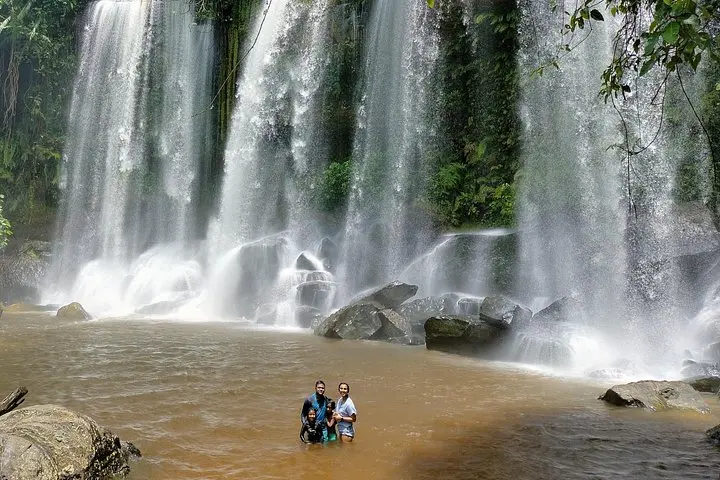
- ✓Bring bathing suits and towels from hotel to swim at holy waterfall.
Pack with intention
What to bring.
Good to know
Common questions.
The tour runs about 8–9 hours (480–540 minutes); it typically includes hotel pickup, transport, a guide, entrance pass for Phnom Kulen and Kampong Phluk, and the sampan boat ride—Beng Mealea admission may be extra if you don't hold an Angkor pass.
Plan the edges
The details that make the day easier.
Phnom Kulen is considered the cradle of the Khmer Empire—9th-century inscriptions there reference Mahendraparvata, an early Angkorian city predating state consolidation at Angkor.
After the tour head back to Siem Reap’s Pub Street for a casual meal—try fish amok or a bowl of kuy teav (noodle soup). For a quieter option, dine at a riverside restaurant near the Old Market where locals serve grilled freshwater fish; finish with a local Beer Angkor and chat with your guide about village life.
- Closest airport
- Siem Reap International (REP). Typical drive: Phnom Kulen ~1–1.5 hours north, Beng Mealea ~1–1.5 hours east; expect 2–3 hours of combined driving. Cell service: intermittent outside Siem Reap and around the plateau. Permits: Phnom Kulen and Kampong Phluk passes included; Beng Mealea admission often paid on site (~$10 USD) unless you hold an Angkor pass.
Support local communities by hiring licensed guides, avoid single-use plastics, and stay on established paths at archaeological sites to minimize erosion and damage to fragile stonework.
Explore by topic
Follow the threads.
Keep exploring
Make the story part of the trip.
 Related story
Aksla is the small mountain that makes Ålesund legible: 418 steps, sweeping panoramas, and a short tour that threads architecture and coastline into 90 minutes of memorable sightlines. Perfect for anyone who wants a quick, high-reward encounter with Norway’s west coast.
 Related story
The New York Public Library’s Main Branch is more than a photo stop—it's a civic living room, an architectural landmark, and a waypoint for walking tours that stitch together Midtown’s history, films, and holiday rituals. Here's how to make the most of a visit.
 Related story
Five miles of riverfront walking that reveal NYC’s quieter rhythms—Riverside Park pairs easy urban hiking with history, birdlife and a front-row view of the city’s climate resiliency efforts. Walk a stretch or follow the Greenway; either way, the Hudson makes its presence felt.