
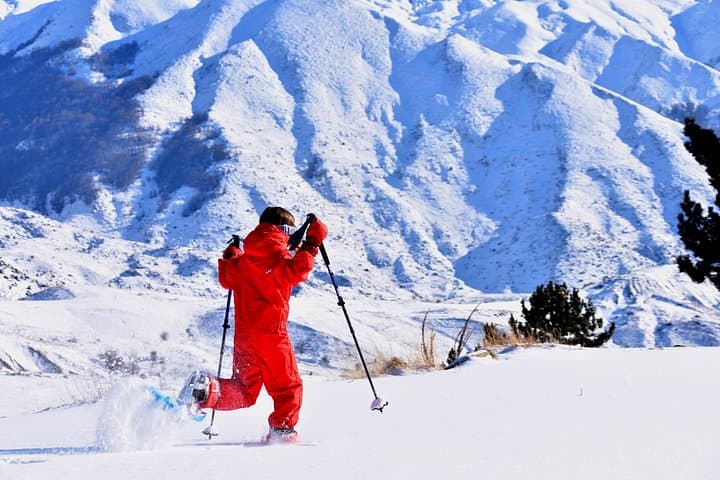
What the day feels like
By mid-morning the beech forest loosens and the air thins; individual breath—hot and quick—shows in front of you like an offering. A ribbon of unbroken snow threads uphill, the tracks only yours for now. Mount Tomorr doesn’t pose with postcard theatrics. Instead it reveals itself in stages: first the cathedral-limbed beech woods, then the patchwork of limestone slabs, and finally the broad, stony shoulder where the shrine sits, stubborn against wind and winter. It feels older than politics and louder than small talk, a place where weather and myth still argue.
Tomorr’s profile rises east of Berat and towers above the Osum valley, a karst massif crowned at 2,416 meters. Locals call it a throne of the gods; the mountain answers that name. The same crags and springs that made Tomorr a sacred site for Pelasgian cults and later Bektashi pilgrims now shape winter routes for snowshoers who want solitude and scale without technical climbing. The mountain keeps its rituals—snow that lingers in cirques, sudden whiteouts, and the hush of snowfall that turns a chaotic landscape into a minimalist room for thinking.
Geologically, Tomorr is limestone and marble worked into cliffs and gullies by millennia of freeze and flow. In winter the karst sinks and reappears beneath wind-scoured drifts; springs still find a way through the ice, making the mountain less a static shrine than a stubborn, living thing. Culturally, Tomorr is part of a dense human tapestry. Nearby Berat—UNESCO-listed for its Ottoman-era neighborhoods—sits at the mountain’s western foot, and the town of Çorovodë, which straddles the Osum River to the south, is the common launch point for many winter treks. Pilgrims still make the ascent in summer; in winter it’s quieter, but the same sense of reverence remains.
This is a two-day, operator-led snowshoe experience designed for travelers who want more than a half-day walk. Expect roughly 10–12 kilometers of moving snowshoe distance per day depending on conditions, with cumulative elevation changes that can reach 800–1,200 meters across the itinerary. The pace is unhurried: breaks for hot tea, time to read the sky, and the occasional lesson in route-finding. Nights are typically spent in a local guesthouse or basic refuge—part of the appeal is stepping out of the bright, warm rooms of Berat and into the raw hush beyond.
Why go? There are few places where cultural gravity and alpine silence meet so cleanly. The mountain’s combination of accessible approach, spiritual resonance, and open winter terrain makes it ideal for groups of friends, families (older children), and anyone who wants to try snow travel away from crowded alpine resorts. The reward is not just the summit views—though you get them, and they can be jaw-dropping—but the steadily expanding sense of smallness and clarity when you stand on limestone looking down at a white river of valleys.
Practical notes: guides provide local knowledge about avalanche exposure, route selection, and where to place an overnight. Snow conditions vary—deep powder early in the season, wind-packed crust later—so a basic ability to walk long hours with load and an openness to teachable moments with crampons or trekking poles is helpful. If you’re new to snowshoeing, expect a patient introduction to stride, kick-step, and stopping in deep snow; if you’re experienced, you’ll enjoy the chance to practice navigating an alpine karst in a non-resort environment.
Safety and etiquette matter: Tomorr is a national park and a sacred place. Stay on supported routes when possible, respect marked spring sources, and avoid disturbing small chapels or designated pilgrimage zones. Local guides typically handle logistics—transport from Berat or Çorovodë, guesthouse arrangements, and in-winter route changes—so book through a reputable operator and check cancellation terms (this tour lists free cancellation). Bring layered technical clothing, liquid and solid calories that won’t freeze, and a small repair kit for boots and snowshoes.
Photography here rewards patience: light slants across ridges in the late afternoon, and micro-shadows on wind-swept snow deliver texture that makes even simple compositions sing. Practice exposing for highlights—snow tricks meters easily—and keep a spare battery warm against your body. Finally, pair the mountain days with Berat’s warm hospitality: the town’s narrow streets, whitewashed homes, and small taverns are the perfect counterpoint to winter’s scale.
If you want a winter experience that combines wilderness, culture, and manageable commitment, Mount Tomorr’s snowshoe routes are a compelling option. You’ll come for the snow; you’ll return having walked a place that still holds its own stories, and maybe with a few of your own.
Trail wisdom
Small choices, better day.
Hire a local guide
Weather and karst terrain change rapidly; a local guide knows safe routes and cultural sensitivities.
Layer for variable cold
Pack a breathable base, insulating mid-layer, and a waterproof shell—temperatures can swing and wind elevates chill.
Protect batteries and liquids
Keep spare batteries and drinks close to your body to prevent freezing during long exposures.
Respect pilgrimage sites
Tomorr is sacred—avoid disturbing shrines, and ask guides about local customs before photographing religious sites.
Local knowledge
Read the place, not just the route.
Watch for native species including Alpine chamois (watch from a distance), Golden eagle circling high ridgelines.
Keep an eye out for wildlife during the transition between areas and habitats. Respect distance guidelines.
Tomorr is protected as a national park; stay on established routes in winter to limit erosion on fragile alpine soils and respect springs and sacred sites.
Follow the guide's instructions on size limits, ethical handling, and leave-no-trace practices.
Osum Canyon near Çorovodë—a striking river gorge not far from winter trailheads. Berat’s Mangalemi and Gorica neighborhoods for warm taverns and local architecture
Locally recommended viewpoints and quiet spots known best to local operators.
Tomorr has long been a sacred mountain—used in Pelasgian myth and the later Bektashi pilgrimage tradition—and its summit hosts religious observances in summer.
Maritime roots and regional tradition shape the waterways and working coasts.
Seasonal guide
Four versions of the same landscape.
Spring
Best forEarly melt snowshoeing · Wild springs and thawing streams
ChallengesAvalanche risk at spring thaw · Variable trail conditions—ice under meltwater
Spring brings mixed conditions: firm early-morning snow that softens by noon and increased runoff—expect wet patches and rapid weather shifts.
Summer
Best forAlpine wildflowers · Day hiking to the shrine
ChallengesNo snow for snowshoeing · Warmer temperatures and sun exposure
Summer is excellent for hiking and cultural visits; routes are dry, but the winter-specific snowshoe experience isn’t available.
Fall
Best forClear visibility and crisp air · Less crowded trails
ChallengesEarly snowfalls possible · Shorter daylight hours
Fall rewards with dramatic color and clear vistas; late-season storms can bring early snow—check forecasts.
Winter
Best forSnowshoeing and winter solitude · Photography of snowy karst
ChallengesCold temperatures and wind-scoured ridges · Possible deep powder or icy crust
Winter is prime for guided snowshoe trips—expect true winter conditions, full snow coverage, and the need for warm, technical gear.
Operator details
What the booking data adds.
Included
- ✓Private transportation
- ✓Use of our snowshoeing equipments
- ✓Bottled water
- ✓After Snowshoeing we will enjoy a fresh and BIo local lunch
- ✓Breakfast on CastlePark Restaurant
- ✓Traditional Dinner on the first day on the Castle Park restaurant
Not included
- —Any other meals or drinks that are not described are not included
Good to know
- ✓Public transportation options are available nearby
- ✓Not recommended for travelers with spinal injuries
- ✓Not recommended for pregnant travelers
- ✓Not recommended for travelers with poor cardiovascular health
- ✓Suitable for all physical fitness levels
Pack with intention
What to bring.
Good to know
Common questions.
No—basic instruction is provided, but you should be comfortable walking for several hours in cold conditions and be in good fitness.
Plan the edges
The details that make the day easier.
Mount Tomorr’s highest point is 2,416 meters and the mountain remains an active pilgrimage site for the Bektashi order—summer pilgrimages continue to draw visitors.
After the trek, return to Berat for tave kosi (baked lamb with yogurt), fresh byrek from a local bakery, and a small glass of raki—head to the Mangalemi quarter for cozy taverns and views over the old town.
- Closest airport
- Tirana (TIA) ~2–2.5 hours drive to Berat; trailhead access varies—most transfers from Berat or Çorovodë are 45–90 minutes; cell service is intermittent above treeline; no special permits typically required but use a licensed guide.
Tomorr is part of Albania’s national park system—pack out all waste, avoid off-trail travel that damages fragile alpine vegetation, and respect pilgrimage sites and local customs.
Explore by topic
Follow the threads.
Keep exploring
Make the story part of the trip.
 Related story
Less than two hours from Nairobi, Kereita Forest pairs hands-on canopy adventure with quiet montane trails and a sobering colonial history—perfect for families, teams, and curious travelers seeking a full-day pulse of nature.
Set out from Bass Harbor for a private, customizable day on Blue Hill Bay — lighthouses, puffins, seals, and the chance to feel Acadia from the water. Small groups, local captains, unforgettable views.
In four hours you can move from shaded canyon ferns to wind-scoured coastal ridgelines, guided by someone who knows where the light—and the hidden views—live. This private half-day hike on the Monterey Peninsula or Big Sur is compact, curated, and perfect for travelers who want depth without a multiday commitment.