
What the day feels like
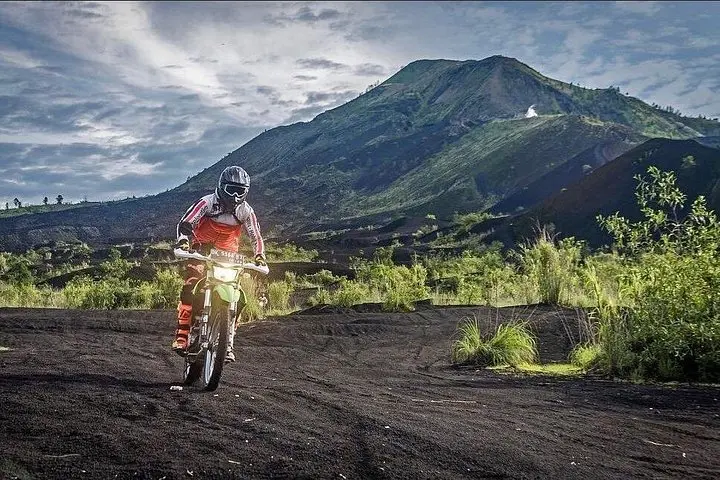
By the time the sun clears the lip of Batur’s caldera, the black sand glows like iron filings. Your bike chirps as you shift down—early morning chill still in the air—and the trail unfurls: a ribbon of volcanic rock, switchbacks that carve into the mountain flank, and occasional open stretches that reveal a lake held like a dark eye in the caldera below. This is not a scenic drive meant to be admired from a tour bus. It’s a half-day dirt-bike jaunt that gives you the terrain: the sharp scent of eucalyptus and charred earth, the wind that insists you move faster, and the slow reveal of Bali’s underbelly—its geology, its people, and a landscape shaped by fire.
The Batur Volcano Dirt Bike Adventure and Tour offers four concentrated hours on curated routes around northern Bali’s most visible landmark. It’s a private, guided ride built for people who want to feel the machine under them and the mountain around them: off-road tracks over hardened lava, rutted farm roads, and narrow singletrack through stands of bamboo and coffee bushes. Expect about 25–40 kilometers of riding, with elevations ranging roughly from 700 to 1,200 meters—enough vertical variance that the thermals change and your pack needs to be sensible.
Mount Batur sits inside a 13-kilometer-wide caldera carved by prehistoric eruptions and later filled in part by Lake Batur. The current cone towers at 1,717 meters and is one of Bali’s most active volcanoes, with a human history entwined with its movements. People settled the caldera rim because the ash-enriched soil is unusually fertile; you’ll see terraced farms of coffee and vegetables clinging to steep slopes. Local villages—many in Kintamani and Toya Bungkah—have adapted a rhythm around the volcano: temples and shrines face the mountain, and local priests still perform rituals to honor the energies that can be both life-giving and dangerous.
Geology is the trip’s silent narrator. The black sand and pumice, the jagged flow lines where lava cooled into ribbed plates, and the sweeping curves of the caldera wall all tell a story of heat, pressure, and sudden change. Riding here teaches you to read the land: hard-packed tracks give way to loose scoria, and what looks like a benign slope can hide deep ruts. A knowledgeable guide will point out old flow margins, explain how hot springs form in the caldera’s fractures, and why the water at Toya Bungkah is warm enough to soak tired muscles after a ride.
Culture is immediate. You’ll pass roadside warungs where women in kebayas sell kopi (strong Balinese coffee) and banana fritters, and you’ll see temple gates—ornate, split-courtyard entrances—standing against the skyline. Guides are often local riders who double as story-keepers; they’ll tell you which villages grew from lava fields and which rice terraces are irrigated by age-old subak systems. Respect is simple here: ask before photographing people and keep temple areas clean.
Practicalities matter. This is not a beginner’s trail. The tour is designed for experienced riders comfortable with off-road handling and short bursts of technical riding. Bikes are typically 150–250cc dual-sport or dirt bikes—agile but demanding at higher speeds on loose volcanic soil. The tour runs roughly four hours total (including brief photo stops and a short break) and operates primarily in the dry season, when trails are firm and visibility is best.
Safety, and smart gear choices, make the day pleasurable rather than punishing. Bring a full-face or off-road helmet, layered clothing for cooler ridge-top mornings, gloves with good grip, and sturdy boots that protect your ankles without being unwieldy when you dismount. Hydration is non-negotiable: highland sun plus physical focus will dehydrate you faster than you think. Your guide will brief you on ground signals, safe passing etiquette, and how to tackle sandy corners and steep descents.
After the ride, the mountain still gives you favors: hot springs in Toya Bungkah are a popular, restorative stop a short ride from many trail exits. Ubud and Kintamani—both common bases—offer everything from local warungs to high-end resorts, so you can balance the gritty, elemental experience of the trail with comfortable recovery.
Who should come? Riders who enjoy concentrated technical riding, travelers who want to pair adrenaline with cultural context, and anyone who likes their landscapes raw and honest. If you’re a weekend rider looking to expand skills and taste a volcanic plateau, this half-day adventure delivers more than a few moments you’ll remember: the first open stretch when the lake drops into view, a herd of Bali cows on a ridge, the steam of a hot spring hanging like fog in a bowl of green.
Book it with a guide who knows the trails, respects local communities, and maintains good safety practices. For newcomers to dirt biking, consider a private lesson day beforehand; for seasoned riders, focus on tire choice and suspension setup for volcanic terrain. Either way, you’ll come away with a clearer sense of how fire made this part of Bali, and how people continue to live with that energy.
If you go: time your ride for clear mornings in the dry season (April–October), bring a small waterproof pack for camera and layers, and plan to finish the day with a soak and a strong Balinese coffee. The motor hums, the ash crunches under your tires, and for a few hours you’re moving through a landscape both ancient and immediate. It’s adventure with altitude, history, and hospitality wrapped into one efficient, unforgettable half-day.
Trail wisdom
Small choices, better day.
Wear a Proper Off-Road Helmet
A good off-road or dual-sport helmet with goggles protects from ash, dust, and low branches—don’t substitute with a street helmet.
Manage Tire Pressure
Drop tire pressure slightly for better traction on soft volcanic sand, but not so low that you risk rim damage—ask your guide for exact PSI.
Hydrate Early and Often
Bring at least 1–2 liters in a hydration bladder; highland sun and focus on technical riding deplete fluids quickly.
Listen to Your Guide
Local guides know micro-conditions, line choices, and cultural etiquette—follow signals and pacing instructions for safety.
Local knowledge
Read the place, not just the route.
Watch for native species including Long-tailed macaques in roadside groves, Tropical birds such as kingfishers and mynas.
Keep an eye out for wildlife during the transition between areas and habitats. Respect distance guidelines.
Stick to established tracks to avoid trampling fragile regrowth; support local guides and warungs to keep tourism revenues in the community.
Follow the guide's instructions on size limits, ethical handling, and leave-no-trace practices.
Toya Bungkah hot springs—less commercial early in the morning. A small coffee roadside warung near Kintamani that roasts beans over wood fire
Locally recommended viewpoints and quiet spots known best to local operators.
Mount Batur lies in a massive caldera formed by prehistoric eruptions; the fertile ash soils have supported Balinese farming communities for centuries.
Maritime roots and regional tradition shape the waterways and working coasts.
Seasonal guide
Four versions of the same landscape.
Spring
Best forQuieter trails · Lush post-rain landscapes
ChallengesOccasional muddy sections · Unpredictable showers
Spring (March–May) bridges the wet and dry season; trails firm up but you may encounter residual mud and greener scenery.
Summer
Best forStable dry trails · Clear summit and lake views
ChallengesHigher daytime temperatures · Dusty conditions
Summer (June–August) is the clearest, most reliable season for off-road riding and distant vistas over Lake Batur.
Fall
Best forFewer tourists · Cooler morning rides
ChallengesTransition rains possible · Shorter daylight
Fall (September–November) offers cooler mornings and quieter trails, though occasional rains can make sections slick.
Winter
Best forDramatic skies · Solitude
ChallengesIncreased rain and slippery tracks · Obstructed views
Winter (December–February) is Bali’s wet season; strong rains can close or complicate routes—confirm with your operator.
Operator details
What the booking data adds.
Included
- ✓Hotel pickup and drop-off
- ✓Bottled water
- ✓Driver/guide
- ✓Fuel surcharge
Not included
- —Lunch
Good to know
- ✓Service animals allowed
- ✓Public transportation options are available nearby
- ✓Infants are required to sit on an adult’s lap
- ✓Specialized infant seats are available
- ✓Not recommended for travelers with spinal injuries
- ✓Not recommended for pregnant travelers
- ✓Not recommended for travelers with poor cardiovascular health
- ✓Suitable for all physical fitness levels
- ✓Children must be accompanied by an adult
Pack with intention
What to bring.
Good to know
Common questions.
Yes—this tour is geared toward riders comfortable with off-road terrain, braking on loose surfaces, and standing on the pegs; beginners should book a skills lesson first.
Plan the edges
The details that make the day easier.
Mount Batur sits within a 13-kilometer-wide caldera and contains Lake Batur—the largest natural lake in Bali—formed after major prehistoric eruptions.
After the ride, head to a local warung for kopi Bali and nasi campur, or soak at Toya Bungkah hot springs; Ubud offers evening options from casual warungs serving babi guling to craft beer and cafe culture for a relaxed end to the day.
- Closest airport
- Ngurah Rai International Airport (DPS) — ~2 hours drive; From Ubud: ~1–1.5 hours to Kintamani
- Mount Batur trailheads; Cell service
- patchy on ridgelines; Permits: usually none beyond park access fees—book with an endorsed local guide.
Ride only on marked trails to avoid erosion and sacred sites; pack out trash, respect temple areas, and choose local-guided operators who reinvest in community livelihoods.
Explore by topic
Follow the threads.
Keep exploring
Make the story part of the trip.
 Related story
Aksla is the small mountain that makes Ålesund legible: 418 steps, sweeping panoramas, and a short tour that threads architecture and coastline into 90 minutes of memorable sightlines. Perfect for anyone who wants a quick, high-reward encounter with Norway’s west coast.
 Related story
The New York Public Library’s Main Branch is more than a photo stop—it's a civic living room, an architectural landmark, and a waypoint for walking tours that stitch together Midtown’s history, films, and holiday rituals. Here's how to make the most of a visit.
 Related story
Five miles of riverfront walking that reveal NYC’s quieter rhythms—Riverside Park pairs easy urban hiking with history, birdlife and a front-row view of the city’s climate resiliency efforts. Walk a stretch or follow the Greenway; either way, the Hudson makes its presence felt.