
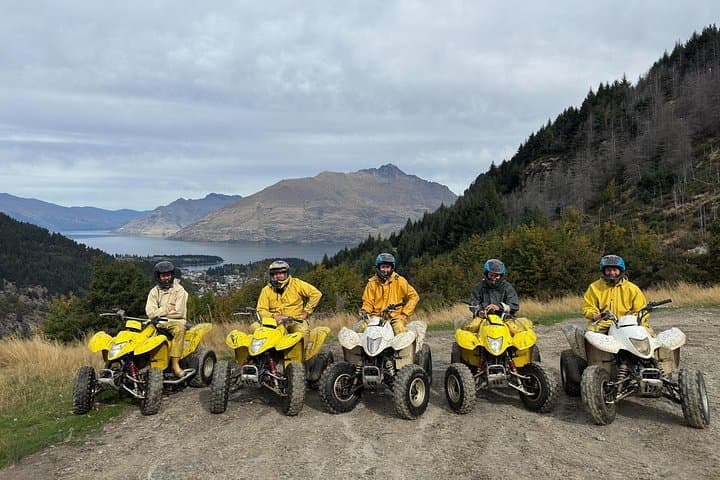
What the day feels like
The engines cough to life and the valley answers. You shoulder into the throttle, the quad's weight solid beneath you, and the track opens: a braided ribbon of dust, tussock, and rock that climbs away from Queenstown like a hand reaching for the Southern Alps. For 60 minutes you ride that arc, trading the town's tourist bustle for wind and grade, cresting ridgelines that reveal the Shotover River's silver braid and the saw-tooth skyline of Coronet Peak. The landscape insists on attention; the river seems to dare you to look away.
This is the Queenstown ATV Quad Bike Adventure Tour: a concentrated, engineered dose of off-road exhilaration set in a private 650-acre Adventure Park five minutes from downtown. It is precisely designed for the modern adventurer who wants impact without a full day committed. A short training session in a dedicated practice area levels the field; guides tailor the route to the group's experience so a complete beginner can keep pace while confident riders find steep lines and technical turns. Helmets, gloves, goggles, and wet-weather clothing are provided, and the company finishes the hour with complimentary photos — small, tangible proof that you rose to the hill climbs.
The setting roots the thrill in place. Queenstown sits on Lake Wakatipu's jagged edge, backed by glaciated peaks carved over millennia. The Shotover River, coursing through narrow canyons below the park, was once a corridor of fevered human ambition: gold-hungry prospectors fought the current and the cliffs in the 1860s. Today those same channels offer whitewater excursions; from your quad ridge you see the river as a sliver of history and geology, its braided bed a map of past glaciers and ongoing erosion. Coronet Peak, visible from many of the park's high points, switches roles seasonally — ski slope in winter, a grassy amphitheater for sun and scrub in summer.
Culture here is practical and celebratory. Queenstown bills itself the Adventure Capital of the World, and the quad park fits that reputation — high-energy, professionally run, and unapologetically fun. Small-group formats keep the experience personal, and most local operators emphasize safety and environmental responsibility, limiting routes to avoid erosion and preserve native vegetation. The land is private but the views are public: in one hour you get a concentrated portrait of Otago's contrasts, from alpine scrub to river gorge.
For the planner who wants certainty, the logistics are tidy. The tour runs for 60 minutes and is marketed to a broad skill spectrum. Pricing starts from about USD 187, instant confirmations are common, and cancellation policies are flexible. Expect to arrive early for a quick briefing, be fitted in provided gear, and run through a training loop. Guides will adjust throttle limits and line choices to match riders, so everyone gets a push at their comfort limit.
What to expect physically: short bursts of intensity interleaved with steady cruising. The most demanding parts are hill climbs and technical descents that require throttle modulation and weight shifts; they aren’t technical mountaineering, but they are not frictionless either. If you can climb a flight of stairs without losing breath, you can enjoy this ride — the challenge is more about coordination than cardiovascular endurance.
Practical tips to make the hour count: wear sturdy closed-toe shoes, bring a small daypack with water, and layer for sudden alpine sun or rain. Let your guide know your experience level and any medical concerns. Keep your camera tucked while riding; most operators provide photos so you can focus on control and line choice. Respect the land: stay on trail, avoid off-route shortcuts, and listen when guides point out fragile native plants or nesting bird areas.
The payoff is immediate and photographic. From a high ridge you can trace the town's footprint, the lake's sinuous shape, and the rawness of the ranges. The quads give you permission to get into places hikers might not reach in an hour, and they translate landscape into motion — a conversation between throttle and terrain. When you coast back into the staging area, helmet off and hair dusted gold, the photos feel earned.
For families and mixed-ability groups the tour balances fun with control. For experienced riders it scratches an itch for technical descents without committing to a full-day expedition. For photographers the hour is a study in changing light; afternoons often bring deeper shadows and more contrast across the ridges.
If you have one day in Queenstown and one hour to spare, this ride is an efficient, joyful way to sample Otago's larger outdoor proposition: mountains, rivers, and a culture that trades in carefully managed adrenaline. It’s not wilderness in the purest sense, but it's honest: a managed landscape where you can let the engine do some of the talking and still come away feeling like you found a private view of one of New Zealand's most photographed corners.
Trail wisdom
Small choices, better day.
Arrive early
Give yourself at least 20 minutes to get fitted and listen to the safety briefing; the training area is brief but essential.
Close-toed shoes only
Wear sturdy footwear for footpegs and rocky transitions; sandals are not permitted.
Hydrate and layer
Bring a 500–750 ml water bottle and dress in layers to handle sun, wind, or sudden showers.
Keep camera secure
Use operator photos for action shots; handheld cameras are risky while riding.
Local knowledge
Read the place, not just the route.
Watch for native species including Kea (alpine parrot), Tui (native songbird).
Keep an eye out for wildlife during the transition between areas and habitats. Respect distance guidelines.
Operators confine riding to a private network to limit erosion; visitors should stay on designated trails and pack out waste to protect tussock and native plants.
Follow the guide's instructions on size limits, ethical handling, and leave-no-trace practices.
Drive out to Skippers Canyon for historic gold-feel narrow roads and views. Walk the quieter Bob's Peak trails for sunrise without the crowds
Locally recommended viewpoints and quiet spots known best to local operators.
The Shotover River corridor was a focal point of Otago's 1860s gold rush, shaping settlement and transport routes around Queenstown.
Maritime roots and regional tradition shape the waterways and working coasts.
Seasonal guide
Four versions of the same landscape.
Spring
Best forWildflowers in low scrub · Cool, crisp air · Fewer crowds
ChallengesChangeable weather · Wet trail sections
Spring brings fresh growth and cooler temperatures; trails may be damp after melt or rain, so expect muddy sections.
Summer
Best forWarm, stable weather · Longer daylight · Clear mountain views
ChallengesHigher UV exposure · Potential dust on trails
Summer is prime for clear vistas and reliable conditions—bring sun protection and stay hydrated.
Fall
Best forGolden tussock colors · Crisp light for photos · Fewer tour groups
ChallengesCooler evenings · Variable weather
Autumn sharpens the landscape and light; temperatures drop quickly after sunset, so layer up.
Winter
Best forSnow-capped peaks from a distance · Less crowded trails · Contrast of white peaks and brown tussock
ChallengesCold, wet conditions · Operator may alter routes
Winters are cold and operators adjust routes; vehicle traction and participant comfort are the priorities.
Operator details
What the booking data adds.
Included
- ✓Wet weather gear if required
- ✓Professional, experienced guide
- ✓Return transfers from Queenstown town centre
- ✓Guided quad bike adventure on purpose-built off-road tracks
- ✓Full safety equipment (helmet, goggles, gloves)
- ✓Complimentary photos
Not included
- —Food and drinks
- —Personal travel and medical insurance (recommended for international visitors)
Good to know
- ✓Not recommended for travelers with spinal injuries
- ✓Not recommended for pregnant travelers
- ✓Not recommended for travelers with poor cardiovascular health
- ✓Travelers should have a high level of physical fitness
- ✓Minimum age 14 years old
- ✓Conversational English required to understand the safety briefing and follow your guide's instructions.
Pack with intention
What to bring.
Good to know
Common questions.
No. The tour includes a training session and guides tailor routes to skill levels, so beginners are welcome.
Plan the edges
The details that make the day easier.
The Shotover River was one of New Zealand's richest gold-bearing rivers during the Otago Gold Rush of the 1860s.
After the ride, head into town for a legendary Fergburger, then sample a Gibbston Valley wine or local craft beer—Queenstown's dining scene pairs comfort food with regional lamb and seafood.
- Closest airport
- Queenstown Airport (ZQN); Driving distance from downtown: ~5 minutes; Cell service: good in town, patchy on ridgelines; Permits: none for this private park; Gear provided: helmets, gloves, goggles, wet-weather clothing
Rides are limited to designated tracks in a private park to reduce erosion—stick to marked trails, pack out all waste, and avoid disturbing native vegetation or birds.
Explore by topic
Follow the threads.
Keep exploring
Make the story part of the trip.
 Related story
Less than two hours from Nairobi, Kereita Forest pairs hands-on canopy adventure with quiet montane trails and a sobering colonial history—perfect for families, teams, and curious travelers seeking a full-day pulse of nature.
Set out from Bass Harbor for a private, customizable day on Blue Hill Bay — lighthouses, puffins, seals, and the chance to feel Acadia from the water. Small groups, local captains, unforgettable views.
In four hours you can move from shaded canyon ferns to wind-scoured coastal ridgelines, guided by someone who knows where the light—and the hidden views—live. This private half-day hike on the Monterey Peninsula or Big Sur is compact, curated, and perfect for travelers who want depth without a multiday commitment.