
What the day feels like
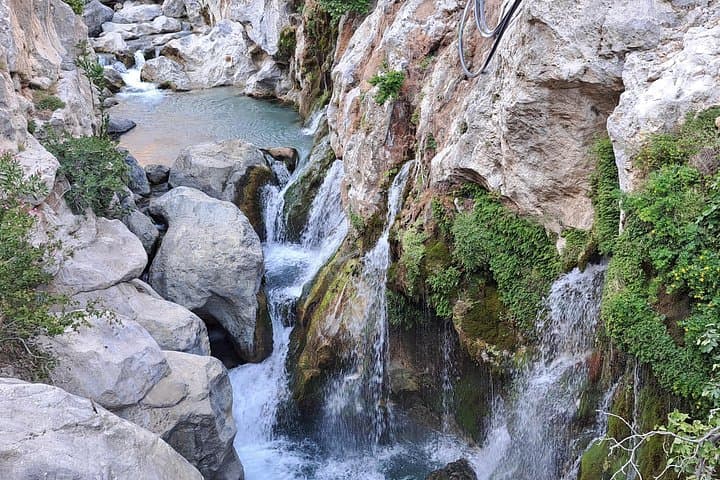
You arrive by a narrow road that unwinds through olive-silvered hills and fig trees until the valley tightens and the world quiets. The canyon’s mouth yawns—vertical limestone walls, streaked in ochre and gray, rise like a folded city of stone. The air here smells of thyme and sun-warmed rock; somewhere upstream a short cascade ticks against a shelf of stone. On a private full‑day tour out of Heraklion, this is the place that pulls you from the noisy coast into a smaller, wilder Crete: Kourtaliotiko Gorge, where walking feels less like exercise and more like being invited into a secret.
Kourtaliotiko (sometimes written Kourtaliotis) is a narrow, karst-carved gorge on Crete’s south side. Its cliffs are sedimentary pages—limestone laid down over millions of years when this island was a seabed, later wrinkled and lifted by tectonic forces. The result is a corridor of dramatic cliffs, caves, and small waterfalls fed by seasonal streams. People have threaded this landscape for millennia: nearby are Minoan ruins at Phaistos, and the villages along the route—Koxare, Spili, Matala—read like a map of Cretan daily life, from mountain springs to seaside tavernas.
The geology is obvious underfoot: limestone cobbles, scree slopes, and slabs polished by centuries of water. Botanically it’s surprisingly lush—scented shrubs and wild herbs cling to cracks, and in spring the gorge is a patchwork of rare endemic flowers. You’ll hear the resident griffon vultures riding thermals above the canyon, their silhouettes cutting the light, and if you’re lucky you’ll glimpse a Mediterranean tortoise slipping into shade.
A private guide—standard on this 6–7 hour experience—does more than point out the obvious. They read the rocks and the plants and the human signs: shepherds’ terraces carved into the slopes, stone chapels tucked in clefts, and the echo of Minoan routes that once connected inland settlements to the sea. On a well-paced hike through the gorge you’ll stop at a small waterfall and natural pool where dipping your feet is a real, immediate relief. Expect a mix of walking on prepared tracks and shorter stretches that are uneven or stony; the route rewards attention and a steady pair of shoes.
Why travelers choose this trip is simple: it compresses Crete’s best themes into a day—dramatic geology, warm villages, ancient history, and coastal sweetness. After the gorge you’ll likely visit Spili with its Venetian-era fountain and Phaistos for a glance at Minoan ruins. The tour’s private format means you can linger where you want, ask questions about local agriculture, or take a detour for a seaside lunch in Matala’s caves-village. For photographers, the canyon’s light—high-contrast shafts early and late in the day—makes for striking compositions.
Practicalities are pragmatic: this is a full-day tour (360–420 minutes). The walking portion is moderate—shorter distances cumulatively but with varied terrain and some uneven sections—so moderate fitness and steady footwear are required. In spring and fall the gorge is at its best: flowers, flowing water, and cooler walking. Summers are hot and best for early starts or late-season water dips; winter can be wet and muddy.
What you’ll walk away with isn’t just a list of sights but a sense of scale—how the same island that hosts sun-baked beaches also shelters deep, cool canyons—and the kind of local knowledge you only get from being with someone who knows the best pools, the quiet paths, and where to stop for fresh goat cheese and raki. If you’re planning a longer stay on Crete, treat this day as both an intimate landscape primer and a soft introduction to the island’s cultural layers.
Book the private tour if you want flexibility: guides can tailor pacing, make local restaurant recommendations, or add short historical stops. For solo travelers and families alike, it’s an efficient way to escape urban Heraklion for something elemental—stone, water, and sky—without doing the logistical heavy lifting yourself. And if you want to get your plans set up before you land, see this Kourtaliotiko Gorge private tour for details and booking options.
On the trail, keep your pace steady, drink often, and give the vultures space. The gorge doesn’t demand technical skill, but it does reward respect—for the terrain, for the fragile plants, and for villages that have farmed these slopes for generations.
Trail wisdom
Small choices, better day.
Start early
Begin at first light to avoid mid-day heat and to catch vultures in thermal lift.
Wear sturdy shoes
Expect limestone slabs, loose scree, and short uneven stretches—trail runners with good grip or light hiking boots work best.
Hydrate and snack
Carry 1.5–2L of water and high-energy snacks—local stops may be limited between villages.
Respect nesting raptors
Give griffon vultures space and avoid making loud disturbances near cliff ledges.
Local knowledge
Read the place, not just the route.
Watch for native species including Griffon Vulture, Mediterranean Tortoise.
Keep an eye out for wildlife during the transition between areas and habitats. Respect distance guidelines.
The canyon’s karst flora is sensitive—stay on trails, avoid disturbing cliffs where raptors nest, and pack out all waste.
Follow the guide's instructions on size limits, ethical handling, and leave-no-trace practices.
Spili’s Venetian fountain and shady cafés. A short detour to Matala’s sandstone caves and seaside tavernas
Locally recommended viewpoints and quiet spots known best to local operators.
The gorge sits near Phaistos, one of Crete’s major Minoan palaces—this landscape was a corridor between Bronze Age settlements and the south coast.
Maritime roots and regional tradition shape the waterways and working coasts.
Seasonal guide
Four versions of the same landscape.
Spring
Best forWildflowers · Flowing waterfalls · Cool hiking
ChallengesMud in shaded sections · Variable weather
Spring is peak for flowers and water—expect cool mornings and lush canyon walls.
Summer
Best forSwimming spots · Long daylight hours · Village tavernas
ChallengesHigh temperatures · Limited shade mid-day
Summer offers warm pool dips but plan for early starts and sun protection.
Fall
Best forPleasant hiking temps · Harvest season eats · Birdwatching
ChallengesOccasional rain · Shorter days
Autumn is comfortable and atmospheric, with ripe olives and fewer crowds.
Winter
Best forDramatic skies · Quieter trails
ChallengesWet, slippery paths · Reduced services in villages
Winter can be wet and slick—check local conditions and guide advice before heading out.
Operator details
What the booking data adds.
Included
- ✓Pick up and drop off from your accommodation
- ✓Local English Speaking Driver Guide
- ✓Transportation in Mercedes Benz Van
- ✓Liability Insurance
- ✓Coffee and Water
Not included
- —Personal expenses
Good to know
- ✓Public transportation options are available nearby
- ✓Specialized infant seats are available
- ✓Not recommended for travelers with spinal injuries
- ✓Not recommended for travelers with poor cardiovascular health
- ✓Travelers should have at least a moderate level of physical fitness
- ✓Let us know if there are any specific sights or experiences you'd like to include, and we'll tailor the tour accordingly
Pack with intention
What to bring.
Good to know
Common questions.
This private tour runs approximately 360–420 minutes (6–7 hours), combining gorge walking with visits to local villages and historic sites.
Plan the edges
The details that make the day easier.
Kourtaliotiko Gorge is a known nesting area for griffon vultures, which use the canyon’s thermals to soar—these birds help control the island’s ecosystem by scavenging carcasses.
After the hike, head to Matala for fresh grilled fish and a cold beer in a seaside taverna, or stop in Spili for local cheeses and a glass of raki—these villages pair Cretan food traditions with convivial atmospheres.
- Closest airport
- Heraklion (HER). Typical driving: ~1–1.5 hours from Heraklion to the gorge area. Cell service: patchy in the canyon. Permits: none usually required for day visits. Pickup: private tours often include hotel pick-up—confirm when booking.
This karst landscape is ecologically fragile—stick to trails, avoid disturbing nesting raptors, and pack out all trash to protect endemic plants and clean water sources.
Explore by topic
Follow the threads.
Keep exploring
Make the story part of the trip.
 Related story
Less than two hours from Nairobi, Kereita Forest pairs hands-on canopy adventure with quiet montane trails and a sobering colonial history—perfect for families, teams, and curious travelers seeking a full-day pulse of nature.
Set out from Bass Harbor for a private, customizable day on Blue Hill Bay — lighthouses, puffins, seals, and the chance to feel Acadia from the water. Small groups, local captains, unforgettable views.
In four hours you can move from shaded canyon ferns to wind-scoured coastal ridgelines, guided by someone who knows where the light—and the hidden views—live. This private half-day hike on the Monterey Peninsula or Big Sur is compact, curated, and perfect for travelers who want depth without a multiday commitment.