
What the day feels like
The early morning highway out of Hue yawns open and cool. Motorbikes thrum like distant insects, and rice paddies catch the first clean light; by noon the karst cathedral of Phong Nha begins to puncture the horizon—sharp, green spires rising like the teeth of the land. On this two-day loop you trade imperial citadel stones and lacquered bowls for a different kind of grandeur: underground rivers that think in centuries, caverns that remember the sky, and villages that stitch the edge between Huế’s royal past and Quảng Bình’s rural present.
You arrive at the mouth of Paradise Cave (Hang Thiên Đường) with a guide who knows which ledges hold the best echoes. The cave doesn’t simply sit— it performs. Stalactites, long and patient as cathedral organ pipes, drip in a steady tempo; sunlight from the trail opening catches speleothems and makes them appear lustrous, as if someone left the world’s smallest chandeliers on slow spin. The hill around you is limestone heaved into fantastical towers by tectonics and rain, a puzzle box of karst folded over millions of years. Caves and rivers have carved this landscape into the dramatic backdrop you’ll be moving through, and the park protects a geology that’s both delicate and showy.
Phong Nha–Ke Bang National Park was recognized as a UNESCO World Heritage Site in 2003 for precisely this mingling of biodiversity and karst wonder. Its human history is quiet but persistent: local communities have coexisted with these caves for generations, using rivers as highways and caves as shelter. During wartime, these hollows offered refuge; today, they sustain livelihoods through guiding, smallholder agriculture, and a steady stream of curious travelers.
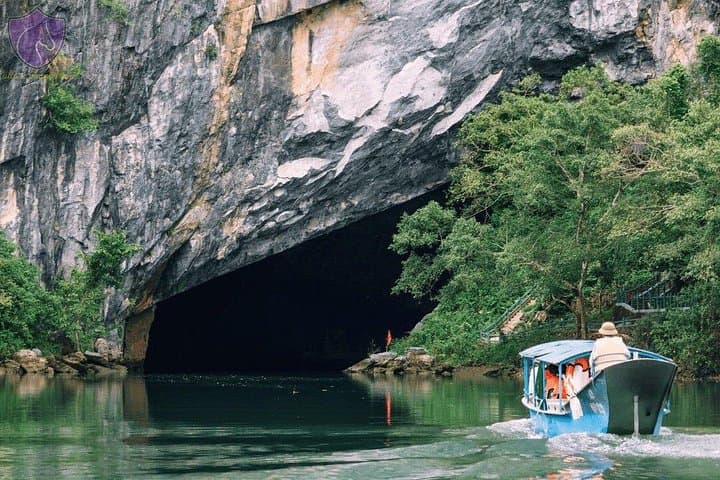
This is an adventure with contrasts. Expect calm stretches of rivers that dare you to drift and sudden staircases that ask for steady knees. On day one you ride from Hue across the Annamite foothills, punctuated by stops at viewpoints and small markets where vendors offer steaming bowls of cao lầu or sticky rice with sesame. By mid-day, you’ll board a boat for a tranquil stretch on the Chày River, the water a mirror under towering karst. Guides point out cave mouths that could swallow a bus and invite you to imagine prehistoric rivers trudging through darkness.
The highlight is Paradise Cave itself: a well-maintained boardwalk carries you into large caverns where your headlamp is unnecessary because the cave’s own openings let in surreal daylight. Walk slowly—the formations keep secrets—and let the cave’s interior rearrange your sense of scale. On day two, optional side trips open up: Dark Cave (Hang Tối) for those who want mud, zip lines, and a wild swim, or the Nuoc Mooc spring for a cleaner, quieter dip.
Practical details matter here as much as wonder. The tour runs two days with comfortable, locally run guesthouses for the overnight—nothing fussy, but clean, and often family-run with home-cooked meals. Expect 6–8 hours of active sightseeing split between the two days (the whole trip spans roughly 48 hours). Trails in and around the caves vary from paved boardwalk to loose limestone steps; pay attention to wet surfaces. Weather can flip quickly—summer monsoons will swell rivers and close some routes, while dry season can make caves dusty and bright.
Who it’s for: this trip balances accessibility with adventure. Casual hikers who can handle stair climbs will find it rewarding; experienced cavers will appreciate the scale without needing technical gear. Guides are usually local and bilingual enough to translate geology into stories and to shepherd you around the harder bits. Pack sensible footwear, layers, and a sense of flexibility—some of the magic of Phong Nha comes from unexpected detours and quiet river margins where you can watch swifts unspool themselves against the cliff face.
Responsible travel here is straightforward: follow the path, avoid touching fragile formations, and bring a reusable bottle—local communities are working to reduce single-use plastic. Support local guides, buy a meal in the village, tip if the service is good. The park is living geology and living culture; leaving both intact is part of the adventure.
If you leave with anything, let it be an appreciation for scale—the patient work of water on stone, communities persisting on the limestone fringe, and the way a cavern can rearrange a day so completely that it feels like two lives stitched into one weekend. This is not a checklist trip. It’s a paced, sensory pivot from imperial Hue to subterranean calm, and it asks, quietly, that you listen.
Trail wisdom
Small choices, better day.
Watch Your Step in the Caves
Boardwalks and staircases can be damp; take deliberate steps and use handrails where provided.
Bring a Reusable Bottle
Water is available at stops—refill rather than buying single-use plastic bottles.
Plan for Variable Weather
Rain can close river routes; pack a lightweight rain jacket and quick-dry layers.
Hire a Local Guide
Guides add context and help navigate signage, and fees support village economies.
Local knowledge
Read the place, not just the route.
Watch for native species including Cave bats (various species), Long-tailed macaques and diverse birdlife.
Keep an eye out for wildlife during the transition between areas and habitats. Respect distance guidelines.
The park limits routes and uses local guides to reduce impact; visitors should avoid touching speleothems, pack out trash, and use refill stations to cut plastic waste.
Follow the guide's instructions on size limits, ethical handling, and leave-no-trace practices.
Dark Cave (Hang Tối) for mud, zipline, and river swim. Nuoc Mooc spring—clear, shallow pools great for a quiet dip
Locally recommended viewpoints and quiet spots known best to local operators.
Phong Nha–Ke Bang was designated a UNESCO World Heritage Site in 2003 for its extensive karst formations and cave systems.
Maritime roots and regional tradition shape the waterways and working coasts.
Seasonal guide
Four versions of the same landscape.
Spring
Best forMild temperatures · Clear cave lighting · River boating
ChallengesOccasional showers · Higher visitor numbers during holidays
Spring (Feb–Apr) brings comfortable temperatures and clear days—ideal for cave visits and river sections, though short rains are possible.
Summer
Best forLush landscapes · Warm swimming spots · Long daylight hours
ChallengesMonsoon rains · Possible route closures · High humidity
Summer is vibrant and green but can be wet—expect sudden heavy rain and strong river currents that may alter the itinerary.
Fall
Best forPleasant weather · Fewer crowds · Great light for photos
ChallengesCooler nights · Occasional storms early in season
Autumn offers stable weather and softer light; it’s a sweet spot for photography and quieter trails.
Winter
Best forDry cave interiors · Cooler hiking temperatures
ChallengesChilly mornings · Limited swimming opportunities
Winter is dry and cooler—comfortable for hiking and cave exploration but bring a warm layer for mornings and evenings.
Operator details
What the booking data adds.
Included
- ✓Water bottle.
- ✓Transport
- ✓English speaking guide
- ✓Entrance fees
- ✓Boat
- ✓Lunch
- ✓Dinner
- ✓Breakfast
Not included
- —Tip and Gratuities
- —Personal Expenses
Good to know
- ✓Infants are required to sit on an adult’s lap
- ✓Not recommended for travelers with spinal injuries
- ✓Not recommended for pregnant travelers
- ✓Suitable for all physical fitness levels
Pack with intention
What to bring.
Good to know
Common questions.
Expect approximately 3.5–4.5 hours of driving depending on traffic and stops; the tour typically includes this transfer as part of the two-day itinerary.
Plan the edges
The details that make the day easier.
Phong Nha–Ke Bang National Park contains some of the oldest karst mountains in Asia—its limestone bedrock dates back more than 400 million years, and the park was named a UNESCO World Heritage Site in 2003.
After a day underground, head to a riverside homestay or local eatery for com hen (small clam rice) or grilled fish with rice paper—pair with a cold local beer and listen to guides swap stories about the karst and their villages.
- Closest airports
- Hue Phu Bai (HUI) or Dong Hoi (VDH); Driving distance from Hue: ~3.5–4.5 hours depending on stops; Cell service: good in towns, patchy in caves; Permits
- Fees
- Phong Nha-Ke Bang entrance and specific cave tickets (usually included with organized tours).
This is a fragile karst ecosystem—stay on marked trails, don’t touch cave formations, pack out all trash, and support licensed local guides and community-run homestays.
Explore by topic
Follow the threads.
Keep exploring
Make the story part of the trip.
 Related story
Less than two hours from Nairobi, Kereita Forest pairs hands-on canopy adventure with quiet montane trails and a sobering colonial history—perfect for families, teams, and curious travelers seeking a full-day pulse of nature.
Set out from Bass Harbor for a private, customizable day on Blue Hill Bay — lighthouses, puffins, seals, and the chance to feel Acadia from the water. Small groups, local captains, unforgettable views.
In four hours you can move from shaded canyon ferns to wind-scoured coastal ridgelines, guided by someone who knows where the light—and the hidden views—live. This private half-day hike on the Monterey Peninsula or Big Sur is compact, curated, and perfect for travelers who want depth without a multiday commitment.