
What the day feels like
Night in the Arctic arrives with an economy of sound. Boots crunch on packed snow; breath turns to brief, visible ghosts. A guide’s headlamp slices a corridor through the dark, and something vast and patient begins to stir above the black collars of the fjords. This is how the hunt for the Aurora Borealis feels outside Tromsø: deliberate, slightly theatrical, and entirely communal. You’re not just looking up—you’re negotiating with weather, latitude, and a cosmic current that appears only when conditions conspire.
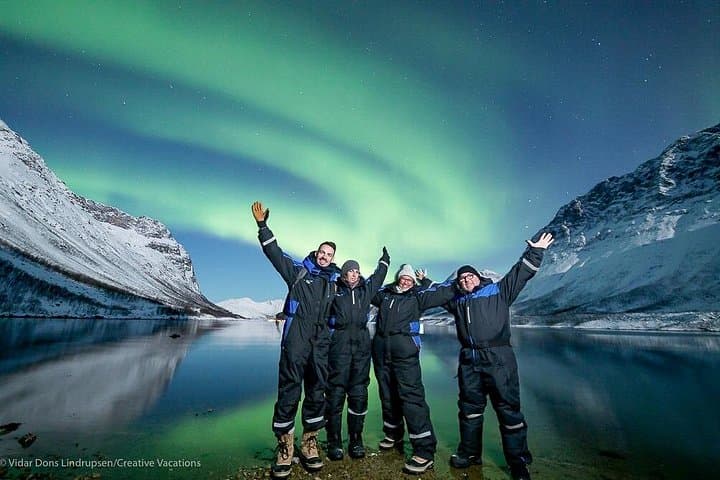
The Aurora Adventure Tour with Creative Vacations turns the chase into a practiced rhythm. Pickup from city hotels collapses minutes of urban friction into the rearview; then the van threads away from city lights toward valleys and coasts that give northern skies a fighting chance. Vidar, the local photographer and storyteller named in the tour notes, talks as if the aurora were a temperamental guest: how to coax it with patience, where to avoid light pollution, which lenses and shutter speeds capture shape rather than smear. His portraits, taken beneath the curtains of green or violet and emailed the next day, feel like proof that you stood under something ancient.
Tromsø sits well within the auroral oval—the ring of frequent northern-light activity that embroidered the night skies for millennia. The town’s coastal geography, bounded by fjords and small islands, creates pockets of clear sky even when the immediate skyline is stubbornly overcast. Geologically the landscape is young: glacial-carved valleys and steep, jagged ridges that drop into inky water. Culturally, this is Sami country layered with maritime Norwegian habits—fish, reindeer, and a resilient social life warmed by pubs and small restaurants serving slow-cooked cod and cloudberries.
Why travel here for the aurora and not stay home to stream somebody’s footage? Two reasons. First, the lights are not a spectacle played on a screen; they are a physical presence—an atmosphere that folds and moves with such scale that cameras habitually understate it. Second, guides like Vidar tilt the odds in your favor. They read local weather models and cloud cover with an intimacy that raw forecasts can’t match. They know where to find a crescent of clear sky, a shoreline that offers reflection, or a ridge that frames the curtains against a silhouette of mountains.
Practicalities are straightforward and essential. The tour runs approximately 7–9 hours. Expect long periods of waiting interspersed with intense bursts of auroral activity. Operators provide insulated suits and dry boots—non-negotiable in Arctic conditions where hypothermia sneaks in during idle camera work. Bring your own camera if you want creative control, but you can also travel light and use the guide’s photography help; the tour includes portrait shots and a curated selection of aurora images sent to participants.
Photographically, think in terms of tripod, wide-angle lens (14–24mm), aperture around f/2.8 to f/4, and shutter speeds from 1 to 15 seconds depending on intensity. Higher ISO will be necessary—expect to work between ISO 800 and 3200—so know how your camera handles noise. If you’re a casual observer, let the guide do the technical work and just watch: some moments are best held by the eyes, not the sensor.
Weather and seasonality define the experience as much as geography. The best months cluster between September and April; the darkest skies from late November to mid-January offer extended night, but cold and overcast conditions can frustrate photographic goals. March and late February are often touted as the sweet spot—longer daylight for additional activities, clearer skies, and reliably frigid nights that stabilize the atmosphere for steady auroral displays.
A successful aurora night is as much mental as it is logistical. Layer clothing so you aren’t tempted to leave early; bring snacks and a thermos—hot drinks matter when everything else is frozen. Respect local conditions: some of the best vantage points are private land or sensitive habitats; your guide will direct you where to stand and where to avoid. Lastly, temper expectations. No operator can guarantee lights, but they can guarantee a considerate, safe, and educated search that maximizes your chances.
Beyond the aurora, Tromsø is a compact town with a lively afterlife for a night of sky-watching. The evening might end in a low-key bar—Ølhallen, Tromsø’s oldest pub, offers a chance to warm up with local brews and swap frames and stories. The memory of green curtains folding across a star-scattered vault is amplified by the human ritual of sharing images and thumbnails and fogged-up camera viewfinders.
For travelers who want an aurora night that balances craft and comfort, this tour is built for both beginners and photographers who want expert coaching. It’s a lesson in patience, in reading the night, and in recognizing how small human narratives—city-lights, hotel pickups, emailed portraits—can connect you to something planetary and fleeting. When the sky finally takes its bow and the van heads home, you’ll carry something more useful than a great photo: a clearer sense of how to be still under the Arctic ceiling and wait.
Trail wisdom
Small choices, better day.
Dress in Layers
Insulated suit is provided, but wear thermal base layers and wool socks to stay comfortable during long waits.
Bring a Tripod
A sturdy tripod is the single best investment for aurora photography—steady frames make for cleaner, crisper images.
Charge Spare Batteries
Cold drains batteries fast—carry at least two spares inside an inner pocket to keep them warm.
Be Patient with Night Windows
Guides often move between vantage points to find clear skies—expect stretches of inactivity punctuated by intense displays.
Local knowledge
Read the place, not just the route.
Watch for native species including Reindeer, Sea eagles.
Keep an eye out for wildlife during the transition between areas and habitats. Respect distance guidelines.
Respect private and grazing lands; artificial light and vehicle traffic can disturb wildlife—follow guide instructions to minimize impact.
Follow the guide's instructions on size limits, ethical handling, and leave-no-trace practices.
A remote fjord shoreline used for reflections when aurora appears. Small island vantage points accessible via short drives that reduce light pollution
Locally recommended viewpoints and quiet spots known best to local operators.
Tromsø grew as a polar hub in the 19th century—its role as a base for Arctic exploration helped build the town’s blending of maritime trade and indigenous Sami culture.
Maritime roots and regional tradition shape the waterways and working coasts.
Seasonal guide
Four versions of the same landscape.
Spring
Best forAurora viewing in clearer skies · Longer daytime activities
ChallengesVariable temperatures · Thawing snow leading to wet conditions
Late winter to early spring brings longer daylight while nights remain aurora-productive; dress for cold nights and slushy mornings.
Summer
Best forMidnight sun experiences · Hiking and coastal trips
ChallengesNo true night for aurora viewing · Mosquitoes in some areas
Summer is not suitable for Northern Lights—Tromsø’s midnight sun prevents dark skies, though the landscape shines in other ways.
Fall
Best forCrisp nights for aurora · Fewer tourists
ChallengesEarly season cloud cover · Cooling temperatures and variable conditions
Autumn ushers in darker nights and a higher probability of clear-sky windows—layer and prepare for rapidly changing weather.
Winter
Best forPeak aurora season · Snow-based activities
ChallengesExtreme cold · Short daylight hours
Winter offers the highest aurora odds but requires rigorous cold-weather gear and tolerance for long, dark nights.
Operator details
What the booking data adds.
Included
- ✓Tripod
- ✓Professional photographer and guide
- ✓All Fees and Taxes
- ✓Warm winter suit and boots
- ✓Biscuits.
- ✓Hot vegetable soup.
- ✓Portrait sent to you via e-mail
- ✓Coffee and/or Tea
Not included
- —Your own camera
Good to know
- ✓Public transportation options are available nearby
- ✓Specialized infant seats are available
- ✓Travelers should have at least a moderate level of physical fitness
- ✓A traveller's passport is mandatory as we may cross the border into Finland.
- ✓We need to know what size winter suit and winter boots you use.
- ✓We need your phone number and e-mail in case we have to contact you.
- ✓If you have any dietary needs you have to inform us when you do the booking.
Pack with intention
What to bring.
Good to know
Common questions.
No operator can guarantee aurora sightings; this tour maximizes your chances through experienced guide decisions about location and timing, but sightings depend on solar activity and local weather.
Plan the edges
The details that make the day easier.
Tromsø lies well above the Arctic Circle and sits within the auroral oval, making it one of the most consistently reliable places on Earth to observe the Northern Lights.
After a night of sky-watching, grab a beer at Ølhallen—Tromsø’s historic pub—or warm up with local Arctic cod and reindeer stew at Emmas Drømmekjøkken; if daylight allows, ride the Fjellheisen cable car for sweeping fjord views.
- Closest airport
- Tromsø Airport (TOS)
- Typical driving distance to viewing spots
- 20–90 km from city center
- Cell service
- generally available in town, limited in remote viewing spots
- Permits
- none typically required but respect private land and follow guide directions
Minimize light pollution by using red headlamps, avoid disturbing wildlife and grazing lands, and pack out all trash—these small actions protect both habitat and the night sky.
Explore by topic
Follow the threads.
Keep exploring
Make the story part of the trip.
 Related story
Less than two hours from Nairobi, Kereita Forest pairs hands-on canopy adventure with quiet montane trails and a sobering colonial history—perfect for families, teams, and curious travelers seeking a full-day pulse of nature.
Set out from Bass Harbor for a private, customizable day on Blue Hill Bay — lighthouses, puffins, seals, and the chance to feel Acadia from the water. Small groups, local captains, unforgettable views.
In four hours you can move from shaded canyon ferns to wind-scoured coastal ridgelines, guided by someone who knows where the light—and the hidden views—live. This private half-day hike on the Monterey Peninsula or Big Sur is compact, curated, and perfect for travelers who want depth without a multiday commitment.