
What the day feels like
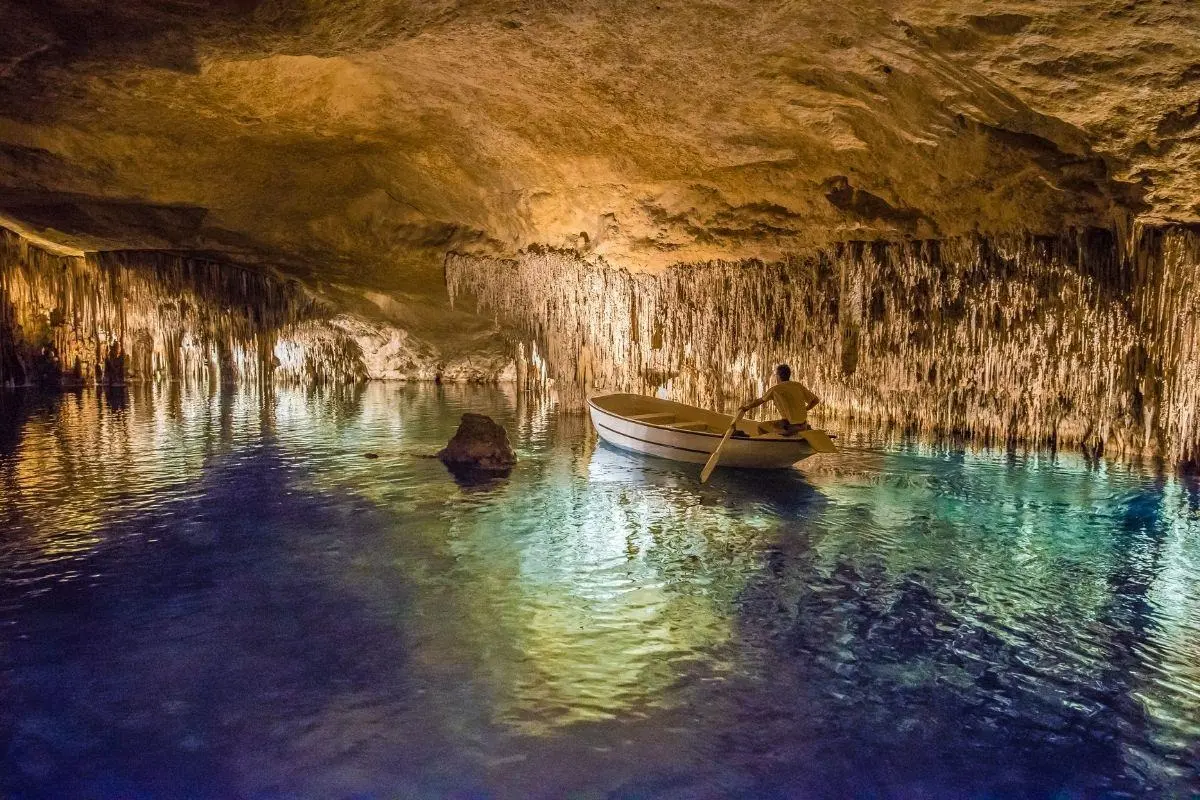
You duck beneath a low, cool throat of stone and the world you left — sun-baked limestone terraces and the sticky perfume of Mediterranean pines — is swallowed. Light becomes a memory; the cave inhales, and a hush wraps around you like velvet. The path zigzags down through galleries carved over millennia until, without fanfare, you reach a ledge that overlooks a black mirror: Lake Martel. The water seems to hold the weight of the island itself, and when the quartet begins to play, the notes travel like ripples across a hidden ocean. This is the Caves of Drach (Cuevas del Drach), Mallorca’s subterranean theater where geology, history, and a dash of pageantry come together.
The Drach caves are a demonstration of patient work. Rainwater and underground rivers have sculpted the caverns for millions of years, depositing delicate stalactites and stalagmites, hollowing chambers, and creating one of the largest underground lakes in the world — Lake Martel. The lake takes its name from Édouard-Alfred Martel, the French explorer often called the father of modern speleology, who first mapped significant sections of the system in the late 19th century. Since then the caves have been shaped and reused: from shepherds’ hideaways to show caves with benches, lighting, and the celebrated musical program that punctuates almost every visit.
Part spectacle, part natural wonder, a visit to the Drach isn’t about spelunking in the technical sense. A well-constructed path of roughly 1,200 meters and a 25-meter descent ferries visitors through four main chambers, culminating at the Martel lagoon. The route is accessible for most walkers but includes steps and narrow sections; mobility limitations should be checked with tour operators. Inside, the temperature is a steady, pleasant 21°C year-round, so your jacket will either be a comfort or simply unnecessary depending on the season and your tolerance for cool, damp air.
Tours come in flavors that suit different appetites. If you want the sense of place and a quieter rhythm, private day trips from Palma or Cala d’Or pair local guides with pick-up and a deeper dive into the caves’ natural history and local lore. Group bus tours—half-day or full-day—package the cave visit with Porto Cristo free time and stops like the Majorica pearl factory. For those chasing a compact experience, the underground concert and the two-minute boat ride across Lake Martel remain the highlights: the musicians play from a floating platform, and the dimmed lights make the lake’s reflections as much a performer as the quartet.
The practical bits matter. Summer crowds can swell — book tickets in advance, and if you can, aim for early or late slots to avoid the busiest coach arrivals. Many full-day tours pair Drach with Cuevas dels Hams (the Hams caves) and a stop in Porto Cristo, where pastel façades and a natural harbor offer a softer, seaside counterpoint to the cool hush of the caverns. The Majorica pearl factory is a common add-on; its displays and shop are an easy way to connect local craft with your day underground.
For photographers, the Drach is a study in restraint. Long exposures reward patience: reflections on the lake, the sheen of damp rock, and the chiaroscuro created by cave lighting are best captured with a tripod, high ISO technique, or an open aperture. Be mindful: flash is discouraged during the concert, and tripods may be restricted in crowded periods.
This is also a place to be light on impact. Stay on designated paths, respect the barriers that protect fragile formations, and follow guides’ instructions. The caves are an engineered visitor site, but they’re also a living system: breathing, dripping, and gradually altering the very features you came to see.
If you’re planning, here are the operational realities to mind: the subterranean concert runs about ten minutes and is typically part of every visit; the boat ride across Lake Martel is a short, scenic crossing included in many ticketed experiences; and the in-cave temperature makes a thin layer a useful comfort year-round. Wear non-slip shoes—the cave floor can be damp—and expect to traverse a handful of stairs. If you have mobility concerns, reach out to the operator: some areas are accessible while others are not.
Visiting the Caves of Drach is less about conquering a challenge and more about holding still inside a slow, geological performance. It’s an approachable wonder: kids wide-eyed at the floating lights, couples leaning on railings listening to bowed strings, solo travelers scribbling notes. Yet even with the amenities, the feeling of being under the island is visceral. The water offers a cool counterpoint to Mallorca’s shoreline: while beaches dare you to swim and salt to sting, the Drach invites you to listen. That hush is its lure.
After the cave, Porto Cristo makes a fine companion: have a late lunch of fresh fish, stroll the marina, or seek out a quiet cove to read. If you have a full day, combine Drach with the Hams caves for a contrasting set of underground forms, or add a stop at the Majorica factory to see how the island’s iconic pearls are made. Master the logistics, and you’ll leave the caves with a souvenir that no shop can sell: the memory of an hour in the cool dark where the island seems to breathe in slow, deliberate rhythms.
Trail wisdom
Small choices, better day.
Book a timed ticket in advance
Popular in summer—reserve a slot to avoid long coach queues and secure an early or late visit when the cave is quieter.
Bring non-slip shoes
Floors can be wet and stepped; sturdy soles make the descent and side passages safer and more comfortable.
Layer up
The cave holds a constant ~21°C; a light jacket prevents chills after the sun outside.
Respect the performance
The ten-minute classical concert is part of the experience—no flash photography or loud conversation during the performance.
Local knowledge
Read the place, not just the route.
Watch for native species including bats (occasional roosting species), Mediterranean lizards near the coastal areas.
Keep an eye out for wildlife during the transition between areas and habitats. Respect distance guidelines.
Stick to marked routes and avoid touching formations; support small-group tours and local guides to limit overtourism impacts.
Follow the guide's instructions on size limits, ethical handling, and leave-no-trace practices.
Cala Petita — a small, tranquil cove near Porto Cristo for an afternoon dip. Majorica factory shop and Manacor market — pair craft and local produce after the caves
Locally recommended viewpoints and quiet spots known best to local operators.
The caves were extensively explored and mapped in the late 19th and early 20th centuries; the lake bears the name of speleologist Édouard-Alfred Martel.
Maritime roots and regional tradition shape the waterways and working coasts.
Seasonal guide
Four versions of the same landscape.
Spring
Best forfewer crowds · pleasant weather outside · pairing with coastal walks
Challengessome tour schedules limited
Spring brings milder island temperatures and smaller crowds, making it ideal for pairing the cave visit with outdoor exploring.
Summer
Best forlong daylight hours · combined beach and cave day trips · peak transport options
Challengeslarge tour groups · longer lines · hot conditions outside
High season fills the caves with tourists; inside remains cool but expect busier entrances and book ahead.
Fall
Best foroff-season quiet · good travel deals · combining with harvest markets
Challengesreduced ferry or ancillary tour frequency
Autumn mirrors spring with comfortable temperatures and thinner crowds; a great time for relaxed visits and local markets.
Winter
Best forshorter lines · pleasant cave temperature · combining indoor activities
Challengesreduced public transport links · some seasonal businesses closed
Winter keeps the cave at a constant, comfortable temperature but check transport and tour availability from resorts.
Pack with intention
What to bring.
Good to know
Common questions.
The on-site route and performance typically take about 1 hour; allow 1–3 hours for transfers, waiting, and any nearby stops on a half-day tour.
Plan the edges
The details that make the day easier.
Lake Martel is named after Édouard-Alfred Martel, the pioneering French caver who extensively explored European subterranean systems in the late 19th century.
Porto Cristo’s fishing-boat harbor and seafood restaurants make a perfect post-cave lunch; pair your visit with a stop at the Majorica pearl shop and a tasting of local sobrassada from market stalls.
Choose small-group operators, avoid flash and touching formations, and use refillable water bottles to reduce single-use plastics in this sensitive karst environment.
Explore by topic
Follow the threads.
Keep exploring
Make the story part of the trip.
 Related story
Aksla is the small mountain that makes Ålesund legible: 418 steps, sweeping panoramas, and a short tour that threads architecture and coastline into 90 minutes of memorable sightlines. Perfect for anyone who wants a quick, high-reward encounter with Norway’s west coast.
 Related story
The New York Public Library’s Main Branch is more than a photo stop—it's a civic living room, an architectural landmark, and a waypoint for walking tours that stitch together Midtown’s history, films, and holiday rituals. Here's how to make the most of a visit.
 Related story
Five miles of riverfront walking that reveal NYC’s quieter rhythms—Riverside Park pairs easy urban hiking with history, birdlife and a front-row view of the city’s climate resiliency efforts. Walk a stretch or follow the Greenway; either way, the Hudson makes its presence felt.