
What the day feels like
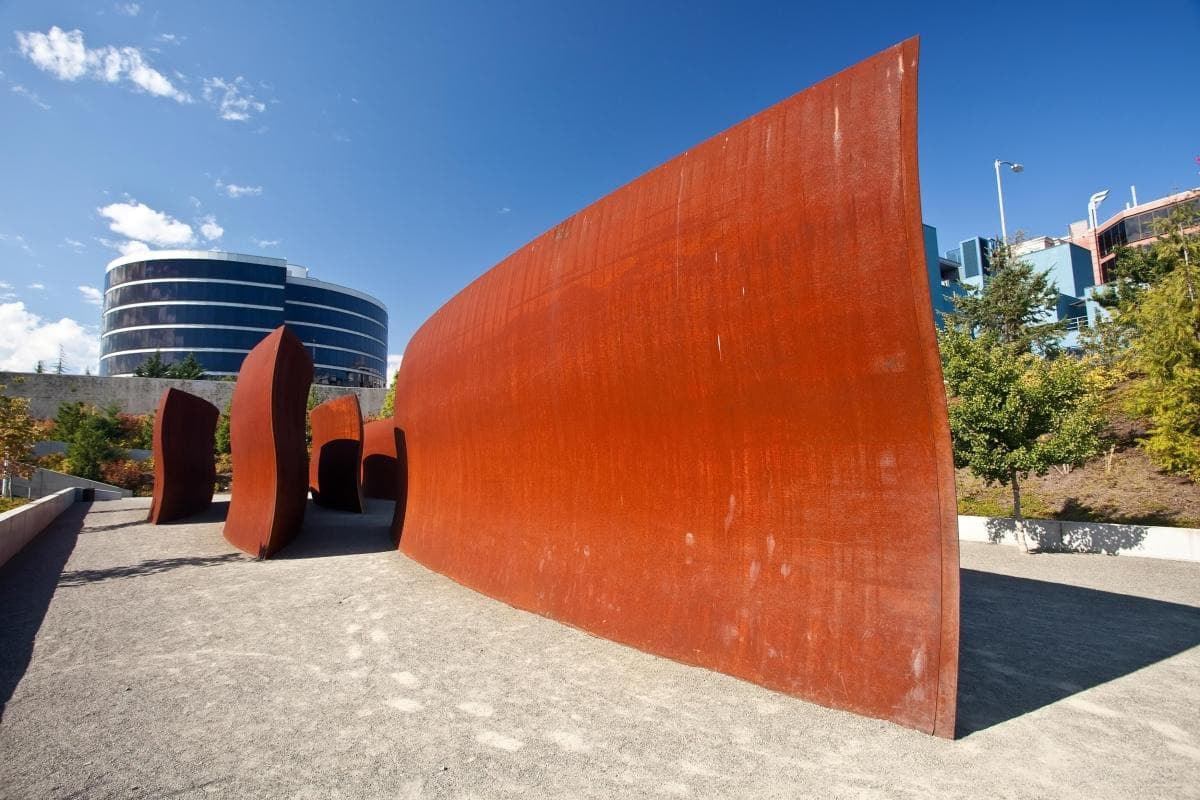
A low tide and a late-summer light turn Elliott Bay into a theater of reflections. You walk out of downtown’s grid onto a ribbon of concrete and lawn—sculptures rising like punctuation marks against the water, gulls arguing over a shoreline snack, and a distant sweep of the Olympic Mountains holding the horizon like an attentive audience. The Olympic Sculpture Park doesn't feel like a museum so much as a public performance: steel and stone work with wind and tide, and the city, briefly, falls into the role of spectator.
Opened in 2007 and owned by the Seattle Art Museum (SAM), Olympic Sculpture Park reclaimed roughly nine acres of industrial waterfront and rooftop parking to create one of the country's most accessible waterfront sculpture parks. Designed by the New York firm Weiss/Manfredi, the site is an urban greenway that stitches downtown Seattle to the Elliott Bay shoreline, converting a brownfield into an open-air campus of contemporary art. It’s compact—easy to navigate in an hour—but layered in experience: architectural pathways, lawns meant for unfolding a lunch blanket, and sculptures that invite different approaches depending on whether you come to study lines of welded steel or simply to sit and watch the harbor ferries cut across the afternoon.
Geology and geography are part of the show here. The park sits on the edge of Puget Sound, a glacially carved inlet whose tides and weather shape everything from the park’s plant palette to the way sculptures age. On clear days you can see snow-dusted peaks across the water—the Olympics to the west and, on rare, crystalline mornings, the distant silhouette of Mount Rainier to the south-east. The park’s modest slopes and terraced lawns echo the area's glacial past: subtle rises that frame sightlines and change a sculpture's mood as you circle it.
This is not an isolated art object; it’s integrated into the city. Belltown’s coffee shops and galleries are a three-block stroll uphill, and the waterfront, Pike Place Market, and the Seattle Center are steps or easy bike rides away. That adjacency is part of the park’s appeal: it’s a hinge between urban life and open water, and a flexible stage for many ways to experience Seattle. Guided walking tours stop here to talk about specific works and the park's transformation from industrial land to cultural destination. Cycling tours, particularly the Emerald City Bicycle Tour, use the park as a coastal gateway—the wide, paved promenade is ideal for rolling past public art with the city unfolding behind you. For families and teams, app-led scavenger hunts and exploration games turn the park into a puzzle of clues and photo challenges, inviting you to look closer at the sculptures and the stories behind them. And for anyone wanting that perfect shot—the icon of a sculpture set against the skyline—private photographers offering Flytographer sessions know the park’s best angles and times of day.
Why come? The park is a rare urban trifecta: art, shoreline, and skyline, all in a space that’s democratic (free, open to the public) and compact enough that it rewards curiosity. For travelers with limited time in Seattle, a focused hour here delivers a concentrated sense of the city: the way Seattle balances raw natural grandeur and design-forward civic planning, and how public art can transform a landscape.
Practical matters: expect a roughly 0.5–1 mile loop if you want to move slowly and read plaques; the paths are paved and mostly gentle, with a few ramps and steps that frame viewpoints. Elevation change is minimal—under 100 feet—making it suitable for most ability levels, including families and travelers with limited mobility (many routes are wheelchair-accessible). Allow 45 minutes for a quick pass, 90 minutes to linger, or combine the park with a half-day walking tour of Belltown and the waterfront. Winter brings softer crowds and dramatic rainy-day moods; summer has the most reliable light and clear views of the mountains.
Layer in an activity that suits your pace. Take a bicycle tour for a neighborhood sweep that uses the park as a scenic midpoint, especially useful if you want to cover more of the city; the guided rides typically last 2–3 hours and traverse protected bike lanes along Elliott Bay. If you favor a hands-on discovery, download an app-led scavenger hunt or the Time Travel exploration game to give the park a storyline and keep kids—of any age—engaged. For a quiet, contemplative visit, come early in the morning and stake out a bench: soft east light, fewer people, and a chance to watch ferries and tidal patterns translate into kinetic sculptures of their own.
Tips to get the most out of your visit: wear comfortable walking shoes; bring a light rain shell year-round—Seattle’s weather loves last-minute shifts—and pack water and a small snack. Timing matters: golden hour—early morning or late afternoon—adds depth to the park’s metal finishes and throws long, dramatic shadows across lawns. If you’re shooting photos, bring a wide-angle lens for landscape shots and a 50mm for intimate details of textures and welded surfaces. Consider pairing the park with a Flytographer session or a private walking tour if you want context: guides and photographers add narrative and an outsider’s eye that can turn a casual visit into a curated experience.
There’s a respectful civic ethic to visiting here. The sculptures are designed to be viewed at close range but not to be climbed; the lawns are for lounging but not for large events without prior permission. The park’s transformation from industrial land to public gathering place was the result of community advocacy and museum stewardship—visitors who arrive with curiosity and consideration fit the park’s intended role as a communal front porch facing Elliott Bay.
Whether you come to study contemporary sculpture, to watch the tide render the harbor anew, or to use the park as a hinge in a larger day of exploring Seattle, the Olympic Sculpture Park offers a compact, layered encounter with art in the landscape. It’s the kind of urban space that rewards both short stops and slow exploration: bring your wits, your camera, and a readiness to move at the museum’s unpretentious pace—one step, one viewpoint, one sculpture at a time.
Trail wisdom
Small choices, better day.
Go early or late for the light
Golden hour casts long shadows and makes steel and stone glow—arrive within an hour of sunrise or an hour before sunset for the best photos and fewer crowds.
Layer for sudden rain
Seattle weather shifts fast; carry a lightweight waterproof shell to stay comfortable without weighing you down.
Bring a reusable water bottle
There are no food services inside the park—hydration and a small snack keep a short visit comfortable.
Combine with a guided tour
Combine a 45–90 minute park visit with a half-day walking or bike tour to see nearby Belltown, the waterfront, and Pike Place Market efficiently.
Local knowledge
Read the place, not just the route.
Watch for native species including Bald eagles, Harbor seals and variety of shorebirds.
Keep an eye out for wildlife during the transition between areas and habitats. Respect distance guidelines.
The park uses native plantings and was a major brownfield reclamation project; visitors are encouraged to use public transit and follow leave-no-trace principles to minimize impact.
Follow the guide's instructions on size limits, ethical handling, and leave-no-trace practices.
Walk the north shoreline at low tide to see intertidal textures and small tide pools. Cross over to Belltown's western streets for indie galleries and a coffee stop—many artists’ studios are within blocks
Locally recommended viewpoints and quiet spots known best to local operators.
The park opened in 2007 on a reclaimed industrial site and was developed by the Seattle Art Museum with a design by Weiss/Manfredi, transforming a former brownfield into a public art space.
Maritime roots and regional tradition shape the waterways and working coasts.
Seasonal guide
Four versions of the same landscape.
Spring
Best forblooming native plantings · moderate crowds · mild weather for walking
Challengesoccasional rain · muddy paths in adjacent green spaces
Spring brings fresh green plantings and fewer tourists than summer—expect intermittent showers and brisk mornings.
Summer
Best forclear mountain views · golden-hour photography · bike tours
Challengeslargest crowds · occasional smoke impacts from regional wildfires
Summer offers the most reliable light and visibility—visit early or late in the day to avoid mid-day crowds.
Fall
Best fordramatic skies · cooler walks · off-peak visiting
Challengesshorter daylight hours · more frequent rain fronts
Fall produces crisp air and dramatic cloudscapes; layers are essential as temperatures fall after sunset.
Winter
Best formoody seascapes · quiet contemplation · storm-watching
Challengesfrequent rain and wind · limited visibility on cloudy days
Winter is quiet and atmospheric—dress warmly and be prepared for wind-driven rain if you plan to linger on the shoreline.
Pack with intention
What to bring.
Good to know
Common questions.
Yes—admission to the outdoor park is free year-round, as it is a public space managed by the Seattle Art Museum.
Plan the edges
The details that make the day easier.
Olympic Sculpture Park opened in 2007 and was designed by the firm Weiss/Manfredi; it transformed roughly nine acres of former industrial land into a waterfront public park managed by the Seattle Art Museum.
After the park, loop into Belltown for micro-roaster coffee, seasonal Pacific Northwest seafood at waterfront stands, and small galleries—Seattle’s public-art scene spills naturally into neighborhood culture.
The park sits on reclaimed industrial land and uses native plantings to support local ecology—visitors should favor transit, pack out trash, and respect plantings and artworks.
Explore by topic
Follow the threads.
Keep exploring
Make the story part of the trip.
 Related story
Less than two hours from Nairobi, Kereita Forest pairs hands-on canopy adventure with quiet montane trails and a sobering colonial history—perfect for families, teams, and curious travelers seeking a full-day pulse of nature.
Set out from Bass Harbor for a private, customizable day on Blue Hill Bay — lighthouses, puffins, seals, and the chance to feel Acadia from the water. Small groups, local captains, unforgettable views.
In four hours you can move from shaded canyon ferns to wind-scoured coastal ridgelines, guided by someone who knows where the light—and the hidden views—live. This private half-day hike on the Monterey Peninsula or Big Sur is compact, curated, and perfect for travelers who want depth without a multiday commitment.