
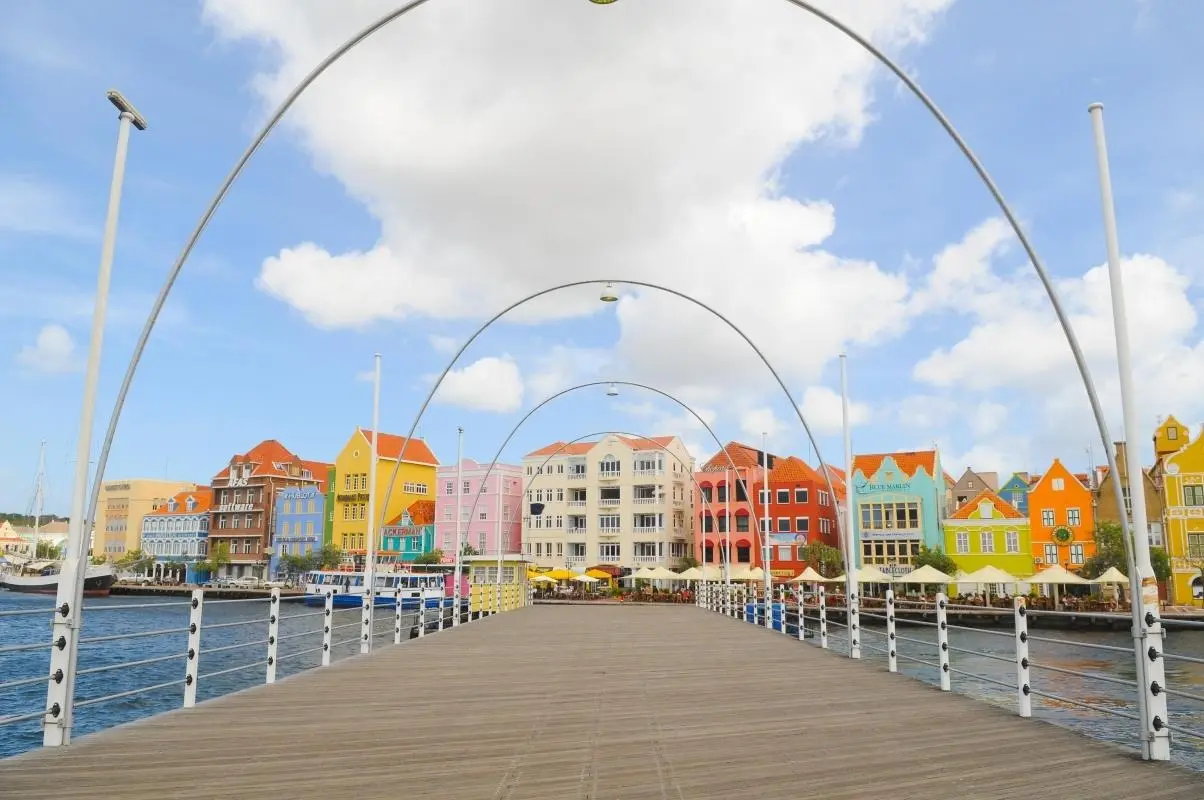
What the day feels like
The gangway clangs once and the heat greets you like a friendly dare—the kind you accept the minute your boots hit the dock. Willemstad’s harbor smells of diesel, salt, and frying plantains; its skyline is a ribbon of candy-colored Dutch colonial houses reflected in the water. For a few hours, the city is yours: a compact, character-rich capital that hands you beaches, history, and a surprisingly athletic streak of outdoor life. The trick is choosing how to spend the short window between ship schedules—and doing it in a way that feels like travel, not a checklist.
Start small and kinetic: a powerboat cuts your options down to minutes and momentum. On the 2 Hour Adventurous Powerboat Sightseeing & Snorkel Private Tour you’ll trade slow sightseeing for speed—the ocean reorganizes itself as background into a composed series of surprises. The captain nudges you into coves where the reef rises like a city block, then stops at a shallow wreck where sergeant fish and parrotfish dart through corroded ribs. The water here is a character with agency: it presses cool fingers against your mask and dares you deeper. Snorkeling in Curaçao is uncomplicated logistics—short swim times, steady visibility—and wildly rewarding because the reefs here still have the bones of colorful, complex life.
If you prefer land that moves you, a Beach and City Curaçao Comfort VIP Jeep Wrangler Tour or an Off Road Trail Ride through the island’s spine gives you a more curated, tactile view. The island is compact—roughly 60 kilometers east to west—so a half- to full-day private island tour can stitch together dramatic contrasts: pastel Willemstad and Fort Beekenburg’s 18th-century stonework, salt pans painted with flamingos, and the gnarly limestone coast where the surf hammers at Shete Boka. Jeep tracks grind into scrubland and suddenly the Atlantic is louder, a living thing that marks the island’s edges.
For travelers who want context with their scenery, Curaçao’s human story is as compelling as its beach life. Willemstad is a UNESCO World Heritage Site; its waterfront architecture tells a colonial tale in still-bright pigments. Tours like Curaçao’s Untold Story: The Black History Tour and the Cultural Baseball Tour map the island’s unusual cultural threads—the legacy of enslaved people and the extraordinary per-capita contribution Curaçao has made to Major League Baseball. Food is another entry point into local life: the Curacao Food Tour at 3 type of restaurants that the locals enjoy stitches simple street bites to refined plates and introduces you to modern island gastronomy rooted in Papiamento flavors and international influences.
If you have the luxury of a full day, the Authentic Curacao: Private Full island Tour lets you tailor the island at your pace—blue water stops, Christoffel and Shete Boka National Park, and the Landhuis Chobolobo distillery for an education in Blue Curaçao liqueur. For the physically curious, Christoffel Mountain’s main trail climbs to 372 meters (about 1,220 feet) and rewards hikers with panoramic coastal views; it’s a short, steep commitment but one that lends gravity to an otherwise flat island experience.
Practical edges: timing and gear sharpen your day. Mornings are best for water clarity and fewer boaters; late afternoon light is gorgeous for Willemstad’s waterfront photos but crowds swell. Reef-safe sunscreen is non-negotiable—many operators require it—and a lightweight wind layer will keep you warm on the ocean dash. If you plan to climb Christoffel, go early (the trail is exposed and the sun is honest) and bring at least 1.5 liters of water, a headlamp if you’re cutting it close, and shoes with grippy soles.
Accessibility and logistics make Curaçao easy to love. The island’s drive times are short: expect 30–60 minutes from most port berths to inland highlights. Most tours offer pick-up and drop-off at the cruise terminal, and private options give you the most efficient use of time. It’s also smart to carry a small amount of local currency (Netherlands Antillean guilder is used alongside US dollars in some places) and to ask guides about tide windows for shore snorkeling—some coves are shallow at low tide and best accessed mid-tide.
Beyond the checklist, Curaçao’s charm comes from the local friction: vendors balancing pastries on bike baskets, a stray dog that knows the good breakfast spots, the smell of guava and diesel braided together. Respect that texture. Keep swimsheets covered between beach hopping and town, tip guides for local knowledge, and leave nothing but footprints on fragile reef edges.
Willemstad is an island capital that rewards curiosity. Whether you choose a two-hour powerboat that ends with salt in your hair and a sunburn forming into a souvenir, a Jeep jaunt that deposits you at a bluff where the sea will not stop arguing with the rocks, or a cultural tour that reframes the colorful facades as living testimony, Curaçao hands you an island scaled for short adventures and long memories. Step off the gangway with purpose and leave more than a postcard—leave a few answers to the questions the island asks you about rhythm, color, and the sea’s patient insistence.
Trail wisdom
Small choices, better day.
Book an early tour
Morning trips avoid crowds, deliver better snorkeling visibility, and beat the island’s strongest mid-day sun.
Use reef-safe sunscreen
Many operators require biodegradable, reef-friendly sunscreen to protect coral and marine life.
Carry small bills
Bring a mix of USD and local currency for taxi tips, market purchases, and small vendors in Willemstad.
Wear grippy shoes for Christoffel
If you plan to climb Christoffel Mountain, choose trail shoes with good traction for rocky, steep sections.
Local knowledge
Read the place, not just the route.
Watch for native species including Flamingos at the salt pans, Loggerhead and hawksbill turtles while snorkeling.
Keep an eye out for wildlife during the transition between areas and habitats. Respect distance guidelines.
Many operators promote reef-friendly practices (no-touch snorkeling, reef-safe sunscreen) and local groups work to monitor coral health—choose eco-aware tours to support preservation.
Follow the guide's instructions on size limits, ethical handling, and leave-no-trace practices.
Playa Lagun: a small, sheltered cove ideal for calm snorkeling and close turtle sightings. Landhuis Chobolobo tasting room: learn the history of Blue Curaçao at a historic plantation house
Locally recommended viewpoints and quiet spots known best to local operators.
Willemstad’s city center is a well-preserved example of Dutch colonial architecture and was designated a UNESCO World Heritage Site in 1997.
Maritime roots and regional tradition shape the waterways and working coasts.
Seasonal guide
Four versions of the same landscape.
Spring
Best forFewer crowds · Good snorkeling visibility · Comfortable day trips
ChallengesOccasional showers · Early-season seaweed patches
Late spring is warm with lower tourist density—good for half-day tours and clear water swims, though brief showers are possible.
Summer
Best forLong daylight hours · Beach-hopping · Evening food tours
ChallengesHigher humidity · Rain and occasional tropical squalls
Summer brings heat and intermittent storms; plan boat trips early and expect robust afternoon breezes that can make sea conditions choppier.
Fall
Best forLower prices · Wildlife sightings (shorebirds) · Quieter towns
ChallengesPeak hurricane season in the region (Jun–Nov) · Unpredictable seas
Fall is quieter and often less expensive but carries greater weather risk—check cancellation policies and weather forecasts.
Winter
Best forDry weather · Best snorkeling clarity · Peak cruise window
ChallengesHigher visitor numbers · Advance-booking needed
Winter is the island’s high season: dry, sunny, and ideal for sea and land tours—book tours in advance for cruise arrivals.
Pack with intention
What to bring.
Good to know
Common questions.
Drive time is roughly 45–60 minutes depending on traffic and your berth; private tours often include port pickup and can be scheduled to maximize time in the park.
Plan the edges
The details that make the day easier.
Willemstad’s historic city center was designated a UNESCO World Heritage Site in 1997 for its unique Dutch colonial architecture and coastal trading history.
The island’s cuisine is a fusion of African, Dutch, Latin American, and Caribbean influences—try keshi yena (stuffed cheese), stobá (stews), and a tasting at the Landhuis Chobolobo distillery for Blue Curaçao.
Choose operators that use mooring buoys instead of anchors, practice no-touch snorkeling, and encourage reusable water bottles to reduce single-use plastic on the island.
Explore by topic
Follow the threads.
Keep exploring
Make the story part of the trip.
 Related story
Aksla is the small mountain that makes Ålesund legible: 418 steps, sweeping panoramas, and a short tour that threads architecture and coastline into 90 minutes of memorable sightlines. Perfect for anyone who wants a quick, high-reward encounter with Norway’s west coast.
 Related story
The New York Public Library’s Main Branch is more than a photo stop—it's a civic living room, an architectural landmark, and a waypoint for walking tours that stitch together Midtown’s history, films, and holiday rituals. Here's how to make the most of a visit.
 Related story
Five miles of riverfront walking that reveal NYC’s quieter rhythms—Riverside Park pairs easy urban hiking with history, birdlife and a front-row view of the city’s climate resiliency efforts. Walk a stretch or follow the Greenway; either way, the Hudson makes its presence felt.