
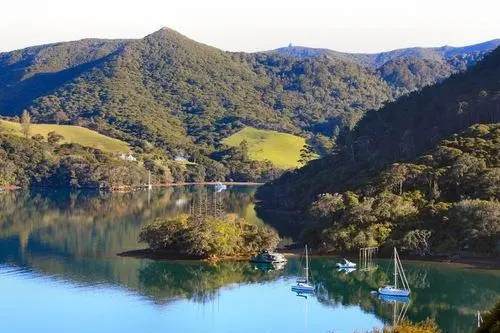
What the day feels like
You bank the small aircraft over a patchwork of blue and green, and the Hauraki Gulf opens like a promise: tiny reefs, shadowing swells, and the ragged silhouette of Great Barrier Island — Aotea — resolving beneath you. The plane drops in low, engines soften, and the island’s open spaces, ridgelines and sheltered bays feel immediate and private; this is a place that still answers only to weather and tide, and to the people who have chosen to live apart from the city’s pulse.
On the ground, the island has a slow, thoughtful gravity. Forested ridges hold native tawa and kanuka; old volcanic cones break the skyline; and the shore alternates between long white beaches and rocky headlands, where the sea presses with a voice of its own. The long walk to Kaitoke Hot Springs is a perfect primer: an introduction to Aotea’s dual nature — then wild and then domestic. The trail threads through regenerating forest, across pumice-rich soils and old logging tracks, climbing gently until the trees clear and steam rises from a hideaway basin. You take off your boots, step into warm, mineral-rich water and feel the island leach the city out of your bones.
Great Barrier’s story is written in its geology and the layers of human presence stamped upon it. The island is volcanic in origin, part of the bigger Hauraki Gulf volcanic field. Peaks and ridgelines are scarred by lava flows and ash beds that have, over millennia, weathered into fertile pockets of soil and a mosaic of ecosystems. Māori know it as Aotea, and the island endures in whakapapa (genealogy) and in stories of settlement. European activity — sandalwood cutters, miners and later small-scale farmers — left tracks and clearings, some of which are now regenerating back to native bush. Today, the population is small, a network of dive shops, cafes, artists and permaculture growers who run on solar and rainwater and who treat the island as something to steward rather than exploit.
Why travel here? Great Barrier is for people who want reclamation: the sense of being somewhere that still resists the rush. It’s an island of layered pleasures. A short scenic flight from Auckland — about 25–30 minutes by light aircraft — gives you a cinematic entry, dropping you near Tryphena or Claris where a network of trails and quiet beaches radiate. Guided day trips make an efficient introduction: a multi-island hopper that pairs hot springs hikes with a wine-tasting stop at Waiheke is an easy way to see the gulf’s contrasts in a single day, and private tours let you tailor the pace.
The Kaitoke Hot Springs walk is the kind of trip that rewards basic planning. Expect 3–6 km round-trip depending on the trailhead and route, with a cumulative elevation change in the low hundreds of metres — steep in stretches but never technical. Trails vary from boardwalks through wet gully to stony ridgelines; after rain the path can get slippery and your boots will be grateful for tread. Plan a 3–5 hour window for the full experience: travel, a relaxed walk, an hour soaking and threading a return via a different scenic track.
If you want more speed, the Hauraki Gulf is its own playground. Jet-ski operators from the Hibiscus Coast run customizable rides — from quick adrenaline loops to longer sorties that skirt islands and coves. These are best for a bright, low-wind day; the gulf can shift from glass to chop quickly and good operators will align routes to conditions. For solitude and birdlife, hike inland ridges at first light: the island hosts kiwi, tui, kererū and a range of seabirds that ride the thermals off headlands.
Practical intel: the most efficient way to reach Great Barrier is by small aircraft from Ardmore or Auckland’s domestic airfields; flights are short and scenic but subject to weather cancellations. Ferries from Auckland take longer and are more exposed to Gulf swells. Mobile coverage is patchy; download maps and let someone know your plan. The island runs on local power solutions — solar, diesel and community microgrids — so be prepared for simple comforts and small-town timetables.
Packing smart matters. Bring sturdy, waterproof hiking boots, rain layers, and a warm mid-layer for post-soak chill. A daypack with 1.5–2 litres of water, snacks and a small dry bag for electronics will cover most itineraries. If you’re joining a guided hot springs tour, a change of clothes and a fast-dry towel are game-changers.
Culturally, Great Barrier is quietly civic-minded. Local operators favor small-group guiding, low-impact trails and community-run conservation projects; you’ll pass signage for traplines, native restoration zones and volunteer-led wildlife studies. Respect the land: take rubbish with you, stay on marked tracks, and ask before photographing people or private properties.
For travelers looking for variety, package trips that combine a scenic flight, a bush walk and a wine or food experience on nearby Waiheke or in the Gulf are smart use of limited time. But the island’s truest benefit is a slower tempo. Stay a night if you can. Walk at dawn. Soak in heat that smells faintly of iron and fern.
Great Barrier Island is not dramatic in a single postcard shot — its power is subtle and accumulative. It rewards the patient: those who can listen to wind through kanuka and follow a faint track up a ridge to a view where the sea edges into sky. It asks only that you come with attention and leave with lighter pockets and a slightly different sense of time. If you want to be jolted back into presence, Aotea is ready: it’s an island that will slow you, warm you and, if you let it, quietly change the way you measure a day.
Trail wisdom
Small choices, better day.
Time your flight windows
Morning flights are less likely to be canceled and offer clearer views for spotting reef and coastline features.
Grip and gaiters
The Kaitoke approaches can be muddy; waterproof boots and gaiters keep grit out and feet dry on streams and boardwalks.
Respect soak etiquette
If using natural pools, rinse before entering and keep noise low — these are quiet cultural and ecological spaces.
Pack communications
Bring a portable battery and download offline maps — cell coverage on the island is intermittent.
Local knowledge
Read the place, not just the route.
Watch for native species including brown kiwi (nocturnal), tūī and kererū (native forest birds).
Keep an eye out for wildlife during the transition between areas and habitats. Respect distance guidelines.
Local groups run predator control and native planting programs; visitors are urged to stay on trails and support community-led initiatives.
Follow the guide's instructions on size limits, ethical handling, and leave-no-trace practices.
Whangapoua Beach at low tide for coastal strolls and shell hunts. Claris ridge walks at dawn for panoramic Gulf views and birdlife
Locally recommended viewpoints and quiet spots known best to local operators.
Known to Māori as Aotea, the island has a long history of seasonal occupation, trading and strong community stewardship that continues today.
Maritime roots and regional tradition shape the waterways and working coasts.
Seasonal guide
Four versions of the same landscape.
Spring
Best forwildflower displays · birdwatching · cool-weather hiking
Challengesunpredictable rain · muddy tracks
Spring brings bright regrowth and active birdlife, but trails can be soggy; waterproof footwear and quick-dry layers are essential.
Summer
Best forbeach swimming · boat and jetski outings · long daylight hours
Challengescrowds on popular beaches · sun exposure
Summer is ideal for water activities and extended days on the trail; expect warmer temps and the best weather window for scenic flights.
Fall
Best forcalmer seas for boating · clear views · fewer visitors
Challengescooler nights · shortening daylight
Autumn offers crisp air, golden light on ridgelines and quieter trails — bring an insulated layer for evenings.
Winter
Best fordramatic coastal weather · solitude · photography of stormlight
Challengesstrong winds · lower temperatures · increased flight cancellations
Winter is atmospheric and quiet but wind and rain increase chances of cancellations; plan extra time and pack warm, waterproof gear.
Pack with intention
What to bring.
Good to know
Common questions.
Options are small aircraft (25–30 minutes) or passenger ferries (several hours); flights are faster but can be canceled in bad weather.
Plan the edges
The details that make the day easier.
Great Barrier Island is also known by its Māori name Aotea and is the sixth-largest island of New Zealand.
Tryphena and Claris are small hubs of artists, cafes and community co-ops; seafood, home-baked goods and small-batch preserves are island specialties to seek out.
- Access
- 25–30 min flight or several-hour ferry; currency: NZD; power: limited microgrids; mobile: patchy; medical: basic clinic in Claris.
Stay on marked tracks, respect traplines and volunteer projects, use refillable water bottles to reduce plastic and support local operators who invest in conservation.
Explore by topic
Follow the threads.
Keep exploring
Make the story part of the trip.
 Related story
Stand in City Hall Park and feel the city breathe around an 1812 Federal-style landmark. This is a walking experience that pairs architecture, history, and Lower Manhattan’s lived-in streets—ideal for curious travelers who love stories with their sidewalks.
 Related story
Step beyond Canal Street and into a dense, sensory world where food, language, and history overlap. This is Chinatown: compact, storied, and urgently alive. Learn how to move through it like a neighbor — and why every corner tells a story.
 Related story
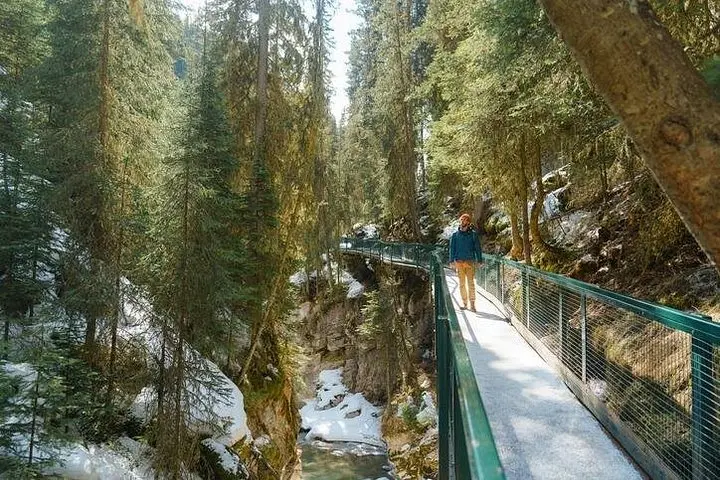
In eight efficient hours, experience the turquoise drama of Lake Louise and the cathedral-like icefalls of Johnston Canyon. This guided shuttle day trip from Banff/Canmore combines easy access, crisp winter scenery, and practical guidance for a high-reward Rockies outing.