
What the day feels like
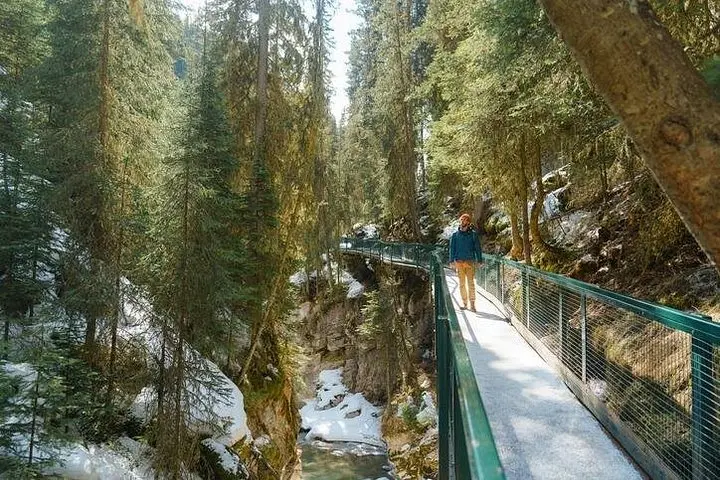
The shuttle slips out of Banff before sunrise, a steady hum and the smell of coffee softening the alpine cold. Outside, the valley wakes in stages: white breath above conifer crowns, the slow glitter of frost on guardrails, and the first, impossible turquoise of Lake Louise peeking through the pines. By the time the vehicle eases into Lake Louise Village, the lake is a cathedral — an emerald mirror edged with snow and the vertical white of the Victoria Glacier. Later, in Johnston Canyon, the world narrows to ice-made corridors where frozen waterfalls hang like chandeliers and the canyon’s limestone walls press close enough to feel the cold.
This full-day guided run from Banff or Canmore stitches two of the Bow Valley’s best short adventures into a compact, transportable experience: a lakeside wander that’s as photogenic as it is short, paired with a walk into the heart of a canyon turned winter theater. The trip is deceptively simple, but that economy — a clean, well-timed shuttle, a village stop for lunch, and guided time on the trails — is what makes it possible to see both without feeling rushed.
Geology does most of the heavy lifting here. Lake Louise is the work of glaciers: rock flour ground from bedrock by ice and carried into the lake, scattering incoming light and producing that signature turquoise. Johnston Canyon, downstream from the glaciers that once filled these valleys, has been carved into thin limestone and dolomite over millennia; in winter, constant seepage and the river’s flow freeze into layered icefalls that clothe the canyon in crystalline texture. The contrast — the open, glacially fed lake and the intimate, vertical canyon — is a lesson in how water shapes mountain landscapes at different scales.
The cultural layer is subtle but present. The Stoney Nakoda people called Lake Louise Ho-run-num-nay, or Lake of the Little Fishes, long before the name shifted to honor Princess Louise, Duchess of Argyll. The arrival of the Canadian Pacific Railway and the building of the grand chateau-style hotels in the late 19th and early 20th centuries turned this corridor into Canada’s first mountain tourism industry; today, small mountain towns like Banff and Canmore retain that outdoor-service DNA — cafes for layered thermals, gear shops that loan microspikes, and guides who can read a weather window like sheet music.
Why go? Lake Louise is one of those places that earns every cliché: its color is unreal, the shoreline offers immediate payoff for minimal effort, and on winter days a steam of breath and camera clicks punctuates the quiet. Johnston Canyon adds narrative tension: a clear path, catwalks anchored to limestone, and the reward of reaching frozen cascades that look otherworldly in low light. For anyone who wants a day in the Rockies that combines photographic vistas, accessible hiking, and the drama of winter ice, this pairing is efficient and satisfying.
Practical note: this is an eight-hour, guided outing with curbside pickups in Banff and Canmore, complimentary hot beverages on the shuttle, and a planned stop in Lake Louise Village to grab a bite and stretch your legs. Expect short boardwalks and stairs in the canyon and icy spots; traction devices like microspikes make the walk easier and safer. Pack layered clothing, a warm hat, and insulated boots — the wind across the lake can cut through a lot of insulation.
Timing matters. Sunrise and late afternoon produce the best light on the lake’s face, and mid-winter days are short; aim for a winter booking that gets you to the lake in daylight and still leaves time for Johnston Canyon’s approach before the deepest freeze sets in. Park entry (Parks Canada) is required; the tour typically coordinates logistics, but bringing your own park pass or planning for an entry fee is smart. The tour’s price point is accessible — a comfortably guided day for the cost of a good rental — and the free cancellation policy gives flexibility in a mountain winter where weather can change plans.
Safety, simply: keep to marked trails, leave room under icefalls (falling ice is real), and don’t test frozen lake surfaces. The canyon’s catwalks are secure but can be slick; poles and microspikes cut worry. Wildlife sightings happen — elk and deer around the lake, occasionally bighorn sheep on ridgelines — but keep distance and do not feed animals.
For travelers who want a single-day, high-reward taste of the Rockies, this is it: efficient transport, managed risk, and two strong visual bookends. Whether you’re a photographer chasing perfect blue, a family looking for an achievable mountain day, or a seasoned hiker craving a low-stakes outing with big scenery, the Lake Louise and Johnston Canyon pairing delivers an alpine day that’s as educational as it is memorable.
Trail wisdom
Small choices, better day.
Bring traction
Microspikes or crampons make the Johnston Canyon catwalks and icy shorelines far easier to manage.
Layer smart
Temperatures can swing between sunny lake edges and shaded canyon corridors—pack a moisture-wicking base, insulating midlayer, and waterproof shell.
Use the village stop
Take advantage of the Lake Louise Village stop to warm up, use restrooms, and refuel before hiking.
Respect icefalls
Observe frozen waterfalls from a distance—ice can fracture and fall without warning.
Local knowledge
Read the place, not just the route.
Watch for native species including Elk, Bighorn sheep.
Keep an eye out for wildlife during the transition between areas and habitats. Respect distance guidelines.
Banff National Park limits stay-on-trail access to prevent erosion and protect fragile alpine habitats; pack out waste and avoid disturbing wildlife.
Follow the guide's instructions on size limits, ethical handling, and leave-no-trace practices.
Walk farther along the Lake Louise Lakeshore Trail for quieter views away from the hotel. Check the Johnston Canyon trail extension past the Upper Falls for fewer crowds and quieter ice formations
Locally recommended viewpoints and quiet spots known best to local operators.
Lake Louise’s arrival as a tourist destination accelerated with the Canadian Pacific Railway and the chalet hotels; Indigenous Stoney Nakoda names predate colonial naming.
Maritime roots and regional tradition shape the waterways and working coasts.
Seasonal guide
Four versions of the same landscape.
Spring
Best forLess-crowded trails · Early melt photography
ChallengesSlushy paths · Variable temperatures
Spring brings fluctuating conditions—pack for cold mornings and muddy afternoons as trails thaw.
Summer
Best forOpen lakeshore walks · Longer daylight · Wildflower views
ChallengesCrowds at Lake Louise · Warmer temperatures and sun exposure
Summer offers stable conditions and full access to lakeside trails, but expect more people and strong midday sun.
Fall
Best forCrisp light for photos · Fewer tourists
ChallengesRapid weather shifts · Early snow possible
Autumn’s clear air makes for vivid lakes and colors; layers and an early start are recommended.
Winter
Best forFrozen waterfalls · Turquoise lake color against snow
ChallengesShort daylight hours · Icy surfaces
Winter showcases the canyon’s icefalls and the lake’s dramatic contrast, but traction and warm gear are essential.
Operator details
What the booking data adds.
Included
- ✓Ice Cleats, Hiking Poles, and Hand Warmers Provided for Your Comfort and Safety
- ✓Hot Beverages: Enjoy complimentary coffee, tea, and hot chocolate
- ✓Leisure Time: Enjoy 90 minutes at Lake Louise and 2 hours at Johnston Canyon.
- ✓Experienced Local Guide: Learn from our guide who will share insights and stories about the region
- ✓Convenient Shuttle Service: The shuttle stays in the parking lot throughout the tour.
- ✓Small Groups: Travel with a group of no more than 13 people for a more personalized experience.
Not included
- —Bring your own lunch and snacks
- —Gratuities
- —Banff National Park Pass
Good to know
- ✓Service animals allowed
- ✓Public transportation options are available nearby
- ✓Suitable for all physical fitness levels
- ✓Minimum Age: 8 years. Not suitable for children under 8 years old.
- ✓You will receive your specific pickup time by email at least 2–3 days prior to your tour date. Please make sure to check for this email, as your pickup time will depend on your selected location.
- ✓In order to participate all adults must sign a waiver prior to the tour. A waiver must also be completed by the parent or guardian of any child under the age of 18. Failure to complete the waiver will result in the cancellation of your tour.
- ✓No-shows, missed departures, or unused services are non-refundable.
- ✓Ice skating at Lake Louise is weather-dependent and typically only available until mid-April, depending on conditions.
- ✓Participants should be fit and healthy enough to hike the trail at Johnston Canyon, as the paths can be icy and uneven, especially in winter. The hike to the Lower Falls is 1.2 km one way with a 50 m elevation gain, taking about 1 hour round trip. This section includes some gentle inclines and a series of narrow walkways suspended along the canyon walls, offering stunning views of the icy creek below. You’ll pass through a short, low-ceilinged cave to get an up-close view of the frozen waterfall. For those continuing to the Upper Falls, be prepared for a longer, more challenging trek of 2.5 km one way with a 120 m elevation gain, which takes approximately 2 hours round trip. This section features steeper inclines, switchbacks, and additional lookout points with panoramic views of the towering ice walls and snow-draped forest. Ice cleats and hiking poles are provided for better traction, but sturdy, insulated boots are highly recommended. Please dress warmly and be prepared for cold, snowy conditions.
Pack with intention
What to bring.
Good to know
Common questions.
Yes—families can do this trip if children are comfortable walking on short hikes and wearing traction devices; strollers are not practical on the canyon catwalks.
Plan the edges
The details that make the day easier.
Lake Louise’s vivid turquoise comes from glacial 'rock flour' — fine particles ground by glaciers and suspended in the water, scattering blue-green light.
After the day’s hike, warm at the Fairmont Chateau Lake Louise for hot chocolate or return to Banff for local favorites like The Bison (local game) or Banff Ave Brewing Co. for a beer — both capture the region’s cozy, outdoorsy food scene.
- Closest airport
- Calgary International (YYC, ~1.5-hour drive). Driving from Banff: ~40–60 minutes to Lake Louise depending on conditions; Johnston Canyon ~30 minutes. Cell service: intermittent in canyon and around the lake. Permits: Banff National Park entry required (Parks Canada).
This corridor is inside Banff National Park—minimize impact by staying on trails, packing out waste, and giving wildlife space; shared shuttles help reduce vehicle congestion.
Explore by topic
Follow the threads.
Keep exploring
Make the story part of the trip.
 Related story
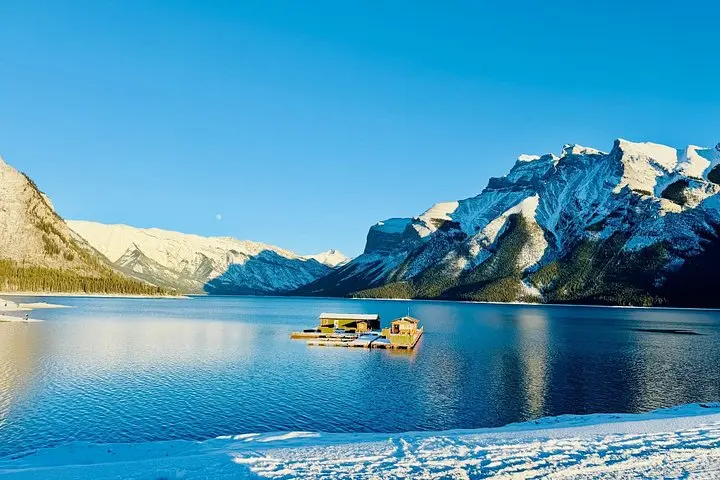
See Banff’s signature overlooks and hidden lakes in one compact, expertly guided 2.5-hour loop. Perfect for short-stay travelers who want big scenery without the driving.
 Related story
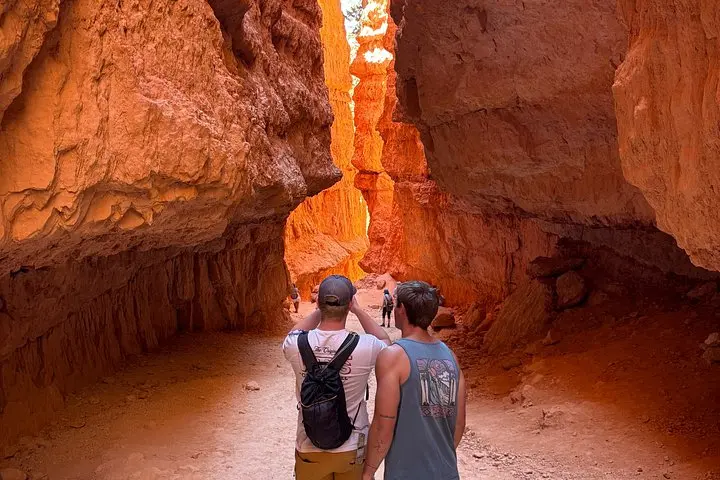
A guided sunrise hike down the Navajo Loop turns Bryce Canyon’s hoodoos from postcard scenery into an intimate geology lesson. Three miles, expert narration, and unforgettable light—this tour is the quickest way to understand how ice, time, and wind carved a city of stone.
 Related story
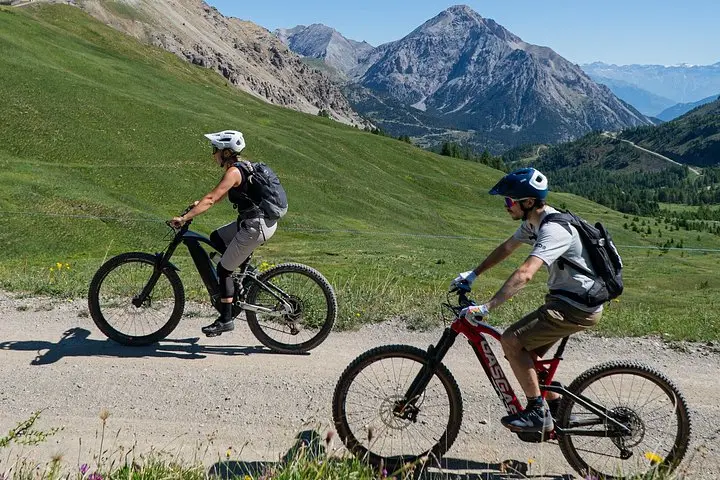
A three-hour guided mountain-bike tour that threads alpine lakes, Roman passes and timbered ridges on the Italy–France border—perfect for riders who want a scenic, accessible taste of high-Alpine adventure.