
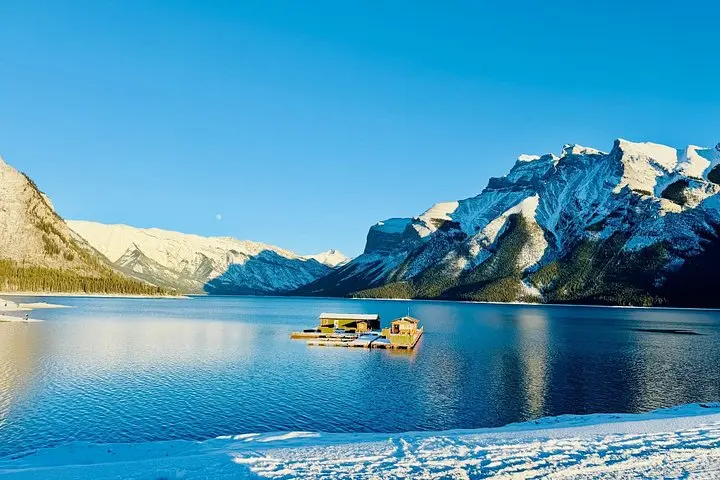
What the day feels like
You pull on a windbreaker as the Rockies wake: pale light along the bow of the hoodoos, a thin fog lifting off the river that dares you to follow its current toward the valley. The van hums away from Banff’s main street and the air opens—limestone ridges, glittering lakes, and viewpoints stitched together so tightly they read like a single cinematic sequence. In 150 minutes you’ll cover miles that would take a day to stitch together on your own. What the Best of Banff: Signature Express Tour lacks in length it makes up for in choreography: carefully timed stops, small groups, and a guide who balances geology lessons with the kind of local stories that stick.
The route is compact by design. Surprise Corner gives a first, breath-stealing vantage of Bow River and Cascade Mountain. Two Jack Lake, quieter and reflective, is a place to let the water act like a mirror and recalibrate your senses. Depending on itinerary and season, the tour threads through roadside viewpoints and lesser-known pullouts—spotting elk on a hillside, watching a cloud drift across a glacier-scraped ridge. Guides here are storytellers: they’ll talk about the stubborn geology—sandstone and shale thrust upward millions of years ago, later carved into the dramatic amphitheaters you’re seeing—and about the human stories, from Indigenous connections to the arrival of the CPR and the hot springs discovery that birthed Canada’s first national park in 1885.
The Rockies wear time on their faces. Glacial flour in the alpine runoff turns lakes a near-surgical turquoise, a result of ground rock suspended in meltwater. Hoodoos—tall, thin spires of weathered rock—stand like sentinels of erosion, and the Bow River keeps time in riffles and quiet pools. Wildlife is never far away in Banff: elk, bighorn sheep, and, with luck and distance, bears. The tour’s pace puts you close enough to feel the landscape’s physicality—cool wind off a lake, the grain of lodgepole pines—without the logistics drag of self-driving, parking, and squeezing into crowded pullouts.
Practicality is baked into the experience. This is not a strenuous hike; it’s a curated viewing and learning experience with short walks at stops and plenty of photo time. Ideal for first-time visitors, quick-stay travelers, or anyone who wants a concentrated primer on Banff’s visual highlights, the Signature Express also works as an orientation for later adventures. Expect clear commentary about safety—how to behave around wildlife, why rockfall happens on certain slopes, and why timing matters for light and crowds.
Timing is everything. Early morning light softens the limestone faces and the low-angle sun brings out lake color; later, tour routes can run into clearer skies and busier pullouts. Guides often adjust for weather and crowd flow, which is where the small-group advantage matters: more flexibility, more meaningful moments. The tour’s ticketing is traveler-friendly—instant confirmation and a free cancellation policy make it low-risk if your plans shift.
If you go: dress in layers, carry a camera and a mid-telephoto for wildlife, and keep a Parks Canada pass handy—the national park requires one and it’s the right thing to do for conservation funding. Prepare for altitude—the town of Banff sits around 1,383 meters (4,537 feet)—and for sharp temperature swings between the valley floor and exposed viewpoints. Bring binoculars if you want to watch sheep climbing impossibly steep ledges, and respect wildlife with distance and silence; a photo is never worth endangering an animal or yourself.
Why travelers book this tour is simple: efficiency without feeling rushed. For the curious traveler who doesn’t want to drive or spend hours planning, it’s an expert-compacted crash course in what makes Banff both iconic and quietly surprising. You’ll leave with a stack of images and a handful of insights—about the park’s glacial history, the Indigenous landscapes, and how the elements keep shaping these ranges—that make a return visit feel inevitable.
The Signature Express is not a full substitute for time on the trail; it is an invitation. It shows you where to come back and linger: a particular lakeshore where the light is best at dusk, a ridge with wildflowers in late July, a river bend where otters play. It’s also a responsible way to experience Banff when time, weather, or ability limits longer excursions. Done right, the tour turns a quick stop into a meaningful introduction to mountain geography, conservation, and the simple, humbling pleasure of standing at the edge of a lake that looks painted by the earth itself.
In short: if you have a morning or an afternoon and want to see what makes this national park famous without the logistics headaches, this guided express is a strong, sensible way to feel the Rockies’ scale and walk away with a clear sense of where to return. The mountains don’t rush you—the tour simply gives you the key to the theater and a good seat.
Trail wisdom
Small choices, better day.
Buy a Parks Canada Pass Before You Go
Most stops are inside Banff National Park—buy your pass online to avoid lines and support conservation.
Layer for Mountain Weather
Temperatures can swing quickly between valley and viewpoint—bring a windproof layer and a warm mid-layer.
Bring a Mid-Telephoto Lens or Binoculars
A 70–200mm lens or compact binoculars helps with wildlife and distant peaks without crowding the foreground.
Respect Wildlife Distance
Stay in designated viewing areas and follow guide instructions—animals’ stress can increase with close approaches.
Local knowledge
Read the place, not just the route.
Watch for native species including Elk, Bighorn Sheep.
Keep an eye out for wildlife during the transition between areas and habitats. Respect distance guidelines.
Banff is managed by Parks Canada—stay on trails, pack out trash, and purchase a park pass to support maintenance and wildlife programs.
Follow the guide's instructions on size limits, ethical handling, and leave-no-trace practices.
Two Jack Lake for reflections and sunset silhouettes. Vermilion Lakes drive—good for sunrise and quiet wildlife viewing
Locally recommended viewpoints and quiet spots known best to local operators.
Banff National Park was established in 1885 as Canada’s first national park after the discovery of thermal springs and the arrival of the Canadian Pacific Railway.
Maritime roots and regional tradition shape the waterways and working coasts.
Seasonal guide
Four versions of the same landscape.
Spring
Best forMelting waterfalls · Lower shoulder-season crowds
ChallengesUnpredictable weather · Some access roads still snowbound
Late spring brings swollen rivers and powerful waterfalls; expect chilly mornings and soft side roads in early season.
Summer
Best forClear lake colors · Long daylight for photos
ChallengesPeak crowds · Limited parking at popular spots
Summer offers the most stable weather and vivid lake hues, but arrive early to beat the crowds at top viewpoints.
Fall
Best forAutumn colors · Elk rut sightings
ChallengesShorter daylight · Colder mornings and gusty afternoons
Fall turns the valleys golden and brings wildlife activity; dress warm and plan around shorter daylight windows.
Winter
Best forSnow-clad scenery · Fewer tourists
ChallengesClosed or limited access to some lakes · Icy conditions on short walks
Winter’s quiet is spectacular, but some stops may be limited or require easy winter footwear; confirm accessibility with your operator.
Operator details
What the booking data adds.
Included
- ✓Water
- ✓Energy bar
Not included
- —Gratuity
Good to know
- ✓Service animals allowed
- ✓Infants are required to sit on an adult’s lap
- ✓Not recommended for travelers with poor cardiovascular health
- ✓Suitable for all physical fitness levels
- ✓No luggages No strollers
Pack with intention
What to bring.
Good to know
Common questions.
The tour lasts roughly 150 minutes (2.5 hours) and includes guided stops at curated viewpoints such as Surprise Corner and Two Jack Lake; specifics depend on the itinerary and seasonal accessibility.
Plan the edges
The details that make the day easier.
Banff National Park was established in 1885 and is Canada’s oldest national park, created shortly after the discovery of hot springs and the arrival of the transcontinental railway.
After the tour, stroll Banff Avenue for hearty mountain fare—try Park Distillery for locally distilled spirits and an open-kitchen menu, or head to the Banff Ave Brewing Co. for a post-scenic-pulse pint. For a cultural stop, the Banff Park Museum or local Indigenous-run galleries offer context about the land you’ve just seen.
- Closest airport
- Calgary International (YYC)
- Driving
- ~90–120 minutes to Banff
- Typical pickup
- central Banff hotels or meeting points
- Cell service
- good in town, variable at some viewpoints
- Permits
- Parks Canada day pass required
Banff is on traditional Indigenous territories and managed by Parks Canada—pack out what you pack in, stay on designated roads and trails, and support local conservation by purchasing a park pass.
Explore by topic
Follow the threads.
Keep exploring
Make the story part of the trip.
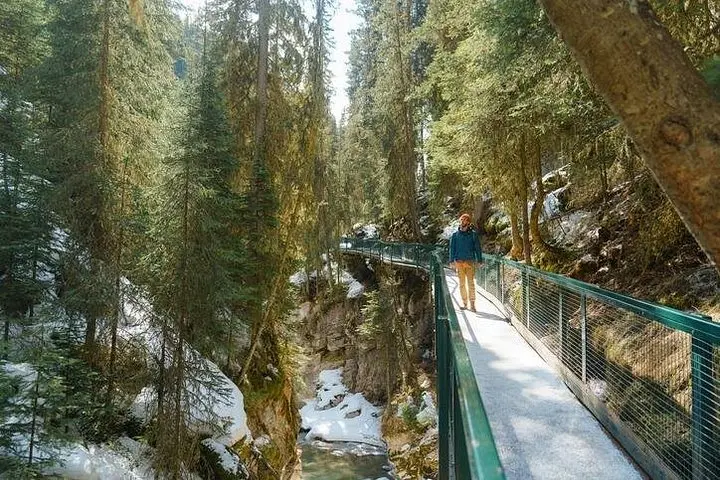 Related story
In eight efficient hours, experience the turquoise drama of Lake Louise and the cathedral-like icefalls of Johnston Canyon. This guided shuttle day trip from Banff/Canmore combines easy access, crisp winter scenery, and practical guidance for a high-reward Rockies outing.
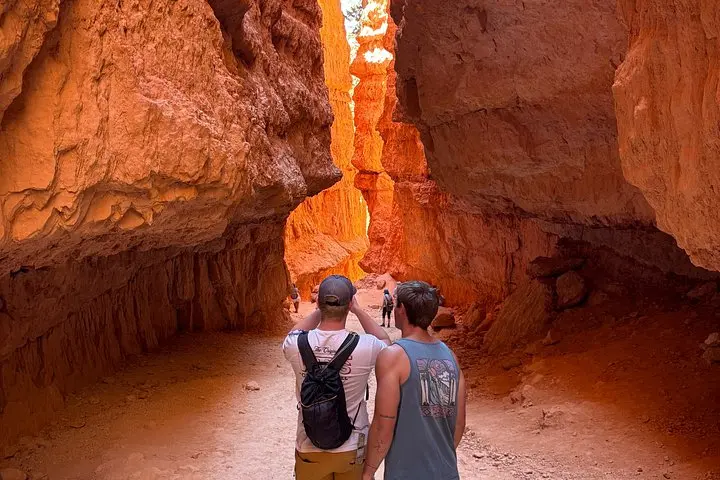 Related story
A guided sunrise hike down the Navajo Loop turns Bryce Canyon’s hoodoos from postcard scenery into an intimate geology lesson. Three miles, expert narration, and unforgettable light—this tour is the quickest way to understand how ice, time, and wind carved a city of stone.
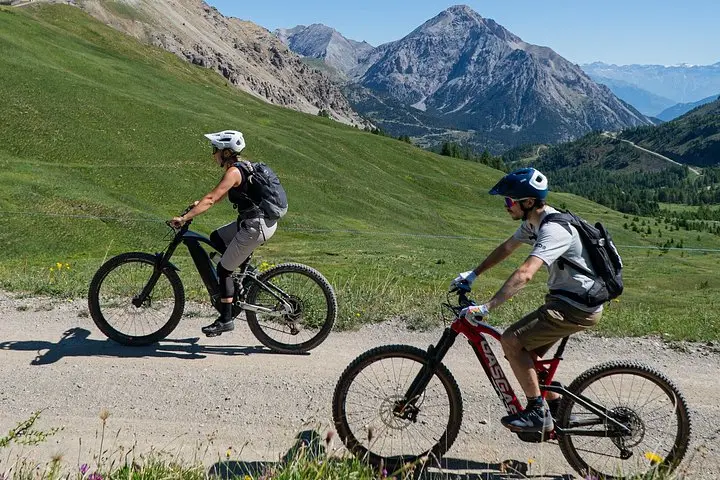 Related story
A three-hour guided mountain-bike tour that threads alpine lakes, Roman passes and timbered ridges on the Italy–France border—perfect for riders who want a scenic, accessible taste of high-Alpine adventure.