
What the day feels like
The first thing you notice when the fort appears on the horizon is the angle — a dark silhouette of basalt and battlement set against the Arabian Sea, not so much sitting on the coast as holding it. Wind comes off the water in clean sheets, and when you climb the broad stone steps to the ramparts the smell of salt and fish stalls follows like an accompaniment. Below, waves telescope into a thousand shades of blue and the cannons point into the same infinite distance they watched for centuries. This is Diu Fort: a 16th‑century Portuguese stronghold that reads like a maritime novel in stone.
Walk its terraces and you move through layered histories. The Portuguese thickened and rebuilt walls on older Gujarat foundations during the 1500s; the fort’s arcades, guardrooms and barred embrasures still make their argument on behalf of strategy and survival. But the place resists being fossilized. Far from a static museum, Diu Fort is a working promenade where fishermen mend nets in the shade, families cross the draw of late‑afternoon light, and the sea—ever restless—keeps a kind of conversation going with the old garrison.
Geologically the site is stubborn basalt — black, dense rock that fractures into the long slabs you see in the fort’s ramparts and the jagged coastline nearby. The basalt cliffs form small caverns and tidal pools that hold shorebirds and riffles of sardines. Those who come for the photos quickly learn the visual grammar: cannon in the foreground, aquamarine sea beyond, and sky that flares gold at dusk. The island’s geography made it a natural anchor for maritime trade and, later, colonial ambition.
Culturally, Diu reflects a seam where Gujarati life and Portuguese influence braided together. In the Old Town, narrow lanes still smell of curry leaves and fresh baking; modest churches and temples sit within a short walk of each other. Food follows the same conversation—seafood curries spiced to Gujarati sensibilities, breads and desserts that carry a Portuguese echo, and a tea culture that will stop the most hurried itinerary. Local craftsmen sell lacquerware and woven goods in the market lanes near the fort; bargaining here is friendly and functional rather than theatrical.
The fort is also the hinge that connects the island’s must‑see neighbors. A short walk from the ramparts takes you toward Naida Caves, a low limestone labyrinth that opens to the sea with natural windows; Gangeshwar Temple’s Shiva lingas framed by pounding surf; and the crescent Nagoa Beach for swimming and late afternoon sun. Most travelers visit on day trips from Ahmedabad or as part of a larger Gujarat circuit that folds in Junagadh, Gir National Park and the Rann of Kutch—packaged excursions like the Enchanting Diu Heritage Tour or broader Gujarat historical itineraries often make Diu a highlight stop rather than the whole trip.
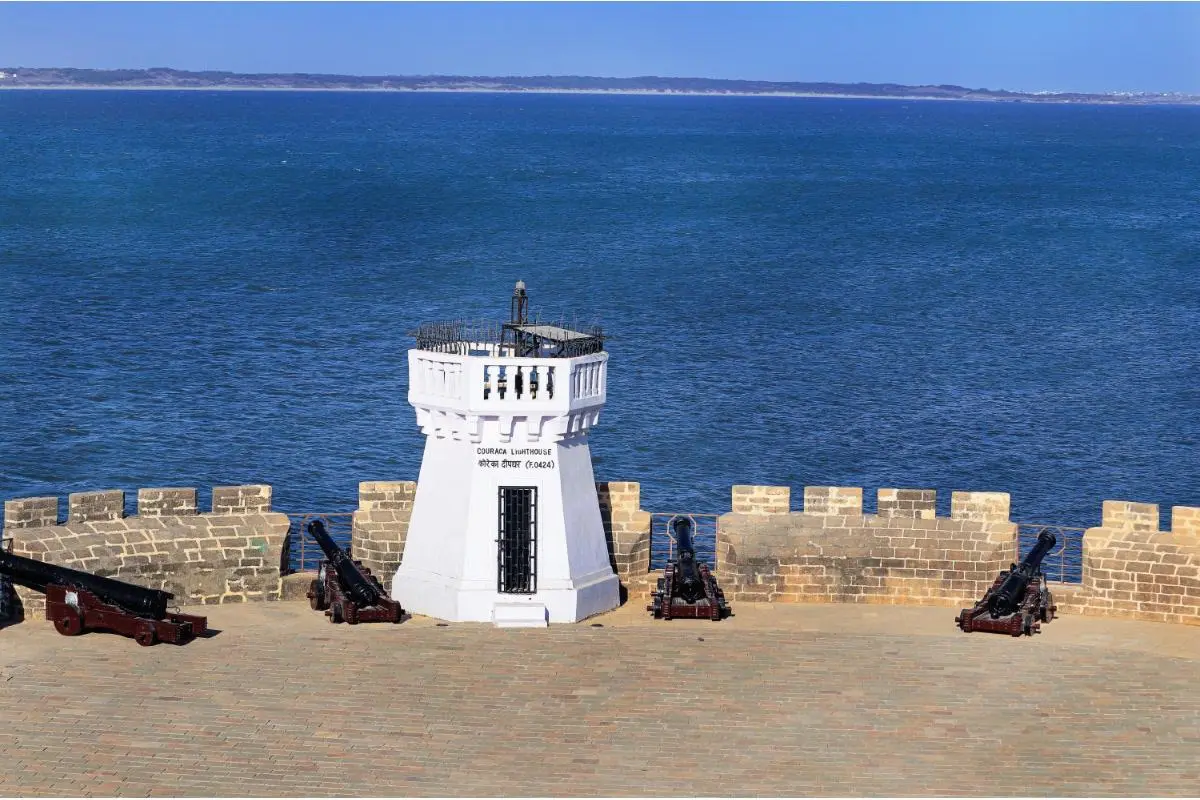
Practical things first: the fort is compact but uneven underfoot. Expect stone steps and corroded ironwork, plus windy exposures on the ramparts. Plan for 1–3 hours if you want to see the main walls, climb the lighthouse, visit the small museum inside, and walk down to Naida Caves. Early morning and late afternoon are the best windows: softer light for photos, fewer tour groups, and a breeze that keeps the mosquitoes at bay. If you’re timing a trip around weather, the post‑monsoon months (October–February) are pleasantly cool, while the summer heat can be intense.
Gear is straightforward: sturdy shoes with grip, sun protection, and plenty of water. Bring a wide‑angle lens for the ramparts, and a telephoto if you want to pick out fisherman and distant boats. Local guides can add a lot — they’ll point out inscriptions, hidden embrasures, and the stories of sieges and salt‑trade fortunes that are otherwise easy to miss. Booked tours that include Diu typically combine logistical convenience with contextual history, which is useful if you prefer to absorb the landscape while someone else handles the driving.
For itineraries: combine the fort with a slow walk through Diu’s Old Town, a dip at Nagoa Beach, and a visit to Gangeshwar Temple at sunset. If you’re on a longer schedule, add a wildlife stop at nearby Gir National Park or a sunrise over the Little Rann of Kutch — many multi‑day Gujarat circuits fold Diu naturally into their south‑coast leg.
Safety and stewardship are simple. The ramparts are exposed: keep an eye on children, stay behind railings where present, and avoid getting too close to wave‑cut edges after heavy weather. Carry water and a small first‑aid kit; mid‑day in summer can be draining. Finally, leave no trace—pack out what you pack in and help maintain the simple beauty that draws people here.
Diu Fort rewards the traveler who moves slowly. Sit on a parapet with a tea vendor’s cup and watch the sea collect a constellation of small boats. Listen for the gulls’ humanized cries and the distant, patient rattle of waves against spent stone. The fort’s best gift isn’t a single viewpoint; it’s time—the slow, human kind that lets you feel how coastal histories are written in both rock and routine. If you want a place where history is audible and the sea dares you to look farther, Diu Fort hands you that view, and then keeps humming the rest of the story.
Trail wisdom
Small choices, better day.
Time your visit for golden hour
Late afternoon light softens the stone and colors the sea—arrive 90 minutes before sunset to cover ramparts and nearby Naida Caves.
Bring grip‑soled shoes
Stairs and basalt surfaces can be slick—comfortable, grippy footwear keeps climbs safe and steady.
Carry water and sunscreen
There’s limited shade on the ramparts; keep hydration and sun protection accessible.
Hire a local guide for context
A guide points out architectural features, Portuguese inscriptions, and stories that bring the fort to life.
Local knowledge
Read the place, not just the route.
Watch for native species including coastal shorebirds such as terns and sandpipers, offshore dolphins occasionally seen from the ramparts.
Keep an eye out for wildlife during the transition between areas and habitats. Respect distance guidelines.
Coastal erosion and single‑use plastic pollution are active concerns—support local cleanup drives and use refillable water to reduce impact.
Follow the guide's instructions on size limits, ethical handling, and leave-no-trace practices.
Naida Caves — low sea caves with natural windows and tidal pools. Gangeshwar Temple — sea‑framed Shiva lingas just a short walk from the fort
Locally recommended viewpoints and quiet spots known best to local operators.
Diu Fort was built and fortified by the Portuguese in the 16th century and remained under Portuguese administration until 1961, leaving visible European architectural influences on the island.
Maritime roots and regional tradition shape the waterways and working coasts.
Seasonal guide
Four versions of the same landscape.
Spring
Best formild walking · birdwatching · lower crowds
Challengesoccasional windy days · increasing heat late season
Spring brings comfortable temperatures and active shorebirds—good for walks and photography before summer highs set in.
Summer
Best forearly morning visits · quick photo stops
Challengeshigh heat and humidity · limited shade
Summers are hot; plan visits at dawn or dusk and expect short, intense sun exposure during the day.
Fall
Best forpost-monsoon clarity · coastal walks · calmer seas
Challengesresidual wet areas after heavy monsoons · some repair work on paths
After the monsoon the landscape is refreshed and the seas calm—ideal for exploring caves and coastal views.
Winter
Best forsightseeing · long walks · pleasant evenings
Challengesincreased tourist numbers around holidays
Winter offers the most pleasant weather—crisp air, cool evenings, and extended daylight for exploring.
Pack with intention
What to bring.
Good to know
Common questions.
The fort is generally accessible during daylight hours—arrive early morning to avoid crowds and midday heat; exact hours can vary so check locally.
Plan the edges
The details that make the day easier.
Diu remained under Portuguese rule from the 16th century until 1961, making its architecture and community a rare surviving example of long-term European influence on India’s west coast.
Diu’s cuisine blends Gujarati simplicity with Portuguese notes—fresh seafood curries, sweet baked goods, and coastal snacks; markets sell lacquerware and woven crafts made by local artisans.
- Nearest base
- Diu town. Nearest airport: Diu (DIU). Best time: October–February. Accessibility: Short walks and stairs—moderate mobility needed. Combine with: Naida Caves, Nagoa Beach, and regional Gujarat tours.
Choose refillable water, avoid single‑use plastics, hire local guides and vendors, and respect wildlife along tidal pools to keep Diu’s shores healthy for future visitors.
Explore by topic
Follow the threads.
Keep exploring
Make the story part of the trip.
 Related story
Stand in City Hall Park and feel the city breathe around an 1812 Federal-style landmark. This is a walking experience that pairs architecture, history, and Lower Manhattan’s lived-in streets—ideal for curious travelers who love stories with their sidewalks.
 Related story
Step beyond Canal Street and into a dense, sensory world where food, language, and history overlap. This is Chinatown: compact, storied, and urgently alive. Learn how to move through it like a neighbor — and why every corner tells a story.
 Related story
In eight efficient hours, experience the turquoise drama of Lake Louise and the cathedral-like icefalls of Johnston Canyon. This guided shuttle day trip from Banff/Canmore combines easy access, crisp winter scenery, and practical guidance for a high-reward Rockies outing.