
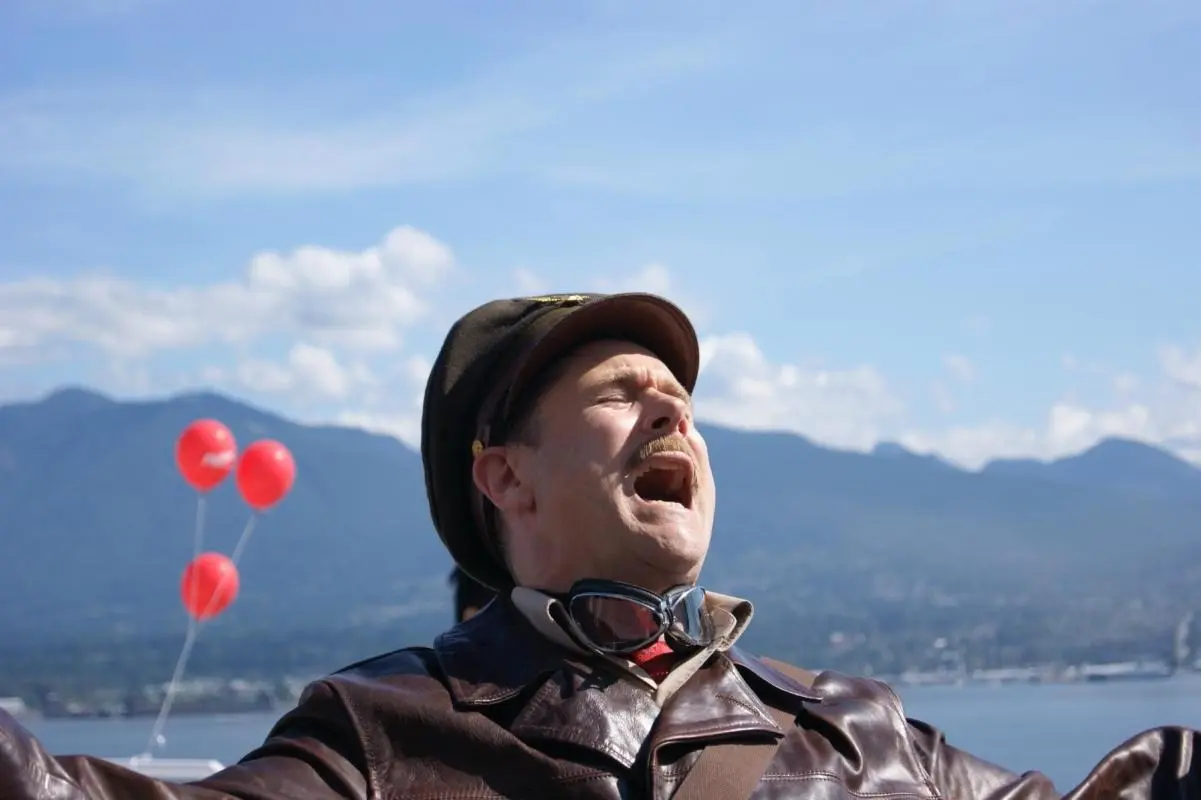
What the day feels like
The theatre darkens and for a heartbeat the city outside Canada Place recedes into the hiss of seawater and distant traffic. A narrator’s voice threads into the dark—a careful, intimate tone that promises both fact and folklore—and then the floor tilts, a breeze lifts your hair and the room exhales. Your feet dangle above a curved bench as a giant spherical screen blooms into light: mountain ridgelines, ice-blue glaciers, a herd of caribou moving like a living river. This is FlyOver Canada, and for thirty-five breathless minutes it converts downtown Vancouver into a launch pad for the country’s wild spaces.
FlyOver is not a theme-park roller coaster so much as a staged, multisensory flight. The experience layers motion, scent, temperature and mist with aerial cinematography, collapsing geography into a sequence of cinematic flyovers that make you feel the taut wind of the Rockies and the salt in a Pacific breeze. Launched with new content in 2024 (Awaken Canada), the ride pairs modern film craft with a theatrical pre-show that frames each region’s human story—Indigenous voices, working communities, and conservation themes—before you take off.
Positioned at Canada Place, FlyOver sits at Vancouver’s waterfront between the convention centre and the cruise terminals. That location is not accidental. Canada Place itself is a civic stage: its white sails—built for Expo 86—have long been a symbol of the city’s relationship with sea and sky. From here you can pivot clockwise into Gastown’s cobbled streets, north to Stanley Park’s cedar-scented seawall, or hop the ferry for Granville Island’s market bustle. FlyOver makes an efficient cultural limb for a day of downtown exploration—get the aerial overview, then step outside and walk the realities you’ve just seen on screen.
The story FlyOver tells is both cinematic and civic. Filmmakers shoot in helicopters and drones across vast, remote places—coastlines, tundra, old-growth forests—and the ride stitches these scenes into a coherent route that nods to Indigenous knowledge and modern conservation challenges. For travelers, it’s useful context: you’ll leave with a map in your mind of what to explore beyond the urban edges, and a sharper sense of why British Columbia’s ecosystems feel both enormous and intimately threatened.
Practicalities are straightforward. The full program—pre-show, immersive flight and exit—runs about 35–45 minutes. There are several daily showtimes year-round; during summer and holiday periods book in advance. The theatre is fully accessible, with transfer-level seating for guests with mobility devices and closed captions available for pre-show content. For anyone prone to motion sensitivity, a short warning: the sensation of flight is convincing. Pick seats near the middle and prepare with ginger tablets or anti-nausea measures if you know you’re sensitive to motion.
A FlyOver visit pairs especially well with a compact Vancouver itinerary. Start with morning coffee in Gastown, walk the waterfront to Canada Place, take an early FlyOver show, then rent bikes to loop the Stanley Park Seawall. Afterward, cross False Creek to Granville Island for lunch at the public market—fresh oysters and smoked salmon are a local specialty—or head to the Vancouver Lookout to compare a real skyline view with your simulated flight.
Timing matters: aim for a mid-morning or late-afternoon show to avoid crowds and leave daylight for walking. Public transit is the easiest access—Waterfront Station is a short walk—while parking near the convention centre is available but can be pricey during conventions and cruise season. Plan for 60–90 minutes total at FlyOver if you want the full audiovisual experience plus time to browse the gift shop.
Visitor tips: wear layers—the theatre is kept cool—and bring a small daypack for essentials. Cameras are allowed in the lobby but not during the show; take lots of photos outside afterward, especially from the promenades around Canada Place where the reflections of the harbour make vivid foregrounds. Families will find the ride approachable: it’s thrilling without being extreme, and children aged 5–7 often find the sensory elements most compelling.
FlyOver is also useful for those who want a low-impact taste of Canada’s vast landscapes. One can’t replace boots-on-the-ground wilderness travel, but the ride makes destinations feel nearer—and for many travelers it’s the spark that turns a city layover into a longer itinerary to the Coast Mountains, Vancouver Island, or the Great Bear Rainforest.
At its best, FlyOver balances spectacle with stewardship. Recent films and pre-show segments increasingly highlight Indigenous perspectives and conservation, framing the landscapes not just as postcard vistas but as lived-in places with histories and futures. If you come away wanting more, local operators and visitor centres can point you to ethically guided excursions and Indigenous-led tours that deepen the stories you’ve seen from above.
Whether you’re killing a few hours between flights, traveling with kids, or trying to stitch a thematic day out of downtown Vancouver, FlyOver Canada offers a compact, sensory-rich lens onto a country that feels both huge and urgently intimate. Leave the theatre and walk the waterfront; the city’s mix of harbor wind, cedar forest scent, and market smoke will make the cinematic landscapes feel alive under your feet.
Why go: it’s an efficient primer on Canada’s geography and culture, family-friendly and accessible, and a practical complement to Vancouver’s outdoor offerings. How to prepare: book a mid-morning slot, use public transit, wear layers, and plan a walking loop so the simulated km you’ve seen can be measured against real ones just beyond the doors.
Trail wisdom
Small choices, better day.
Book a mid-morning show
Shows mid-morning avoid the biggest crowds and leave daylight to explore Stanley Park or Granville Island afterward.
Prepare for motion
If you’re prone to motion sickness, take ginger or an anti-nausea tablet beforehand and choose center-row seating.
Use public transit
Waterfront Station is a short walk away—transit is cheaper and faster than parking during peak cruise/convention times.
Layer up
The theatre is cool; wear a light jacket you can remove after the show for waterfront walks.
Local knowledge
Read the place, not just the route.
Watch for native species including Harbour seals, Bald eagles.
Keep an eye out for wildlife during the transition between areas and habitats. Respect distance guidelines.
FlyOver’s programming increasingly highlights Indigenous perspectives and conservation themes; support local operators and Indigenous-guided tours to deepen your understanding.
Follow the guide's instructions on size limits, ethical handling, and leave-no-trace practices.
Bill Reid Gallery (Indigenous art just a short walk from Canada Place). Harbour Green Park—quiet shoreline views east of Canada Place
Locally recommended viewpoints and quiet spots known best to local operators.
Canada Place’s distinctive white sails were constructed for Expo 86 and have since become an iconic symbol of Vancouver’s waterfront.
Maritime roots and regional tradition shape the waterways and working coasts.
Seasonal guide
Four versions of the same landscape.
Spring
Best forIndoor activities on rainy days · Combining with early-season seawall walks
ChallengesUnpredictable rain · Variable ferry schedules
Spring brings rain and mild temperatures—FlyOver is a reliable indoor option before heading to drier afternoon windows for waterfront walks.
Summer
Best forDaytime waterfront strolls · Family visits and peak showtimes
ChallengesHigher visitor numbers · More expensive parking
Summer is ideal for pairing FlyOver with outdoor attractions; book tickets in advance and plan for larger crowds.
Fall
Best forPhotography with changing light · Less crowded shows
ChallengesShorter daylight hours · Cooler temperatures
Autumn’s crisp air makes post-show walks around the harbour especially rewarding; shows are less crowded than summer.
Winter
Best forA warm, scenic indoor escape · Holiday-season programming
ChallengesStormy coastal weather · Peak holiday crowds
Winter is perfect for a cozy indoor cinematic flight; combine with museum visits and warm lunches on Granville Island.
Pack with intention
What to bring.
Good to know
Common questions.
Expect about 35–45 minutes total: a short pre-show, the immersive flight, and exit time.
Plan the edges
The details that make the day easier.
Canada Place’s roof—those iconic white sails—was built for Expo 86 and remains one of Vancouver’s most recognizable landmarks.
Vancouver’s culinary scene reflects the Pacific—fresh seafood, sushi, and Asian-influenced dishes abound; pair a FlyOver visit with smoked salmon at Granville Island Market and explore Indigenous art at nearby galleries.
- Location
- Canada Place, downtown Vancouver. Duration: 35–45 minutes. Transit: 5–10 min walk from Waterfront Station. Book: reserve online during high season. Accessibility: transfer-level seating available.
Support sustainability by taking transit, using refillable water bottles, and choosing Indigenous- or locally-led excursions that reinvest in communities and conservation.
Explore by topic
Follow the threads.
Keep exploring
Make the story part of the trip.
 Related story
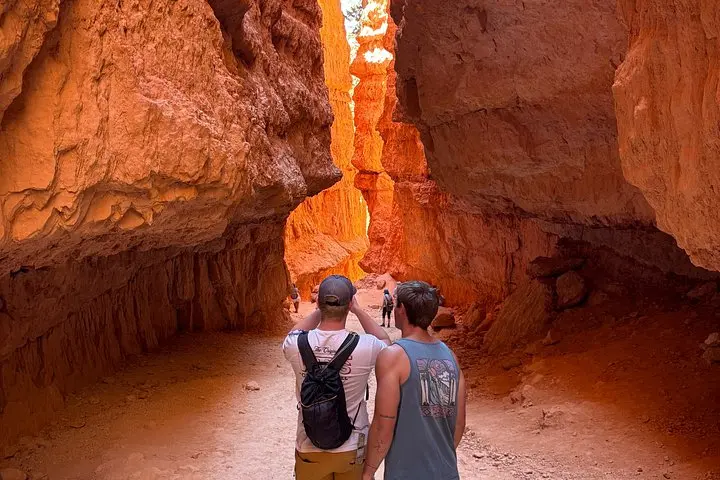
A guided sunrise hike down the Navajo Loop turns Bryce Canyon’s hoodoos from postcard scenery into an intimate geology lesson. Three miles, expert narration, and unforgettable light—this tour is the quickest way to understand how ice, time, and wind carved a city of stone.
 Related story
A three-hour guided mountain-bike tour that threads alpine lakes, Roman passes and timbered ridges on the Italy–France border—perfect for riders who want a scenic, accessible taste of high-Alpine adventure.
 Related story
A single-day private tour from Munich that moves from Zugspitze’s wind-scoured summit to the glassy shores of Eibsee, across Austria’s Highline179 suspension bridge, and finishes beneath the turrets of Neuschwanstein. Efficient, scenic, and full of photo moments—here’s how to make the most of it.