
What the day feels like
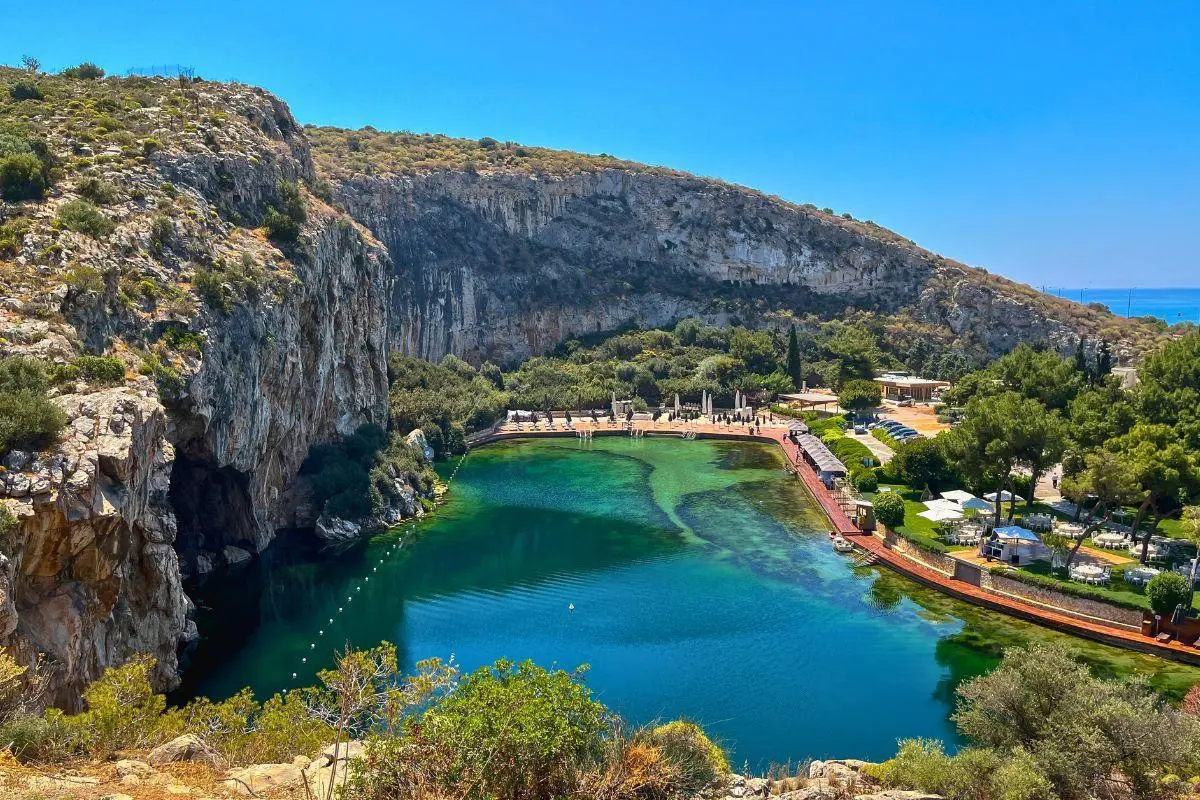
You arrive from Athens along a road that softens from concrete to cypress and tamarisk. The Aegean is always flirting on your right — a strip of glittering blue — until a cluster of low cliffs opens and a palm-sized mirror of water sits tucked into a eucalyptus grove. The first breath you take beside Lake Vouliagmeni is humid and mineral; the air smells faintly of sea and hot stone. It feels less like entering a lake and more like stepping into a private outdoor thermal pool the earth has set aside for the city.
Vouliagmeni’s shape is deceptively small: a round, deep bowl squeezed into limestone cliffs, fringed with pebbled terraces, a few wooden piers, and a compact lakeside café. But the surprising features are below the surface. This is not an ordinary freshwater pond — it is a brackish, thermal lake fed by an underground karst system and warm marine currents that rise through fissures in the rock. Water temperatures hover between the low 20s and high 20s Celsius year-round, and the depth drops off suddenly to cavernous chambers. Locals and therapists have long touted its mineral-rich waters for easing muscle tension and skin complaints; for many visitors the attraction is equal parts wellness and the simple comfort of buoyant, warm water.
Geology is part of the story here. Lake Vouliagmeni is the collapsed roof of an ancient sea cave — a collapsed sinkhole that connected to subterranean passages and the nearby Saronic Gulf. Over millennia, seawater and hot springs have mixed in this hollow, creating a stable, mildly saline environment. That mix is the reason the lake feels luxurious even on a late-autumn afternoon. The cliffs that edge the lake are fossil-laden limestone; they keep the place private and quiet in a way that feels intentional.
The cultural side of Vouliagmeni is small but meaningful. It sits within the Athenian Riviera — a string of seaside suburbs where Athenians come to escape the city’s heat. Across the decades the lake has toggled between a local retreat and an international curiosity; beach clubs and day-trip vans now pull up beside regulars, and the lakeside restaurant serves grilled fish and simple salads to go with post-swim beers. Wellness is a modern overlay here: fish pedicures, thermal therapy, and short guided meditation sessions have become common options on many half-day itineraries out of Athens.
For travelers who want to try Vouliagmeni, timing and expectations matter. The lake’s publicly managed bathing areas are compact; you’ll pay a modest entry fee (typically listed around €17–20 on current services) and use the changing rooms, showers, and sunbeds. In summer the place is busiest between late morning and early afternoon; aim for early morning when the water is calm and the light is soft, or late afternoon before sunset when the cliffs glow and tour groups have thinned.
There’s a practical simplicity to enjoying Vouliagmeni: swim slow, breathe easy, and let the warmth loosen you. The lake’s buoyancy is pronounced, so it’s an excellent spot for easy laps, floating, or a guided breathing session. If you want to combine sightseeing, many day tours stitch Vouliagmeni into a coastal route that includes Glyfada’s cafes and the Temple of Poseidon at Cape Sounion — the change from thermal calm to temple-top sunset is one of Greece’s most satisfying day-trip contrasts.
Logistics are straightforward. From central Athens the drive is roughly 20–40 minutes depending on traffic; there’s limited public transit access (buses and trams can get you close to Vouliagmeni village), but many visitors find a taxi or a private transfer more efficient. Bring swimwear, an extra layer for post-swim breezes, and cash for the entrance fee if you prefer — though most payment points accept cards. For photographers: the lake’s small piers, reflections off the water, and the limestone backdrop make for intimate frames rather than wide-open seascapes — plan accordingly.
Safety and etiquette are part of the experience. The water is warm and deep but not uniformly shallow; heed roped-off swimming zones and lifeguard instructions in summer. Wear reef or water shoes on the rocky terraces, and use biodegradable sunscreen — the lake’s ecology is fragile and we all share stewardship of its clarity. The fish-pedicure services that spring up in high season are optional; look for licensed operators and be mindful of any skin cuts or conditions before trying a fish spa.
Lake Vouliagmeni is a modest place with an outsized feel. It’s not a wild waterfall or a rugged mountain summit; its draw is the subtle luxury of geothermal warmth, the geological curiosity of a submerged cave, and the peacefulness of a water body that has somehow retained privacy on the edge of a metropolis. For a traveler based in Athens who wants to reset between monuments and museums, it’s the most convenient form of therapy the earth has put on schedule.
Practical edge: give yourself ninety minutes if you plan to swim and linger at the café; longer if you want a massage or a fish-pedicure. Combine the visit with the Athenian Riviera’s beaches or an afternoon drive to Cape Sounion for sunset and you’ll leave with both warm skin and a sense of spatial contrast — city to thermal lake to cliff-top temple — that defines Attica’s coastline.
Why go? Because Vouliagmeni is a compact, efficient escape: a warm basin of water that relaxes the body, a pocket of geology that intrigues the mind, and a convenient, low-effort way to recharge in the same day you tour ancient ruins. For a visitor to Athens with an eye for comfort and curiosity, the lake is one of those quietly excellent choices that turns a good trip into a well-rested one.
Trail wisdom
Small choices, better day.
Arrive early or late
Beat the crowds—arrive at opening or late afternoon for quieter water and better sunlight for photos.
Bring water shoes
Rocky terraces and pebbled entry points can be slippery—water shoes protect your feet and improve traction.
Use biodegradable sunscreen
Regular sunscreens harm the lake’s fragile ecology—choose reef-safe formulas to protect water quality.
Mind the ropes
Respect roped-off swimming zones and lifeguards; depths drop quickly and some areas are reserved for therapeutic use.
Local knowledge
Read the place, not just the route.
Watch for native species including Mediterranean gulls, small endemic fish and lizards on the cliffs.
Keep an eye out for wildlife during the transition between areas and habitats. Respect distance guidelines.
The lake is managed to balance public access with conservation; visitors should minimize chemical sunscreens, avoid littering, and respect roped-off areas to protect water quality.
Follow the guide's instructions on size limits, ethical handling, and leave-no-trace practices.
Megalo Kavouri beach for a quieter coastal swim. The lakeside taverna for grilled fish and sunset views
Locally recommended viewpoints and quiet spots known best to local operators.
Lake Vouliagmeni formed from the collapse of an ancient sea-cave; its geothermal springs and seawater mixing have drawn locals to its waters for decades.
Maritime roots and regional tradition shape the waterways and working coasts.
Seasonal guide
Four versions of the same landscape.
Spring
Best forgentle swims · fewer crowds · wildflower coastal walks
Challengescooler air temperatures · unpredictable wind on some days
Spring offers mild water temperatures and fewer visitors—ideal for peaceful swims and combining with coastal hikes.
Summer
Best forfull thermal experience · sunbathing · extended daylight
Challengescrowds at peak times · higher local fees and parking pressure
Summer brings reliably warm water and lively lakeside services; go early or late to avoid peak crowds.
Fall
Best forwarm water without heat · photography at golden hour · wellness sessions
Challengesshorter daylight hours · sporadic rain in late fall
Autumn preserves the lake’s warmth while cooling the air—great for relaxed floating and dramatic light on the cliffs.
Winter
Best forthermal soaking · quiet solitude · off-season wellness
Challengescool air temperatures and reduced services · limited lifeguard coverage
Winter is quiet and intimate, with the lake’s thermal warmth most noticeable against crisp air—services are pared back but the experience is serene.
Pack with intention
What to bring.
Good to know
Common questions.
Yes—swimming is allowed within the designated bathing areas; there is an entrance fee and facilities including changing rooms and showers.
Plan the edges
The details that make the day easier.
Lake Vouliagmeni’s waters remain warm year-round (roughly 22–29°C) because it’s fed by a mix of thermal springs and subterranean seawater — a feature long associated with therapeutic benefits.
Vouliagmeni sits on the Athenian Riviera where seafood tavernas and small cafés cater to post-swim appetites—try simple grilled fish, a Greek salad, and local rosé while watching the light change on the cliffs.
- Location
- Vouliagmeni, Attica — ~20–40 min from central Athens. Hours: seasonal; entrance fee ~€17–20. Facilities: changing rooms, showers, lakeside café; limited parking. Best time: early morning or late afternoon.
Protect the lake’s delicate ecology by using biodegradable sunscreen, disposing of all waste properly, and respecting signage and restricted areas—the site relies on visitor stewardship.
Explore by topic
Follow the threads.
Keep exploring
Make the story part of the trip.
 Related story
Stand in City Hall Park and feel the city breathe around an 1812 Federal-style landmark. This is a walking experience that pairs architecture, history, and Lower Manhattan’s lived-in streets—ideal for curious travelers who love stories with their sidewalks.
 Related story
Step beyond Canal Street and into a dense, sensory world where food, language, and history overlap. This is Chinatown: compact, storied, and urgently alive. Learn how to move through it like a neighbor — and why every corner tells a story.
 Related story
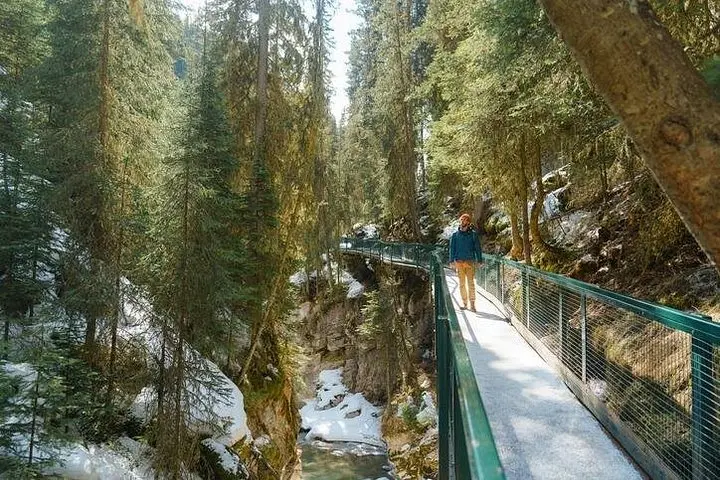
In eight efficient hours, experience the turquoise drama of Lake Louise and the cathedral-like icefalls of Johnston Canyon. This guided shuttle day trip from Banff/Canmore combines easy access, crisp winter scenery, and practical guidance for a high-reward Rockies outing.